

Top Tweets for #galleryglimpse

更新世の初めには、森林を食むゴンフォテリウムなど、史上最大の陸生哺乳類が出現しました。
この動物の体重は4,500~ 6,600kgだったでしょう。
#GalleryGlimpse

At the beginning of the Pleistocene, some of the largest land mammals to ever exist emerged, including the forest browser Gomphotherium. This animal would have weighed between 4,500 – 6,600 kg! #GalleryGlimpse

At the beginning of the Pleistocene, some of the largest land mammals to ever exist emerged, including the forest browser Gomphotherium. This animal would have weighed between 4,500 – 6,600 kg! #GalleryGlimpse
Look at the details preserved in this Homoioptera gigantea specimen!
By the Carboniferous Period, roughly 400 million years ago, many insects had taken to the air, more than 100 million years before the first birds. #GalleryGlimpse


This mammoth display has a secret…
Have you ever noticed the clouds slowly moving in front of the moon in this mural? This lighting detail adds dimension to the display, making it a popular stop for selfies. #GalleryGlimpse

This interactive display in our Cenozoic Gallery allows you—and some friends—to stand on the scale and find a creature that is equal to your weight. Have you met your match? #GalleryGlimpse


Like other mass extinctions, the end-Cretaceous event was complex and involved multiple contributing factors. This specimen is on display in the entrance to our Cenozoic Gallery. #GalleryGlimpse #DidYouKnow #Science

Our “Devonian Reef” diorama depicts life in the seas 419 – 359 million years ago. To keep the models clean, the display was constructed to be completely sealed, ensuring dust cannot settle inside. #GalleryGlimpse


Meet one of North America’s oldest and most complete plesiosaur specimens, on display in our Grounds for Discovery exhibit. Nichollssaura borealis, found in Fort McMurray, AB, lived in the Western Interior Seaway 112 million years ago. #GalleryGlimpse


Discosauricus was a small, primarily aquatic reptile that likely fed on worms and insect larvae. This fossil, collected in the Czech Republic, is from the Early Permian. #GalleryGlimpse

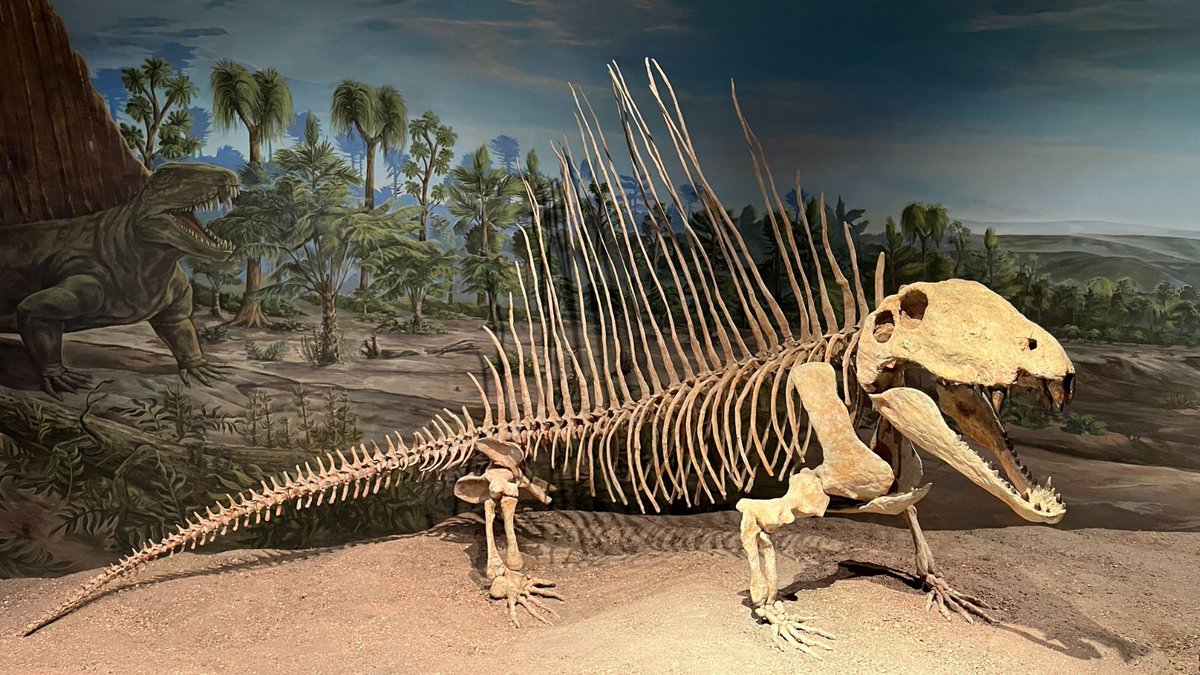
#DYK the first Dimetrodon fossil was found in 1845? A Prince Edward Island farmer was digging a well and discovered an upper jawbone 21 feet below the surface. Although it resembles a dinosaur, Dimetrodon is actually more closely related to mammals than reptiles. #GalleryGlimpse
#DYK you can distinguish between Lambeosaurus species by the shape of the crest? Lambeosaurus lambei (left) has a crest that includes a short rod projecting backward. The crest of Lambeosaurus magnicristatus (right) has no rod. #GalleryGlimpse

Psittacosaurus is known as the “parrot lizard” for the unique shape of its beak. Psittacosaurus is an early ceratopsian dinosaur that lived in Asia, although it lacks the brow and nasal horns for which later ceratopsians became known. Art by Julius Csotonyi. #GalleryGlimpse


You’ll find this interesting checkmark-shaped specimen in our Palaeozoic Gallery. This group of trilobite fossils, called Acernaspis orestes, lived 440 million years ago. Trilobites are an extinct group of animals related to shrimps, spiders, and insects. #GalleryGlimpse


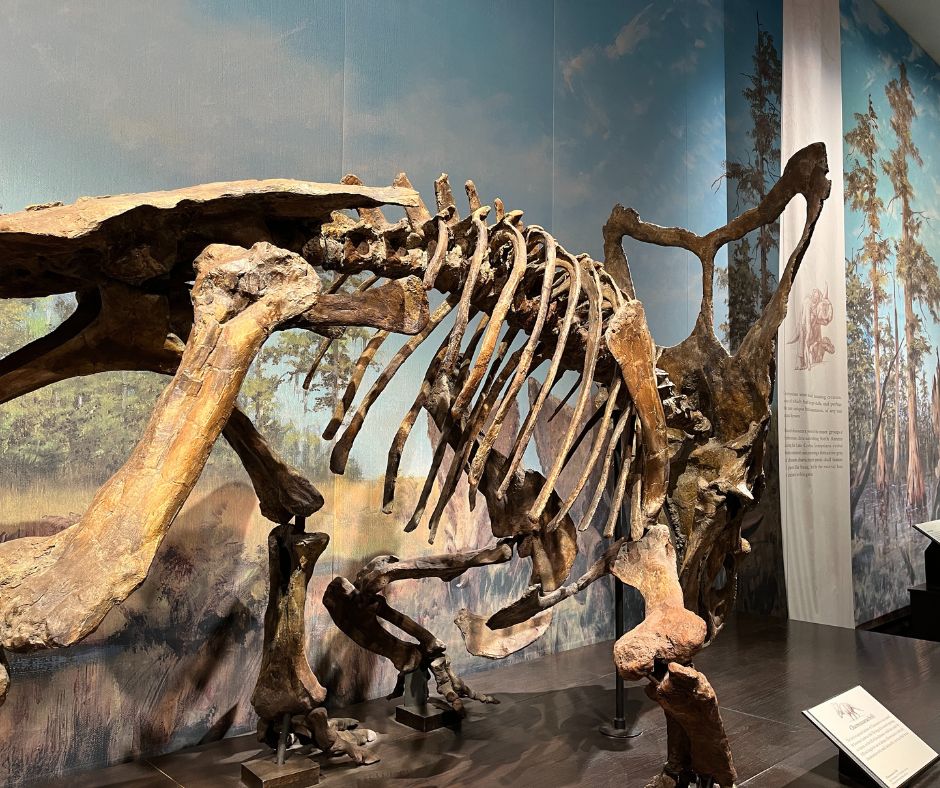
During life, skin would have covered these openings. However, unlike other horned dinosaurs, Chasmosaurus frills were too fragile for defense. #GalleryGlimpse
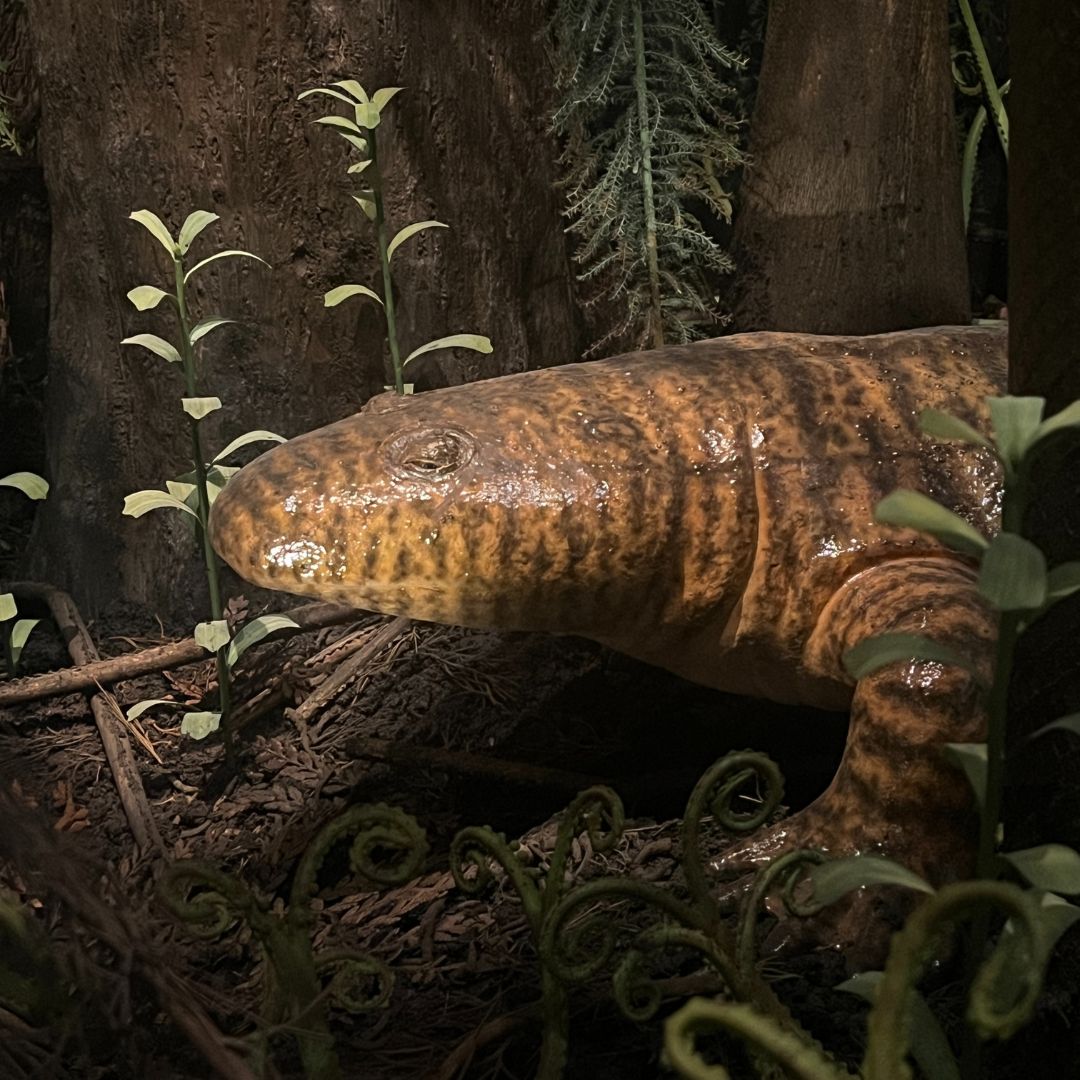
Have you ever felt like something was watching you in our Terrestrial Palaeozoic exhibit? Our Ichthyostega model blinks at visitors every minute or so. Ichthyostega is surrounded by tree-sized foliage, which first appeared 385 million years ago. #GalleryGlimpse
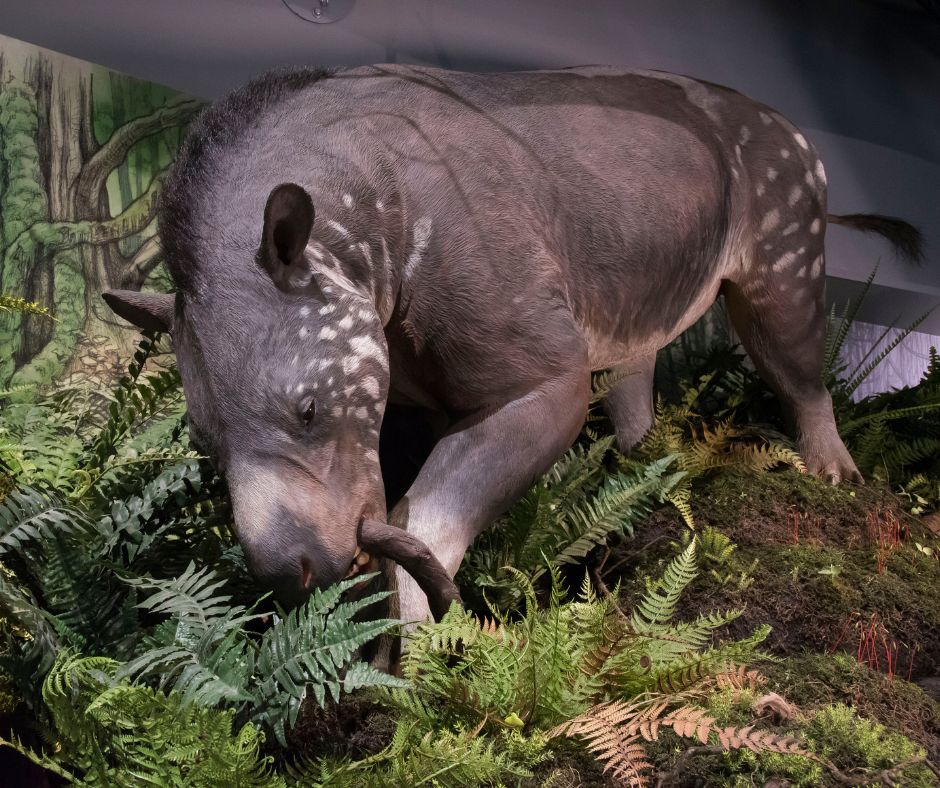
Although mammals have been around for 225 million years, they didn’t achieve large body sizes until after the extinction of the dinosaurs. Pantodonts were among the largest mammals of the Palaeocene. Despite their fierce appearance, they were herbivorous. #GalleryGlimpse

Dinictis is sometimes confused with animals like Smilodon, but it’s actually a “false sabre-toothed cat.” Unlike modern large cats, Dinictis walked flat-footed. However, it would still have been a powerful predator in its own environment. #GalleryGlimpse

Between 34-32 million years ago, camels like Poebrotherium wilsoni lived in North America. These camels were likely much faster and more agile than their living relatives. You’ll notice that this animal didn’t have distinct humps. #GalleryGlimpse

Get acquainted with the fossil preparation process at our Prep Table, located just outside the window into our Preparation Lab. You can ask our technicians questions and watch them prepare fossils every day from 9 a.m. to 4 p.m. until August 31. #GalleryGlimpse
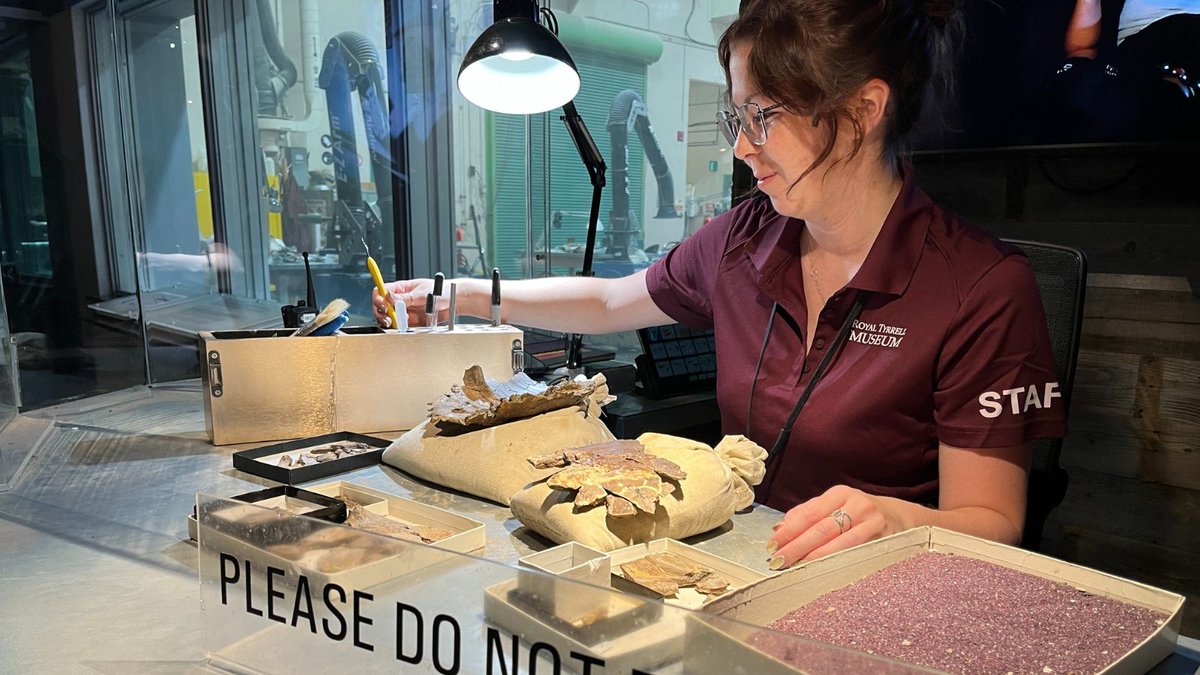

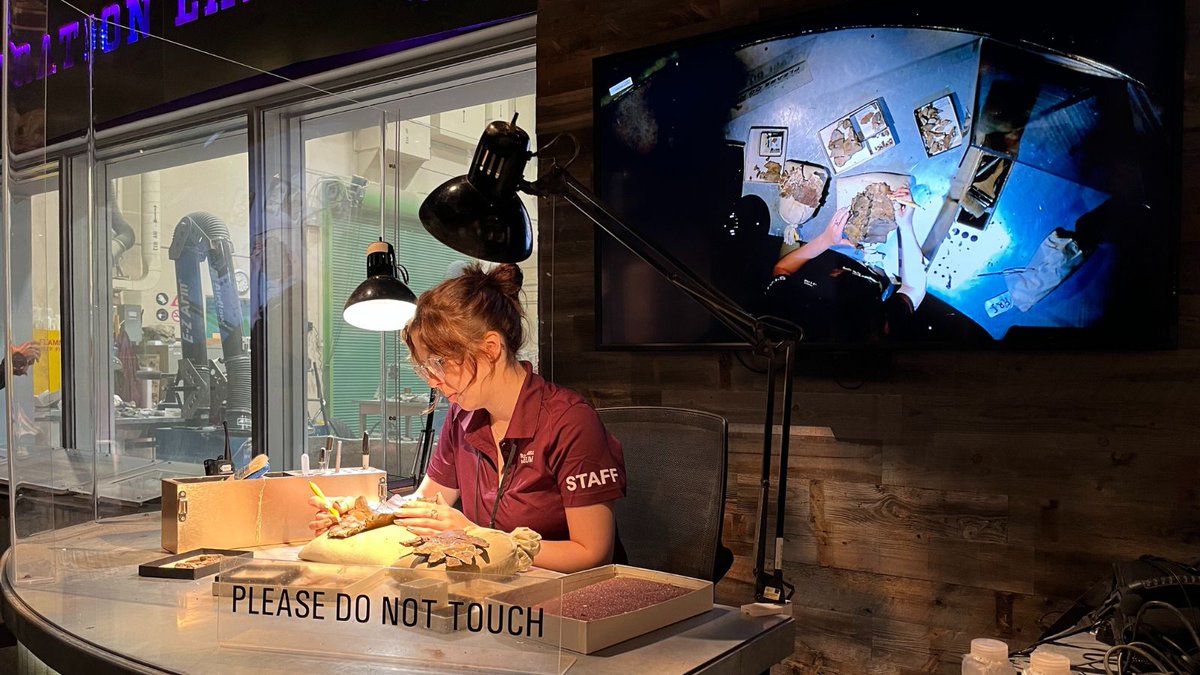
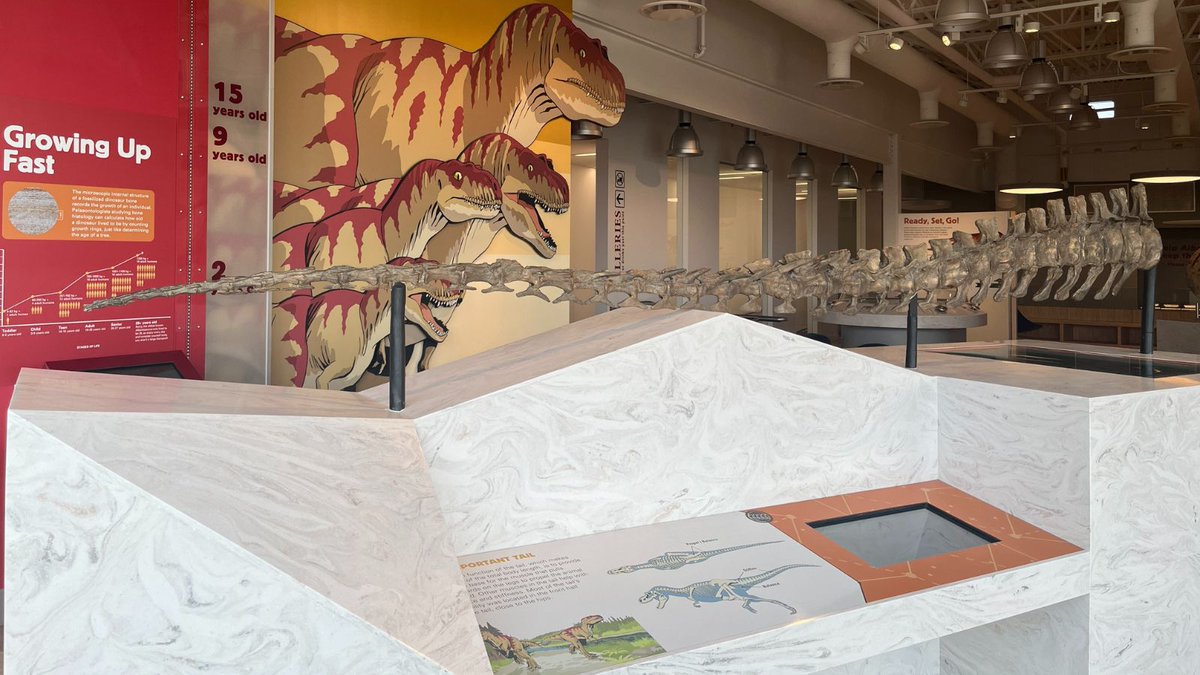
The powerful tail of Albertosaurus made up 48% of its body length. This display in our Learning Lounge shows how the tail helped provide a stable base for muscles that propelled the animal forward, and also helped with balance. #GalleryGlimpse #TyrannosaurTuesday
Last Seen Hashtags on Sotwe
曝光
Seen from United States
nicest #niceling
수치플
Seen from Korea
Year1966
Seen from United States
doggystyle
Seen from Netherlands
anxiouspandaaaa
Seen from United States
minichat()*** filter:videos since:2026-09-25
Seen from Thailand
ukchav
Seen from United Kingdom
فيديو_بوسي_الرقاصة
Seen from Oman
spoolymonth
Seen from United States
Trends for you
Most Popular Users

Elon Musk 
@elonmusk
240.9M followers

Barack Obama
@barackobama
118.8M followers

Cristiano Ronaldo
@cristiano
114.5M followers

Donald J. Trump
@realdonaldtrump
111.9M followers

Narendra Modi
@narendramodi
107M followers

Rihanna
@rihanna
98.7M followers

NASA
@nasa
92.2M followers

Justin Bieber
@justinbieber
91.8M followers

KATY PERRY
@katyperry
90M followers

Taylor Swift
@taylorswift13
84M followers

Lady Gaga
@ladygaga
75.5M followers

Virat Kohli
@imvkohli
73.4M followers

Kim Kardashian
@kimkardashian
70.8M followers

YouTube
@youtube
68.7M followers

Neymar Jr
@neymarjr
66.4M followers

Bill Gates
@billgates
65.2M followers

Selena Gomez
@selenagomez
63.1M followers

The Ellen Show
@theellenshow
62.2M followers

CNN
@cnn
61.7M followers

X
@x
60.6M followers