

Top Tweets for #henryIV

OTD in 1440 - death of Joan Beaufort, Countess of Westmorland. Joan was the half-sister of the first Lancastrian King #HenryIV & the grandmother of the Yorkist Kings #EdwardIV & #RichardIII. A forceful personality, her ambitions for her Neville offspring ensured the family came to dominate northern England & that her son Richard Neville, Earl of Salisbury & grandson Richard Neville, Earl of Warwick (the Kingmaker) were forces to be reckoned with during the #WarsoftheRoses.
Born in c.1377-79 Joan was the daughter of John of Gaunt, Duke of Lancaster & his mistress Katherine Swynford. Joan & her brothers were legitimised by Papal Bull in September 1396 after her father married Katherine as his third wife.
In 1391 Joan’s father had married her to Robert Ferrers. Her enhanced social status following her legitimisation enabled the widowed Joan to marry a higher status second husband, Ralph Neville (later Earl of Westmorland) in November 1396.
At the time of their marriage Ralph was a widower with 12 children. He would have a further 14 children with Joan. Ralph & Joan entered into a complex set of legal entails to bequeath the bulk of their lands to Ralph’s eldest son by Joan, Richard Neville Earl of Salisbury, rather than the children of his first marriage. This created the Neville-Neville feud & ensured the eldest grandson from the first marriage Ralph Neville, 2nd Earl of Westmorland inherited little more than the title & the family’s seat of Raby Castle. This was less Joan acting as a ‘wicked stepmother’ & more a recognition by Ralph of how much his marriage to Joan had increased his wealth & power, both through the direct annuity granted by her father & her connections to the Lancastrian royal family.
#RichardII made Ralph, Earl of Westmorland in 1397 & elevated Joan to become a Lady of the Garter in 1399. These rewards did not prevent the couple from supporting the usurpation of Joan’s half-brother, Henry of Bolingbroke, (now Henry IV) in 1399. Ralph is also credited with helping to persuade Richard II to abdicate. This choice of allegiance is unsurprising given Joan’s own closeness to Henry. Her mother Katherine had served as governess to Henry’s sisters, & Katherine & Joan lived in the household of Henry’s wife Mary de Bohun during the 1380s.
Henry’s largesse to Ralph & Joan, referred to in grants as ‘the King’s sister’ was significant. Ralph was made Earl Marshal & given a lifetime grant of the Lancastrian honour of Richmond, receiving the lands but not the title.
These lands were retained by Ralph & Joan’s son the Earl of Salisbury, giving him resources equivalent to two earldoms; the Richmond lands as well as the lands he acquired through his marriage to Alice Montague, heiress to the the earldom of Salisbury. There are suggestions that Salisbury, as de facto Earl of Richmond, resented Henry VI granting the title to Edmund Tudor in 1453.
Joan & Ralph also exploited their closeness to Henry IV to purchase the wardships of aristocratic heirs to secure advantageous marriage partners for their own children, a practice described by J.R. Lander as ‘the most amazing series of child marriages in English history.’
The most famous of these unions was the marriage of Cecily Neville to Richard, 3rd Duke of York. The infant Henry VI’s government had sold Richard’s wardship to Ralph & Joan in 1423 - a sensible move which ensured Richard, a potential dynastic rival to the young King, grew up in a loyal Lancastrian household.
Joan’s heritage is also important context for understanding why her son Salisbury & grandson Warwick did not initially support York (Salisbury’s brother-in-law) in the early 1450s. It took threats to their own lands to persuade them to shift allegiances. Their subsequent support for York proved crucial in enabling the outbreak of the Wars of the Roses by creating a Yorkist party strong enough to challenge Henry VI’s government & win the 1455 first Battle of St Albans.

OTD in 1389 - birth of Isabella of Valois, 2nd wife of #RichardII. Isabella almost became Queen of England twice as the wife of two different men, when #HenryIV, the Lancastrian King who replaced Richard, attempted to remarry her to his son (later #HenryV.)
Isabella married Richard II in Paris on 31 October 1396, when she was aged only 6 & he was 29. Although the marriage was arranged to establish peace between England & France, Isabella was an odd choice for Richard, a widower without an heir. Canonical law stipulated that the marriage could not be consummated until the bride reached her twelfth birthday. Nonetheless Isabella impressed the English envoys by telling them she was happy to be Queen of England as it would make her a great lady. Her dolls were included as part of her wedding trousseau.
Richard seems to have treated Isabella as the daughter he never had & a close bond of affection developed between them. The little Queen was given her own court & governess at Windsor Castle, made a Lady of the Garter & crowned in 1397. Richard visited her regularly & showered her with gifts & toys.
After Richard’s deposition in 1399 & murder in 1400, the new King Henry IV tried to marry Isabella to his heir who was close in age to her (only a 3 year gap) but Isabella refused & went into mourning for her deceased husband. On 21 July 1401 Henry relented & allowed her to return to France with her jewels & personal possessions. However, he kept her dowry, even though this should have been returned following the non-consummation of her marriage.
In 1406 Henry tried again to negotiate a marriage between Isabella & his son, & again was refused. On 29 June 1406 Isabella married her cousin Charles of Orleans instead, but sadly died in childbirth with their only child Joan of Valois when she was aged only 19 on 13 September 1409.
Henry V would go on to marry Isabella’s younger sister Catherine of Valois in 1420 & through her be recognised as Dauphin of France. Their infant son #HenryVI became King of England & France in 1422 on the deaths of both Henry & Charles VI (Isabella & Catherine’s father.)


The Illness of #HenryIV: Did the king have leprosy? If he really did, how did he manage to lead a relatively “normal” existence—without being shunned by his contemporaries? No, apparently something else was going on. https://t.co/pE5ukyegBf


Hello from Pontefract Castle. #EdwardI reportedly said ‘he who holds Pontefract, holds the key to the North.’
Pontefract became a royal castle with the elevation of Henry of Bolingbroke to become #HenryIV in 1399. Henry’s deposed cousin #RichardII died on 14 February 1400, likely of starvation, while he was in the custody of Henry’s retainer Thomas Swynford at the castle.
It was also the execution site of Anthony Woodville, 2nd Earl Rivers & Sir Richard Grey on 25 June 1483, following the power struggle between Elizabeth Woodville & #RichardIII (while still Duke of Gloucester) in the weeks following #EdwardIV’s death.
The royal apartments at Pontefract centred around the King’s and Queen’s Towers, which once stood at 18 metres tall. Little remains of these vast structures (third image.) Richard III & Anne Neville stayed here during their 1483 progress - see linked post. As did #HenryVIII & Catherine Howard on their 1541 progress, with Catherine allegedly engaging in trysts with Sir Thomas Culpepper.
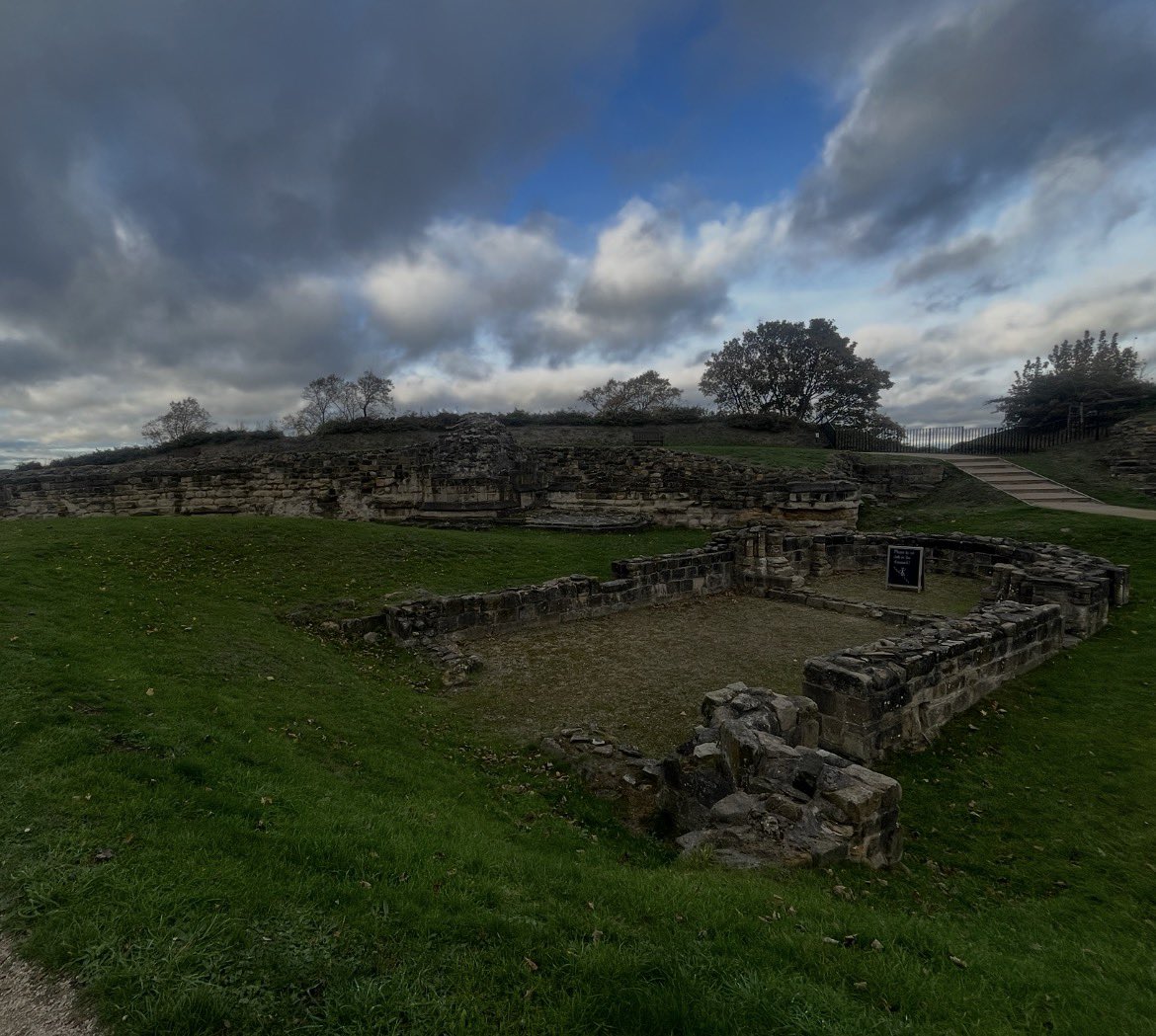


#WarsoftheRoses
OTD in 1483 - #RichardIII’s progress reached Pontefract. The King had written to local gentry on 18 August stating his intention to arrive on 27 August, but it’s possible he may actually have arrived a day or two earlier due to the relatively short distance between Nottingham & Pontefract, & the gap in the surviving documents between 23 & 27 August.
Pontefract was a significant location in the life of Richard III for other reasons. It was the execution site of Anthony Woodville, Lord Rivers & Sir Richard Grey on 25 June 1483, following the power struggle between Elizabeth Woodville & Richard, while still Duke of Gloucester, in the weeks following #EdwardIV’s death. (Some accounts include Sir Thomas Vaughan in this list, but others do not, so I have kept him separate here as his exact fate is unclear.)
It has also been suggested that Pontefract became the secret residence of Richard’s deposed nephew #EdwardV (the elder of the Princes in the Tower) during Richard’s reign. This stems from an intriguing account by the envoy Nicolas von Popplau who visited Richard’s court in Yorkshire in early May 1484 & had multiple private discussions with the King.
According to von Popplau: ‘ten miles from Doncaster, en route to York, there is also a castle stronghold. Inside are held in safekeeping the king's treasure &
all great lords, such as the king's children & sons of princes, that are kept just as close as if in captivity. And the said castle is named in Latin pons fractus [Pontefract|, as I was later given to understand from the mouth of the king himself.’
Who were ‘the king’s children & sons of princes’ referenced by von Popplau? Richard’s only legitimate child, Edward of Middleham had died in April 1484. Von Popplau could have meant Richard’s illegitimate offspring, John & Katherine of Gloucester. However, Katherine married William Herbert, Earl of Huntingdon in May 1484 & accompanied her husband to Wales. Alternative candidates are Clarence’s children, Edward Earl of Warwick & his sister Margaret, or Edward IV’s daughters with Elizabeth Woodville who had left sanctuary at Westminster Abbey following their mother’s reconciliation with Richard in April 1484. Or most intriguingly of all von Popolau might have meant Edward V &/or his younger brother Richard, Duke of York.
This final interpretation is lent further weight by an assertion elsewhere in Von Popplau’s work that although some claim ‘King Richard, who reigns now, had put to death the sons of King Edward, so that not they but he was crowned. But many say (and I count myself amongst them) they still live & are kept in a very dark cellar.’ Was this at Pontefract?
📷@GenealogyBeech


With all of the issues facing the Church today, this, THIS is what CT wants to right about? To malign a departed saint who cannot refute is despicable. “Rumour is a pipe; Blown by surmises, jealousies, conjectures..." #HenryIV #Shakespeare

👑🏴 #OTD in #History 13 October 1399, #HenryBolingbroke was crowned #KingHenryIV of England at #WestminsterAbbey. He was the first King to have English as his mother tongue since the Norman Conquest of 1066. #HenryIV reigned until his death on 20 March 1413.


OTD in 1390- birth of Humphrey, Duke of Gloucester, youngest of the four sons of #HenryIV & Mary de Bohun.
Gloucester was the foremost literary patron of his age & his book collection helped create Oxford’s Bodleian Library. But the nature of his death in 1447 while under arrest for treason had long term political implications & stoked a growing atmosphere of mistrust & discord which would build into the #WarsoftheRoses.
Gloucester shared his elder brother #HenryV’s desire to assert English claims to France. His rivalry with his half-uncle Cardinal Beaufort caused conflict after Henry’s death as well as his determination to continue pursing the Hundred Years War, which antagonised those who favoured peace policies including William de la Pole, Duke of Suffolk & ultimately #HenryVI himself.
Gloucester attempted unsuccessfully to become Regent for his nephew after the death of his elder brother, John, Duke of Bedford in 1435, but was blocked by Beaufort & his allies. The rediscovery of Henry V’s will at Eton College in 1978 demonstrated Gloucester had been acting in line with his late brother’s wishes.
Gloucester’s popularity with the commons & his advocacy of war in France set him on a collision course with his opponents. His enemies exploited his marriage to his long term mistress Eleanor Cobham (shown with him in the right hand image), accusing her of sorcery & witchcraft against the King, forcing the couple’s separation & Gloucester’s own retirement from court. The 1447 accusations of treason against him may well have been fabricated & there were rumours that he was poisoned.
Henry’s cousin & later dynastic rival, Richard, 3rd Duke of York shared Gloucester’s enthusiasm for the war in France. Gloucester’s fate also likely served as a warning to York & encouraged him to back his own calls for reform & policy changes in the early 1450s with the raising of troops to ensure his own safety.
In another interesting twist York gained possession of Gloucester’s palatial London residence of Baynard’s Castle after the Yorkist victory at the First Battle of St Albans in 1455. It had initially reverted to the crown on Gloucester’s death & Henry VI had then granted it to his half-brother Edmund Tudor, Earl of Richmond (father of #HenryVII) in 1453.
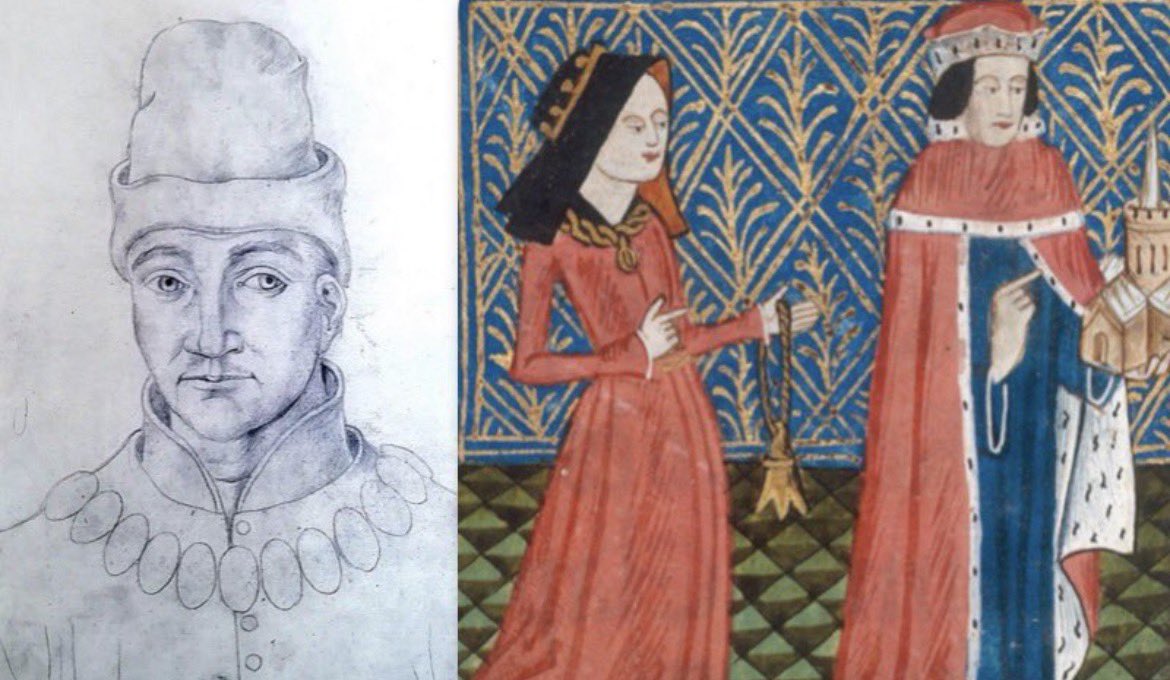

Henry IV became king of England today in 1399.
Shakespeare gave him two plays.
They begin with a panoramic scene: revolt in Wales, a canceled crusade, pilgrims headed to Canterbury, and an act of highway robbery. #Shakespeare #HenryIV


colin morgan reading for prince hal from henry iv, part 1 - act 3, scene 2 in 2011
#colinmorgan #henryiv
🔗: https://t.co/tWfKs22dEu
OTD in 1399 - #RichardII was deposed by Parliament when the Archbishop of Canterbury read out a statement from him acknowledging his unsuitability to rule. It is doubtful this was with Richard’s consent, but far more interesting is that his successor #HenryIV was elected by Parliament the following day.
Henry was the first Lancastrian King. He was Richard’s cousin, had previously been one of the Lords Appellant (the nobles who had resisted Richard’s rule in the 1380s) & had become the central figurehead of opposition to Richard following the King’s decision to confiscate the Lancastrian estates on the death of Henry’s father, John of Gaunt, in February 1399. But he wasn’t Richard’s heir presumptive. That was another cousin Edmund Mortimer, Earl of March.
However, March was a boy of 7 whereas Henry was the most popular & capable English noble of his generation - a tournament champion, renowned crusader, father of four sons & a skilled orator. In short, he was the obvious choice of replacement king.
Confident in his own popularity, it was Henry himself who insisted on Parliament’s central role in Richard’s deposition & his own accession. In doing so he created an important constitutional precedent, which like Henry himself is often forgotten today.
Last year’s debate about whether #JamesI ‘stole’ the crown of England in 1603 by not necessarily having his predecessor #ElizabethI’s nomination to succeed her overlooks this precedent. Simply put James didn’t need it. For his accession to be legal Parliament’s approval was sufficient. And with or without Elizabeth’s blessing James was always likely to be the English Parliament’s preferred candidate as the most experienced, competent & powerful claimant, similar to Henry in 1399.
An intriguing contrast is with #HenryVII in 1485. It is revealing that Henry VII chose to deliberately schedule his first Parliament for after his coronation on 30 October 1485. Despite his overwhelming victory at the Battle of Bosworth he evidently did not wish to take the risk of Parliament not confirming his legitimacy as King, which points to continuing insecurity about his own position.

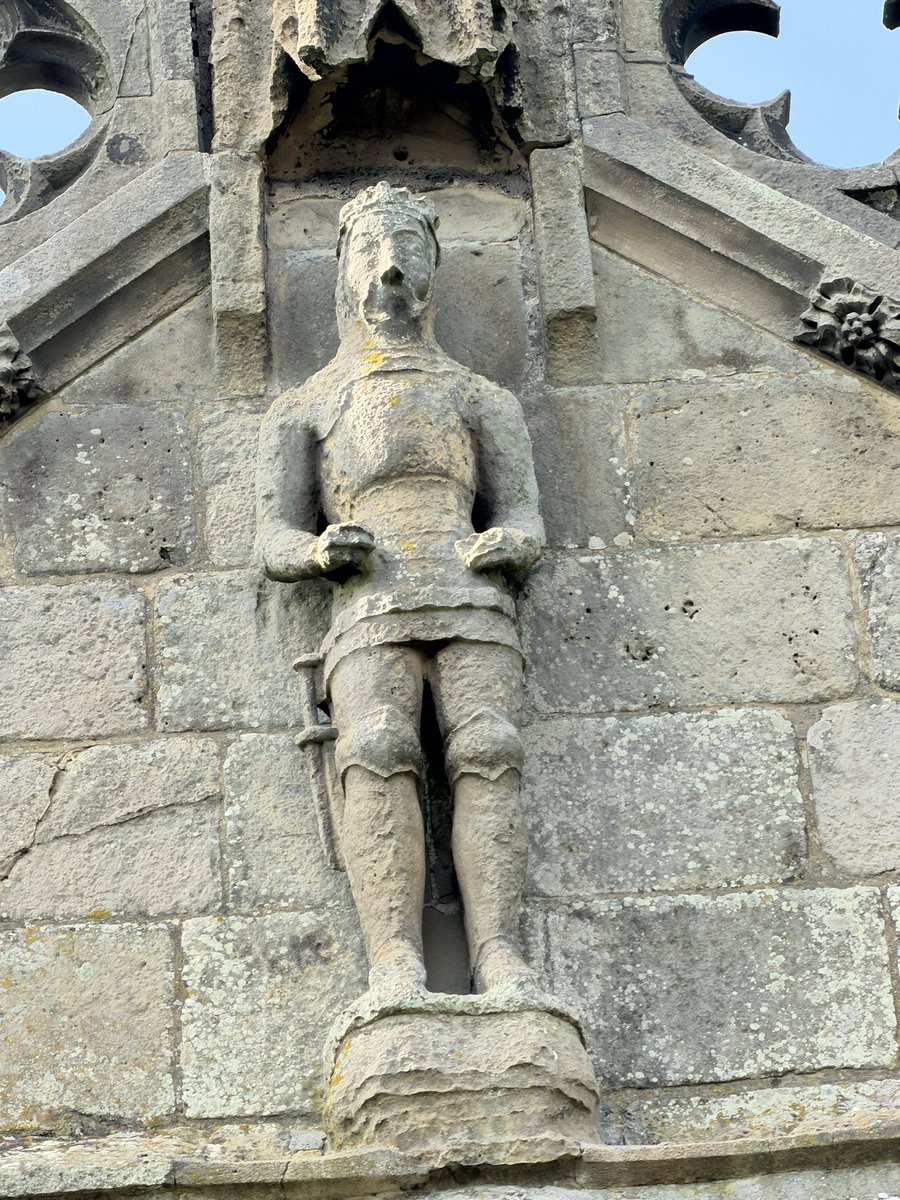
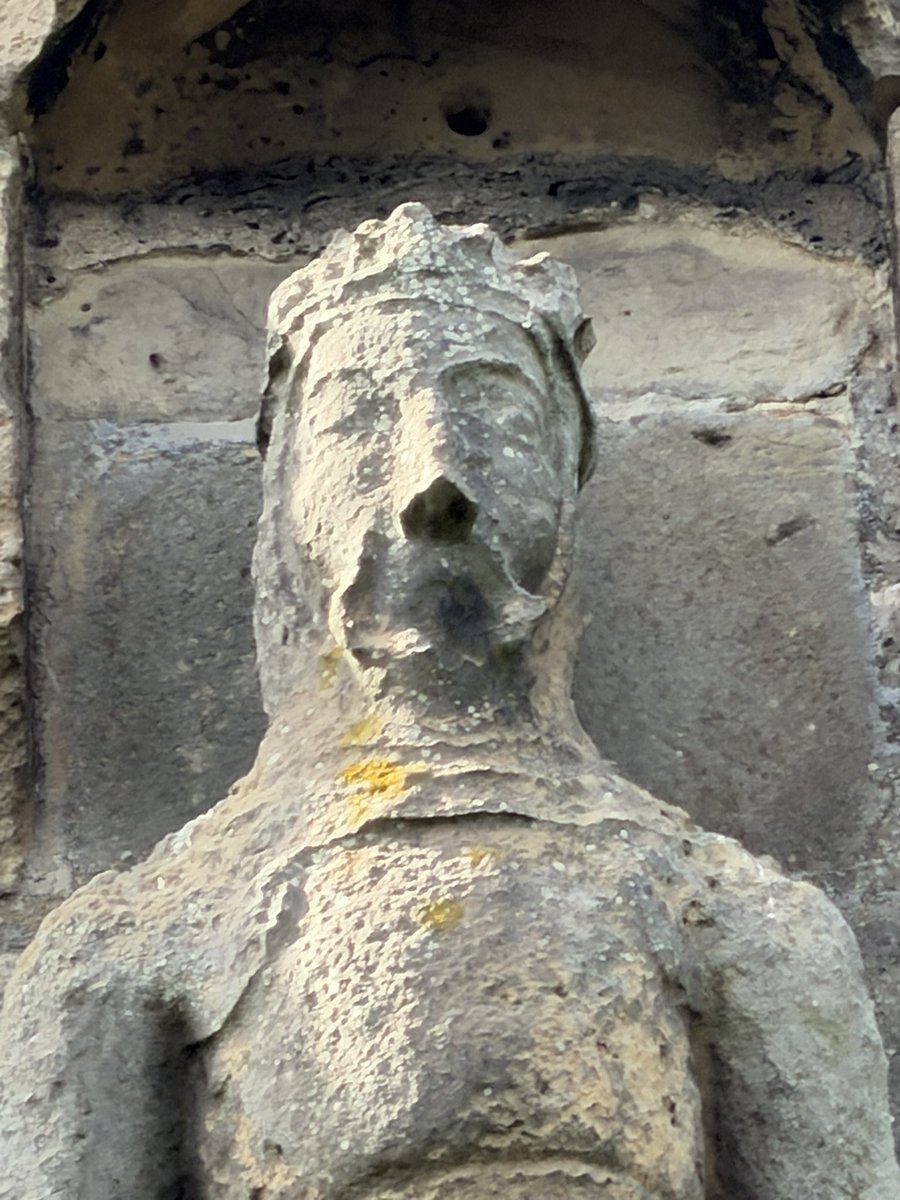
Henry IV, depicted on the church of St Mary Magdalene which was built on the site of the Battle of Shrewsbury (1403) as a chantry chapel to pray for and commemorate the dead. If I was Henry, I would not have been thrilled with this depiction #battleofshrewsbury #henryiv #houseoflancaster #shrewsbury1403

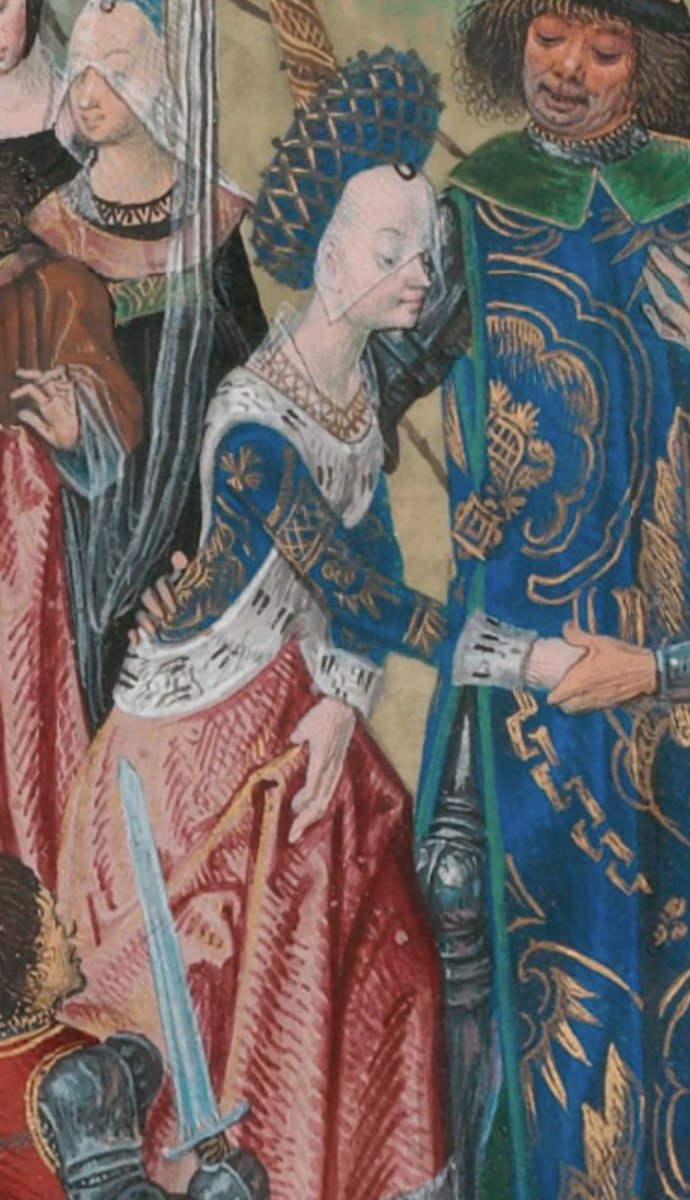
OTD in 1409 - death of Isabella de Valois, 2nd wife of #RichardII. Isabella almost became Queen of England twice as the wife of two different men, when #HenryIV, the Lancastrian King who replaced Richard, attempted to remarry her to his son (later #HenryV.)
Isabella married Richard II in Paris on 31 October 1396, when she was aged only 6 & he was 29. Although the marriage was arranged to establish peace between England & France, Isabella was an odd choice for Richard, a widower without an heir. Canonical law stipulated that the marriage could not be consummated until the bride reached her twelfth birthday. Nonetheless Isabella impressed the English envoys by telling them she was happy to be Queen of England as it would make her a great lady. Her dolls were included as part of her wedding trousseau.
Richard seems to have treated Isabella as the daughter he never had & a close bond of affection developed between them. The little Queen was given her own court & governess at Windsor Castle, made a Lady of the Garter & crowned in 1397. Richard visited her regularly & showered her with gifts & toys.
After Richard’s deposition in 1399 & murder in 1400, the new King Henry IV tried to marry Isabella to his heir who was close in age to her (only a 3 year gap) but Isabella refused & went into mourning for her deceased husband. On 21 July 1401 Henry relented & allowed her to return to France with her jewels & personal possessions. However, he kept her dowry, even though this should have been returned following the non-consummation of her marriage.
In 1406 Henry tried again to negotiate a marriage between Isabella & his son, & again was refused. On 29 June 1406 Isabella married her cousin Charles of Orleans instead, but sadly died in childbirth with their only child Joan of Valois when she was aged only 19 on 13 September 1409.
Henry V would go on to marry Isabella’s younger sister Catherine de Valois in 1420 & through her be recognised as Dauphin of France. Their infant son #HenryVI became King of England & France in 1422 on the deaths of both Henry & Charles VI (Isabella & Catherine’s father.)
OTD in 1368 - Death of Blanche of Lancaster, first wife of John of Gaunt, Duke of Lancaster & mother of #HenryIV. Blanche is often overlooked in favour of John’s mistress & third wife Katherine Swynford, but she was arguably more significant.
Many of you will have heard of Katherine Swynford because her unusual story of mistress to wife was dramatised by historical novelist Anya Seton, & because through her Beaufort offspring she was he great-grandmother to the Yorkist Kings #EdwardIV & #RichardIII through her daughter Joan & great-great grandmother to #HenryVII through her son John. However, Blanche was the root of Gaunt’s power & without her he would not have become as important as he did & there would have been no royal House of Lancaster.
Blanche & her elder sister Maud were the heiresses to Henry of Grosmont, Duke of Lancaster, who was #EdwardIII’s cousin & the wealthiest man in England. Blanche was married to Edward’s third surviving son John of Gaunt in 1359. John gained possession of all the Lancastrian titles & estates following the deaths of Blanche’s father in 1361 & her sister in 1362. This vast landed wealth gave John resources equal if not greater than those of his elder brother, Edward Prince of Wales (the Black Prince) & was the foundation of his unparalleled political power during the reign of the Prince’s son #RichardII.
Blanche & John had seven children, three of whom survived infancy - Philippa, Elizabeth & Henry. Blanche died on 12 September 1368. The cause is disputed with some historians citing the plague & others death in childbirth with a baby who did not survive. John held annual commemorations of her death for the rest of his life. He chose to be buried with her in the magnificent tomb he commissioned in St Paul’s (shown in the image & lost in the Great Fire of London) rather than with either of his two subsequent wives Constanza of Castile or Katherine Swynford.
Gaunt’s retainer the poet Geoffrey Chaucer (who was also brother-in-law to Katherine Swynford) wrote The Book of the Duchess in Blanche’s honour. It depicts the depths of John’s affection & devotion to Blanche by showing a knight mourning a terrible tragedy as John was doing during his own lengthy mourning period for Blanche.
A final thought to ponder, we’re often told that by the Battle of Bosworth in 1485 Henry Tudor & his mother Margaret Beaufort were the sole survivors of the House of Lancaster. This is not strictly true. They were descended from John’s relationship with Katherine Swynford, but there were many surviving Lancastrian descendants of his marriage to Blanche. Notably the royal house of Portugal which descended from Blanche’s oldest daughter Philippa, as well as Emperor Maximilian, who through his mother Isabel of Portugal was also a direct descendant of Philippa, Blanche & John.


#ShakespeareSunday 🌈 ''Hail, many colour'd messenger.''-The Tempest, A4, S1-
#TomHiddleston #HenryIV #TheHollowCrown


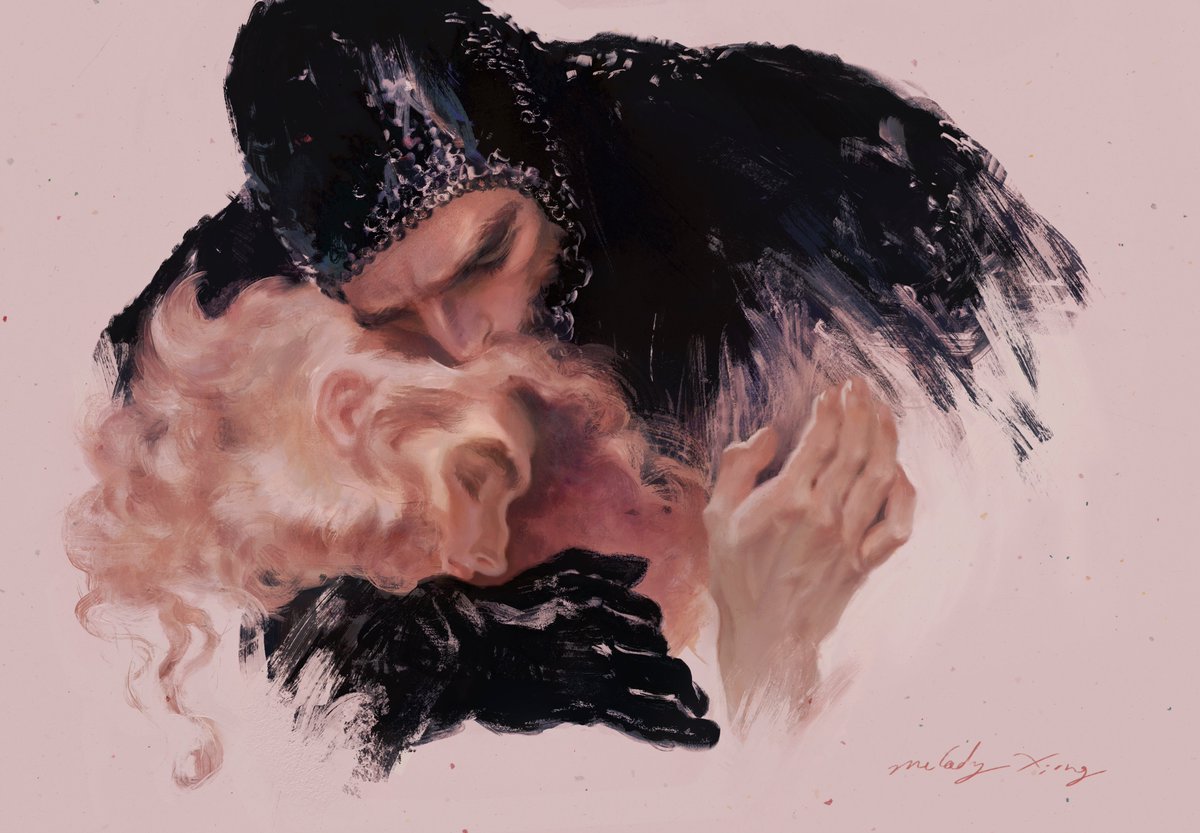
OTD in 1403 - #HenryIV & his sixteen year old son Henry, Prince of Wales (later #HenryV) defeated Henry Hotspur Percy & his uncle Thomas Percy at the Battle of Shrewsbury, securing the future of the Lancastrian dynasty.
The Percies were aggrieved that their support for Henry’s usurpation in 1399 hadn’t translated into the level of rewards they anticipated. Hotspur’s wife Elizabeth Mortimer was also the aunt of Edmund Mortimer, the youth viewed by many as #RichardII ’s heir presumptive in 1399, giving the Percies an alternative option for king, once they fell out with Henry IV. Henry had perhaps unwisely refused the ransom demands for Edmund’s release from the Welsh leader Owain Glyndwr, meaning that the Percies had access to Edmund once they decided to ally with Glyndwr. Although the Welshman did not hear about the advancing armies in time to join the Percies at Shrewsbury.
Shrewsbury was notable for being the first time English longbowmen fought against each other on English soil. The impact of their arrows was devastating, including to Prince Henry, who suffered a severe wound to his face, which left a permanent scar.
The Percies had the best of the archery volleys, but then Hotspur squandered this advantage through a charge which resulted in his own death & a royal victory.

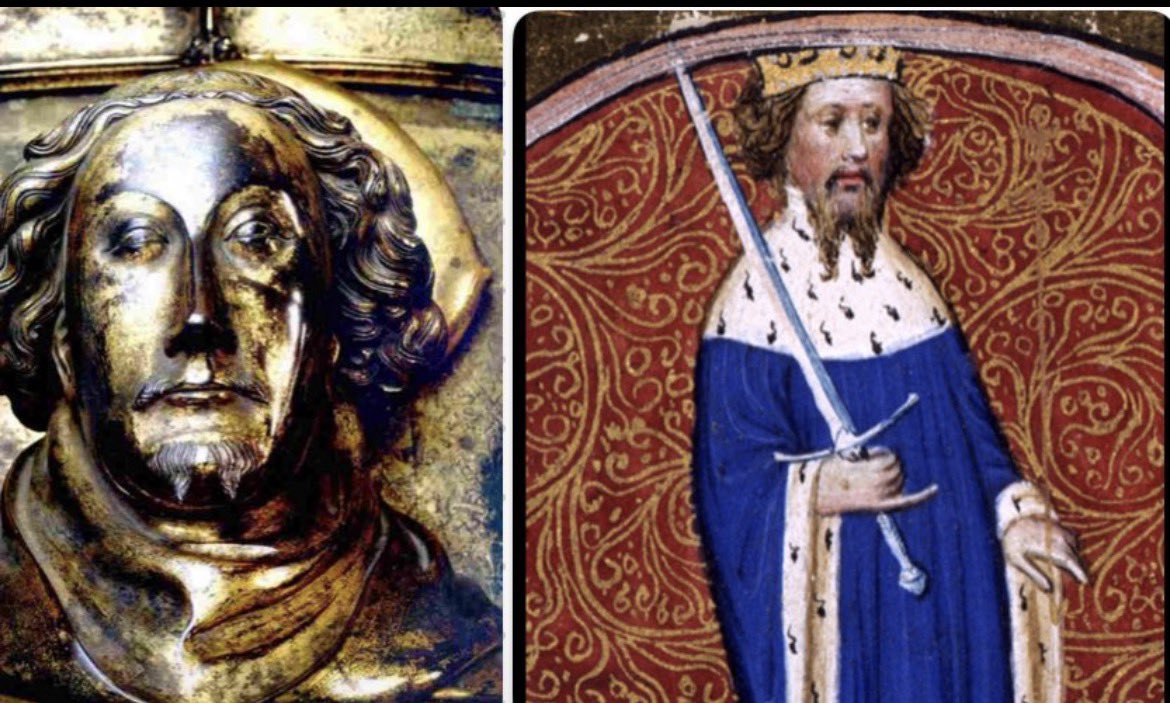
OTD in 1398 - Roger Mortimer, 4th Earl of March was killed at the Battle of Kellistown. March’s death had serious consequences for #RichardII (image) & is important context for Richard’s own deposition in 1399.
As a descendant of #EdwardIII’s second son, Lionel, Duke of Clarence, March was viewed by many as Richard’s heir presumptive. His death left that role to be taken by his son Edmund, who was a boy of only 7 when the crisis of 1399 arrived. This further strengthened the appeal of Richard’s long term rival his cousin Henry of Bolingbroke (later #HenryIV) who was a renowned jouster, crusader & father to four sons.
Richard’s desire to avenge March’s death was also the trigger for his Irish campaign, which meant he was out of the country when Henry landed at Ravenspur to reclaim his inheritance in the summer of 1399. It wouldn’t be long before Henry’s return developed into a bid for the crown.
The #WarsoftheRoses are often traced back to Henry IV’s usurpation & the passing over of the superior claim of the Mortimers. This claim was inherited by Richard, 3rd Duke of York from his mother Anne Mortimer, who was the daughter of the Roger Mortimer.
However, there was nothing inevitable about the conflict & the Mortimer claim could have lapsed into history in other circumstances. Henry IV & Henry V were both successful Kings of England, with the latter even making good the Plantagenet claim to the throne of France.
Instead, the Wars of the Roses were caused by the ineptitude of Henry VI. The combination of the loss of the Battle of Castillon & Henry’s own mental collapse in 1453 was a vivid demonstration that the House of Lancaster was no longer the winning prospect it had once been.
It is striking that as late as 1452 York lacked support (even from his close Neville kinsmen) when he brought an army to Dartford demanding a greater role in government & was forced into a humiliating surrender. From 1453 onwards however, York’s appeal rose as Henry’s evaporated. The Neville Earls had also seen an opportunity to ally with York to bolster their own positions in their respective inheritance disputes (Salisbury with the Percies in the north & Warwick with Somerset in Wales) both of which had involved armed skirmishes in 1453.


"I shall hereafter, my thrice gracious lord,
Be more myself."
~ Henry IV Part 1 - Act. 3. Sc. II
#ShakespeareSunday
#HenryIV #thematrix
OTD in 1415 - Philippa of Lancaster, Queen of Portugal, died of the plague. She was the eldest daughter of John of Gaunt & elder sister of #HenryIV.
Philippa was the eldest child from Gaunt’s first marriage to Blanche of Lancaster, & became Queen of Portugal when she wed John I in 1387. In Portugal she is celebrated as the mother of ‘the golden generation’, but in England she is a #forgottenwoman despite being the ancestress of many European rulers & multiple potential claimants to the English throne.
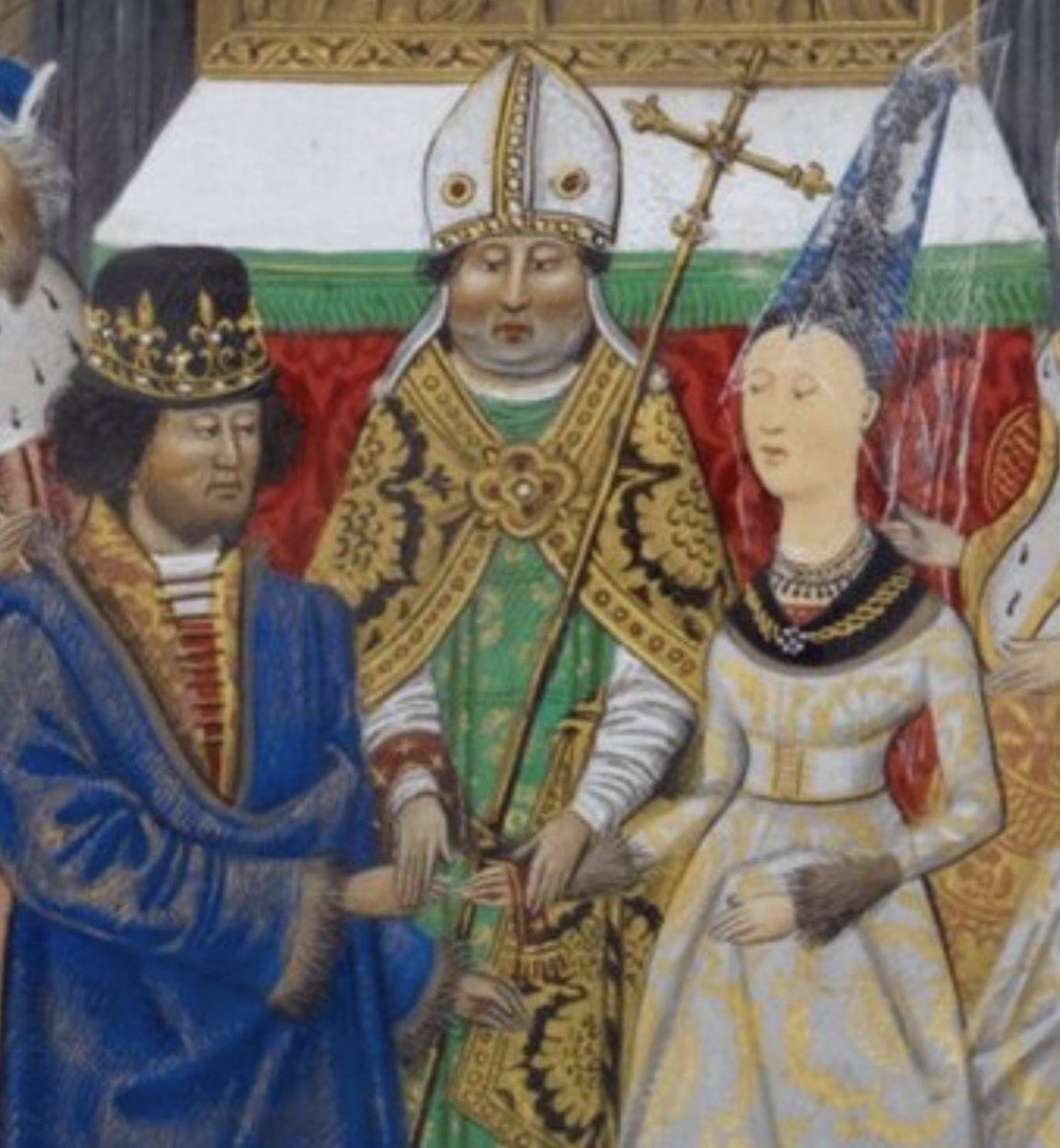
The image depicts Philippa’s wedding to John. Their marriage was the centrepiece of a new alliance between England & Portugal. John wanted to be allied to Philippa’s father, Gaunt, who claimed the crown of Castile in right of his second wife Constanza. If Gaunt had succeeded in becoming King of Castile (which of course he ultimately didn’t) he would have became the most powerful man in the Iberian peninsula.
John was less keen on Philippa herself as a perspective bride. At twenty-seven she was considered an older bride & doubts were raised at the Portuguese court about her potential fertility. She was also reputedly plain in appearance in contrast to John’s longstanding mistress Ines Peres Esteves, who had already given him three children.
However, in spite of these initial doubts the marriage between John & Philippa proved to be a great success. They had eight children & as the years passed John became deeply attached to her. When she died in 1415 he was said to be ‘so grieved by [her] mortal illness... that he could neither eat nor sleep.’
Philippa famously commented that ‘it would be regarded as an indecent thing for a wife to interfere in her husband's affairs.’ But she also enjoyed a strong behind the scenes influence throughout her marriage & is credited with shaping many of her husband’s decisions.
Philippa & John’s children included Edward I, known as the Philosopher King, who ruled Portugal from 1433 to 1438; Henry the Navigator who is credited with launching the Portuguese age of maritime discovery; & Isabella of Portugal who wed Philip the Good, Duke of Burgundy in 1428.
Isabella publicly claimed the crown of England as the ‘universal heiress’ of her cousin #HenryVI after his death in 1471 & the extinction of the direct male Lancastrian line. This was despite Isabella’s son Charles the Bold of Burgundy being the brother-in-law of the Yorkist King #EdwardIV & funding the invasion which had enabled Edward to recover his crown & remove Henry VI.
Through her son Edward the Philosopher King, Philippa was the grandmother of the Habsburg Emperor Maximilian who was the son of Edward’s daughter Eleanor of Portugal. Also through Edward, Philippa was the great-grandmother of Joanna of Portugal, whose hand in marriage as a strong Lancastrian claimant was sought by two successive Kings of England in 1485, #RichardIII & #HenryVII.
Last Seen Hashtags on Sotwe
MOMSON()***************************************
Aparnathomas
Seen from United Arab Emirates
الأردن_يجمعنا
Seen from United States
Erstis
Seen from United States
اختك
Seen from Egypt
milf olgun
Seen from Turkey
agegap
Seen from India
LeGrandDebat
Seen from France
indian
Seen from Pakistan
izmit olgun
Seen from Turkey
Trends for you
Most Popular Users

Elon Musk 
@elonmusk
240.8M followers

Barack Obama
@barackobama
118.7M followers

Cristiano Ronaldo
@cristiano
114.5M followers

Donald J. Trump
@realdonaldtrump
111.9M followers

Narendra Modi
@narendramodi
107M followers

Rihanna
@rihanna
98.7M followers

NASA
@nasa
92.2M followers

Justin Bieber
@justinbieber
91.8M followers

KATY PERRY
@katyperry
90M followers

Taylor Swift
@taylorswift13
84M followers

Lady Gaga
@ladygaga
75.5M followers

Virat Kohli
@imvkohli
73.4M followers

Kim Kardashian
@kimkardashian
70.8M followers

YouTube
@youtube
68.7M followers

Neymar Jr
@neymarjr
66.4M followers

Bill Gates
@billgates
65.2M followers

Selena Gomez
@selenagomez
63.1M followers

The Ellen Show
@theellenshow
62.1M followers

CNN
@cnn
61.7M followers

X
@x
60.6M followers