

Top Tweets for #java japanese

DSA Grind ⚡
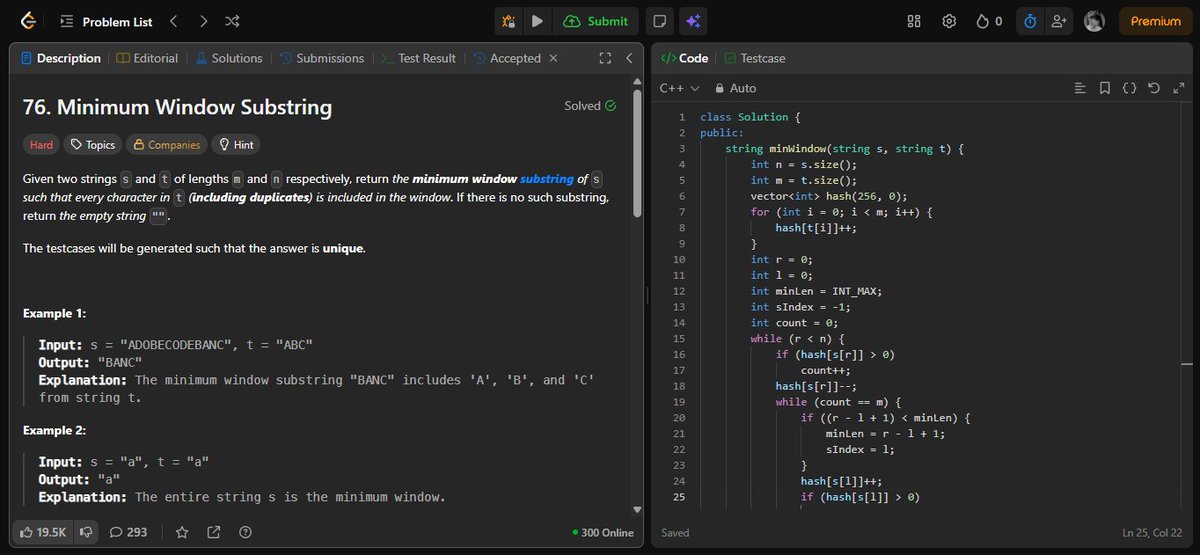
🧩 Longest substring with at most K distinct chars, Subarray with K distinct integers, Minimum window substring & subsequence — all done ✅
📘 Cohort 2.2 wrapped up!
🇯🇵 Japanese grammar revision completed 💪
#100DaysOfCode #DSA #LeetCode #CodingJourney #WebDev #Java




#Java peers...
Please share your vast library of Duke the Java mascot photos...from a conference, posters, artwork, stickers, plushie dolls, etc. I'd love to see what's in your collection! I'll pick one random winner for a special Duke gift. Post away!
#30YearsOfJava

🌎 Calling all #Java enthusiasts!
Participate in the 2025 Jakarta EE Developer Survey. The survey is available in Spanish, Portuguese, Japanese, and Chinese.
Make your voice heard: https://t.co/dRWQ4PxsAw
#opensource #JakartaEE
🚨 The 2025 Jakarta EE Developer Survey welcomes the perspective of Java developers from around the world!
Our survey is available in Spanish, Portuguese, Japanese, and Chinese! https://t.co/FnjxJZquyk
#opensource #JakartaEE #Java
🌎 Calling all #Java enthusiasts! The 2025 Jakarta EE Developer Survey is live—and it's available in Spanish, Portuguese, Japanese, and Chinese.
Make your voice heard: https://t.co/UpHUaWeEXK
#opensource #JakartaEE

Annealing Nuclear Plasma
US SuperComputer Nuclear Bomb Simulation-Breaks The World Record. Featuring
@gp_pulipaka
with
@eelrekab
#BigData #Analytics #DataScience #AI #MachineLearning #IoT #IIoT #PyTorch #Python #RStats #TensorFlow #Java #JavaScript #ReactJS #GoLang #CloudComputing #Serverless #DataScientist #Linux #Books #Programming #Coding #100DaysofCode I
Interviewee: GP
Interviewed by Lee Baker ( @eelrekab).
https://t.co/aY10rRPJDy…
Nuclear explosions are the largest of the large, the and the cause of some of the most cataclysmic calamities in recorded history. The inflammable force of nuclear technology is unrivaled by any other form of human made explosive. Destructive methods such as trinitrotoluene better called as TNT create violent outbursts as a result of chemical reactions between combustible elements such as oxygen and carbon. Nuclear explosions, on the other hand, occur at an atomic rather than a molecular level.
The term ‘nuclear’ refers to the nucleus or center of an atom, which is made up of particles called neutrons and protons. Different elements have different atomic structures. When the number of protons and neutrons in the atoms of an element are balanced, they are considered stable. Uranium expel extra protons and neutrons in a process known as radioactivity.
The road to understanding the explosive potential of nuclear energy began in the late 1780s, when a German chemist discovered uranium. Since then, scientists have uncovered its physics and chemistry, including Marie and Piere’s discovery of uranium’s radioactivity in 1896, Lise Meitner and Otto Frischs’ work on splitting the atom in the early 1900s and Ernest Rutherford’s famous fusion experiments in 1934. Over a century’s worth of research has uncovered that the explosive power of nuclear energy comes in multiple forms: fission and fusion. Although both can lead to immensely powerful explosions, they work in different ways.
Types of Nuclear Warheads Trigger In a similar way to how a trigger fires the bullet of a gun, a fission bomb detonates following the release of an internal explosion that propels a bullet of radioactive material typically a marble of uranium-235, into a subcritical mass of the same material. The result causes a fission reaction and an explosion. Implosion Rather than firing two sources at one another, an implosion bomb uses a central subcritical radioactive source and encases it in highly explosive material. By detonating that explosive material, a shock wave is created that compresses the radioactive source to the point that a fission reaction occurs in protons.
Chain Reaction
Fusion bombs-work in two stages. Firstly, an internal fission bomb detonates causing the release of extreme heat and X-ray radiation. The heat and radiation created from the fission bomb are focused onto a fusion fuel source, which is compressed until a fusion reaction. In Los Alamos National Lab, studying 'Fermi acceleration,' a speed up that happens to the particles in supernovae and solar flares as particles oscillate back and forth they gain speed along the way—acting kind of like pinballs bouncing between bumpers.
The supercomputer scientist wanted to simulate a plasma, the fourth state of matter that’s just a stew of dismembered nuclei and electrons, and see if its pinballs accelerated this way. Scientists don’t explode bombs-with abandon anymore to understand them—as they seemingly did in the early days, turning islands into holes. Instead, they simulate bombs’ statuses, and look back at old videos to try to simulate what they see in supercomputer simulated explosion. Now, in US supercomputers with the help of statistics simulate the trajectories of nuclear explosion instead of bombarding the actual islands. This interview is to show how this happens with machine learning and deep learning.
92% of the buildings in Hiroshima destroyed in nuclear strike annihilation. A nuclear explosion by-way of fission occurs-when subatomic particles neutrons bombarded-with heavy radioactive elements such as uranium or plutonium. This bombardment causes the elements into split atoms, releasing energy and more neutrons as a result of annihilation. A fission chain reaction in-which more neutrons bombard more atoms culminates as a massive explosion, which can either be exploited for generating energy or used in warfare.
Only two nuclear fission bombs have ever been deployed in 1900s against an enemy during the warfare. A bomb known as ‘Little Boy’ was dropped on the Japanese city of Hiroshima and used less than few pounds of uranium-235 to deliver an explosion equivalent to around 15,000 tonnes of TNT. A second attack occurred the same year trialling a new implosion fission bomb called ‘Fat Man’ that used a few pounds of plutonium-239 to release the equivalent of 21,000 tonnes of TNT over the Japanese city of Nagasaki.
Nuclear fusion on the other hand somewhat works in a very different way to a fission reaction. Rather than splitting an atom, fusion forces two atoms of a light element, such as hydrogen, together to form a new element, such as helium. The fusion of these two atoms also releases enormous amounts of energy. Of the nine nuclear-capable countries in the world, six are packing weapons that exploit the immense energy released from nuclear fusion. A hydrogen bomb also referred to as a thermonuclear weapon, converts hydrogen into helium by-way of nuclear fusion to release massive amounts of explosive energy. The first nuclear fusion explosion occurred on the Enewetak Atoll, part of the Marshall Islands in the Pacific Ocean Known as a hydrogen bomb and this unprecedented device unleashed an explosion equal to over ten megatons of TNT, the heat of that could be felt around 30 miles from source.


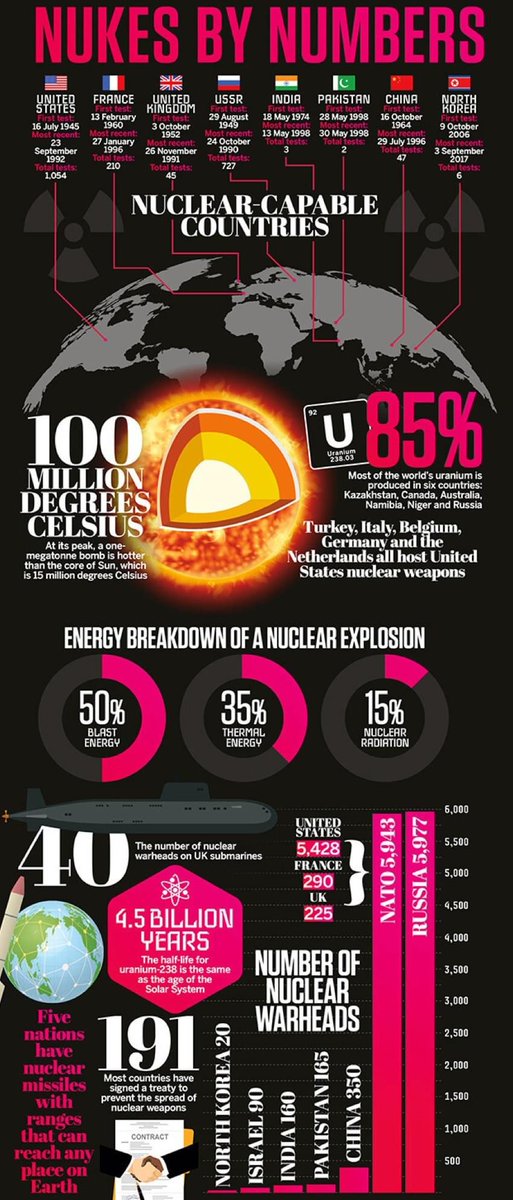


面白そうなので日本語化というのをやってみた!
Translated Java_4_Young_Developers into Japanese
https://t.co/WmBOHgAbqk #java

Fidel is hiring for a #JavaDeveloper – Bilingual Japanese.
Experience: 2+ Yrs
Loc.: Kalyani Nagar, #Pune
Skills: #Japanese level N3, #Java experience, understanding of understanding of unit testing / JIRA or SVN.
Apply here: https://t.co/99fPLVFuDK
#BilingualJavaDeveloperJobs


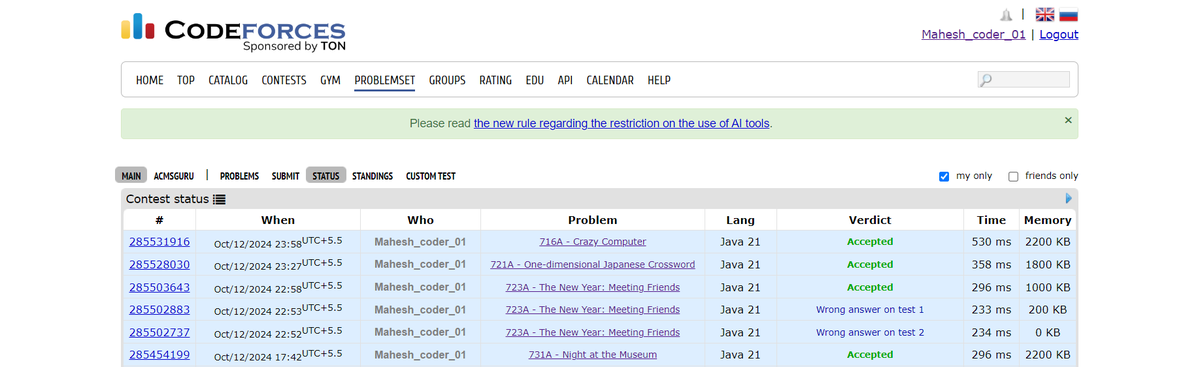
🚀 Codeforces Daily Problem Solves:
✅ 731A - Night at the Museum
✅ 723A - The New Year: Meeting Friends
✅ 721A - One-dimensional Japanese Crossword
✅ 716A - Crazy Computer
Today’s coding grind continues! 💻🔥 #Codeforces #CompetitiveProgramming #100DaysOfCode #Java #LeetCode

This day in history (October 3rd) 1943 Operations begin at PETA Java, defending (Japanese) fatherland #history #pacificwar #ww2 #worldwartwo #java #japan

Scientists Reach Nearly 500000 Gbps or 500 Tbps Internet Speeds Using Fiber from NICT.
#BigData #Analytics #DataScience #AI #MachineLearning #IoT #IIoT #PyTorch #Python #RStats #TensorFlow #Java #JavaScript #ReactJS #GoLang #CloudComputing #Serverless #DataScientist #Linux #Programming #Coding #100DaysofCode
The groundbreaking achievement of Japanese scientists recently showcased the potential for future internet speeds, as they successfully enabled a nearly 500 Tbps connection using off-the-shelf optical fiber.
The research comes from Japan’s National Institute of Information and Communications Technology (NICT), which has partnered with other labs to use existing optical fiber technology to deliver significant speed enhancements.
In March, Aston University in the UK, one of NICT’s partners on the project, achieved internet speeds came closer to this speed over a single standard optical fiber. NICT has since followed up with another test, achieving speeds near to 500 Gbps.
The achievement was made possible by utilizing additional wavelength bands, essentially within the optical fibers to increase the data transmission rate. Specifically, NICT scientists utilized the O-, E-, and S-bands to amplify the data through the tranmissions, whereas the C- and L-bands are typically used for long-haul transmission over fiber networks.
The achievement allowed for a total of 1,505 wavelength channels within the optical bandwidth, with each channel reaching a data rate of over 250 Gbps. When all the wavelengths are combined, the experiment achieved a theoretical near 500 Tbps internet speed over a 50-kilometer water absorption peak suppressed optical fiber.
To utilize the additional wavelength bands, NICT developed several types of doped fiber optical amplifiers, which deploy a small amount of rare earth ions such as erbium, thulium, or bismuth ions. Such amplifiers have significantly boosted the fiber transmission range and enable the amplification of numerous wavelength channels simultaneously," the institute explained.
There is no information available on when NICT would be able to commercialize the technology. The institute has partnered with Nokia Bell Labs and the Hong Kong-based firm Amonics to develop the optical fiber technologies.
https://t.co/qpPbfwVhVZ


The 2024 Jakarta EE Developer Survey closes tomorrow! Our annual survey welcomes the perspective of Java developers from around the world, and is available in Spanish, Portuguese, Japanese, and Chinese: https://t.co/NMgzSBTaKf #opensource #JakartaEE #Java
The 2024 Jakarta EE Developer Survey welcomes the perspective of Java developers from around the world! Our survey is available in Spanish, Portuguese, Japanese, and Chinese! https://t.co/OkKnFzQl9F #opensource #JakartaEE #Java
The 2024 Jakarta EE Developer Survey welcomes the perspective of Java developers from around the world! Our survey is available in Spanish, Portuguese, Japanese, and Chinese! https://t.co/uCCg9le2rr #opensource #JakartaEE #Java

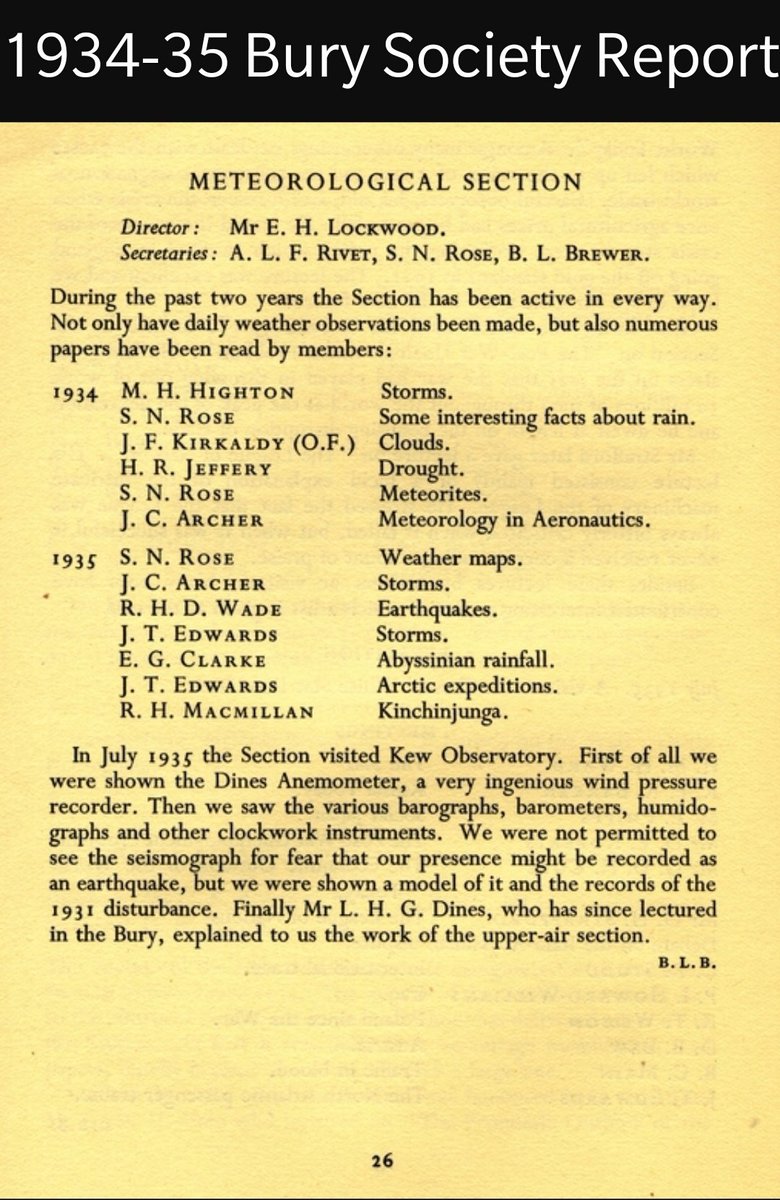
#UK #Essex @FelstedSchool @ArchivesFelsted @stockshouse
HMAS #Perth was sunk in the Battle of the Sunda Strait after the Battle of the #Java Sea against the Japanese #Navy according to the #Australian War Memorial website.
#ANZAC Day remembrance on 25th April
@AWMemorial #anzac

#felsted455 #gardetafoy
Birthday today:
Michael Highton born 15th April 1917 (b 1931-34). Scholar. A member of the Bury Metrological Society monitoring storms. 1932-34. Passed into RN (Special Entry). WWII: Lt RN. KiA on HMAS Perth 28 Feb 1942, aged 24. Mentioned in Despatches
The 2024 Jakarta EE Developer Survey welcomes the perspective of Java developers from around the world! Our survey is available in Spanish, Portuguese, Japanese, and Chinese! 🌐https://t.co/3yd3gUpeIj #opensource #JakartaEE #Java

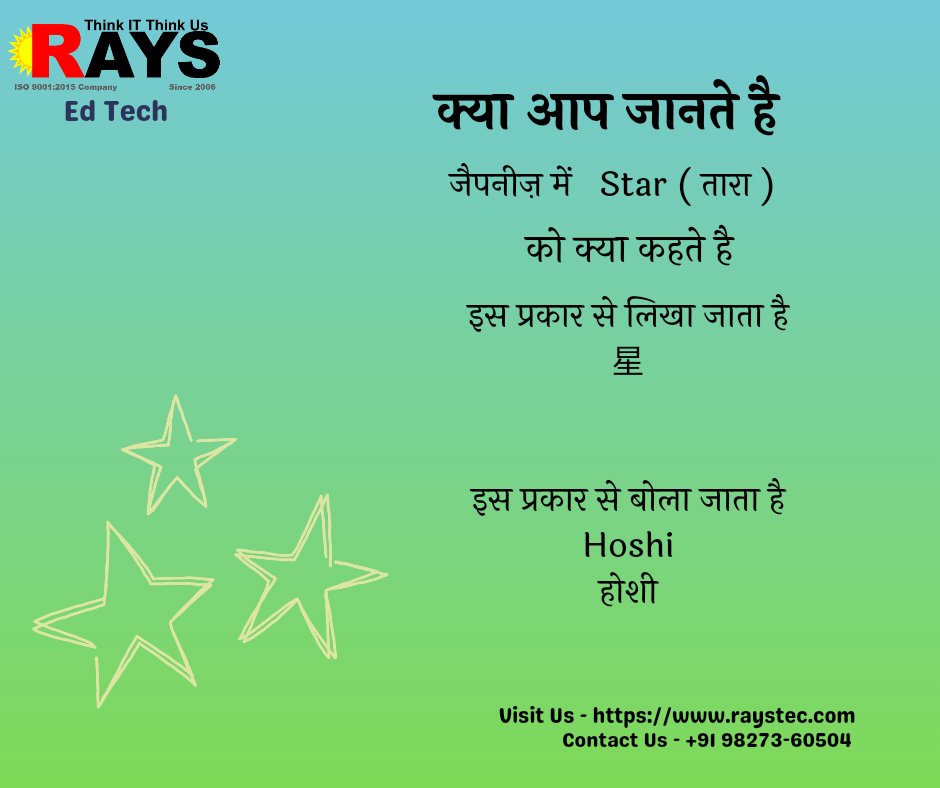
What we Say #Star In #japanese .
Learn Japanese With Us #java #Android #development #developer #TechNews #TechForGood #techno #programming #developers #coder #development #TECHM #CODE #100DaysOfCode #coding #India #fullstack #Newsclick #Technologynews #Japan #javascript
What we Say #strong In #japanese .
Learn Japanese With Us #java #Android #development #developer #TechNews #TechForGood #techno #programming #developers #coder #development #TECHM #CODE #100DaysOfCode #coding #India #fullstack #Newsclick #TechnologyNews #Japan #javascript

What we Say #Watermelon In #japanese .
Learn Japanese With Us #java #Android #development #developer #TechNews #TechForGood #techno #programming #developers #coder #development #TECHM #CODE #100DaysOfCode #coding #India #fullstack #Newsclick #TechnologyNews #Japan #javascript

Last Seen Hashtags on Sotwe
Trends for you
Most Popular Users

Elon Musk 
@elonmusk
241.7M followers

Barack Obama
@barackobama
118.9M followers

Cristiano Ronaldo
@cristiano
114.6M followers

Donald J. Trump
@realdonaldtrump
111.9M followers

Narendra Modi
@narendramodi
107.2M followers

Rihanna
@rihanna
98.7M followers

NASA
@nasa
92.4M followers

Justin Bieber
@justinbieber
91.8M followers

KATY PERRY
@katyperry
90.1M followers

Taylor Swift
@taylorswift13
84M followers

Lady Gaga
@ladygaga
75.5M followers

Virat Kohli
@imvkohli
73.5M followers

Kim Kardashian
@kimkardashian
70.9M followers

YouTube
@youtube
68.8M followers

Neymar Jr
@neymarjr
66.5M followers

Bill Gates
@billgates
65.2M followers

Selena Gomez
@selenagomez
63.1M followers

The Ellen Show
@theellenshow
62.3M followers

CNN
@cnn
61.8M followers

X
@x
60.7M followers