

Top Tweets for #ourintegrity

In case you missed it, yesterday marked the start of the School of Integrity for Emerging Leaders, where young leaders from across Zimbabwe are sharpening their knowledge and skills to champion integrity, accountability, and the fight against corruption.
#SOI2026 #OurIntegrity #OurIdentity #EndCorruptionZW #TIZim

Powerful conversations on integrity, accountability, ethical leadership & anti-corruption systems. One key takeaway: integrity starts with us. ❤️
#SOI2026 #OurIntegrity #OurIdentity #TIZim #EndCorruption
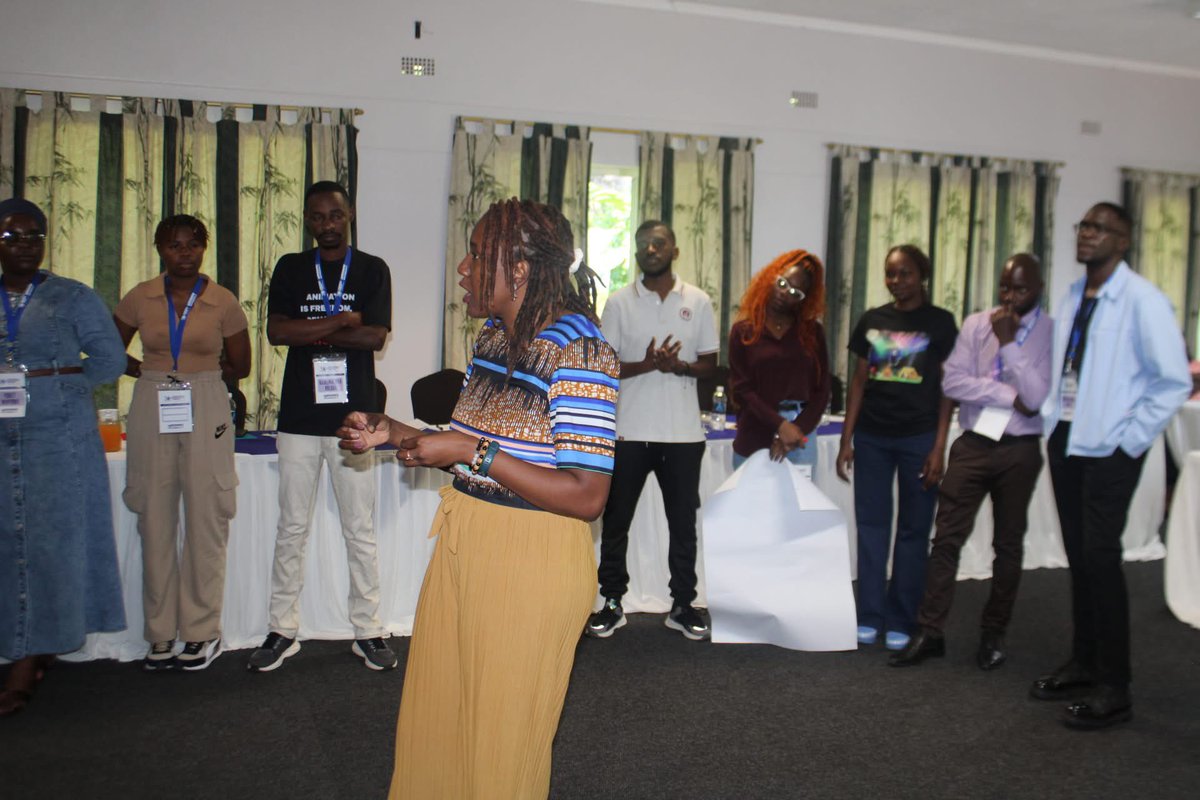


Fighting Corruption requires courage and conviction from young people, it is a hard rocky road that further necessitates team work
The @TIZim_info SOI is on!!! #soi2026 #OurIntegrity #OurIdentity #TIZim30 #EndCorruptionZW #TIZim

The 2026 SOI is on!!! The fellows began their journey to the Vumba Mountains for the 2026 School of Integrity for Emerging Leaders. One bus ride, many personalities. #SOI2026 #OurIntegrity #OurIdentity #TIZim30 #EndCorruptionZW #TIZim
School of Integrity for Emerging Leaders
#SOI2026 #OurIntegrity #OurIdentity #TIZim30 #EndCorruptionZW #TIZim
We are pleased to announce the School of Integrity for Emerging Leaders, Class of 2026.
#SOI2026 #OurIntegrity #OurIdentity #TIZim30 #EndCorruptionZW #TIZim

5 days to go!!!!!
The School of Integrity for Emerging Leaders will close applications on March 31, 2026. Follow the link below:
https://t.co/BHmDyb1ftb
#TIZim #OurIntegrity #SOI2026 #TIZim30 #EndCorruptionZW
Young women carry the heaviest burden of corruption. It limits their access to education, jobs, health services and opportunities.
This Women’s Month, we are calling on young women to step forward and lead the fight for integrity and accountability. Your voice matters. Your leadership is needed.
If you are a young Zimbabwean woman aged 18–30, this is your moment. Join the School of Integrity for Emerging Leaders and be part of a generation that refuses corruption.
Young men are also encouraged to apply and stand alongside women for accountable leadership.
Apply here: https://t.co/DKxZfJX53Y
#TIZim #OurIntegrity #SOI2026 #TIZim30
6 days to go!!!!!
The School of Integrity for Emerging Leaders will close applications on March 31, 2026. Follow the link below:
https://t.co/BHmDyb1ftb
#TIZim #OurIntegrity #SOI2026 #TIZim30 #EndCorruptionZW
7 days to go!!!!!
The School of Integrity for Emerging Leaders will close applications on March 31, 2026. Follow the link below:
https://t.co/BHmDyb1ftb
#TIZim #OurIntegrity #SOI2026 #TIZim30 #EndCorruptionZW

7 days to go!!!!!
The School of Integrity for Emerging Leaders will close applications on March 31, 2026. Follow the link below:
https://t.co/BHmDyb1ftb
#TIZim #OurIntegrity #SOI2026 #TIZim30 #EndCorruptionZW
8 days to go!!!!!
The School of Integrity for Emerging Leaders will close applications on March 31, 2026. Follow the link below:
https://t.co/BHmDyb1ftb
#TIZim #OurIntegrity #SOI2026 #TIZim30 #EndCorruptionZW
8 days to go!!!!!
The School of Integrity for Emerging Leaders will close applications on March 31, 2026. Follow the link below:
https://t.co/BHmDyb1ftb
#TIZim #OurIntegrity #SOI2026 #TIZim30 #EndCorruptionZW

💬 Corruption is not just stealing money — it steals trust, hope, and justice.
#OurIntegrity
#Dignity
#TIZ
#StopCorruption #EthicalLeadership
TI Z Director Tafadzwa Chikumbu unpacked the legal and institutional frameworks guiding Zimbabwe’s anti-corruption efforts, tracing their roots from continental commitments to national implementation. The African Union Convention on Preventing and Combating Corruption (AUCPCC). Adopted in Maputo on 11 July 2003, the AU Convention was Africa’s collective response to rampant political and economic corruption.
49 African countries have signed the Convention, and 43 have ratified it. Zimbabwe signed in 2003 and ratified in 2006.
The Convention established a regional consensus on how African states should act in the areas of:
✅ Prevention
✅ Criminalization
✅ International Cooperation
✅ Asset Recovery
What makes the AUCPCC unique is its mandatory provisions on:
Private-to-private corruption
Transparency in political party funding
It also compels member states to introduce open and coordinated investigations into corruption cases, aiming to uproot corruption in both public and private sectors.
The SADC Protocol against Corruption was adopted by the SADC Heads of State and Government at their August 2001 Summit held in Malawi, making it the first anti-corruption treaty in Africa.
All 16 SADC Member States have ratified the Convention. Zimbabwe signed the convention in 2001 and ratified it in 2004.
The preamble notes the serious magnitude of corruption in the region and its destabilising effects, particularly that it undermines good governance.
The purpose of the Protocol is threefold, namely;
•to promote the development of anti-corruption mechanisms at the national level;
•to promote cooperation in the fight against corruption by state parties; and
•to harmonise anti-corruption national legislation in the region
National Legal Frameworks
Zimbabwe’s commitment to the AU Convention is reflected in its robust legal architecture, which forms the foundation for anti-corruption enforcement.
Key legal instruments include:
Constitution of Zimbabwe (Amendment No. 20) [2013] – guarantees good governance and integrity in public office.
Anti-Corruption Commission Act [Chapter 9:22] – establishes and empowers ZACC.
Prevention of Corruption Act [Chapter 9:16] – outlines offences and penalties for corruption.
Criminal Law (Codification and Reform) Act [Chapter 9:23] – consolidates criminal laws, including corruption-related crimes.
Criminal Procedure and Evidence Act [Chapter 9:07] – provides mechanisms for investigation, prosecution, and evidence handling.
National Institutional Frameworks
Fighting corruption requires coordination across multiple agencies. Zimbabwe’s institutional framework includes:
@ZACConline_ – investigates and refers corruption cases.
@NPAZim – prosecutes corruption-related offenses.
@MoJLPA – provides legal policy direction.
Judicial Service Commission (JSC) – ensures fair and independent adjudication.
Office of the Auditor General – audits public accounts to detect misuse of funds.
@FIUZimbabwe – national agency responsible for detecting, preventing, and combating financial crimes, particularly money laundering (ML), terrorist financing (TF) and proliferation financing (PF). Its mandate includes collecting, analysing, and disseminating financial intelligence to prevent illicit financial activities
@Zimra_11 – prevents tax evasion and illicit financial flows.
Zimbabwe Republic Police @PoliceZimbabwe (PACU) – investigates and enforces anti-corruption laws.
@ParliamentZim (Portfolio Committees) – exercises oversight and accountability on public spending.
#SchoolofIntegrity
#OurIntegrity
#OurIdentity
#EmergingLeaders
![TIZim_info's tweet photo. TI Z Director Tafadzwa Chikumbu unpacked the legal and institutional frameworks guiding Zimbabwe’s anti-corruption efforts, tracing their roots from continental commitments to national implementation. The African Union Convention on Preventing and Combating Corruption (AUCPCC). Adopted in Maputo on 11 July 2003, the AU Convention was Africa’s collective response to rampant political and economic corruption.
49 African countries have signed the Convention, and 43 have ratified it. Zimbabwe signed in 2003 and ratified in 2006.
The Convention established a regional consensus on how African states should act in the areas of:
✅ Prevention
✅ Criminalization
✅ International Cooperation
✅ Asset Recovery
What makes the AUCPCC unique is its mandatory provisions on:
Private-to-private corruption
Transparency in political party funding
It also compels member states to introduce open and coordinated investigations into corruption cases, aiming to uproot corruption in both public and private sectors.
The SADC Protocol against Corruption was adopted by the SADC Heads of State and Government at their August 2001 Summit held in Malawi, making it the first anti-corruption treaty in Africa.
All 16 SADC Member States have ratified the Convention. Zimbabwe signed the convention in 2001 and ratified it in 2004.
The preamble notes the serious magnitude of corruption in the region and its destabilising effects, particularly that it undermines good governance.
The purpose of the Protocol is threefold, namely;
•to promote the development of anti-corruption mechanisms at the national level;
•to promote cooperation in the fight against corruption by state parties; and
•to harmonise anti-corruption national legislation in the region
National Legal Frameworks
Zimbabwe’s commitment to the AU Convention is reflected in its robust legal architecture, which forms the foundation for anti-corruption enforcement.
Key legal instruments include:
Constitution of Zimbabwe (Amendment No. 20) [2013] – guarantees good governance and integrity in public office.
Anti-Corruption Commission Act [Chapter 9:22] – establishes and empowers ZACC.
Prevention of Corruption Act [Chapter 9:16] – outlines offences and penalties for corruption.
Criminal Law (Codification and Reform) Act [Chapter 9:23] – consolidates criminal laws, including corruption-related crimes.
Criminal Procedure and Evidence Act [Chapter 9:07] – provides mechanisms for investigation, prosecution, and evidence handling.
National Institutional Frameworks
Fighting corruption requires coordination across multiple agencies. Zimbabwe’s institutional framework includes:
@ZACConline_ – investigates and refers corruption cases.
@NPAZim – prosecutes corruption-related offenses.
@MoJLPA – provides legal policy direction.
Judicial Service Commission (JSC) – ensures fair and independent adjudication.
Office of the Auditor General – audits public accounts to detect misuse of funds.
@FIUZimbabwe – national agency responsible for detecting, preventing, and combating financial crimes, particularly money laundering (ML), terrorist financing (TF) and proliferation financing (PF). Its mandate includes collecting, analysing, and disseminating financial intelligence to prevent illicit financial activities
@Zimra_11 – prevents tax evasion and illicit financial flows.
Zimbabwe Republic Police @PoliceZimbabwe (PACU) – investigates and enforces anti-corruption laws.
@ParliamentZim (Portfolio Committees) – exercises oversight and accountability on public spending.
#SchoolofIntegrity
#OurIntegrity
#OurIdentity
#EmergingLeaders](https://pbs.twimg.com/media/G2pixbNXwAAjT5N.jpg)
![TIZim_info's tweet photo. TI Z Director Tafadzwa Chikumbu unpacked the legal and institutional frameworks guiding Zimbabwe’s anti-corruption efforts, tracing their roots from continental commitments to national implementation. The African Union Convention on Preventing and Combating Corruption (AUCPCC). Adopted in Maputo on 11 July 2003, the AU Convention was Africa’s collective response to rampant political and economic corruption.
49 African countries have signed the Convention, and 43 have ratified it. Zimbabwe signed in 2003 and ratified in 2006.
The Convention established a regional consensus on how African states should act in the areas of:
✅ Prevention
✅ Criminalization
✅ International Cooperation
✅ Asset Recovery
What makes the AUCPCC unique is its mandatory provisions on:
Private-to-private corruption
Transparency in political party funding
It also compels member states to introduce open and coordinated investigations into corruption cases, aiming to uproot corruption in both public and private sectors.
The SADC Protocol against Corruption was adopted by the SADC Heads of State and Government at their August 2001 Summit held in Malawi, making it the first anti-corruption treaty in Africa.
All 16 SADC Member States have ratified the Convention. Zimbabwe signed the convention in 2001 and ratified it in 2004.
The preamble notes the serious magnitude of corruption in the region and its destabilising effects, particularly that it undermines good governance.
The purpose of the Protocol is threefold, namely;
•to promote the development of anti-corruption mechanisms at the national level;
•to promote cooperation in the fight against corruption by state parties; and
•to harmonise anti-corruption national legislation in the region
National Legal Frameworks
Zimbabwe’s commitment to the AU Convention is reflected in its robust legal architecture, which forms the foundation for anti-corruption enforcement.
Key legal instruments include:
Constitution of Zimbabwe (Amendment No. 20) [2013] – guarantees good governance and integrity in public office.
Anti-Corruption Commission Act [Chapter 9:22] – establishes and empowers ZACC.
Prevention of Corruption Act [Chapter 9:16] – outlines offences and penalties for corruption.
Criminal Law (Codification and Reform) Act [Chapter 9:23] – consolidates criminal laws, including corruption-related crimes.
Criminal Procedure and Evidence Act [Chapter 9:07] – provides mechanisms for investigation, prosecution, and evidence handling.
National Institutional Frameworks
Fighting corruption requires coordination across multiple agencies. Zimbabwe’s institutional framework includes:
@ZACConline_ – investigates and refers corruption cases.
@NPAZim – prosecutes corruption-related offenses.
@MoJLPA – provides legal policy direction.
Judicial Service Commission (JSC) – ensures fair and independent adjudication.
Office of the Auditor General – audits public accounts to detect misuse of funds.
@FIUZimbabwe – national agency responsible for detecting, preventing, and combating financial crimes, particularly money laundering (ML), terrorist financing (TF) and proliferation financing (PF). Its mandate includes collecting, analysing, and disseminating financial intelligence to prevent illicit financial activities
@Zimra_11 – prevents tax evasion and illicit financial flows.
Zimbabwe Republic Police @PoliceZimbabwe (PACU) – investigates and enforces anti-corruption laws.
@ParliamentZim (Portfolio Committees) – exercises oversight and accountability on public spending.
#SchoolofIntegrity
#OurIntegrity
#OurIdentity
#EmergingLeaders](https://pbs.twimg.com/media/G2pijX2WkAAUcTW.jpg)
![TIZim_info's tweet photo. TI Z Director Tafadzwa Chikumbu unpacked the legal and institutional frameworks guiding Zimbabwe’s anti-corruption efforts, tracing their roots from continental commitments to national implementation. The African Union Convention on Preventing and Combating Corruption (AUCPCC). Adopted in Maputo on 11 July 2003, the AU Convention was Africa’s collective response to rampant political and economic corruption.
49 African countries have signed the Convention, and 43 have ratified it. Zimbabwe signed in 2003 and ratified in 2006.
The Convention established a regional consensus on how African states should act in the areas of:
✅ Prevention
✅ Criminalization
✅ International Cooperation
✅ Asset Recovery
What makes the AUCPCC unique is its mandatory provisions on:
Private-to-private corruption
Transparency in political party funding
It also compels member states to introduce open and coordinated investigations into corruption cases, aiming to uproot corruption in both public and private sectors.
The SADC Protocol against Corruption was adopted by the SADC Heads of State and Government at their August 2001 Summit held in Malawi, making it the first anti-corruption treaty in Africa.
All 16 SADC Member States have ratified the Convention. Zimbabwe signed the convention in 2001 and ratified it in 2004.
The preamble notes the serious magnitude of corruption in the region and its destabilising effects, particularly that it undermines good governance.
The purpose of the Protocol is threefold, namely;
•to promote the development of anti-corruption mechanisms at the national level;
•to promote cooperation in the fight against corruption by state parties; and
•to harmonise anti-corruption national legislation in the region
National Legal Frameworks
Zimbabwe’s commitment to the AU Convention is reflected in its robust legal architecture, which forms the foundation for anti-corruption enforcement.
Key legal instruments include:
Constitution of Zimbabwe (Amendment No. 20) [2013] – guarantees good governance and integrity in public office.
Anti-Corruption Commission Act [Chapter 9:22] – establishes and empowers ZACC.
Prevention of Corruption Act [Chapter 9:16] – outlines offences and penalties for corruption.
Criminal Law (Codification and Reform) Act [Chapter 9:23] – consolidates criminal laws, including corruption-related crimes.
Criminal Procedure and Evidence Act [Chapter 9:07] – provides mechanisms for investigation, prosecution, and evidence handling.
National Institutional Frameworks
Fighting corruption requires coordination across multiple agencies. Zimbabwe’s institutional framework includes:
@ZACConline_ – investigates and refers corruption cases.
@NPAZim – prosecutes corruption-related offenses.
@MoJLPA – provides legal policy direction.
Judicial Service Commission (JSC) – ensures fair and independent adjudication.
Office of the Auditor General – audits public accounts to detect misuse of funds.
@FIUZimbabwe – national agency responsible for detecting, preventing, and combating financial crimes, particularly money laundering (ML), terrorist financing (TF) and proliferation financing (PF). Its mandate includes collecting, analysing, and disseminating financial intelligence to prevent illicit financial activities
@Zimra_11 – prevents tax evasion and illicit financial flows.
Zimbabwe Republic Police @PoliceZimbabwe (PACU) – investigates and enforces anti-corruption laws.
@ParliamentZim (Portfolio Committees) – exercises oversight and accountability on public spending.
#SchoolofIntegrity
#OurIntegrity
#OurIdentity
#EmergingLeaders](https://pbs.twimg.com/media/G2piWGYWUAAbOEs.jpg)

We are pleased to announce the School of Integrity for Emerging Leaders, Class of 2025.
#SchoolofIntefrity
#OurIntegrity
#OurIdentity
#EmergingLeaders


@CathyJoeGPT @wickedwone @Jim_Jordan #RepReps failed US. #IrrefutableTruth.
They lack objectivity & humble pie:
They bought story that Greatness was America & forgot the #Goodness qualifier.
@GOP are Great #Traitors who willingly kill w. zeal so Great, they sold America’s Greatest Asset to #TheEnemy: #OurIntegrity.




-Being Yourself..
-Being Joyful..
-Being Honest..
-Being Hopeful..
#OurFuture #OurValues #OurIntegrity
#Blessed&Grateful.🙏😇


Applying highest integrity towards creating your dream home. #OurIntegrity #FulfillingDreams #DreamHome #HebronProperties



#JuryDuty Today... the Destiny or fate of others are #Counting upon #OurIntegrity.. #Praying for Divine Decisions....

Last Seen Hashtags on Sotwe
schooluniform
Seen from United Kingdom
saoアニメ
Seen from United States
BaiLu
Seen from Greece
FractionalPropertyOwnership
Seen from United States
DoggyStyle
Seen from Indonesia
jasonluv
Seen from Pakistan
mlm
Seen from United States
นายแบบ
Seen from Thailand
utamu
Seen from Netherlands
Hooped
Seen from United Kingdom
Most Popular Users

Elon Musk 
@elonmusk
241M followers

Barack Obama
@barackobama
119.2M followers

Cristiano Ronaldo
@cristiano
112.1M followers

Donald J. Trump
@realdonaldtrump
111.8M followers

Narendra Modi
@narendramodi
107.1M followers

Rihanna
@rihanna
98M followers

NASA
@nasa
92.2M followers

Justin Bieber
@justinbieber
91.2M followers

KATY PERRY
@katyperry
88.5M followers

Taylor Swift
@taylorswift13
82.4M followers

Lady Gaga
@ladygaga
73.9M followers

Virat Kohli
@imvkohli
71.2M followers

Kim Kardashian
@kimkardashian
70.2M followers

YouTube
@youtube
68.7M followers

Bill Gates
@billgates
64.3M followers

Neymar Jr
@neymarjr
64M followers

The Ellen Show
@theellenshow
62.4M followers

CNN
@cnn
61.8M followers

Selena Gomez
@selenagomez
61.6M followers

X
@x
60.8M followers