

Top Tweets for #polyphase

Kestówv Wave CPU scheduler:
Polyphase Concurrency/ temporal scheduler.
Kestówv's cpu scheduler changes how the processor functions. In AC systems and electrical grid, transformers and motors are Concurrent circuits that are balanced.
The original polyphase system was 2 phases. Here is the math to control your processor like a transformer or motor.
Quad core:
Bank A core 0&1 90° phase offset
Bank B core 2&3 90° phase offset.
Bank A & B 180° phase offset.
The phase rotation is tied directly to the Processor's clock cycle.




Below is a list of some national, international, global and local observances for July 10, 2026:
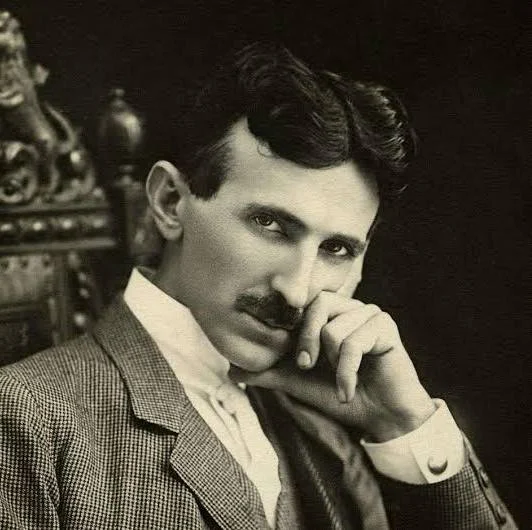
Nikola Tesla Day (July 10) commemorates the birthday of the visionary inventor (born 1856) whose alternating current system, wireless ideas, and polyphase motors revolutionized electricity and modern technology. Often overshadowed by contemporaries like Edison, Tesla’s story illustrates how groundbreaking genius can be eclipsed by business rivalries and timing, prompting thought on the unpredictable paths of innovation and the enduring debt society owes to eccentric pioneers.
https://t.co/Nyg6w6HJ3X
National French Fry Day (second Friday in July) celebrates the beloved crispy potato strips enjoyed worldwide, often with deals and promotions at fast-food chains highlighting their versatility as a side or snack. One intriguing fact is that while Belgians claim invention in the late 1600s—when frozen rivers forced them to fry potato “fish” shapes as a substitute—the dish gained its “French” name in America during World War I because U.S. soldiers heard French spoken by Belgian troops, illustrating how cultural misunderstandings and global conflicts can reshape everyday foods into icons of comfort and shared humanity.
https://t.co/35xx3jbwoZ
National Kitten Day (July 10) celebrates kittens in their first year of life and promotes adoption from shelters, especially during peak “kitten season” when litters flood rescues each spring and summer. Created by animal advocate Colleen Paige as a focused observance on young cats (distinct from but complementary to her earlier National Cat Day), the July date deliberately aligns with the period when shelters see the highest influx of newborns, turning the day into both a celebration of cuteness and a practical call to help manage overpopulation through responsible adoption and spay/neuter efforts.
https://t.co/iUVbVlHhcj
National Piña Colada Day (July 10) invites enjoyment of the creamy, rum-based tropical cocktail blending pineapple, coconut, and ice, often tied to summer escapism and Puerto Rican heritage where it was proclaimed the official drink. Invented in 1954 by bartender Ramon Marrero at San Juan’s Caribe Hilton Hotel (named for “strained pineapple”), its story reveals how a single inventive mixologist’s creation can encapsulate Caribbean colonial history, tourism booms, and the universal human desire for a sip of paradise amid everyday routines.
https://t.co/LJrRV9s2Uj
National Motorcycle Day (second Friday in July) recognizes riders’ passion for the open road, community bonds, and charitable contributions, encouraging group rides, safety awareness, and appreciation for the industry’s positive societal impact. Sponsored by Dairyland Insurance since around 2016, it highlights motorcycles as symbols of freedom and fellowship while prompting thought on how two-wheeled travel fosters both personal adventure and collective responsibility in an increasingly car-dominated world.
https://t.co/uADrIL37v5
Collector Car Appreciation Day (second Friday in July) raises awareness of automotive restoration, collecting, and the cultural-economic role of classic vehicles through car shows, cruises, and educational events backed by SEMA and congressional resolutions since 2010. It celebrates how these machines have inspired music, film, fashion, and innovation while inviting reflection on technology’s dual legacy—progress and preservation—in shaping American identity and skilled craftsmanship across generations.
https://t.co/Nyg6w6HJ3X
Don’t Step on a Bee Day (July 10) encourages mindfulness toward bees and pollinators by urging people to watch their step and support their protection amid habitat loss. Bees pollinate roughly one-third of global food crops, with a single worker bee producing only about 1/12 teaspoon of honey in its lifetime, underscoring the profound interdependence between tiny insects and human survival in an age of environmental strain and agricultural reliance.
https://t.co/CKyrKMI0dN
Teddy Bear Picnic Day (July 10) draws from the whimsical 1907 song “The Teddy Bears’ Picnic,” inviting imaginary or real outings with stuffed bears to spark childhood joy and nostalgia. The teddy bear itself originated from a 1902 hunting incident involving President Theodore Roosevelt, who refused to shoot a tethered bear—transforming a moment of compassion into a global symbol of comfort and innocence that continues to bridge generations through play and storytelling.
https://t.co/zP52avYLJ4
Pick Blueberries Day (July 10) promotes harvesting and savoring fresh blueberries for pies, jams, and healthy eating, celebrating this North American native superfood at peak season. Wild blueberries (especially from Maine, which produces most U.S. wild crops) contain higher antioxidant levels than cultivated varieties, inviting thought on how indigenous plants connect us to seasonal rhythms, biodiversity, and the nutritional wisdom embedded in local ecosystems.
https://t.co/zP52avYLJ4
National Capybara Day (July 10) honors the world’s largest rodent for its famously calm, highly social nature and peaceful coexistence with other animals in both wild habitats and captivity. While capybaras are often photographed tolerantly sharing space with birds, turtles, monkeys, and more—sometimes allowing them to perch on their backs—their most documented caregiving behavior is alloparenting within their own herds, where females commonly nurse and protect each other’s young; their broader internet fame stems more from viral memes highlighting this extreme docility than from routine cross-species “nannying.”
https://t.co/YwHFGMHXxo
Chronic Disease Awareness Day (or Chronic Disease Day, July 10) focuses attention on the global burden of long-term conditions like heart disease, diabetes, and arthritis, advocating prevention, management, and support. Many such diseases stem from intertwined genetic, lifestyle, and environmental factors, highlighting the thought-provoking reality that modern longevity has shifted humanity’s greatest health challenges from acute infections to chronic management—demanding sustained personal and societal commitment.
https://t.co/zP52avYLJ4
Global Energy Independence Day (July 10) promotes reducing reliance on imported fossil fuels through renewables, efficiency, and innovation for greater national and planetary resilience. It underscores how energy sovereignty intertwines with geopolitics, climate stability, and technological progress, inviting reflection on humanity’s pivot from finite resources toward sustainable systems that could redefine security and equity for future generations.
https://t.co/CKyrKMI0dN
Clerihew Day (July 10) honors the humorous four-line biographical poem form (AABB rhyme) invented by Edmund Clerihew Bentley in the early 1900s, often featuring absurd or irreverent takes on famous figures. This lighthearted verse style demonstrates poetry’s power as playful social commentary, encouraging creative critique of authority and celebrity while reminding us that wit can humanize even the loftiest historical names.
https://t.co/LJrRV9s2Uj
Bahamas Independence Day (July 10) marks the 1973 achievement of sovereignty from Britain after centuries of colonial rule across its 700-island archipelago. This transition highlights themes of self-determination and resilience in small island nations, where geography, tourism, and history converge to shape unique identities amid global shifts toward decolonization and independence.
https://t.co/LJrRV9s2Uj
Wyoming Statehood Day (July 10) celebrates Wyoming’s admission to the Union in 1890 as the 44th state, known as the “Equality State” for granting women full voting rights in 1869—decades before the 19th Amendment. This progressive milestone in the rugged American West challenges assumptions about frontier conservatism and invites reflection on how regional experiments in equality can influence national movements for civil rights.
https://t.co/Nyg6w6HJ3X

https://t.co/HN9oRy7Nyp
Fact-checked by Grok 6 hours ago
Nikola Tesla was born on July 10, 1856, in Smiljan, then part of the Austrian Empire, to Milutin Tesla, a Serbian Orthodox priest known for his erudition, polyglot abilities, and love of literature, and Đuka (Georgina) Mandić Tesla, an inventive homemaker who created labor-saving household devices and tools.[14] [15] Milutin, born in 1819 and deceased in 1879, provided a model of intellectual rigor and moral discipline, influencing his son's early education through practical mental exercises and a virtuous example that fostered creativity and perseverance.[16] [17] Đuka, born in 1822 and living until 1892, never formally educated but memorized Serbian epic poems and wove intricate designs, directly inspiring Tesla's inventive instincts by demonstrating practical innovation in everyday mechanics.[12] [11]Tesla's family environment emphasized self-reliance and ingenuity, with his mother's fabrication of appliances like embroidered bags and tools instilling in him a hands-on approach to problem-solving from childhood.[15] His father's priestly role and scholarly pursuits exposed him to languages, poetry, and ethical reasoning, shaping Tesla's disciplined mindset and linguistic skills, which he later credited for his mental visualization abilities.[18] [19] The tragic early death of his elder brother Dane in a horse-riding accident further motivated Tesla to excel, as his parents urged him to achieve for the family's lost potential.[20]From an early age, Tesla displayed exceptional aptitudes in mechanics and science, disassembling his grandfather's clocks to study their mechanisms and experimenting with farm equipment to create simple devices.[21] He demonstrated a prodigious memory and aptitude for mathematics and engineering, applying learned concepts innovatively during home education and later at gymnasium in Gospić, where he excelled academically.[22] [20] These talents, rooted in familial encouragement rather than formal training, foreshadowed his later breakthroughs, as Tesla himself attributed his intuitive grasp of inventions to his mother's example and his father's intellectual stimulation.[20][12]Nikola Tesla
Nikola Tesla (July 10, 1856 – January 7, 1943) was a Serbian-American inventor, electrical engineer, and mechanical engineer renowned for developing the alternating current (AC) electrical supply system.[1][2] Born in Smiljan in the Austrian Empire (present-day Croatia) to Serbian parents, Tesla emigrated to the United States in 1884, becoming a naturalized citizen in 1891.[1][3] He secured approximately 300 patents worldwide for innovations including the induction motor, the Tesla coil, and polyphase AC distribution systems that enabled efficient long-distance power transmission.[4][2]Tesla's early career involved brief employment at Thomas Edison's company, where he improved direct current (DC) dynamos but departed after a disputed bonus, later aligning with George Westinghouse to champion AC against Edison's DC advocacy in the "War of the Currents."[5] His polyphase AC system powered the 1893 World's Columbian Exposition and Niagara Falls hydroelectric plant, establishing AC as the global standard for electrical power.[2] Despite these triumphs, Tesla pursued ambitious but unrealized projects like wireless global communication and power via the Wardenclyffe Tower, leading to financial ruin; he died impoverished in a New York hotel room at age 86.[6] His visionary ideas on radio, X-rays, and turbines foreshadowed 20th-century technologies, though personal eccentricities and disputes over credit—such as with Guglielmo Marconi on radio—marred his legacy amid rivalries.[7]Early Life
Childhood in Smiljan
Nikola Tesla was born at midnight between July 9 and 10, 1856 (by the local Julian calendar, corresponding to July 10 in the Gregorian), in the village of Smiljan in the Lika region of the Austrian Empire's Military Frontier, now part of Croatia.[8][9] His father, Milutin Tesla, served as a Serbian Orthodox priest in the parish, authoring works on Serbian history and poetry while emphasizing education and discipline within the family.[8][10] Tesla's mother, Đuka Mandić Tesla, descended from a line of Orthodox clerics but lacked formal schooling; she demonstrated practical ingenuity by devising household tools, including a mechanical eggbeater and a spindle for weaving, which influenced her son's early interest in mechanics despite the family's modest rural circumstances.[11][9]Tesla was the fourth of five children, with an older brother, Dane (born 1848), and three sisters: Milka, Angelina, and Marica.[12] Dane, regarded as exceptionally gifted and favored by the parents, died at age 12 in a horse-riding accident when Tesla was about five, an event that reportedly caused Tesla profound guilt and emotional distress, as he felt overshadowed by his brother's talents.[12][8] The Smiljan household, centered around the parish rectory, provided a stimulating environment amid the agrarian Military Frontier, where Tesla engaged in outdoor activities like fishing and hiking, fostering his acute observation of natural phenomena such as thunderstorms, which later shaped his views on electricity.[13][9]From an early age, Tesla exhibited prodigious mental faculties, including a near-photographic memory—recalling entire books after one reading—and vivid mental visualizations of objects and mechanisms, which he attributed to innate aptitude rather than formal training.[9] He constructed rudimentary inventions, such as a bug-powered propeller and a waterwheel, drawing inspiration from his mother's devices and the local water-powered mills.[11] These pursuits clashed with his father's expectations for a clerical path, leading to tensions; however, illnesses like cholera at age 9 or 10 honed Tesla's resilience and deepened his introspective tendencies, including episodes of heightened sensory perception that he later described as precursors to his inventive process.[9] Despite the family's Serbian ethnic and Orthodox cultural roots in a multi-ethnic empire, Tesla's childhood emphasized self-reliance and empirical curiosity over rote tradition.[13]Family Influences and Early Aptitudes
Trends for you
Most Popular Users

Elon Musk 
@elonmusk
240M followers

Barack Obama
@barackobama
118.6M followers

Cristiano Ronaldo
@cristiano
114.4M followers

Donald J. Trump
@realdonaldtrump
111.7M followers

Narendra Modi
@narendramodi
106.9M followers

Rihanna
@rihanna
98.6M followers

NASA
@nasa
92.1M followers

Justin Bieber
@justinbieber
91.7M followers

KATY PERRY
@katyperry
89.9M followers

Taylor Swift
@taylorswift13
83.9M followers

Lady Gaga
@ladygaga
75.4M followers

Virat Kohli
@imvkohli
73.3M followers

Kim Kardashian
@kimkardashian
70.8M followers

YouTube
@youtube
68.6M followers

Neymar Jr
@neymarjr
66.3M followers

Bill Gates
@billgates
65.2M followers

Selena Gomez
@selenagomez
63M followers

The Ellen Show
@theellenshow
62.1M followers

CNN
@cnn
61.7M followers

X
@x
60.6M followers