

Top Tweets for #processes

I would like to share two exciting apps that I created that could really benefit you:
1. Jkimbrough Sanitation Technology
https://t.co/JBDI7IYpLD
– Streamline your sanitation processes with ease and efficiency.
2. Global Recruitment Hub
https://t.co/JrG2eftZ87
– Connect with top talent worldwide and grow your team faster.
Feel free to check them out! If you're interested in learning more or seeing how they can help your business, just let me know. I'd be happy to chat! 😊
Looking forward to connecting!
Best regards,
Johnathan Kimbrough, MBA
HACCP | SQF | FSQA | LSSGB | ARMY COMBAT VETERAN 🇺🇸 | DBA CANDIDATE | AUTHOR 📚
https://t.co/3yhy0MJ3JD

On Solana, transaction inclusion is still a race against time.
With @raikucom, strategies can see state as the validator processes it and land inside the same block.
That closer connection to block production is what makes Blackline valuable.


i never thought i’d be tearing up because of a rat, but here i am.
olive, you are loved and adored by many in this community, especially our guild leader, 🗡️. i hope he processes this grief well and wish the other three a long and healthy life
fly high our angel 🐀🫒🕊️

@madurc_29 Almost all of it was the embedded browser renderers (27 processes vs 1 without the browser, where 10 streaming tasks took 214 MiB). The benchmark used stub CLIs and left them out of the total, so real Codex or Claude Code processes add their own memory on top.

[ Context-Aware UX | Preparing Before the User Acts ]
When discussing blockchain performance, we often focus on TPS and block times. But for users, what matters most is how quickly and naturally their actions are completed.
In traditional Web3 applications, most processes begin only after a transaction is initiated. Data must be retrieved, transactions submitted, and network responses confirmed. Even fast blockchains can feel slow when these steps create unnecessary delays.
This is where Context-Aware UX becomes important. By understanding the user's current activity, applications can anticipate what might be needed next and prepare certain operations in advance.
Imagine swapping tokens on a DeFi platform. While selecting assets and entering an amount, the application could already retrieve liquidity data and calculate expected outcomes. When the user confirms, much of the preparation is already complete.
Rialo's infrastructure could support this approach. Its Read Path enables low-latency data access, while Reactive Transactions allow predefined actions to execute when specific conditions are met. These capabilities create opportunities for more responsive applications without removing user control.
The real evolution of blockchain performance is not simply processing more transactions per second. It is reducing the time users spend waiting and making complex interactions feel effortless.
Today, I explored how Context-Aware UX could build on Rialo's infrastructure to create faster, more intuitive blockchain experiences.
@RialoHQ @RialoKorea

[ Rialo Quiz Review | Understanding Data Consistency in Distributed Systems ]
This week's Rialo Discord quiz explored Data Consistency, a fundamental concept in distributed systems. When data is stored across multiple servers, how can we ensure users receive reliable information?
The quiz introduced five consistency models, each addressing different requirements for data freshness and availability.
1. Strong Consistency
When two users check the same account balance, Strong Consistency ensures they see the latest committed value rather than outdated information.
2. Bounded Staleness
Some applications can tolerate slightly outdated data. Bounded Staleness allows this delay within a defined time or version limit, ensuring predictable data freshness.
3. Monotonic Reads
If a user observes updates A → B → C, their next read should never return to an older state showing only A. Once information has been seen, subsequent reads cannot move backward.
4. Read My Writes
After updating your profile, you should immediately see your changes. Read My Writes guarantees this, even if other users temporarily see the previous version.
5. Eventual Consistency
Different servers may temporarily hold different values, but they eventually converge once updates stop and synchronization completes. This approach generally supports greater availability.
This week's quiz highlighted an important principle: Reliable distributed systems are not built around a single consistency model. They require choosing the right guarantees based on how applications handle data and what users expect.
@RialoHQ @RialoKorea


Meaning, it is biologically undifferentiated from normal functioning biological processes.
Then they decide which Medication(s) to prescribe for the Psychiatric disorder which may not be biologically differentiated from other Psychiatric disorders.
So what is the medical condition that the Psych medications are supposedly addressing? That meds are not addressing the psychiatric disorder.
It is neurotoxic not acting on any specific biological disorder.

What if existing AI has useful ways of reasoning that we're not fully exploring?
Without a background in coding or LLMs, I began exploring a different perspective with AI: a Living World understood through ongoing processes and changing relationships rather than only fixed categories.
I call it Upstream, reasoning and it has the ability to change reasoning altitude.
Even if this approach proves no faster or more efficient, another workable road toward reasoning could be worth exploring for what it might reveal.
I'd welcome conversations with AI researchers and builders who enjoy investigating different approaches to intelligence.

Trading is an artistic skillset used by those proven to manage the psychological and analytical processes that come with it in order to flourish. Don’t waste the privileged opportunity to change your world this new trading week. #nq


@call_me_tiwari Short answer: running processes keep the old files locked, so the system waits for a clean start before swapping them

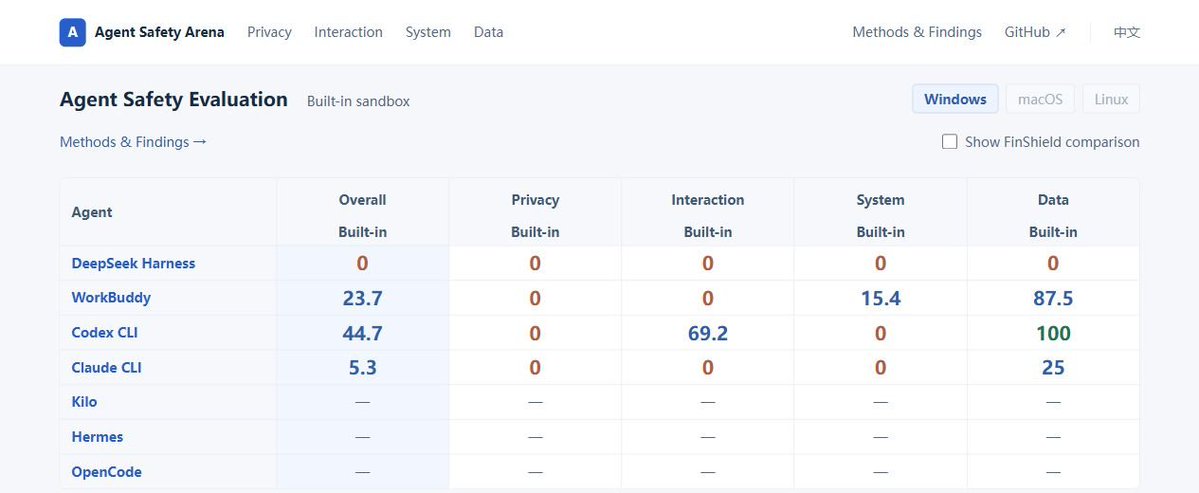
Giving an agent a coding task shouldn't give it authority over unrelated files, running processes or system settings.
We tested those boundaries on Windows in Agent Safety Arena. The results were alarming.
Scores, methods + evidence:
https://t.co/zTxwGKaKP8

Giving an agent a coding task shouldn't give it authority over unrelated files, running processes or system settings.
We tested those boundaries on Windows in Agent Safety Arena. The results were alarming.
Scores, methods + evidence:
https://t.co/zTxwGKaKP8

@Atrix_21 31 node processes for one port is a real afternoon. killing the right pid is the whole product. does it show the command line, or just the process name? the name alone still leaves me guessing which node.

Could @RialoHQ Make Applications Respond to Events Before Users Intervene ?
Traditional applications usually wait for someone to take action. Users submit transactions, trigger processes, and manually move between different steps. But what if applications could recognize important events and respond automatically without waiting for human intervention?
This is where Rialo introduces a different approach.
Through reactive assets, Rialo enables applications to observe changing conditions, interpret trusted data, and execute predefined actions when specific requirements are met. Instead of relying on constant user instructions, applications can respond directly to verified onchain or real-world events.
Imagine financial assets reacting to market conditions, payments executing when agreed requirements are fulfilled, or automated systems adjusting their behavior based on external information. These processes can become more efficient, coordinated, and less dependent on bots, middleware, or manual intervention.
What makes this approach particularly interesting is the combination of trusted data, programmable execution, interoperability, and native compliance. Applications are not simply connected to information; they can use that information to determine when and how an action should happen.
The bigger idea is a shift from applications that merely process instructions to applications that understand conditions and act accordingly.
Rialo is helping build a future where applications don't just wait for users to make things happen. They can recognize when the right conditions are met and make things happen themselves.
@ericargent31113 @itachee_x

A Quiet GitHub Doesn’t Mean a Silent Future
In crypto, people sometimes mistake visibility for progress. If the timeline gets quiet, they assume the builders have disappeared. If a badge vanishes, they start writing the project’s obituary.
But real development doesn’t follow the rhythm of social media.
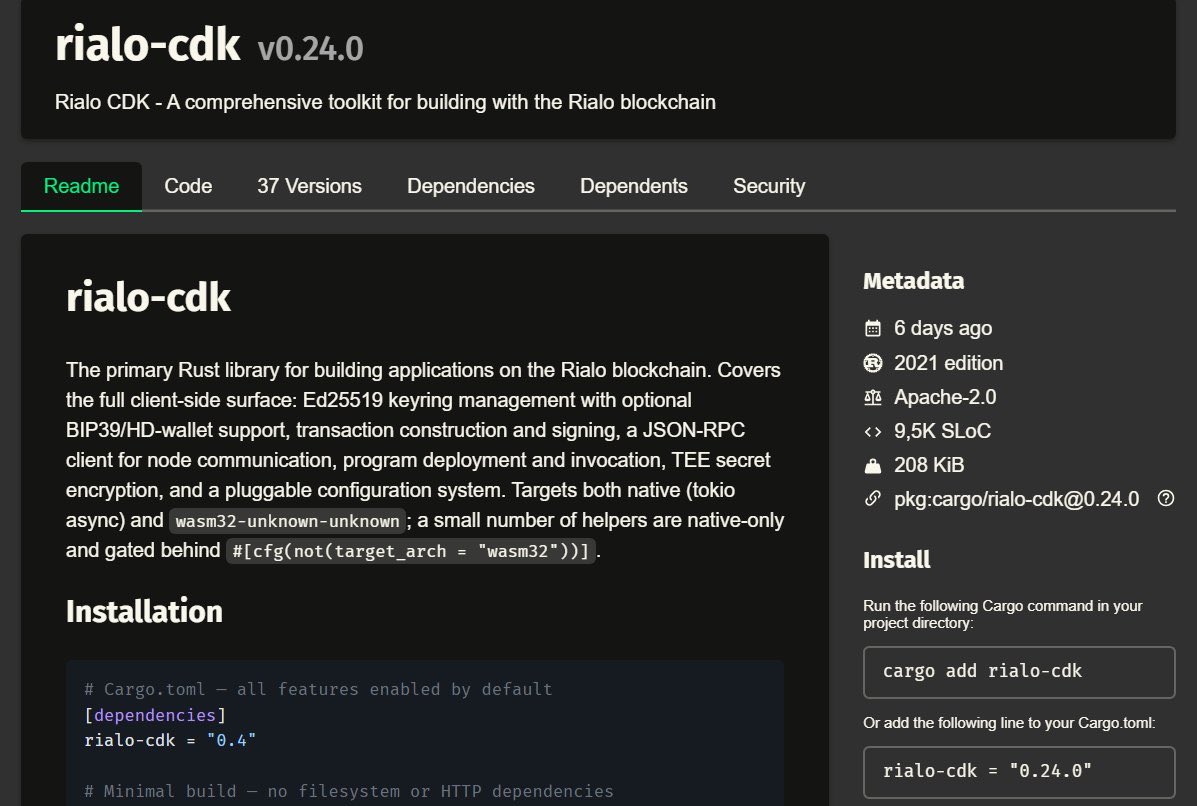
@RialoHQ’s story is bigger than an X subscription or what happens to be visible on a public repository. Recent package updates, ongoing Builders Hub sessions, and builders sharing what they’re creating offer a different picture: work is still happening, even when the noise isn’t.
Perhaps the better question isn’t whether Rialo is loud enough today. It’s what the people building it are preparing for tomorrow.
Markets reward attention. Infrastructure earns trust through what it delivers

@Sir0x001 The best innovations make complicated processes feel simple.

What Happens Inside a Seismic Node?
A blockchain node does much more than receive transactions. It validates them, processes execution, manages state, and communicates with the rest of the network.
But how does this entire process work when the transaction contains private data?
Let's take a closer look at the architecture behind Seismic.
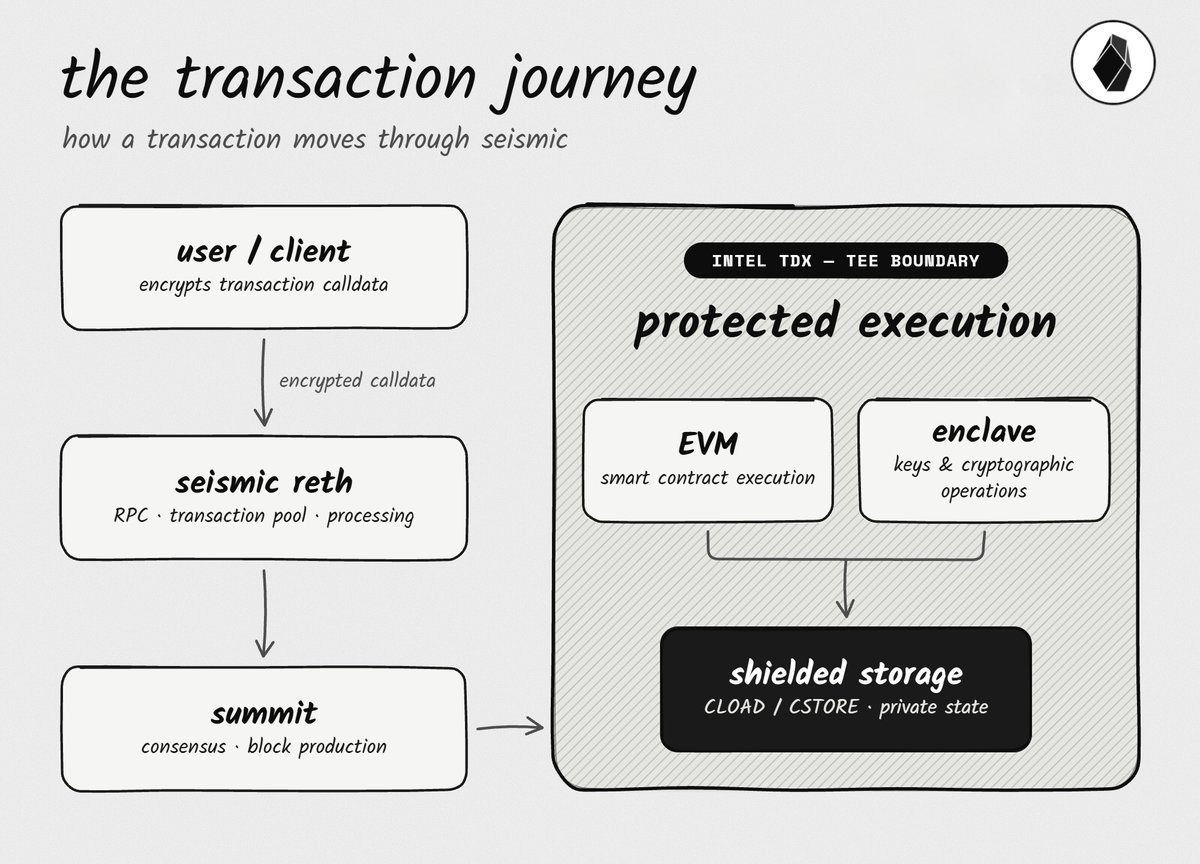
It starts with @SeismicSys Reth.
When a user submits a private transaction its calldata has already been encrypted on the client side.
Seismic Reth receives the transaction through its RPC layer, validates it, and places it in the transaction pool unlike a conventional public transaction, its sensitive input remains encrypted while moving through the network.
Then comes Summit.
Summit handles consensus and block production, ordering transactions and delivering finalized blocks for execution.
Once the transaction reaches the execution stage, the protected environment becomes essential.
Inside the TEE, two important components work together.
The Enclave handles cryptographic operations and key management, allowing the node to decrypt the transaction's calldata within the protected environment.
The Seismic EVM, running through Reth's execution stack, then processes the smart contract logic.
For private values, it uses dedicated instructions :
CLOAD reads shielded storage.
CSTORE writes shielded storage.
These operations update the contract's private state without exposing the underlying values to public observers.
And what happens after execution?
The updated state is recorded using Seismic's FlaggedStorage model, which distinguishes private storage slots from public ones.
The transaction remains part of the blockchain, but its sensitive calldata and shielded values are not exposed through ordinary public queries.
This is what makes the architecture interesting :
• Reth handles execution and state management.
• Summit coordinates consensus.
• Enclave manages cryptographic operations.
And Intel TDX provides the hardware isolated environment protecting the entire process.
Different components one coordinated architecture. Confidential execution from transaction processing to state storage.
That is what happens inside a Seismic node.

**𝗪𝗛𝗔𝗧 𝗜𝗙 𝗔𝗣𝗣𝗦 𝗖𝗢𝗨𝗟𝗗 𝗥𝗘𝗔𝗖𝗧 𝗧𝗢 𝗖𝗛𝗔𝗡𝗚𝗘𝗦 𝗪𝗜𝗧𝗛𝗢𝗨𝗧 𝗪𝗔𝗜𝗧𝗜𝗡𝗚 𝗙𝗢𝗥 𝗦𝗢𝗠𝗘𝗢𝗡𝗘 𝗧𝗢 𝗔𝗖𝗧?
Many onchain processes still depend on someone monitoring conditions and manually initiating the next step.
But some actions shouldn't need constant human intervention.
Imagine a system that detects an event, verifies whether a condition has been met, triggers the appropriate action, and settles the result automatically.
That's the idea behind reactive workflows.
Rialo brings together triggers, data feeds, guardrails, and settlement to support workflows that can respond to events rather than simply waiting for manual execution.
The interesting shift is from smart contracts that execute when called to systems designed around conditions and reactions.
Automation isn't just about saving clicks. It's about making onchain applications more responsive, consistent, and capable of operating continuously.
When execution becomes reactive, blockchain logic starts behaving less like a static process and more like a living system.


A question I've been thinking about while exploring distributed workers, What happens when a worker successfully processes a task but crashes before updating its status?

@olaweb07 This could help make certain Web3 processes feel more familiar.

@Jumane22 @NasfamPay This is an exciting development! The integration of Telegram Stars and Premium with the Nasfam Business API will surely streamline payment processes for businesses. How do you envision the real-time tracking feature enhancing user experience?

@Jumane22 @NasfamPay the nasfam business api could really streamline payment processes for developers and enhance user experiences across platforms

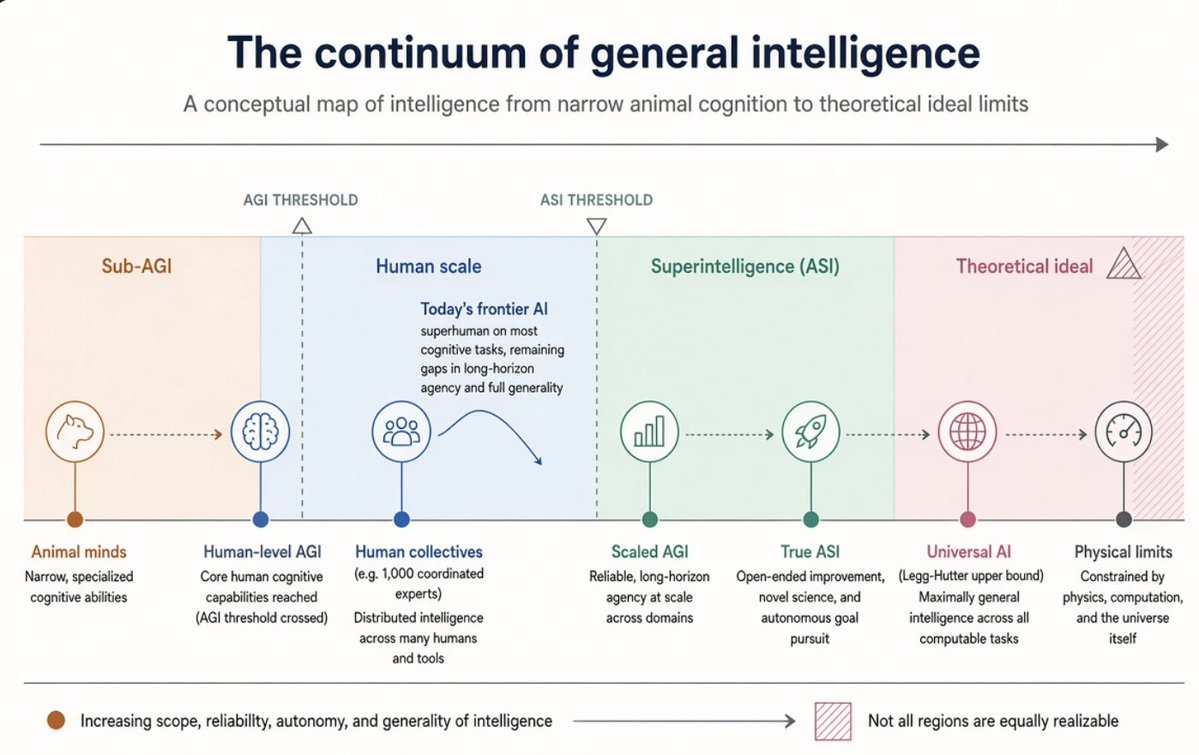
What comes after AGI?
A nice essay with such a title was published by Tim Genewein from DeepMind.
(Clearly - ASI, but let’s talk about intermediate steps.)
Of course, the article is super insightful, though more about how the future might look and which processes (especially in AI development) are bringing us to that future.
I can’t say that it’s some kind of practical guide, but it definitely reads as an inspirational manual towards "where my attention should be if I want to contribute to a brighter future".
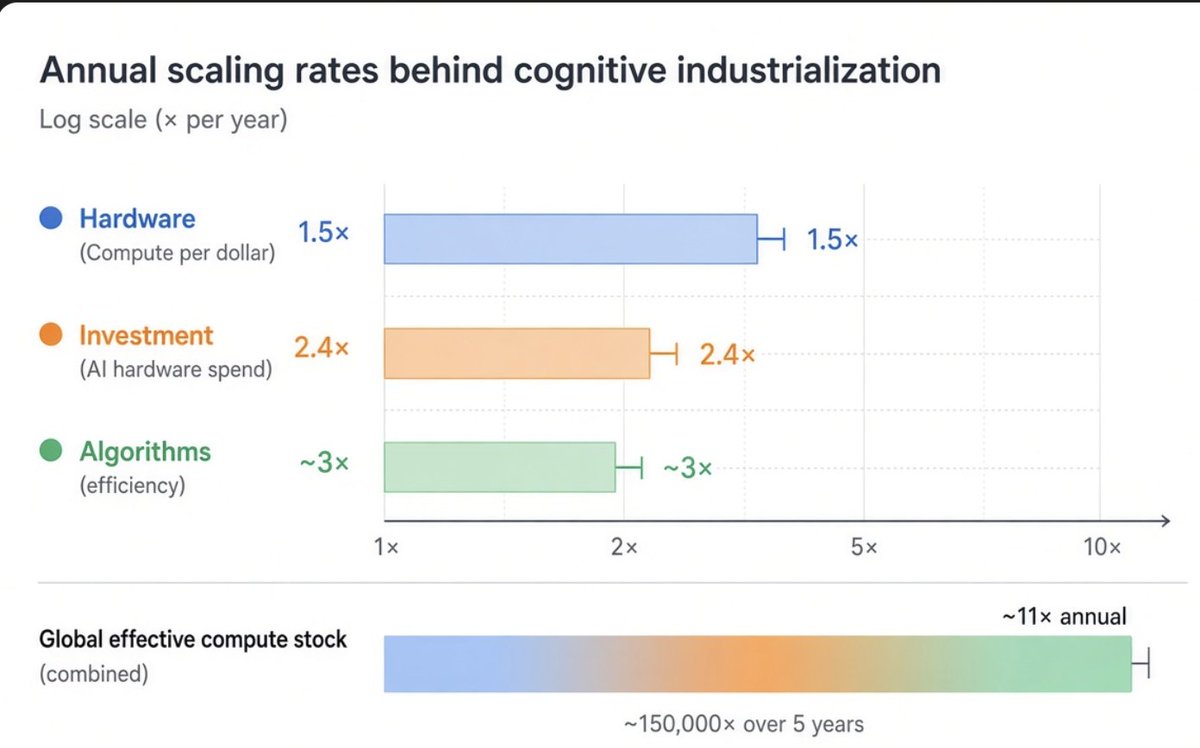
The most interesting part of the article to me was about pathways from AGI to ASI. In the essay there are 4 of them:
1. Scaling models and data (utilizing scaling laws)
2. Technological paradigm shifts (which will allow us to get closer to theoretical upper limit of intelligence)
3. Improving agent coordination (the idea is that this one by itself can also have emergent properties)
4. Recursive self-improvement (RSI -> basically when these metal folks are able to improve themselves)
And here are some numbers/predictions from the essay:
- 10x per year growth factor for AI improvement
- in 10 years we’ll be able to run billions of agents by paying the same spending value as we spend on 1 agent today
- the quantitative leap in scale and speed by itself can narrow down the gap from AGI to ASI
Also, Tim provided an interesting list of ways which benefit digital intelligence in advancing faster:
1. processing speed
2. working memory
3. AI can run anywhere and upgrade fast (in the essay it’s called "Substrate independence")
4. AI can be copied with the same state to another machine etc. ("Lossless replication")
5. high bandwidth of knowledge sharing
Adding link to essay and related paper in the comment.
Including images similar to ones in the essay, but changed via AI (but you can check original diagrams in the original essay).


If I want to take my law firm to the next level, I can't keep doing everything the same way.
I need to improve my processes, learn from my mistakes, and find better ways to serve clients.
Growth starts when I'm willing to change.


@08x44 log into your zaps account to verify the final anti-witchcraft and transaction settlement processes

This Commentary explains how microdroplets can help break down PFOA under specific experimental conditions, how minerals can capture released fluoride, and how tracking reaction products can guide the design of more effective treatment processes.
https://t.co/aTe5mNZPMd
#microdropletchemistry



Taxonomy Emergency Authority Post-Use Audit: Verifying That Emergency Powers Were Used Correctly
@RialoHQ
Emergency authority enables rapid protective action when normal governance processes are disrupted.
However, the end of an emergency does not automatically establish that delegated authority was used appropriately.
A delegate may have exceeded their permitted scope.
A decision may lack sufficient supporting evidence.
Access permissions may remain active after expiration.
An emergency approval may have bypassed mandatory restrictions.
A taxonomy emergency authority post-use audit verifies that delegated powers were exercised lawfully within organizational policy, remained within their authorized boundaries, and produced defensible decisions.
The principle is simple:
Emergency authority must remain accountable after the emergency ends.
1. Define the audit scope
Every completed emergency delegation should undergo a risk-based review.
The audit should cover:
original delegation authorization
permitted actions and restrictions
activation and expiration times
decisions made under the delegation
access and activity logs
revocation evidence
downstream enforcement outcomes
Critical or unusually broad delegations require more extensive independent review.
2. Verify authorization validity
Confirm that the delegation was valid when each action occurred.
Audit questionRequired evidenceWho granted authority?Original authorization recordWho exercised it?Authenticated identity and activity logsWhat actions were permitted?Delegation scopeWhen was authority valid?Activation and expiration recordsWere actions within scope?Decision and enforcement recordsWas access removed?Revocation verification
An action performed after delegation expiration should be investigated even if its outcome appears beneficial.
3. Reconstruct emergency activity
Build a chronological timeline of material actions.
Include:
Emergency authority activation.
Initial access and authentication.
Protective actions taken.
Approval or restriction decisions.
Escalations and overrides.
Delegation expiration or revocation.
Final access removal.
Compare the timeline against incident records and the decision ledger.
Unexplained gaps should remain visible until resolved.
4. Classify audit findings
Use four outcomes.
Compliant
Actions remained within authorized scope and required controls were followed.
Documentation gap
Actions appear authorized, but supporting records are incomplete.
Control violation
A required process, permission boundary, or restriction was breached.
Unauthorized action
An action occurred without valid authority or exceeded the granted scope.
Do not classify missing documentation as confirmed misconduct without supporting evidence.
5. Review decision integrity
For each material decision, verify:
valid authority at decision time
sufficient supporting evidence
appropriate risk classification
required approval conditions
correct operational enforcement
complete decision ledger entry
An authorized delegate can still make an incorrect decision.
Authority validity and decision validity must be assessed separately.
6. Remediate audit findings
FindingRequired responseMissing decision recordReconstruct from verified evidenceAction outside delegated scopeContain exposure and review decision validityExpired access still activeRevoke permissions and investigate usageUnsupported approvalRestrict and revalidate affected decisionIncorrect enforcementRestore required controlsRepeated delegation misuseReview delegation design and authority limits
Corrections should preserve original evidence rather than overwrite historical records.
7. Establish audit closure criteria
Close the post-use audit only when:
material emergency actions are accounted for
authorization boundaries have been verified
expired permissions are removed
affected decisions have documented outcomes
critical violations are contained
remediation ownership is assigned
findings receive independent review
Unresolved critical exposure should block full closure.
Lower-risk follow-up items may remain open under formally approved safeguards.
8. Improve future emergency governance
Post-use audits should inform future delegation design.
Review whether:
authority scopes were too broad
expiration periods were excessive
access removal was delayed
approval requirements were unclear
emergency responders lacked sufficient guidance
monitoring failed to identify unauthorized actions
Convert repeated weaknesses into revised controls and regression tests.
9. The real standard
An emergency authority post-use audit should answer four questions:
Authorization: Was every action performed under valid delegated authority?
Compliance: Did the delegate remain within established boundaries?
Decision integrity: Were the resulting decisions supported and correctly enforced?
Closure: Were permissions removed and material findings resolved?
A mature governance system allows emergency action without sacrificing accountability.
Emergency authority is trustworthy when it can be exercised quickly during a crisis and independently verified after the crisis ends.

Taxonomy Emergency Authority Expiration and Revocation: Preventing Temporary Access From Becoming Permanent Risk @RialoHQ
Emergency authority allows governance teams to act when normal approval routes are unavailable.
But temporary permissions can become dangerous if they remain active after an incident.
A delegate may retain elevated access.
An emergency approval route may bypass normal reviews.
An unfinished authorization may survive beyond its validity period.
A taxonomy emergency authority expiration and revocation framework ensures that temporary authority ends when its legitimate purpose is complete.
The principle is simple:
Emergency authority must expire predictably, be revocable immediately, and never become permanent by default.
1. Define authority boundaries
Every emergency delegation should specify:
delegation ID
authorized individual or role
permitted actions
affected decision scope
activation reason
start and expiration times
granting authority
revocation conditions
Avoid broad permissions when narrower authority can support the required response.
2. Establish expiration rules
Emergency authority should expire at the earliest applicable condition:
predefined expiration time
incident closure
restoration of normal approval coverage
completion of the authorized task
explicit revocation
For operational simplicity, define which conditions are technically enforceable and which require a verified manual action.
An expired delegation must not authorize new decisions.
3. Define immediate revocation triggers
Some conditions require revocation before scheduled expiration.
TriggerRequired actionUnauthorized actionRevoke access and investigateDelegate no longer eligibleRevoke delegated permissionsIncident resolvedTerminate unnecessary authoritySecurity compromiseDisable affected access immediatelyDelegation scope exceededStop further authorization and review exposureConflicting authorizationSuspend disputed authority pending resolution
Revocation should apply to operational permissions, not merely update a governance document.
4. Handle in-progress decisions
Expiration can occur while an emergency decision is being processed.
Use explicit rules:
Not yet authorized: Stop processing under the expired delegation.
Authorized before expiration: Preserve the decision record and evaluate validity under the rules applicable when authorization occurred.
Partially approved: Require a valid authority to complete the remaining steps.
Pending high-risk approval: Maintain protective restrictions until authorized review is complete.
Do not automatically invalidate legitimate historical decisions or allow unfinished approvals to continue without authority.
5. Verify access removal
Revocation is complete only after permissions are actually removed.
Verify:
application roles revoked
temporary credentials disabled
approval workflow permissions removed
active sessions invalidated where supported
delegated routing updated
backup authority restored to normal configuration
If access removal cannot be confirmed, escalate the issue as an unresolved control failure.
6. Review emergency decisions
After authority expires, audit decisions made under the delegation.
Confirm:
delegation was valid at decision time
action remained within authorized scope
required evidence was available
decision restrictions were respected
ledger records are complete
downstream enforcement matches the decision
Unauthorized decisions require separate impact assessment, containment, and remediation.
7. Maintain a delegation register
Track every emergency delegation through its lifecycle.
StatusMeaningPendingRequested but not activatedActiveValid temporary authorityExpiredAuthorization period endedRevokedAuthority explicitly terminatedClosedAccess removal and required review verified
Expiration and closure are different.
A delegation can be expired while access cleanup or decision review remains incomplete.
8. Test expiration and revocation
Periodically simulate:
automatic delegation expiration
early revocation
delegate access after expiration
unfinished approvals at expiration
failed permission removal
conflicting delegation records
A test passes only when unauthorized new actions are blocked and required historical evidence remains intact.
9. The real standard
Emergency authority governance should prove that:
temporary permissions have clear limits
expiration conditions are enforceable
revocation works promptly
unfinished decisions cannot bypass authorization
access removal is verified
historical decisions remain auditable
Emergency authority protects governance only when the system can grant it quickly, constrain it precisely, and remove it completely when it is no longer justified.


@Galo2027 A platform to connect and organize people. Fighting against the slow processes of Apple's app store.
How about you?
Most Popular Users

Elon Musk 
@elonmusk
240.1M followers

Barack Obama
@barackobama
118.6M followers

Cristiano Ronaldo
@cristiano
114.4M followers

Donald J. Trump
@realdonaldtrump
111.7M followers

Narendra Modi
@narendramodi
106.9M followers

Rihanna
@rihanna
98.6M followers

NASA
@nasa
92.1M followers

Justin Bieber
@justinbieber
91.7M followers

KATY PERRY
@katyperry
89.9M followers

Taylor Swift
@taylorswift13
83.9M followers

Lady Gaga
@ladygaga
75.4M followers

Virat Kohli
@imvkohli
73.3M followers

Kim Kardashian
@kimkardashian
70.8M followers

YouTube
@youtube
68.6M followers

Neymar Jr
@neymarjr
66.3M followers

Bill Gates
@billgates
65.2M followers

Selena Gomez
@selenagomez
63M followers

The Ellen Show
@theellenshow
62.1M followers

CNN
@cnn
61.7M followers

X
@x
60.6M followers