

Top Tweets for #rdeb

$nwbo @alphavestcap
EAGLE:
saturday, June 27, 2026 5:21:41 AM
Andrew Caravello, DO
@andrewcaravello
$NWBO
$INMB
$KRYS
$ABEO
#RDEB #EpidermolysisBullosa #EB
#DCVax #CORDStrom #VYJUVEK #ZEVASKYN
It Is Only a Matter of Time
A Tolerogenic DCVax: the Missing Piece for RDEB, the Durability No Terrain Drug Can Buy, and the Network That Already Holds the Rest
It is only a matter of time.
That phrase titles the documentary about children with epidermolysis bullosa, and it names the truth they live inside. It also names a fact sitting in plain sight. Look at who already holds every piece of the immune solution for recessive dystrophic epidermolysis bullosa, RDEB, and the same small set of names keeps appearing. One web. One hub. Underneath the connections sits one cell, and a sentence almost no one has said out loud.
🏛️ The Regulatory Milestone
On June 23, 2026, INmune Bio reported written alignment from the MHRA on its planned 2026 application for conditional UK approval of CORDStrom, its cell therapy for RDEB. Read the detail INmune disclosed and the thesis of this whole piece is sitting in the regulator's own comments. By the company's account, the MHRA found that the MissionEB data showed meaningful symptomatic benefit in pain and itch, but did not produce durable wound closure or a sustained drop in wound burden once treatment stopped, which the agency itself called a significant limitation, and on that basis the data could support CORDStrom as a chronic or intermittent supportive therapy. Supportive, not durable. CORDStrom is a pooled, off-the-shelf product: allogeneic mesenchymal stromal cells grown from donated umbilical cord and infused into the blood to calm inflammation. It came out of MissionEB, a randomized, double-blind, placebo-controlled crossover trial at Great Ormond Street and Birmingham. The company that just cleared that step holds most of the toolkit for RDEB, and the one piece it has not yet made is the one that turns support into durability.
🕸️ One Web, One Hub
One name ties the web together: Linda Powers. She chairs and runs Northwest Biotherapeutics, NWBO, the company behind DCVax, its dendritic cell cancer vaccine. Powers co-founded Toucan Capital, the fund that decided whether a cell therapy lived or died: the manufacturing.
Toucan solved dendritic cell manufacturing twice. In the United States it ran through Cognate BioServices, which Charles River bought for about 875 million dollars. In the United Kingdom it ran through Advent BioServices and the Sawston plant outside Cambridge. Sawston is not a paper credential. It is an eighty-eight-thousand square foot GMP facility with cleanrooms and cryogenic cell storage, and it runs the Flaskworks closed automated system for dendritic cell production that NWBO acquired in 2020, a Northeastern University spinout it bought from the technical founders and Corning. In March 2023 Advent received a full commercial manufacturing license from the MHRA, one of the first in the country for an autologous cancer vaccine, a commercial license, not a clinical-supply license alone. The same fund took an early stake in INmune Bio, which now owns CORDStrom. Mark Lowdell, INmune's chief scientific officer, carries dendritic cell and NK manufacturing competence from University College London and the Royal Free.
Read that against the pieces a working RDEB program needs and the parts line up. NWBO runs the dendritic cell platform, and in 2024 it took an exclusive license from Roswell Park to Pawel Kalinski's aDC1 maturation technology, the type-1 recipe behind IL-12. INmune holds CORDStrom for inflammation and XPro1595, a dominant-negative TNF drug, for the immune terrain. Lowdell holds the chassis competence. The manufacturing is licensed and running. Three of the four layers of a complete treatment sit inside one network. The fourth is not missing because it is hard to make. There is nothing to build. It is a recipe, and no one has run it for this disease.
🧬 The Disease
RDEB comes from mutations in COL7A1, the gene for type VII collagen, the protein that anchors the outer skin to the layer beneath. Without it the skin shears off under the smallest force. Children blister, scar, fuse their fingers, and live in chronic pain. Then the disease shows its worst face. In severe generalized RDEB, aggressive squamous cell carcinoma becomes the leading cause of death in early adulthood. The skin that cannot hold itself together also stops policing itself for cancer.
🧱 Restoration Is Real, and the Wall Moved
Two approved therapies put C7 back. Krystal Biotech makes VYJUVEK, a redosable topical gene therapy carried in a herpes simplex vector, reapplied as the skin turns over. Abeona makes ZEVASKYN, a one-time graft of gene-corrected skin. Both deliver the missing collagen. Neither answers the harder question.
The question is tolerance. Some RDEB patients carry antibodies against C7 before any treatment, and gene therapy can raise them. The body sees the restored protein as foreign and moves to reject it. Put the collagen back and the immune system can erase the correction. That is the wall. You can deliver the protein as many times as you like; if the immune system refuses to accept it, durable repair never arrives.
🧩 The Missing Piece: a Tolerogenic DCVax
Dendritic cells do more than carry antigen. They assign meaning. A naive T cell needs three signals to become a killer. Signal 1 is the antigen, the evidence. Signal 2 is costimulation through CD40, the handshake that confirms the cell is alive and attached. Signal 3 is IL-12, the order to attack. Schmidt and Mescher established that third signal in the Journal of Immunology in 2002, and its absence is not a weak response. It is tolerance. A T cell that meets an antigen without IL-12 does not become a poor soldier. It learns to leave that antigen alone, and the lesson is durable. CD40 is permission. IL-12 is the speech.
An oncology dendritic cell vaccine breaks tolerance on purpose. It loads a tumor antigen, matures the cell into a screaming type-1 state, floods IL-12, and orders an attack. Run the same platform in reverse and it teaches the opposite lesson. This is not a thought experiment. The maturation cocktail writes the verdict, not the cell. Hansen and colleagues set the comparison down in Vaccine in 2013: the type-1 aDC1 cocktail this network runs hypersecretes IL-12, while standard maturation with prostaglandin E2 shuts that IL-12 down. And PGE2 does more than quiet the cell. Drop it into the maturation mix and the dendritic cell turns the other way, IL-12 silenced, IL-10 up, regulatory T cells expanding, PD-L1 rising, the tolerogenic signature, the same flip Kalinski's group put to work when it used PGE2 to drive dendritic cells into PD-L1-high suppressor cells. Same lineage, opposite verdict, decided by the maturation environment alone. The tolerogenic and the instructional cell are not two cells. They are one cell in two epigenetic states, and the dish flips between them on command.
The reverse setting is not even foreign to dendritic cell biology; the tolerogenic program is one the lineage already runs. Maier and colleagues mapped it in tumors in Nature in 2020 and named it the mregDC, a regulatory dendritic cell marked by PD-L1 and by the chemokines CCL17 and CCL22 that pull regulatory T cells in through CCR4. A monocyte-derived dendritic cell does not have to be invented into that state. It can be matured into it. The tolerogenic DCVax does not build a new cell. It runs a program the cell already carries and aims it at one antigen.
So the recipe is concrete. Load C7. Hold the costimulation down. Raise PD-L1. Silence IL-12 and raise IL-10. Present the antigen with no danger context, because an antigen seen alone in a tolerogenic setting routes to tolerance while the same antigen seen with alarmins routes to attack. The same machine that said attack now says this protein is self, leave it alone, and it says it about one chosen antigen while the rest of the immune system stays intact.
The safety leg is already in humans. The tolerogenic dendritic cell is not a new idea waiting to be discovered. Bart Roep's group in Leiden built them from human monocytes with vitamin D3, washed them clean, and showed the core function: antigen-specific tolerance that leaves the rest of the immune system alone. Tolerogenic dendritic cells built on that lineage have dosed patients safely in type 1 diabetes, multiple sclerosis, and Crohn's disease. The method is proven. The tool is real. Advent already manufactures monocyte-derived dendritic cells for DCVax on a closed, licensed line. The tolerogenic version is the same cell, matured the other way and loaded with C7. That is a change of recipe on a line they already run, not new science.
📊 What MissionEB Showed
MissionEB, the trial that just cleared its regulatory step, is the proof in negative space. The regulator read what the therapy did. This is the read of what the disease is. It ran a mesenchymal cell with no antigen and no instruction, infused into the blood to calm the fire. The primary endpoint missed. Change in disease activity at three months did not favor the cells; it edged toward placebo. Safety was clean. The clearest signal was itch, with sustained reduction at six months in the most severely affected children, set against a large placebo effect the authors traced to the intensive supportive care every child received.
Two details matter more than the headline. The trial banked serum cytokines: IL-10, IL-13, IL-22, TNF. It did not measure IL-12p70. That is the one number that tests the mechanism underneath the disease, the cytokine a working type-1 dendritic cell makes and a silenced cDC1 cannot. The trial measured the whole field around it and left out the center. And it excluded children who carried anti-C7 antibodies with a positive binding pattern, which means the trialists already treated the immune signal as a variable worth controlling. The therapy calmed the terrain and left the instruction layer untouched, because no one had built the cell that gives it.
🗣️ The Thing No One Named
Step back and look at the disease again. RDEB gets filed as a structural collagen defect. Underneath, the immune picture reads like the fingerprint of a dendritic cell that has lost its type-1 voice. The general biology is not in dispute. In Nature Reviews Immunology in 2003, Giorgio Trinchieri established that IL-12 from a type-1 dendritic cell is the bridge between the two halves of the immune system, the signal that lets the innate patrol hand a threat to the adaptive specialists and have them act on it. Strip the cross-presenting cDC1 lineage out of a mouse by deleting BATF3, the transcription factor the lineage requires alongside IRF8, and the immunotherapies that turn on a cytotoxic T cell response stop working. Several groups have shown it: checkpoint blockade and adoptive T cell transfer both fail without these cells, and no other dendritic cell subset compensates. That is the cDC1 signature. IL-12 is also the brake on the other programs. Without it, T cells default to type 2 and regulatory profiles that tolerate rather than attack, and the dendritic cell's own IL-12-versus-IL-23 fork tips toward IL-23, the cytokine that drives the type 17 program. When the type-1 voice falls, the system drifts onto both at once: type 2 inflammation, antibodies, itch, the IL-22 the trial measured, and a collapse in cancer surveillance.
Here is the sentence no one has said out loud. RDEB is a dendritic-cell speech disorder wearing a collagen costume.
Name the disease that way and the missing piece stops being optional. It becomes the one cell that answers every problem at once.
The antibody problem. Anti-C7 immunity threatens every redose of gene therapy. The tolerogenic cell teaches C7 as self.
The type 2 problem. The itch and the Th2 skew are the sound of a missing type-1 voice. A type-1-competent dendritic cell re-disciplines the drift the mesenchymal cell could only soften.
The cancer problem. The squamous cell carcinoma grows because cytotoxic surveillance collapsed: the CD8, NK, and gamma-delta effectors lost the IL-12 instruction that licenses them, and precancerous skin gets waved through. Restore the speech and the surveillance returns with it.
The terrain problem. Every one of those programs runs over a field set by TNF. The right drug cuts the soluble TNF that prunes the tolerogenic cell and spares the membrane signal that stabilizes regulatory T cells. INmune already makes that drug.
Four problems. One cell. Opposite settings of the same manufactured dendritic cell. Everything else in the plan is scaffolding around that single node.
🧪 The Test No One Has Run
No RDEB study has measured the number of cDC1 cells, the level of IL-12p70, or the activity of IRF8, the switch that builds the type-1 program. The thesis makes a hard prediction. In severe RDEB the cDC1 count runs low, IL-12p70 runs low, and IRF8 sits suppressed. Run that panel. If the numbers come back normal, the idea is wrong. If they come back the way the disease behaves, the missing piece stops being a theory.
📋 The Protocol
The whole plan stacks four layers. Two quiet the wound. One teaches. One enforces.
1. Tolerogenic DCVax (educator) ? an autologous C7-loaded dendritic cell, the aDC1 line run in reverse, that teaches C7 as self: PD-L1 high, IL-10 up, IL-12 silenced, CCL22 in place of CXCL10.
2. Antigen-specific Tregs (enforcer) ? C7-specific Tregs drawn from the same dendritic cell batch, holding the C7 decision off under repeated inflammatory rechallenge.
3. Selective soluble TNF (terrain) ? XPro1595 (pegipanermin), which cuts the soluble TNF that prunes the tolerogenic cell and spares the transmembrane TNF and TNFR2 signal that stabilizes Tregs.
4. Mesenchymal stromal cells (resolution) ? CORDStrom, lowering the inflammatory noise floor and easing pain and itch.
Sequence it. Calm the terrain first so the lesson is not erased on arrival. Prime the educator in a quiet setting. Set the enforcer to hold the line. Tie boosters to the gene-therapy redosing cycle, because each redose sends a fresh wave of C7 the immune system can learn to attack again, so tolerance holds across a lifetime of exposure, not at a single closure date.
🛡️ The Cancer Failsafe
The same chassis carries a cancer answer, and it is the chassis in its proven setting. If a child develops squamous cell carcinoma, the platform repolarizes to an immunogenic, tumor-loaded dendritic cell that drives a cytotoxic, type-1 response, and becomes a personalized cancer vaccine. This is not the speculative end of the plan. It is the end with the most human evidence behind it. In that immunogenic setting the same platform, loaded with autologous tumor lysate as DCVax-L, extended median survival in newly diagnosed glioblastoma from 16.5 to 19.3 months in the phase 3 trial Liau and colleagues reported in JAMA Oncology in 2023, with 13.0 percent of treated patients alive at five years against 5.7 percent of controls, and a benefit that grew in the tail of the curve rather than decaying. That is the deadliest solid tumor in medicine. The tool that teaches peace can switch to war from the same cell line, and the war setting already works.
🎯 What It Comes Down To
That is the whole shape of it. Every physical piece already sits inside one network: the closed manufacturing line with its commercial license, the dendritic cell platform, the antigen the gene therapies already restore, the terrain drug, the resolution cell. The only thing that does not yet exist is the decision to make it and aim the entire stack at C7. The invention is the aim and the architecture. The method is on the shelf. And the prize it buys is the one MissionEB could not deliver: durability. The regulator's own comments said as much, benefit during treatment and nothing that lasts after it stops. Support is not a cure. A decision, taught once, holds.
Restoration is here. Tolerance is the wall. One cell, taught to say a single sentence, takes the wall down, and the repair holds for a lifetime. Durable. The word a family hears as cure.
It is only a matter of time.
@PearlJam
@eddievedder
@EBResearch
The MHRA written alignment (INmune Bio, June 23, 2026): https://t.co/cCT2YrMdvD
My original RDEB protocol:
Quote
Andrew Caravello, DO
@andrewcaravello
·
Feb 22
Immune Compatibility Engineering for C7 Restoration in RDEB: Tolerogenic DCVax
Antigen Specific Tolerogenic Dendritic Cell Therapy and Adoptive Antigen Specific Regulatory T Cell Transfer as Immune Compatibility Engineering for Type VII Collagen Restoration in Recessive...
2:16 AM · Jun 25, 2026
·
3,306
Views
https://t.co/JNmoIQwLNM
FormalMHRAconsultant
Re: flipper44 post# 831611
Friday, June 26, 2026 5:20:20 PM
Post# of 831710
Rather than being requested by the MHRA, NWBO likely recognized that newly available individual patient-level data allowed a much stronger PSM analysis and proactively submitted it to strengthen the ongoing MAA.

$NWBO $INMB $KRYS $ABEO #RDEB #EpidermolysisBullosa #EB
#DCVax #CORDStrom #VYJUVEK #ZEVASKYN
It Is Only a Matter of Time
A Tolerogenic DCVax: the Missing Piece for RDEB, the Durability No Terrain Drug Can Buy, and the Network That Already Holds the Rest
It is only a matter of time.
That phrase titles the documentary about children with epidermolysis bullosa, and it names the truth they live inside. It also names a fact sitting in plain sight. Look at who already holds every piece of the immune solution for recessive dystrophic epidermolysis bullosa, RDEB, and the same small set of names keeps appearing. One web. One hub. Underneath the connections sits one cell, and a sentence almost no one has said out loud.
🏛️ The Regulatory Milestone
On June 23, 2026, INmune Bio reported written alignment from the MHRA on its planned 2026 application for conditional UK approval of CORDStrom, its cell therapy for RDEB. Read the detail INmune disclosed and the thesis of this whole piece is sitting in the regulator's own comments. By the company's account, the MHRA found that the MissionEB data showed meaningful symptomatic benefit in pain and itch, but did not produce durable wound closure or a sustained drop in wound burden once treatment stopped, which the agency itself called a significant limitation, and on that basis the data could support CORDStrom as a chronic or intermittent supportive therapy. Supportive, not durable. CORDStrom is a pooled, off-the-shelf product: allogeneic mesenchymal stromal cells grown from donated umbilical cord and infused into the blood to calm inflammation. It came out of MissionEB, a randomized, double-blind, placebo-controlled crossover trial at Great Ormond Street and Birmingham. The company that just cleared that step holds most of the toolkit for RDEB, and the one piece it has not yet made is the one that turns support into durability.
🕸️ One Web, One Hub
One name ties the web together: Linda Powers. She chairs and runs Northwest Biotherapeutics, NWBO, the company behind DCVax, its dendritic cell cancer vaccine. Powers co-founded Toucan Capital, the fund that decided whether a cell therapy lived or died: the manufacturing.
Toucan solved dendritic cell manufacturing twice. In the United States it ran through Cognate BioServices, which Charles River bought for about 875 million dollars. In the United Kingdom it ran through Advent BioServices and the Sawston plant outside Cambridge. Sawston is not a paper credential. It is an eighty-eight-thousand square foot GMP facility with cleanrooms and cryogenic cell storage, and it runs the Flaskworks closed automated system for dendritic cell production that NWBO acquired in 2020, a Northeastern University spinout it bought from the technical founders and Corning. In March 2023 Advent received a full commercial manufacturing license from the MHRA, one of the first in the country for an autologous cancer vaccine, a commercial license, not a clinical-supply license alone. The same fund took an early stake in INmune Bio, which now owns CORDStrom. Mark Lowdell, INmune's chief scientific officer, carries dendritic cell and NK manufacturing competence from University College London and the Royal Free.
Read that against the pieces a working RDEB program needs and the parts line up. NWBO runs the dendritic cell platform, and in 2024 it took an exclusive license from Roswell Park to Pawel Kalinski's αDC1 maturation technology, the type-1 recipe behind IL-12. INmune holds CORDStrom for inflammation and XPro1595, a dominant-negative TNF drug, for the immune terrain. Lowdell holds the chassis competence. The manufacturing is licensed and running. Three of the four layers of a complete treatment sit inside one network. The fourth is not missing because it is hard to make. There is nothing to build. It is a recipe, and no one has run it for this disease.
🧬 The Disease
RDEB comes from mutations in COL7A1, the gene for type VII collagen, the protein that anchors the outer skin to the layer beneath. Without it the skin shears off under the smallest force. Children blister, scar, fuse their fingers, and live in chronic pain. Then the disease shows its worst face. In severe generalized RDEB, aggressive squamous cell carcinoma becomes the leading cause of death in early adulthood. The skin that cannot hold itself together also stops policing itself for cancer.
🧱 Restoration Is Real, and the Wall Moved
Two approved therapies put C7 back. Krystal Biotech makes VYJUVEK, a redosable topical gene therapy carried in a herpes simplex vector, reapplied as the skin turns over. Abeona makes ZEVASKYN, a one-time graft of gene-corrected skin. Both deliver the missing collagen. Neither answers the harder question.
The question is tolerance. Some RDEB patients carry antibodies against C7 before any treatment, and gene therapy can raise them. The body sees the restored protein as foreign and moves to reject it. Put the collagen back and the immune system can erase the correction. That is the wall. You can deliver the protein as many times as you like; if the immune system refuses to accept it, durable repair never arrives.
🧩 The Missing Piece: a Tolerogenic DCVax
Dendritic cells do more than carry antigen. They assign meaning. A naive T cell needs three signals to become a killer. Signal 1 is the antigen, the evidence. Signal 2 is costimulation through CD40, the handshake that confirms the cell is alive and attached. Signal 3 is IL-12, the order to attack. Schmidt and Mescher established that third signal in the Journal of Immunology in 2002, and its absence is not a weak response. It is tolerance. A T cell that meets an antigen without IL-12 does not become a poor soldier. It learns to leave that antigen alone, and the lesson is durable. CD40 is permission. IL-12 is the speech.
An oncology dendritic cell vaccine breaks tolerance on purpose. It loads a tumor antigen, matures the cell into a screaming type-1 state, floods IL-12, and orders an attack. Run the same platform in reverse and it teaches the opposite lesson. This is not a thought experiment. The maturation cocktail writes the verdict, not the cell. Hansen and colleagues set the comparison down in Vaccine in 2013: the type-1 αDC1 cocktail this network runs hypersecretes IL-12, while standard maturation with prostaglandin E2 shuts that IL-12 down. And PGE2 does more than quiet the cell. Drop it into the maturation mix and the dendritic cell turns the other way, IL-12 silenced, IL-10 up, regulatory T cells expanding, PD-L1 rising, the tolerogenic signature, the same flip Kalinski's group put to work when it used PGE2 to drive dendritic cells into PD-L1-high suppressor cells. Same lineage, opposite verdict, decided by the maturation environment alone. The tolerogenic and the instructional cell are not two cells. They are one cell in two epigenetic states, and the dish flips between them on command.
The reverse setting is not even foreign to dendritic cell biology; the tolerogenic program is one the lineage already runs. Maier and colleagues mapped it in tumors in Nature in 2020 and named it the mregDC, a regulatory dendritic cell marked by PD-L1 and by the chemokines CCL17 and CCL22 that pull regulatory T cells in through CCR4. A monocyte-derived dendritic cell does not have to be invented into that state. It can be matured into it. The tolerogenic DCVax does not build a new cell. It runs a program the cell already carries and aims it at one antigen.
So the recipe is concrete. Load C7. Hold the costimulation down. Raise PD-L1. Silence IL-12 and raise IL-10. Present the antigen with no danger context, because an antigen seen alone in a tolerogenic setting routes to tolerance while the same antigen seen with alarmins routes to attack. The same machine that said attack now says this protein is self, leave it alone, and it says it about one chosen antigen while the rest of the immune system stays intact.
The safety leg is already in humans. The tolerogenic dendritic cell is not a new idea waiting to be discovered. Bart Roep's group in Leiden built them from human monocytes with vitamin D3, washed them clean, and showed the core function: antigen-specific tolerance that leaves the rest of the immune system alone. Tolerogenic dendritic cells built on that lineage have dosed patients safely in type 1 diabetes, multiple sclerosis, and Crohn's disease. The method is proven. The tool is real. Advent already manufactures monocyte-derived dendritic cells for DCVax on a closed, licensed line. The tolerogenic version is the same cell, matured the other way and loaded with C7. That is a change of recipe on a line they already run, not new science.
📊 What MissionEB Showed
MissionEB, the trial that just cleared its regulatory step, is the proof in negative space. The regulator read what the therapy did. This is the read of what the disease is. It ran a mesenchymal cell with no antigen and no instruction, infused into the blood to calm the fire. The primary endpoint missed. Change in disease activity at three months did not favor the cells; it edged toward placebo. Safety was clean. The clearest signal was itch, with sustained reduction at six months in the most severely affected children, set against a large placebo effect the authors traced to the intensive supportive care every child received.
Two details matter more than the headline. The trial banked serum cytokines: IL-10, IL-13, IL-22, TNF. It did not measure IL-12p70. That is the one number that tests the mechanism underneath the disease, the cytokine a working type-1 dendritic cell makes and a silenced cDC1 cannot. The trial measured the whole field around it and left out the center. And it excluded children who carried anti-C7 antibodies with a positive binding pattern, which means the trialists already treated the immune signal as a variable worth controlling. The therapy calmed the terrain and left the instruction layer untouched, because no one had built the cell that gives it.
🗣️ The Thing No One Named
Step back and look at the disease again. RDEB gets filed as a structural collagen defect. Underneath, the immune picture reads like the fingerprint of a dendritic cell that has lost its type-1 voice. The general biology is not in dispute. In Nature Reviews Immunology in 2003, Giorgio Trinchieri established that IL-12 from a type-1 dendritic cell is the bridge between the two halves of the immune system, the signal that lets the innate patrol hand a threat to the adaptive specialists and have them act on it. Strip the cross-presenting cDC1 lineage out of a mouse by deleting BATF3, the transcription factor the lineage requires alongside IRF8, and the immunotherapies that turn on a cytotoxic T cell response stop working. Several groups have shown it: checkpoint blockade and adoptive T cell transfer both fail without these cells, and no other dendritic cell subset compensates. That is the cDC1 signature. IL-12 is also the brake on the other programs. Without it, T cells default to type 2 and regulatory profiles that tolerate rather than attack, and the dendritic cell's own IL-12-versus-IL-23 fork tips toward IL-23, the cytokine that drives the type 17 program. When the type-1 voice falls, the system drifts onto both at once: type 2 inflammation, antibodies, itch, the IL-22 the trial measured, and a collapse in cancer surveillance.
Here is the sentence no one has said out loud. RDEB is a dendritic-cell speech disorder wearing a collagen costume.
Name the disease that way and the missing piece stops being optional. It becomes the one cell that answers every problem at once.
The antibody problem. Anti-C7 immunity threatens every redose of gene therapy. The tolerogenic cell teaches C7 as self.
The type 2 problem. The itch and the Th2 skew are the sound of a missing type-1 voice. A type-1-competent dendritic cell re-disciplines the drift the mesenchymal cell could only soften.
The cancer problem. The squamous cell carcinoma grows because cytotoxic surveillance collapsed: the CD8, NK, and gamma-delta effectors lost the IL-12 instruction that licenses them, and precancerous skin gets waved through. Restore the speech and the surveillance returns with it.
The terrain problem. Every one of those programs runs over a field set by TNF. The right drug cuts the soluble TNF that prunes the tolerogenic cell and spares the membrane signal that stabilizes regulatory T cells. INmune already makes that drug.
Four problems. One cell. Opposite settings of the same manufactured dendritic cell. Everything else in the plan is scaffolding around that single node.
🧪 The Test No One Has Run
No RDEB study has measured the number of cDC1 cells, the level of IL-12p70, or the activity of IRF8, the switch that builds the type-1 program. The thesis makes a hard prediction. In severe RDEB the cDC1 count runs low, IL-12p70 runs low, and IRF8 sits suppressed. Run that panel. If the numbers come back normal, the idea is wrong. If they come back the way the disease behaves, the missing piece stops being a theory.
📋 The Protocol
The whole plan stacks four layers. Two quiet the wound. One teaches. One enforces.
1. Tolerogenic DCVax (educator) → an autologous C7-loaded dendritic cell, the αDC1 line run in reverse, that teaches C7 as self: PD-L1 high, IL-10 up, IL-12 silenced, CCL22 in place of CXCL10.
2. Antigen-specific Tregs (enforcer) → C7-specific Tregs drawn from the same dendritic cell batch, holding the C7 decision off under repeated inflammatory rechallenge.
3. Selective soluble TNF (terrain) → XPro1595 (pegipanermin), which cuts the soluble TNF that prunes the tolerogenic cell and spares the transmembrane TNF and TNFR2 signal that stabilizes Tregs.
4. Mesenchymal stromal cells (resolution) → CORDStrom, lowering the inflammatory noise floor and easing pain and itch.
Sequence it. Calm the terrain first so the lesson is not erased on arrival. Prime the educator in a quiet setting. Set the enforcer to hold the line. Tie boosters to the gene-therapy redosing cycle, because each redose sends a fresh wave of C7 the immune system can learn to attack again, so tolerance holds across a lifetime of exposure, not at a single closure date.
🛡️ The Cancer Failsafe
The same chassis carries a cancer answer, and it is the chassis in its proven setting. If a child develops squamous cell carcinoma, the platform repolarizes to an immunogenic, tumor-loaded dendritic cell that drives a cytotoxic, type-1 response, and becomes a personalized cancer vaccine. This is not the speculative end of the plan. It is the end with the most human evidence behind it. In that immunogenic setting the same platform, loaded with autologous tumor lysate as DCVax-L, extended median survival in newly diagnosed glioblastoma from 16.5 to 19.3 months in the phase 3 trial Liau and colleagues reported in JAMA Oncology in 2023, with 13.0 percent of treated patients alive at five years against 5.7 percent of controls, and a benefit that grew in the tail of the curve rather than decaying. That is the deadliest solid tumor in medicine. The tool that teaches peace can switch to war from the same cell line, and the war setting already works.
🎯 What It Comes Down To
That is the whole shape of it. Every physical piece already sits inside one network: the closed manufacturing line with its commercial license, the dendritic cell platform, the antigen the gene therapies already restore, the terrain drug, the resolution cell. The only thing that does not yet exist is the decision to make it and aim the entire stack at C7. The invention is the aim and the architecture. The method is on the shelf. And the prize it buys is the one MissionEB could not deliver: durability. The regulator's own comments said as much, benefit during treatment and nothing that lasts after it stops. Support is not a cure. A decision, taught once, holds.
Restoration is here. Tolerance is the wall. One cell, taught to say a single sentence, takes the wall down, and the repair holds for a lifetime. Durable. The word a family hears as cure.
It is only a matter of time.
@PearlJam @eddievedder @EBResearch
The MHRA written alignment (INmune Bio, June 23, 2026): https://t.co/rQusppD02J
My original RDEB protocol: https://t.co/UHGivKcC8y
$NWBO $INMB $KRYS $ABEO #RDEB #EpidermolysisBullosa #EB
#DCVax #CORDStrom #VYJUVEK #ZEVASKYN
It Is Only a Matter of Time
A Tolerogenic DCVax: the Missing Piece for RDEB, the Durability No Terrain Drug Can Buy, and the Network That Already Holds the Rest
It is only a matter of time.
That phrase titles the documentary about children with epidermolysis bullosa, and it names the truth they live inside. It also names a fact sitting in plain sight. Look at who already holds every piece of the immune solution for recessive dystrophic epidermolysis bullosa, RDEB, and the same small set of names keeps appearing. One web. One hub. Underneath the connections sits one cell, and a sentence almost no one has said out loud.
🏛️ The Regulatory Milestone
On June 23, 2026, INmune Bio reported written alignment from the MHRA on its planned 2026 application for conditional UK approval of CORDStrom, its cell therapy for RDEB. Read the detail INmune disclosed and the thesis of this whole piece is sitting in the regulator's own comments. By the company's account, the MHRA found that the MissionEB data showed meaningful symptomatic benefit in pain and itch, but did not produce durable wound closure or a sustained drop in wound burden once treatment stopped, which the agency itself called a significant limitation, and on that basis the data could support CORDStrom as a chronic or intermittent supportive therapy. Supportive, not durable. CORDStrom is a pooled, off-the-shelf product: allogeneic mesenchymal stromal cells grown from donated umbilical cord and infused into the blood to calm inflammation. It came out of MissionEB, a randomized, double-blind, placebo-controlled crossover trial at Great Ormond Street and Birmingham. The company that just cleared that step holds most of the toolkit for RDEB, and the one piece it has not yet made is the one that turns support into durability.
🕸️ One Web, One Hub
One name ties the web together: Linda Powers. She chairs and runs Northwest Biotherapeutics, NWBO, the company behind DCVax, its dendritic cell cancer vaccine. Powers co-founded Toucan Capital, the fund that decided whether a cell therapy lived or died: the manufacturing.
Toucan solved dendritic cell manufacturing twice. In the United States it ran through Cognate BioServices, which Charles River bought for about 875 million dollars. In the United Kingdom it ran through Advent BioServices and the Sawston plant outside Cambridge. Sawston is not a paper credential. It is an eighty-eight-thousand square foot GMP facility with cleanrooms and cryogenic cell storage, and it runs the Flaskworks closed automated system for dendritic cell production that NWBO acquired in 2020, a Northeastern University spinout it bought from the technical founders and Corning. In March 2023 Advent received a full commercial manufacturing license from the MHRA, one of the first in the country for an autologous cancer vaccine, a commercial license, not a clinical-supply license alone. The same fund took an early stake in INmune Bio, which now owns CORDStrom. Mark Lowdell, INmune's chief scientific officer, carries dendritic cell and NK manufacturing competence from University College London and the Royal Free.
Read that against the pieces a working RDEB program needs and the parts line up. NWBO runs the dendritic cell platform, and in 2024 it took an exclusive license from Roswell Park to Pawel Kalinski's αDC1 maturation technology, the type-1 recipe behind IL-12. INmune holds CORDStrom for inflammation and XPro1595, a dominant-negative TNF drug, for the immune terrain. Lowdell holds the chassis competence. The manufacturing is licensed and running. Three of the four layers of a complete treatment sit inside one network. The fourth is not missing because it is hard to make. There is nothing to build. It is a recipe, and no one has run it for this disease.
🧬 The Disease
RDEB comes from mutations in COL7A1, the gene for type VII collagen, the protein that anchors the outer skin to the layer beneath. Without it the skin shears off under the smallest force. Children blister, scar, fuse their fingers, and live in chronic pain. Then the disease shows its worst face. In severe generalized RDEB, aggressive squamous cell carcinoma becomes the leading cause of death in early adulthood. The skin that cannot hold itself together also stops policing itself for cancer.
🧱 Restoration Is Real, and the Wall Moved
Two approved therapies put C7 back. Krystal Biotech makes VYJUVEK, a redosable topical gene therapy carried in a herpes simplex vector, reapplied as the skin turns over. Abeona makes ZEVASKYN, a one-time graft of gene-corrected skin. Both deliver the missing collagen. Neither answers the harder question.
The question is tolerance. Some RDEB patients carry antibodies against C7 before any treatment, and gene therapy can raise them. The body sees the restored protein as foreign and moves to reject it. Put the collagen back and the immune system can erase the correction. That is the wall. You can deliver the protein as many times as you like; if the immune system refuses to accept it, durable repair never arrives.
🧩 The Missing Piece: a Tolerogenic DCVax
Dendritic cells do more than carry antigen. They assign meaning. A naive T cell needs three signals to become a killer. Signal 1 is the antigen, the evidence. Signal 2 is costimulation through CD40, the handshake that confirms the cell is alive and attached. Signal 3 is IL-12, the order to attack. Schmidt and Mescher established that third signal in the Journal of Immunology in 2002, and its absence is not a weak response. It is tolerance. A T cell that meets an antigen without IL-12 does not become a poor soldier. It learns to leave that antigen alone, and the lesson is durable. CD40 is permission. IL-12 is the speech.
An oncology dendritic cell vaccine breaks tolerance on purpose. It loads a tumor antigen, matures the cell into a screaming type-1 state, floods IL-12, and orders an attack. Run the same platform in reverse and it teaches the opposite lesson. This is not a thought experiment. The maturation cocktail writes the verdict, not the cell. Hansen and colleagues set the comparison down in Vaccine in 2013: the type-1 αDC1 cocktail this network runs hypersecretes IL-12, while standard maturation with prostaglandin E2 shuts that IL-12 down. And PGE2 does more than quiet the cell. Drop it into the maturation mix and the dendritic cell turns the other way, IL-12 silenced, IL-10 up, regulatory T cells expanding, PD-L1 rising, the tolerogenic signature, the same flip Kalinski's group put to work when it used PGE2 to drive dendritic cells into PD-L1-high suppressor cells. Same lineage, opposite verdict, decided by the maturation environment alone. The tolerogenic and the instructional cell are not two cells. They are one cell in two epigenetic states, and the dish flips between them on command.
The reverse setting is not even foreign to dendritic cell biology; the tolerogenic program is one the lineage already runs. Maier and colleagues mapped it in tumors in Nature in 2020 and named it the mregDC, a regulatory dendritic cell marked by PD-L1 and by the chemokines CCL17 and CCL22 that pull regulatory T cells in through CCR4. A monocyte-derived dendritic cell does not have to be invented into that state. It can be matured into it. The tolerogenic DCVax does not build a new cell. It runs a program the cell already carries and aims it at one antigen.
So the recipe is concrete. Load C7. Hold the costimulation down. Raise PD-L1. Silence IL-12 and raise IL-10. Present the antigen with no danger context, because an antigen seen alone in a tolerogenic setting routes to tolerance while the same antigen seen with alarmins routes to attack. The same machine that said attack now says this protein is self, leave it alone, and it says it about one chosen antigen while the rest of the immune system stays intact.
The safety leg is already in humans. The tolerogenic dendritic cell is not a new idea waiting to be discovered. Bart Roep's group in Leiden built them from human monocytes with vitamin D3, washed them clean, and showed the core function: antigen-specific tolerance that leaves the rest of the immune system alone. Tolerogenic dendritic cells built on that lineage have dosed patients safely in type 1 diabetes, multiple sclerosis, and Crohn's disease. The method is proven. The tool is real. Advent already manufactures monocyte-derived dendritic cells for DCVax on a closed, licensed line. The tolerogenic version is the same cell, matured the other way and loaded with C7. That is a change of recipe on a line they already run, not new science.
📊 What MissionEB Showed
MissionEB, the trial that just cleared its regulatory step, is the proof in negative space. The regulator read what the therapy did. This is the read of what the disease is. It ran a mesenchymal cell with no antigen and no instruction, infused into the blood to calm the fire. The primary endpoint missed. Change in disease activity at three months did not favor the cells; it edged toward placebo. Safety was clean. The clearest signal was itch, with sustained reduction at six months in the most severely affected children, set against a large placebo effect the authors traced to the intensive supportive care every child received.
Two details matter more than the headline. The trial banked serum cytokines: IL-10, IL-13, IL-22, TNF. It did not measure IL-12p70. That is the one number that tests the mechanism underneath the disease, the cytokine a working type-1 dendritic cell makes and a silenced cDC1 cannot. The trial measured the whole field around it and left out the center. And it excluded children who carried anti-C7 antibodies with a positive binding pattern, which means the trialists already treated the immune signal as a variable worth controlling. The therapy calmed the terrain and left the instruction layer untouched, because no one had built the cell that gives it.
🗣️ The Thing No One Named
Step back and look at the disease again. RDEB gets filed as a structural collagen defect. Underneath, the immune picture reads like the fingerprint of a dendritic cell that has lost its type-1 voice. The general biology is not in dispute. In Nature Reviews Immunology in 2003, Giorgio Trinchieri established that IL-12 from a type-1 dendritic cell is the bridge between the two halves of the immune system, the signal that lets the innate patrol hand a threat to the adaptive specialists and have them act on it. Strip the cross-presenting cDC1 lineage out of a mouse by deleting BATF3, the transcription factor the lineage requires alongside IRF8, and the immunotherapies that turn on a cytotoxic T cell response stop working. Several groups have shown it: checkpoint blockade and adoptive T cell transfer both fail without these cells, and no other dendritic cell subset compensates. That is the cDC1 signature. IL-12 is also the brake on the other programs. Without it, T cells default to type 2 and regulatory profiles that tolerate rather than attack, and the dendritic cell's own IL-12-versus-IL-23 fork tips toward IL-23, the cytokine that drives the type 17 program. When the type-1 voice falls, the system drifts onto both at once: type 2 inflammation, antibodies, itch, the IL-22 the trial measured, and a collapse in cancer surveillance.
Here is the sentence no one has said out loud. RDEB is a dendritic-cell speech disorder wearing a collagen costume.
Name the disease that way and the missing piece stops being optional. It becomes the one cell that answers every problem at once.
The antibody problem. Anti-C7 immunity threatens every redose of gene therapy. The tolerogenic cell teaches C7 as self.
The type 2 problem. The itch and the Th2 skew are the sound of a missing type-1 voice. A type-1-competent dendritic cell re-disciplines the drift the mesenchymal cell could only soften.
The cancer problem. The squamous cell carcinoma grows because cytotoxic surveillance collapsed: the CD8, NK, and gamma-delta effectors lost the IL-12 instruction that licenses them, and precancerous skin gets waved through. Restore the speech and the surveillance returns with it.
The terrain problem. Every one of those programs runs over a field set by TNF. The right drug cuts the soluble TNF that prunes the tolerogenic cell and spares the membrane signal that stabilizes regulatory T cells. INmune already makes that drug.
Four problems. One cell. Opposite settings of the same manufactured dendritic cell. Everything else in the plan is scaffolding around that single node.
🧪 The Test No One Has Run
No RDEB study has measured the number of cDC1 cells, the level of IL-12p70, or the activity of IRF8, the switch that builds the type-1 program. The thesis makes a hard prediction. In severe RDEB the cDC1 count runs low, IL-12p70 runs low, and IRF8 sits suppressed. Run that panel. If the numbers come back normal, the idea is wrong. If they come back the way the disease behaves, the missing piece stops being a theory.
📋 The Protocol
The whole plan stacks four layers. Two quiet the wound. One teaches. One enforces.
1. Tolerogenic DCVax (educator) → an autologous C7-loaded dendritic cell, the αDC1 line run in reverse, that teaches C7 as self: PD-L1 high, IL-10 up, IL-12 silenced, CCL22 in place of CXCL10.
2. Antigen-specific Tregs (enforcer) → C7-specific Tregs drawn from the same dendritic cell batch, holding the C7 decision off under repeated inflammatory rechallenge.
3. Selective soluble TNF (terrain) → XPro1595 (pegipanermin), which cuts the soluble TNF that prunes the tolerogenic cell and spares the transmembrane TNF and TNFR2 signal that stabilizes Tregs.
4. Mesenchymal stromal cells (resolution) → CORDStrom, lowering the inflammatory noise floor and easing pain and itch.
Sequence it. Calm the terrain first so the lesson is not erased on arrival. Prime the educator in a quiet setting. Set the enforcer to hold the line. Tie boosters to the gene-therapy redosing cycle, because each redose sends a fresh wave of C7 the immune system can learn to attack again, so tolerance holds across a lifetime of exposure, not at a single closure date.
🛡️ The Cancer Failsafe
The same chassis carries a cancer answer, and it is the chassis in its proven setting. If a child develops squamous cell carcinoma, the platform repolarizes to an immunogenic, tumor-loaded dendritic cell that drives a cytotoxic, type-1 response, and becomes a personalized cancer vaccine. This is not the speculative end of the plan. It is the end with the most human evidence behind it. In that immunogenic setting the same platform, loaded with autologous tumor lysate as DCVax-L, extended median survival in newly diagnosed glioblastoma from 16.5 to 19.3 months in the phase 3 trial Liau and colleagues reported in JAMA Oncology in 2023, with 13.0 percent of treated patients alive at five years against 5.7 percent of controls, and a benefit that grew in the tail of the curve rather than decaying. That is the deadliest solid tumor in medicine. The tool that teaches peace can switch to war from the same cell line, and the war setting already works.
🎯 What It Comes Down To
That is the whole shape of it. Every physical piece already sits inside one network: the closed manufacturing line with its commercial license, the dendritic cell platform, the antigen the gene therapies already restore, the terrain drug, the resolution cell. The only thing that does not yet exist is the decision to make it and aim the entire stack at C7. The invention is the aim and the architecture. The method is on the shelf. And the prize it buys is the one MissionEB could not deliver: durability. The regulator's own comments said as much, benefit during treatment and nothing that lasts after it stops. Support is not a cure. A decision, taught once, holds.
Restoration is here. Tolerance is the wall. One cell, taught to say a single sentence, takes the wall down, and the repair holds for a lifetime. Durable. The word a family hears as cure.
It is only a matter of time.
@PearlJam @eddievedder @EBResearch
The MHRA written alignment (INmune Bio, June 23, 2026): https://t.co/rQusppD02J
My original RDEB protocol: https://t.co/UHGivKcC8y
https://t.co/Q35YBOaI48

Lucid with an update on $INMB following today's PR regarding #RDEB. INMB current price $1.48
➡️“We reiterate our Buy rating with a 12-month Price Target of $9/share..."

What can one of the most fragile conditions teach us about the future of medicine? Abeona CEO & Director Vishwas Seshadri shares how recessive dystrophic epidermolysis bullosa (#RDEB) is shaping scalable gene and cell therapies: https://t.co/YXJpFOeCe0
#MedEd #RareDisease
@DonDonjarvis101 Thank Don. It’s always just been a matter of time for $NWBO #DCVax #AdventBioservices #Eden #RDEB #geneticdiseaseawareness @jillvedder77
https://t.co/Q35YBOaI48
https://t.co/uGefHlBmiV
$NWBO #DCVax
Today is #RareDiseaseDay
🦋 Learn about #EB and how you can help at https://t.co/3IHmnItDTN
@EBResearch #RDEB
https://t.co/Q35YBOaI48

As #RareDiseaseMonth comes to a close, #INmuneBio recognizes the millions affected by #raredisease and the ongoing need for innovation.
$INMB is advancing novel therapies for high unmet need conditions like #RDEB, a rare genetic disease with systemic impact beyond the skin.
$NWBO #DCVax #DCVax #PlausibleMechanismFramework #RDEP #RDEB #GBM #PediatricGlioma #H3G34 #UCLA
🧬 Dendritic cell therapy is not a drug class. It is a way of manufacturing immune instruction.
That is the universal physiology. Same instructor cell. Different lesson.
In cancer, the immune system must learn recognize and eliminate.
In genetic restoration, it must learn accept and preserve.
Same teacher. Opposite polarity outputs.
This is why $NWBO matters as a reference implementation. #DCVax makes evaluation legible as gates, not vibes: identity, potency, stability, comparability, route and migration, mechanism linked readouts, and release testing rooted in manufacturing reality.
And it is why the FDA’s #PlausibleMechanismFramework matters. When classic trials are structurally infeasible, proof becomes an auditable causal chain plus regulatory quality manufacturing, with confirmatory evidence anchored in mechanistic and pharmacodynamic target engagement. Baseline is not paperwork. Baseline is the denominator.
Dose is not only a number of cells. Outcome depends on dose geometry: dendritic cell to T cell ratio, antigen density per cell, maturation corridor, and contact duration. Durable instruction requires two thresholds: an encounter threshold so instruction is probable, and a memory threshold so the lesson becomes durable.
Cold tumors often fail immunotherapy not because antigen is absent, but because instruction is not executable, compounded by antigen presentation defects and hostile metabolic terrain. This is where EDEN class closed perfusion execution matters: preserve phenotype, preserve signal 3 competence, enable serial instructional exposure, reduce loss prone manual variability. Leukapheresis has often been a numbers workaround. EDEN class automation changes the math so venipuncture can become the default when yield and quality gates are met.
Pediatric brain cancer makes the universality undeniable. UCLA is running a first in human dendritic cell vaccine trial in diffuse hemispheric glioma, H3 G34 mutant. IRIS is used because splicing derived neoantigens become the payload. IRIS identifies and prioritizes targets into a curated peptide curriculum for dendritic cell loading, compatible with limited tissue inputs when maximal surgery is not feasible. That is exactly the small population playbook #RDEP was built to recognize.
RDEB shows the opposite polarity. Repeatable C7 restoration makes immune memory the bottleneck. The solution is not broad suppression. It is antigen specific tolerance with bystander sparing, plus long horizon infection and oncologic surveillance. Autologous chain of identity is part of safety: the patient is the cell source and the antigen source.
Endgame is not permanent immune activation and not permanent immune restraint. Endgame is restored homeostasis: a stable equilibrium where the immune system stops misclassifying the relevant antigen set, and the body can heal itself inside that steady state.
One platform. Many diseases. Same physiology. Different curriculum.
Same safety doctrine: autologous chain of identity, broad antigen breadth for oncology and antigen specificity for tolerance, bystander sparing, and long horizon infection and oncologic surveillance.
#Glioblastoma #EpidermolysisBullosa #RareDisease #RareCancer #CellTherapy #Immunotherapy #Biotech #FDA #Flaskworks #EDEN #IRIS @DrMakaryFDA @EBResearch @jillvedder77 @eddievedder @PearlJam
https://t.co/fY2Al6wFqX
On the @Xtalks Life Science Podcast, $INMB CEO David Moss discusses #INmuneBio’s dominant-negative inhibitor platform targeting chronic inflammation.
From #RDEB to #Alzheimers, learn how innate immunity may reshape treatment.
Listen on @YouTube: https://t.co/uVNLWBgtS8

🧬 On #RareDiseaseDay, “rare” means families living the same emergency every day, just without an audience.
In #RDEB, a single genetic defect can turn skin into lifelong wounds, pain, infections, and aggressive cancer risk. Repair is becoming repeatable, but repeatability creates a new truth: the long game is immune acceptance over years, not one procedure. Durability becomes the real battlefield.
That is why #RDEP matters for ultra rare genetic diseases where classic large trials are unrealistic, and why platforms like $NWBO #DCVax matter as precedent that personalized autologous cell therapies can be manufactured with discipline, identity, and intent.
The goal is simple and human: make restoration usable for a lifetime, without trading safety for hope. #RareDisease #EB
https://t.co/Q35YBOaI48
$NWBO personalized autologous tolerogenic #DCVax for #RDEP in #RDEB, executed in #EDEN closed manufacturing with adoptive transfer of antigen specific #Tregs to lock durability. @DrMakaryFDA
#FDA RDEP exists for ultra rare, genetically defined diseases where conventional large trials are unrealistic, enabling an evidence path anchored in defect correction with confirmatory mechanistic support.

Yes, this framing aligns with RDEP's goals for rare diseases like RDEB, where small populations limit traditional trials. Anchoring on C7 restoration as the defect-correcting core, with tolDC and antigen-specific Tregs enabling immune tolerance for durability, fits the emphasis on innovative evidence. Bayesian inference and natural history borrowing could strengthen the plan by addressing data scarcity—plausible and worth exploring in FDA consultations.
$NWBO #DCVax
Recessive dystrophic epidermolysis bullosa #RDEB is a disease that begins in childhood and does not let go. Skin that should protect becomes a source of constant injury. Blistering, open wounds, infection risk, pain, sleep disruption, scarring, contractures, nutritional compromise, and the long horizon threat of aggressive cSCC become part of ordinary life for families who never asked for an ordinary day.
Now structural repair has moved from aspiration to clinical reality. Redosable C7 restoration, through topical COL7A1 delivery and gene corrected epidermal sheets, means type VII collagen can be reintroduced again and again across a lifetime of new wounds. That progress changes the limiting reagent. When a therapy can be repeated, the immune system is given repeated chances to decide what it is seeing. In RDEB, those decisions occur in wounds that are chronically inflamed, colonized, and saturated with danger signals. The risk is not theoretical. Over time, therapeutic C7 can be learned as a threat, and redosability can quietly lose power.
This manuscript makes the case for an enabling layer called immune compatibility engineering. It proposes autologous, C7 loaded tolerogenic dendritic cells to teach a narrow, antigen specific tolerance to C7 while preserving antimicrobial defense and tumor surveillance. Durability is treated as an active circuit, locked by bidirectional licensing between antigen presenting cells and regulatory CD4 programs, then reinforced when needed with adoptive transfer of antigen specific regulatory T cells. The program is built as an auditable system with defined gates for potency, routing, and stability under EB native stress, and three implementation lanes that match clinical reality: node first tolerance installation, a time bounded installation window protected from TNF and IL 1 destabilization, and a high severity escalation lane that treats transplantation as proof that organism level tolerance is possible while pursuing safer, dendritic centered, PTCy sparing GVHD strategies.
The point is straightforward. The endpoint is not one healed wound. The endpoint is keeping restoration usable for a lifetime, without buying durability with broad immunosuppression in children who already live under microbial pressure and cancer risk.
https://t.co/Q35YBOaI48
#INmuneBio advances #CORDStrom for #RDEB with a key regulatory milestone.
$INMB has submitted its pre-submission package to the UK MHRA to streamline approval and shorten time-to-market.
Full PR: https://t.co/aJcrFtyfRT
#RareDisease #RegulatoryMilestone #INMB

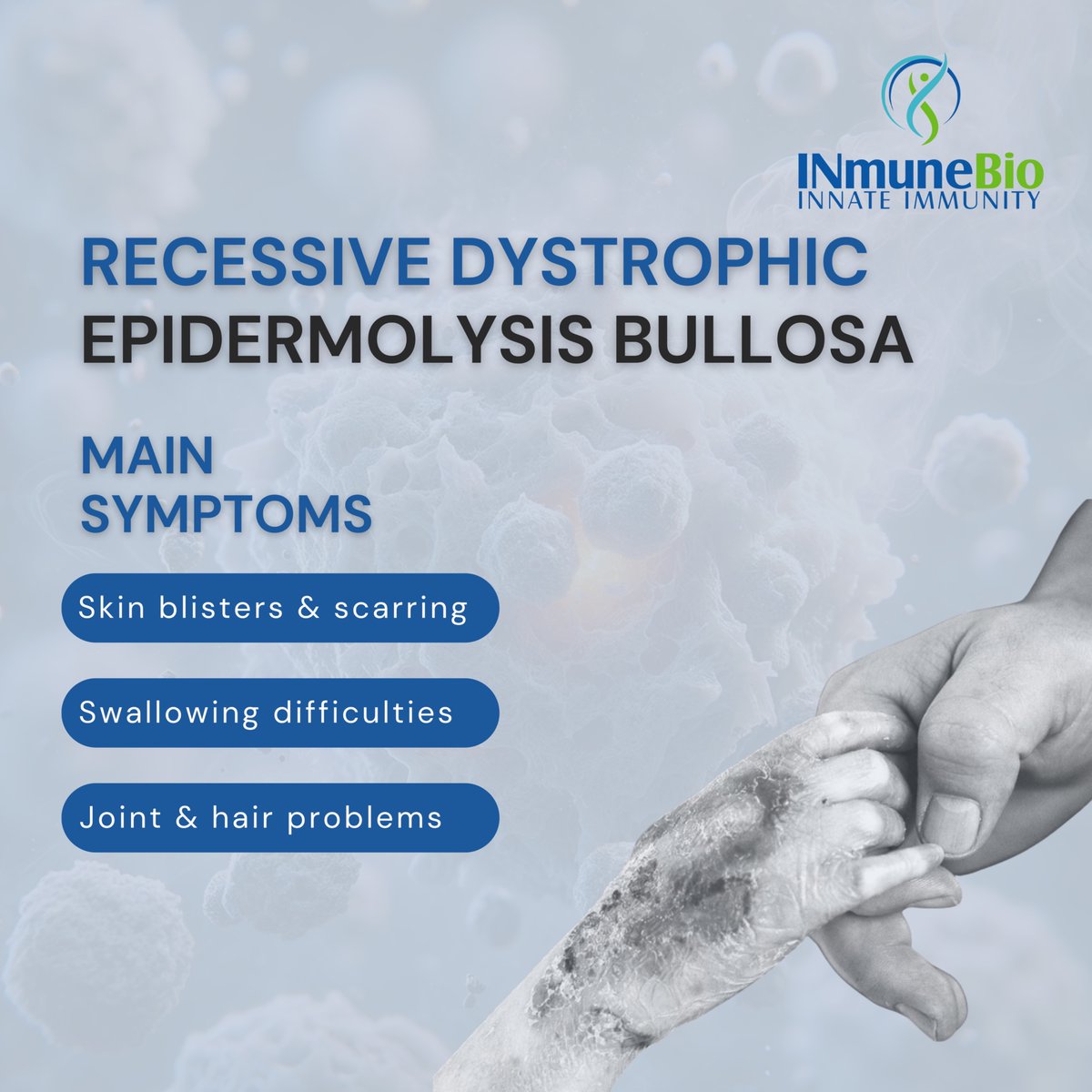
Recessive Dystrophic Epidermolysis Bullosa (#RDEB) is a rare genetic condition causing fragile skin, blisters, & challenges with eating, swallowing, joints, hair, & more.
$INMB is advancing research to improve the lives of those affected.
Learn more: https://t.co/gddJi9Y3yv
#INmuneBio issued a shareholder letter reviewing 2025 milestones & outlining 2026 strategic initiatives, highlighting progress with #XPro1595 in early #Alzheimers disease & continued advancement of #CORDStrom in #RDEB.
Read more: https://t.co/fLTQsT0Hng
$INMB #ShareholderUpdate

In a recent Rare Connection podcast, Mark Lowdell, CSO & Co-Founder of $INMB, discusses #CORDStrom, an investigational cell therapy for #RDEB.
The conversation highlights clinical progress, the regulatory path ahead, & patient impact.
Listen on @Spotify: https://t.co/IzS1sqd6OR
$INMB is advancing therapies for RDEB, a #raredisease affecting skin, causing pain, wounds, & systemic issues.
Groups like @debraOfAmerica & @EBResearch support the #RDEB community, working toward better treatments and brighter futures.
Learn more: https://t.co/eSutmZGDUO


We are done with White Guilt. I don’t care if you call me a racist and I don’t care if you put another smug old Jew in front of me wagging his finger about the Holocaust crying about his grandma.
Our Civilization and everything we love about it is being raped and killed. WAKE UP

Last Seen Hashtags on Sotwe
Cumshot
Seen from United States
cderindo
Seen from Indonesia
ClavesDelComercioUrbano
Seen from United States
kayserigay
Seen from Turkey
Teen
Seen from Turkey
milf
Seen from Turkey
نياكة_ومص_ولحس
Seen from Saudi Arabia
nolimit Teenage*
Seen from Turkey
trans #la
Seen from United States
omegle video
Seen from Italy
Most Popular Users

Elon Musk 
@elonmusk
240.6M followers

Barack Obama
@barackobama
119.2M followers

Donald J. Trump
@realdonaldtrump
111.7M followers

Cristiano Ronaldo
@cristiano
110.6M followers

Narendra Modi
@narendramodi
107M followers

Rihanna
@rihanna
97.6M followers

NASA
@nasa
92.2M followers

Justin Bieber
@justinbieber
90.9M followers

KATY PERRY
@katyperry
87.6M followers

Taylor Swift
@taylorswift13
81.5M followers

Lady Gaga
@ladygaga
73M followers

Virat Kohli
@imvkohli
69.9M followers

Kim Kardashian
@kimkardashian
69.8M followers

YouTube
@youtube
68.7M followers

Bill Gates
@billgates
63.9M followers

Neymar Jr
@neymarjr
62.6M followers

The Ellen Show
@theellenshow
62.4M followers

CNN
@cnn
61.9M followers

X
@x
60.8M followers

Selena Gomez
@selenagomez
60.7M followers