

Top Tweets for #samaTv

Vedanta doesn’t use the modern phrase “emotional maturity” directly, but it offers a profound and timeless understanding of it — rooted in mastery of the mind, freedom from selfish desires, and alignment with the intellect (buddhi) over the emotional impulses of the mind (manas).
Here’s how emotional maturity is defined through Vedantic lenses:
🔹 1. Mastery Over Likes and Dislikes (Rāga-Dveṣa)
“Let a man lift himself by himself; let him not degrade himself. For the Self alone is the friend of the Self, and the Self alone is the enemy of the Self.”
— Bhagavad Gita 6.5
An emotionally immature person is tossed around by personal likes and dislikes — reacting impulsively.
Emotionally mature = acting according to dharma, not emotion.
You do what is right, not what feels good.
🔹 2. Equanimity (Samatvam)
“Samatvam yoga ucyate” — Evenness of mind is called Yoga.
— Bhagavad Gita 2.48
Emotional maturity means not getting elated by praise or devastated by criticism. You hold your center in pleasure and pain, success and failure.
Stable. Calm. Anchored.
🔹 3. Response over Reaction (Viveka and Vairāgya)
Vedanta teaches discrimination (viveka) between the real and unreal, the eternal and the ephemeral — and dispassion (vairāgya) towards what doesn’t matter.
An emotionally mature person:
Pauses before reacting.
Sees the emotion, doesn’t become the emotion.
Doesn’t chase validation or revenge — because the Self is already full.
🔹 4. Freedom from the Ego (Ahaṅkāra)
The emotionally immature person takes everything personally. Every slight is an attack. Every opinion is a threat.
Vedanta teaches: You are not the ego.
You are the witnessing awareness — the unchanging Self.
Emotional maturity = living from the Self, not the story.
🔹 5. Turning Inward for Peace (Antarmukhatva)
“The wise man does not depend on the world for happiness.”
Instead of needing others to behave a certain way for your peace, you source it from within.
The emotionally mature person doesn't blame others for their inner state.
🔹 6. Consistency of Character (Sthitaprajña)
A sthita-prajña is a person of steady wisdom — calm in storms, undistracted by temptations, who fulfills duties without attachment.
That’s Vedanta’s version of emotional maturity:
✅ Freedom from compulsions
✅ Self-mastery
✅ Peace that’s not dependent on outcomes

#2 Fearless championship S1
#1 BGIS 2024
#2 Thug invitational
#1 GT titans rising
#3 Samatva Elite series
2025
#2 Upthrust esports-TMS
#1 ESl S6
Lan won -3⚡️

In the *Bhagavad Gita*, Chapter 2 (titled *Sankhya Yoga* or "The Yoga of Knowledge"), verses 13 to 30 form a crucial part of Lord Krishna's discourse to Arjuna, where he addresses the nature of the self, the impermanence of the body, and the eternal essence of the soul. These verses offer profound philosophical and spiritual remedies for overcoming fear, confusion, and attachment—particularly relevant to Arjuna’s dilemma about fighting in the Kurukshetra war. Below, I’ll summarize the key teachings and their practical "remedies" for life’s challenges:
### Key Themes and Remedies (Verses 13–30)
1. **The Eternal Soul (Verses 13–20)**
- **Teaching**: Krishna explains that the soul (*atman*) is eternal, indestructible, and unchanging. It transcends the physical body, which is temporary and subject to birth and death. Just as a person discards old clothes for new ones, the soul discards old bodies for new ones (Verse 2.22).
- **Remedy**: Overcome fear of death and loss by recognizing your true identity as the eternal soul, not the perishable body. This shift in perspective reduces attachment to material things and alleviates suffering caused by impermanence.
2. **Impermanence of the Body (Verses 14, 16)**
- **Teaching**: The body experiences dualities like heat and cold, pleasure and pain, which are fleeting and arise from sensory contact (Verse 2.14). The real is eternal, while the unreal is temporary (Verse 2.16).
- **Remedy**: Cultivate equanimity (*samatva*) by not being swayed by temporary joys or sorrows. Focus on the unchanging reality behind these experiences to find inner stability.
3. **The Soul’s Invincibility (Verses 17, 23–25)**
- **Teaching**: The soul cannot be cut, burned, wetted, or dried—it is beyond physical destruction (Verse 2.23–24). It is unborn, eternal, and omnipresent.
- **Remedy**: Let go of grief and guilt over actions (like Arjuna’s reluctance to kill in battle) by understanding that the soul remains untouched by worldly events. This fosters courage and detachment in fulfilling one’s duties.
4. **Duty Without Attachment (Verses 27–30)**
- **Teaching**: Death is inevitable for the body, and the soul continues its journey (Verse 2.27). Krishna urges Arjuna to see life and death as natural cycles and to perform his duty as a warrior without personal attachment (Verse 2.30).
- **Remedy**: Act selflessly in alignment with your responsibilities (*dharma*), free from ego or desire for outcomes. This liberates you from the burden of results and aligns you with a higher purpose.
### Practical Application as a Remedy
- **For Fear and Anxiety**: Meditate on the eternal nature of the soul (e.g., Verse 2.20: "It is never born, nor does it ever die") to dissolve fear of mortality or failure.
- **For Emotional Turmoil**: Practice detachment from sensory experiences (Verse 2.14) by observing them without clinging or aversion.
- **For Decision-Making**: Focus on duty over personal gain (Verse 2.27), trusting that the soul remains unaffected by outcomes.
- **For Resilience**: Embrace the invincibility of your true self (Verse 2.24) to face life’s challenges with strength and clarity.
These verses collectively offer a remedy for existential despair and moral confusion by rooting the individual in the wisdom of the eternal self and selfless action. Krishna’s counsel here is both a spiritual balm and a call to practical, disciplined living.
(grok)

@Anirban17gg Sahi pakda h, Hector samatva ka clip nhi daal rha h because strategy leaked ho jayega (Hector ka statement h ye) chronology samjho aap 🤣🤣🤣

Dont forget we gained momentum in samatva only because goblin didnt play day 1

bring back samatva elite tpt for CG
bring back samatva elite tpt for CG

Samatva Elite Series Finals roundup:
M: 18, PP: 32, FP: 90, TP: 122, WWCD: 1, Position: #5
Day 1: 67 pts (Good start day 🥳)
Day 2: 16 pts (Heavy choke day 😵)
Day 3: 39 pts (Yolo day 🤪)


Samatva Elite Series Grand Finals
Overall Standings and Overall Fraggers

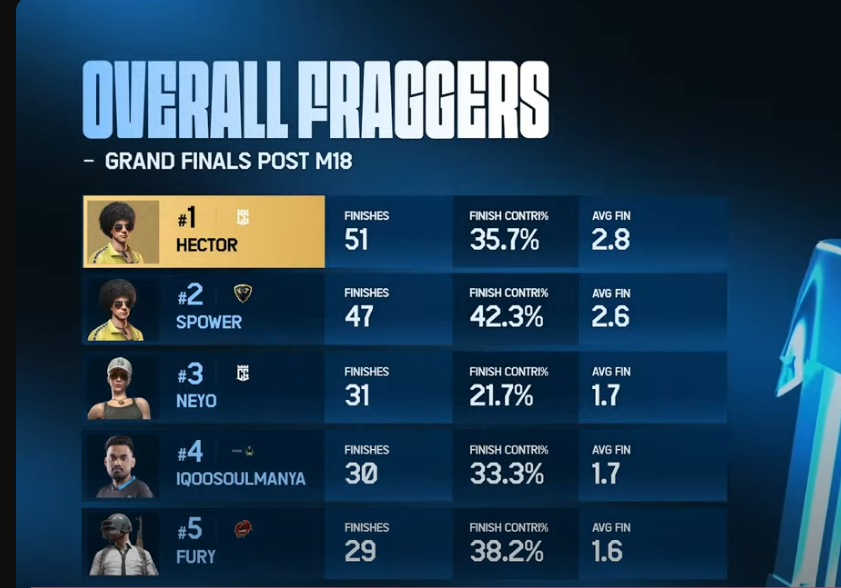

IqooSouL overall #5 in samatva elite series grand finals
Nt 🙌🚀
Overall points - 122
Overall finishes - 90
Individual finishes👇
Manya🦸- 30 Finish(18 match)
Nakul🦇- 23 Finish(18 match)
Rony🦁- 15 Finish(18 match)
Saumay🐆- 22 Finish(18 match)


Cg bkl saara luck yahi samatva me use krloge kya
@fca_aditYa Samatva Elite Series Grand Finals

@lostpeoplelost Kharab din toh samatva mei gaya🥲

8.5 games ka average hai. We finished our bad day on a high. Hopefully we witness some badmaashi tomorrow in samatva.

Samatva Winner CG

Overall view of day's samatva tournament 👇
ch*d gaye guru😭🥲(hope soo they don't do that shit in esl matches)
Overall view of day's samatva tournament 👇
ch*d gaye guru😭🥲(hope soo they don't do that shit in esl matches)

samatva tournament graphics is very good
but casting 🤡

@hitesh1444 samatva ki permission nahi mili
Last Seen Hashtags on Sotwe
Most Popular Users

Elon Musk 
@elonmusk
239.7M followers

Barack Obama
@barackobama
118.6M followers

Cristiano Ronaldo
@cristiano
114.3M followers

Donald J. Trump
@realdonaldtrump
111.7M followers

Narendra Modi
@narendramodi
106.9M followers

Rihanna
@rihanna
98.6M followers

NASA
@nasa
92.1M followers

Justin Bieber
@justinbieber
91.7M followers

KATY PERRY
@katyperry
89.9M followers

Taylor Swift
@taylorswift13
83.9M followers

Lady Gaga
@ladygaga
75.4M followers

Virat Kohli
@imvkohli
73.3M followers

Kim Kardashian
@kimkardashian
70.8M followers

YouTube
@youtube
68.6M followers

Neymar Jr
@neymarjr
66.3M followers

Bill Gates
@billgates
65.1M followers

Selena Gomez
@selenagomez
63M followers

The Ellen Show
@theellenshow
62.1M followers

CNN
@cnn
61.7M followers

X
@x
60.6M followers