

Top Tweets for #strongy

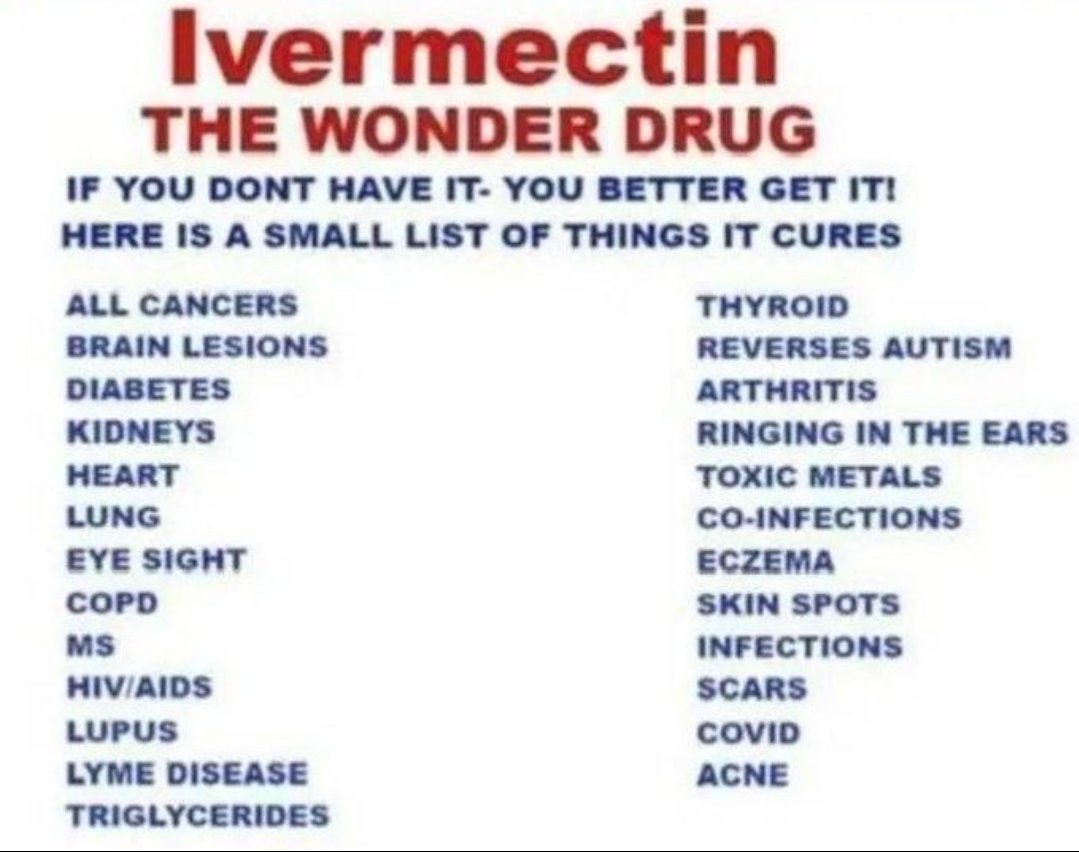
✅ What can Ivermectin help with? 💊
👁️ River blindness (onchocerciasis)
🪱 Intestinal strongyloidiasis
🕷️ Scabies
🪮 Head lice
🧴 Pediculosis pubis
🌹 Rosacea (topical)
🦟 Lymphatic filariasis
🪱 Ascariasis
🪱 Trichuriasis
🪱 Enterobiasis
🪱 Gnathostomiasis
🦠 Mansonellosis
🦠 Demodicosis
🦶 Cutaneous larva migrans
🪰 Myiasis
🦠 COVID-19
🫁 Asthma
🧠 Brain fog
😴 Chronic fatigue
🛡️ Autoimmune disorders
🎗️ Tumors
🩹 Wound healing
🌿 Eczema
🔴 Psoriasis
🌼 Allergic rhinitis
🛡️ Anti-inflammatory effects
🦠 Antiviral activity (laboratory/preclinical research)
🧬 Anticancer effects (cell-line and preclinical research)
🦟 Malaria (potential adjunct)
🦠 Trypanosomiasis (experimental)
🦠 Leishmaniasis (experimental)
🪱 Schistosomiasis (experimental)
🧠 Neuroinflammation (preclinical)
#Ivermectin #Fenbendazole #MedicalResearch #HealthEducation #Parasitology #GlobalHealth #SkinHealth #TropicalMedicine #PublicHealth #Research #Science #Healthcare #Education #HealthAwareness #Cancer #Cancercare


@strongyaya Lep večer.

Ivermectin has been used on humans for nearly 40 years, approved for human consumption in 1987 to treat river blindness and various parasitic infestations. It is considered a "wonder drug" for its widespread, safe use, treating diseases like scabies and strongyloidiasis, with billions of doses distributed globally since its approval.

✴️Parasites Cleared in the Studies
•Nigeria Study (2007): This study found that a dried papaya seed and honey elixir was effective at clearing several intestinal parasites from the stool of children, including:
◦Ascaris lumbricoides (Roundworm): 84.6% clearance rate.
◦Strongyloides stercoralis (Threadworm): 100% clearance rate.
◦Others: The study also observed clearance of Trichuris trichiura(Whipworm), Giardia lamblia (a protozoan), and Taenia saginata (Tapeworm), though these results were not always statistically significant due to small sample sizes.
•Kenya Study (2018): This study specifically measured the impact on Ascaris lumbricoides (Roundworm) and found that fortified porridge reduced the egg count by 63.9% over two months. It also surprisingly helped clear Tinea capitis (Ringworm), which is a fungal infection, not a parasite
🧵
🧫https://t.co/5Q2rUAqe8v.
🧫https://t.co/MrYECT1Xyf.
🦠💊 IVERMECTIN FACTS 💊🦠
(Tap image to read full details)
➡️ 1. Safety & Recognition
🏆 Nobel Prize: Ivermectin’s discovery was awarded the 2015 Nobel Prize in Medicine, highlighting its global medical importance.
🛡️ Safety Profile: It has a long history of use with a well-documented safety profile when used appropriately.
📅 FDA Approval: Approved for human use since 1987, primarily for parasitic infections such as river blindness and strongyloidiasis.
➡️ 2. How It Works in the Body
🧪 Metabolism: Processed by the liver and primarily eliminated through the digestive system.
🧠 Blood-Brain Barrier: At standard doses, it has limited penetration into the brain.
⏱️ Half-Life: Around 18 hours, allowing it to remain active in the body for a sustained period.
➡️ 3. Additional Uses & Research
🔄 Off-Label Uses: Sometimes used for conditions like scabies, lice, and rosacea.
🦠 Viral Research: Laboratory and clinical research has explored its interaction with certain RNA viruses, including studies conducted during COVID-19.
🔬 Ongoing Research Interest
While ivermectin is widely recognized as an essential antiparasitic medication, some researchers are also exploring its potential broader biological effects, including its interaction with cellular pathways. These areas remain under investigation and are not part of standard treatment guidelines.
📊 Current interest in new studies is driven by its long-established safety data and affordability, encouraging further scientific evaluation in different medical contexts.


Healwell Pharma
@Healwellpharma
The two drugs are Ivermectin and Fenbendazole, both initially discovered and used as gastrointestinal anti-parasite drugs. They kill parasites, mainly in the gut. They are basically animal dewormers. Ivermectin is used on many animals, but most famously on horses, and Fenbendazole on dogs. But Ivermectin has also been used as an antiparasitic for humans for many decades.
So there is plenty of data on that. But over recent years, in part thanks to the COVID pandemic, research has shown them to also kill cancer, in the lab, in mice, and even in humans. And all with no serious side effects.
Approved for human use in 1987, [Ivermectin] has been instrumental in tackling some of the world’s most harmful tropical diseases, such as Onchocerciasis, lymphatic filariasis (also known as Elephantiasis), strongyloidiasis and scabies. It also effectively fights parasitic infestations in animals, which can be economically devastating to the livestock industry… Ivermectin is one of the safest drugs known. It is on the World Health Organization’s list of essential medicines, has been given over 4 billion times around the globe, and won the Nobel Prize for its global and historic impacts in eradicating endemic parasitic infections in many parts of the world.”
WHO Guidelines for Scabies: “the majority of side effects are minor and transient”
Prof. Jacques Descotes, Toxicologist and Expert on Safety of Ivermectin: “severe adverse events are unequivocally and exceedingly rare”
LiverTox Database: Not considered toxic to the liver
Nephrotox Database: Not considered toxic to the kidney
PneumoTox: Not considered toxic to the lungs
The standard dose of Ivermectin as an antiparasitic in humans is 0.2mg/kg per day. That’s 17.2 mg for a 190 lb. man. But it’s extremely safe even at much higher doses, as much as 10X higher:
The key thing to understand about Ivermectin is how safe it is, which means there really isn’t a downside to taking it, even as a prophylactic. And as you can see from the footnotes so far, there’s a lot of information out there in the medical literature about Ivermectin. But more importantly, there are at least nine (9) research papers on the anti-cancer properties of Ivermectin published in medical and pharmacological journals over the past five years.
To summarize the findings as briefly as possible, Ivermectin has at least 15 anti-cancer mechanisms of action.
There is evidence that Ivermectin can treat almost every type of cancer, most-importantly including colon cancer, even Stage 4 colon cancer. Ivermectin has been shown to kill cancer cells, both in vitro (in petri dishes) and in vivo (in living organisms, primarily mice):
In Vitro Studies:
breast cancer, ovarian, prostate, colon, pancreas, head and neck, melanoma – inhibits cell proliferation, induction of apoptosis, autophagy, reversion of tamoxifen resistance, inhibits metastases
glioblastoma – growth inhibition, apoptosis, and anti-angiogenesis
In Vivo Studies (done on immune deficient mice):
acute myeloblastic leukemia – reduce tumor volume up to 70%
glioblastoma – reduce tumor volume up to 50%
breast cancer – reduce tumor volume up to 60%
glioma – reduce tumor volume up to 50% (at 0.24mg/kg), however at human dose equivalent to 0.8mg/kg tumors were not detectable!
colon cancer – reduce tumor volume up to 85%
median dose employed was equivalent to 0.4 mg/kg in humans from 10 to 42 days (oral, intraperitoneal or intra-tumoral)
the in vitro and in vivo antitumor activities of Ivermectin are achieved at concentrations that can be clinically reachable based on the human pharmacokinetic studies done in healthy and parasited patients
There’s not much research on the use of Fenbendazole in humans, and while there is no hard data on its side effects…
…most people have NO side effects. The main complaints of the small group of people who did experience side effects were:
* Mild diarrhea
* Mild stomach discomfort
* Elevated liver enzymes
Most Popular Users

Elon Musk 
@elonmusk
239.8M followers

Barack Obama
@barackobama
118.6M followers

Cristiano Ronaldo
@cristiano
114.3M followers

Donald J. Trump
@realdonaldtrump
111.7M followers

Narendra Modi
@narendramodi
106.9M followers

Rihanna
@rihanna
98.6M followers

NASA
@nasa
92.1M followers

Justin Bieber
@justinbieber
91.7M followers

KATY PERRY
@katyperry
89.9M followers

Taylor Swift
@taylorswift13
83.9M followers

Lady Gaga
@ladygaga
75.4M followers

Virat Kohli
@imvkohli
73.3M followers

Kim Kardashian
@kimkardashian
70.8M followers

YouTube
@youtube
68.6M followers

Neymar Jr
@neymarjr
66.3M followers

Bill Gates
@billgates
65.1M followers

Selena Gomez
@selenagomez
63M followers

The Ellen Show
@theellenshow
62.1M followers

CNN
@cnn
61.7M followers

X
@x
60.6M followers