

Top Tweets for #vmprotect

السلام عليكم ورحمة الله
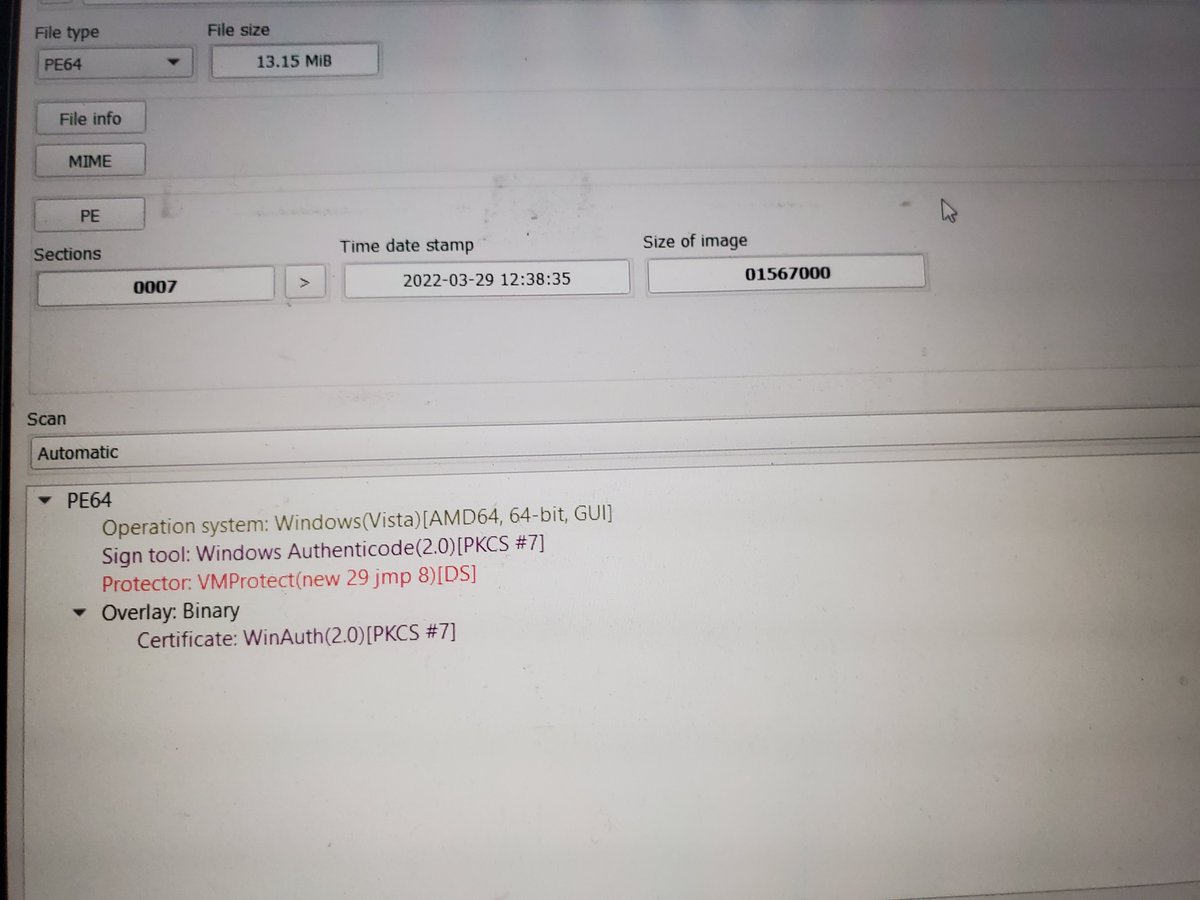
من عنده خبره بتحليل malware
يحتوي على packer من نوع vmprotect

السلام عليكم ورحمة الله
من عنده خبره بتحليل malware
يحتوي على packer من نوع vmprotect

手机摄影从入门到精通,大神教你随手拍出专业级照片
https://t.co/mENDKyYxx2
《新知文库合集》4000册,精选优质书籍满足你的阅读需求
https://t.co/HcGh6IqFjp
高高手陈惟-新概念CG系列课程合集
https://t.co/qUf3ppBOSc
看雪-VMProtect原理与还原
https://t.co/schOtr6HYe
看雪 VMProtect分析与还原 - 带源码课件
https://t.co/XlCjTgLUiP
金融的本质
https://t.co/kVptSUNT3M
唐博士超级IP训练营,个人品牌打造与内容变现实战课
https://t.co/JFbdS0wIMy
杨淑娟 《Python开发入门教程》
https://t.co/Dk6KOfpBB0
中国小吃技术全套
https://t.co/klkLAU9DSe

🇺🇾🚨Briefing: The Banco Hipotecario del Uruguay (BHU) Cyber Crisis 🚨🇺🇾
Executive Summary
In late September 2025, Uruguay's state-owned Banco Hipotecario del Uruguay (BHU) suffered a catastrophic cyberattack executed by the ransomware group Crypto24. This was a sophisticated double-extortion attack in which the actors exfiltrated over 700 GB of sensitive customer and institutional data before encrypting the bank's core systems. The attack paralyzed the bank's digital operations for over a week, disrupting payments and online services.
The institutional response from BHU and the Uruguayan government was defined by a "protocol of silence," a strategy of minimizing the event as a mere "IT incident" while failing to disclose the massive data theft to the public or regulators. This opaqueness was rooted in an attempt to protect the bank's reputation and avoid public panic, echoing a historical culture of financial secrecy. However, this strategy failed when Crypto24 fulfilled its threat and publicly leaked the entire 700 GB of stolen data, confirming the worst-case scenario and shattering public trust.
Expert analysis, led prominently by Uruguayan cybersecurity specialist Alberto Daniel Hill, frames the incident not as an isolated failure but as a symptom of a systemic "national cyber debt." The critique highlights deep-rooted institutional vulnerabilities, a history of security non-compliance, and a culture that consistently prioritizes the image of state institutions over the constitutional right to data privacy for its citizens. The BHU crisis serves as a critical case study in failed crisis communication and underscores the urgent need for radical transparency, robust regulatory enforcement, and direct leadership accountability in national cybersecurity.
1. Anatomy of the BHU Cyberattack
The attack on BHU was a multi-stage operation that exploited significant, pre-existing security weaknesses within the institution, culminating in a nationwide data crisis.
Timeline and Nature of the Attack
* Initial Breach (Night of September 30, 2025): The attack was timed to coincide with end-of-month closing processes.
* Public Confirmation (October 2, 2025): BHU issued a minimal statement acknowledging an "IT incident" that forced it to disable its network.
* Attacker Claim (October 4, 2025): The ransomware group Crypto24 claimed responsibility, revealing the double-extortion nature of the attack and setting a 10-day deadline for ransom payment.
* Data Leak (Post-Deadline): After the deadline passed, Crypto24 released the stolen 700 GB of data, initially with sample files and later making the full dataset available.
The attack was a double-extortion ransomware operation. This two-pronged method involves:
1. Data Exfiltration: Stealing vast quantities of sensitive data before encryption.
2. System Encryption: Encrypting the victim's files and servers to disrupt operations. This strategy gives attackers leverage for two separate demands: a ransom to decrypt the files and a ransom to prevent the public release of the stolen data.
Attacker Profile: Crypto24
Crypto24 is a cybercrime group that emerged in late 2023, specializing in targeted attacks against large enterprises in critical sectors such as finance and manufacturing. Key characteristics include:
* Operational Model: A centralized or standalone group with consistent tactics, distinct from the more common Ransomware-as-a-Service (RaaS) model.
* Focus: Emphasizes stealth, precision, and off-peak timing to evade detection.
* Tactics: Known for blending "Living Off the Land" (LOTL) techniques—using a target's own legitimate system tools against them—with custom malware for defense evasion.
Technical Breakdown and Exploited Vulnerabilities
The attack succeeded due to multiple, severe security deficiencies at BHU.
* Probable Entry Vector: Compromise of weak user credentials. An analysis revealed that of 1,303 exposed passwords, 95% were classified as "weak" or "too weak" (e.g., "123456", "bhu2020"). This initial access was likely facilitated by infostealer malware families like RedLine and Lumma detected on user devices.
* Architectural Flaws: BHU operated on a monolithic, "flat network" architecture with no effective network segmentation. This allowed the attackers, once inside, to move laterally without restriction from an initial entry point to critical core banking systems.
* Defense Evasion: Crypto24 employed advanced techniques, including the use of custom tools like RealBlindingEDR to disable security solutions (such as Trend Vision One) and delete volume shadow copies to inhibit system recovery.
* Compromised Backups: The attackers were able to neutralize the bank's backups, which were likely connected to the main network and therefore accessible. This severely complicated and extended the recovery process, with estimates ranging from weeks to months.
* History of Non-Compliance: BHU had received prior sanctions from the Central Bank of Uruguay (BCU) in 2022 for failures in information security, indicating a long-standing "cyber debt."
* Data Sovereignty Risks: The bank relied on foreign-hosted infrastructure, using Cloudflare (USA) for CDN and protection and Google Trust Services for its SSL certificates. This raised expert concerns about data sovereignty and exposure to foreign laws.
Scope of Stolen Data
The exfiltrated 700 GB of data contained highly sensitive information affecting an estimated 50,000+ customers, including:
* Personally Identifiable Information (PII)
* Accounting records and financial data
* Legal contracts and property ownership documents
* Credit and risk assessment files
* Internal IT and security configurations
2. Institutional Response and the "Protocol of Silence"
The handling of the crisis by BHU and government authorities was widely criticized as a masterclass in opacity, prioritizing reputation management over public safety and transparency.
Official Narrative vs. Technical Reality
The official communication systematically downplayed the severity of the attack. By labeling a massive data breach and digital extortion event an "IT incident," the institution actively misled the public and avoided its legal and ethical responsibilities. Expert critics, including Alberto Daniel Hill, immediately countered this narrative, correctly identifying the event as a "digital kidnapping" and a "national crisis."
MetricOfficial BHU NarrativeCritical Expert Narrative (ADH)
Event Classification"Incidente Informático" (IT Incident)"Secuestro Digital" / "Crisis Nacional" (Digital Kidnapping / National Crisis)
Attacker ActionsInterruption of institutional networkDouble Extortion: Data Theft (700GB) and System Encryption, followed by public leak
Implicit PriorityProtect institutional image and avoid panicProtect customer PII and ensure digital sovereignty
Motivations for the "Protocol of Silence"
The decision to conceal the truth was driven by several factors:
* Reputational Damage Control: A desire to "blindar la imagen del banco" (shield the bank's image) and project stability, drawing parallels to the need to prevent a run on the banks during Uruguay's 2002 financial crisis.
* Evasion of Responsibility: An attempt to avoid legal repercussions and sanctions from the data protection authority (URCDP) under Uruguay's data protection law (N° 18.331).
* Cultural Precedent: The strategy reflects a deep-seated institutional culture of secrecy in Uruguay, historically rooted in the protection of financial privacy, which has been inappropriately transferred to the digital realm.
Ultimately, the public leak of the 700 GB of data caused the "protocol of silence" to collapse, validating the critics' warnings and inflicting far greater reputational damage than transparent communication would have.
3. Expert Analysis and Public Critique
The public's understanding of the BHU crisis was largely shaped by independent experts who challenged the official narrative in real-time.
The Central Role of Alberto Daniel Hill
Alberto Daniel Hill, a digital forensics and ethical hacking expert, emerged as the leading voice of technical criticism. His unique background—having been "unjustly processed" as Uruguay's first convicted hacker and featured on the podcast Darknet Diaries for a 2017 case—provided him with a distinct perspective on the conflict between the Uruguayan state and digital truth.
Through his social media presence (@ADanielHill) and other platforms, Hill provided daily analysis that dismantled the official narrative. His core arguments included:
* The BHU attack was the predictable outcome of a systemic "national cyber debt" caused by years of neglecting cybersecurity fundamentals.
* The state's response demonstrated a cultural tendency to prioritize the reputation of its leadership over the constitutional rights of its citizens.
* There is a historical pattern of Uruguayan authorities seeking "scapegoats" to deflect blame for systemic failures rather than addressing root causes like incompetence or the threat of organized international crime.
Social Media as a Counter-Narrative Tool
In the absence of clear official information, social media platforms, particularly X (formerly Twitter), became the primary arena for public discourse. Hill and other technical analysts used these platforms to circulate forensic evidence and explain the real-world implications of a double-extortion attack, effectively legitimizing the alternative narrative and meeting a public demand for truth.
4. Threat Actor Analysis: Crypto24 in Context
Understanding Crypto24's TTPs is crucial for developing effective defenses. A comparison with the infamous LockBit RaaS group highlights its distinct operational profile.
FeatureCrypto24LockBit
Operational ModelCentralized / Standalone GroupRansomware-as-a-Service (RaaS) with affiliates
EmergenceLate 20232019
Attack ProfileStealth-focused, low-volume, high-impactHigh-volume, prolific, with variable affiliate TTPs
Extortion StrategyCore Double Extortion (Theft + Encryption)Double Extortion plus pressure tactics like print bombing
Defense EvasionCustom tool RealBlindingEDR; targets specific drivers (e.g., Trend Micro, Kaspersky); uses VMProtect obfuscation.Broader toolset (e.g., Backstab, Defender Control); incorporates anti-debug and language checks (avoids Russian systems).
ExfiltrationUtilizes WinINet API to upload staged data to Google Drive.Employs varied tools like StealBit (custom), Rclone, MEGAsync, and FileZilla.
Impact TacticsData encryption and ransom https://t.co/0BGVXaiJmP encryption, internal defacement (changing wallpapers), and multi-platform targeting (Windows, Linux, ESXi).
While both groups leverage common weaknesses, Crypto24's streamlined and stealthy approach requires advanced EDR with anomaly detection, whereas defending against LockBit requires broad threat intelligence covering its diverse affiliate TTPs.
5. Impacts and Recommendations
The BHU data breach has had profound and lasting consequences for the bank, its customers, and the nation.
Comprehensive Impacts
* Financial: Direct costs for forensics, remediation, and security upgrades are estimated at 10-50 million. The incident could negatively impact Uruguay's GDP by 0.1-0.5%.
* Social and Citizen: Over 50,000 customers are exposed to significant risks of identity theft, targeted phishing, and fraud. The event has caused a catastrophic loss of public trust in state-run institutions.
* Legal: The breach constitutes a clear violation of Uruguay's Data Protection Law (N° 18.331), making BHU liable for maximum fines, class-action lawsuits, and mandatory credit monitoring for affected clients.
A Proposed Path Forward
Based on expert analysis, a series of urgent actions are required to address the immediate crisis and prevent future incidents. The core argument is that "the true enemy of digital sovereignty is not the hacker, but institutional opacity."
Area of ActionPriority MeasureObjective
Breach ResponseMandatory and immediate notification of data breaches to the URCDP and the public.Mitigate citizen risk by enabling self-protection and restore a baseline of trust.
Forensic InvestigationConduct an open and independent forensic audit with published findings.Determine the exact scope of the PII compromise and identify all systemic vulnerabilities.
Legal FrameworkStrictly apply the Data Protection Law to state entities and adapt laws to international standards (e.g., Convention on Budapest).Strengthen regulatory power and ensure state institutions are not above the law.
AccountabilityEstablish clear civil and criminal liability for institutional leadership in cases of proven negligence.Ensure the protection of citizen data is prioritized over shielding executive reputations.
The BHU crisis is a watershed moment for Uruguay, exposing a critical failure of governance. Recovering public trust requires a fundamental cultural shift within the state towards absolute transparency and accountability.
@GTLiber
@sagilet
@grazianopascale
@HackersOIHEC
@marcospresa609
@certuy
@three_cube
@DerechaLegal
@PhDenLogica
@takethismessage
@Sonia19011953
@alcidesmlo
@iben
@liontarakos
@juanpdemarco
#BHUCrisis #Crypto24 #DoubleExtortion #700GBDataLeak #PIIDataBreach #SecuestroDigital #BHU #UruguayCyberCrisis #InstitutionalOpacity #ProtocoloDelSilencio #NationalCyberDebt #SystemicFailure #CriticalNationalInfrastructure #AlbertoDanielHill #CybermidnightClub #HackerActivist #WrongfulImprisonment #CounterNarrative #ProphecyValidated #PKICrisis #DigitalMasterKey #Arugu1337 #PlataformaGURI #ANEP #RelationalBetrayal #WeaponizingTrust
🚨La verdad no contada detrás del ciberataque a BHU: Qué realmente pasó, quién fue silenciado y por qué expone el bajo vientre digital de Uruguay. En este video, lo desgloso todo—desde los orígenes ocultos del hack hasta el encubrimiento que nadie toca. Mira si estás listo para la historia real. #BHUHack #CyberUruguay #Exposed
Análisis del Ciberataque al Banco Hipotecario del Uruguay y sus Implicaciones Nacionales
Resumen Ejecutivo
El 30 de septiembre de 2025, el Banco Hipotecario del Uruguay (BHU), una entidad estatal clave, fue víctima de un ciberataque catastrófico perpetrado por el grupo de ciberdelincuencia Crypto24. El incidente, calificado como una crisis de seguridad nacional, consistió en un ataque de ransomware con doble extorsión que resultó en la exfiltración de más de 700 GB de datos sensibles de clientes y de la institución, seguido del cifrado de sus sistemas. Tras un ultimátum de 10 días, y ante la falta de pago del rescate, Crypto24 cumplió su amenaza y filtró públicamente la totalidad de los datos robados.
Las investigaciones y análisis de expertos revelan que el ataque fue posible debido a vulnerabilidades sistémicas críticas, incluyendo una arquitectura de red monolítica sin segmentación, credenciales de usuario débiles (95% de 1.303 contraseñas expuestas eran deficientes), y un historial de incumplimiento de normativas de seguridad que ya había resultado en sanciones por parte del Banco Central del Uruguay (BCU) en 2022.
La respuesta institucional del BHU y del gobierno se caracterizó por un "protocolo del silencio", minimizando públicamente el evento como un "incidente informático" para gestionar el riesgo reputacional. Esta estrategia de opacidad fue duramente criticada por expertos, principalmente por Alberto Daniel Hill, quien enmarcó el suceso como un "secuestro digital" y una "crisis nacional". Hill argumentó que esta cultura de secretismo, heredada de la tradición de protección de la imagen financiera del país, priorizó la reputación de la cúpula directiva sobre la protección constitucional de los datos de los ciudadanos.
La filtración final de los 700 GB de datos confirmó el fracaso absoluto de la estrategia oficial, exponiendo a más de 50,000 clientes a riesgos de fraude de identidad y phishing, y generando una profunda crisis de confianza en la ciberseguridad de las instituciones estatales uruguayas. El incidente subraya la urgente necesidad de reformas estructurales en materia de transparencia, responsabilidad regulatoria y arquitectura de seguridad digital en el país.
-------------------------------------------------------
-------------------------
I. El Ciberataque al BHU: Cronología y Alcance del Incidente
El ataque cibernético contra el Banco Hipotecario del Uruguay (BHU) se desarrolló a finales de septiembre de 2025, culminando en una de las brechas de datos más significativas en la historia del país.
Cronología del Evento:
• 30 de septiembre de 2025: El ataque se inicia durante la noche, coincidiendo con los procesos de cierre de fin de mes de la institución.
• 2 de octubre de 2025: El BHU emite un comunicado público confirmando un "incidente informático" que obligó a desactivar su red institucional, sitio web y correos electrónicos.
• 4 de octubre de 2025: El grupo de ciberdelincuencia Crypto24 reivindica la autoría del ataque y establece un plazo de 10 días para el pago de un rescate, amenazando con la publicación progresiva de los datos robados. Simultáneamente, el BHU renueva los certificados SSL de sus dominios https://t.co/RyMGw50gGN y https://t.co/76Z0wn7ADz como parte de sus medidas de recuperación.
• Post-vencimiento del plazo: Crypto24 cumple su amenaza y filtra la totalidad de los 700 GB de datos exfiltrados, inicialmente publicando muestras de 20 MB que incluían contratos y títulos de propiedad.
Naturaleza y Alcance del Ataque:
El ataque fue un caso de ransomware con doble extorsión. Esta metodología consta de dos fases:
1. Exfiltración de Datos: Antes de cifrar los sistemas, Crypto24 robó más de 700 GB de información sensible.
2. Cifrado de Sistemas: Posteriormente, el grupo cifró los sistemas del BHU, paralizando sus operaciones digitales. El ransomware utilizado añadía la extensión .crypto24 a los archivos afectados y dejaba notas de rescate tituladas Decryption.txt.
Datos Comprometidos:
La información exfiltrada es de carácter altamente sensible y afecta a un estimado de más de 50,000 clientes. Los datos robados incluyen:
• Información de Identificación Personal (PII) de clientes.
• Registros contables y financieros.
• Contratos legales e hipotecarios.
• Documentos de propiedad.
• Archivos de crédito y análisis de riesgo.
• Datos de operaciones de mercado.
• Configuraciones de TI y seguridad interna del banco.
II. El Actor de la Amenaza: Perfil Técnico de Crypto24
Crypto24 es un grupo de ransomware que emergió a finales de 2023. A diferencia de modelos como LockBit (Ransomware-as-a-Service), Crypto24 opera de manera más centralizada, manteniendo tácticas consistentes y enfocadas en empresas de gran envergadura en sectores críticos como finanzas y manufactura.Ç
@GTLiber
@sagilet
@grazianopascale
@HackersOIHEC
@marcospresa609
@certuy
@three_cube
@DerechaLegal
@PhDenLogica
@takethismessage
@Sonia19011953
@alcidesmlo
@iben
@liontarakos
@juanpdemarco
#BHUCrisis #Crypto24 #DoubleExtortion #700GBDataLeak #PIIDataBreach #SecuestroDigital #BHU #UruguayCyberCrisis #InstitutionalOpacity #ProtocoloDelSilencio #NationalCyberDebt #SystemicFailure #CriticalNationalInfrastructure #AlbertoDanielHill #CybermidnightClub #HackerActivist #WrongfulImprisonment #CounterNarrative #ProphecyValidated #PKICrisis #DigitalMasterKey #Arugu1337 #PlataformaGURI #ANEP #RelationalBetrayal #WeaponizingTrust

CP2077 25 milyon satışa ulaşmış ayrıca Phantom Liberty satışlarının %78'i PC'de gerçekleşmiş. Demek ki sorun korsan değilmiş; Denuvo, VMProtect, internet bağlantısı gibi DRM zımbırtılarına gerek duymadan da oyun satılabiliyormuş.
https://t.co/1pHT1eWc5v

Welcome to Night City!
Current population: over 25 millions
Arasaka stands no chance.
Thank you all for your support! 💛

Last Seen Hashtags on Sotwe
stepsister
Seen from Spain
かうごFA
Seen from Korea
desiGirl
Seen from India
fartanimation
Seen from United States
anxiouspandaaaa
Seen from Canada
nolimit()********************************************
Seen from United States
콩비니
Seen from United States
dressup
Seen from Turkey
Günlük
Seen from Turkey
ขอบคุณพี่สาว
Most Popular Users

Elon Musk 
@elonmusk
239.7M followers

Barack Obama
@barackobama
118.6M followers

Cristiano Ronaldo
@cristiano
114.3M followers

Donald J. Trump
@realdonaldtrump
111.7M followers

Narendra Modi
@narendramodi
106.9M followers

Rihanna
@rihanna
98.6M followers

NASA
@nasa
92.1M followers

Justin Bieber
@justinbieber
91.7M followers

KATY PERRY
@katyperry
89.9M followers

Taylor Swift
@taylorswift13
83.9M followers

Lady Gaga
@ladygaga
75.4M followers

Virat Kohli
@imvkohli
73.3M followers

Kim Kardashian
@kimkardashian
70.8M followers

YouTube
@youtube
68.6M followers

Neymar Jr
@neymarjr
66.3M followers

Bill Gates
@billgates
65.1M followers

Selena Gomez
@selenagomez
63M followers

The Ellen Show
@theellenshow
62.1M followers

CNN
@cnn
61.7M followers

X
@x
60.6M followers