“I am losing precious days. I am degenerating into a machine for making money. I am learning nothing in this trivial world of men. I must break away and get out into the mountains to learn the news.”
- John Muir
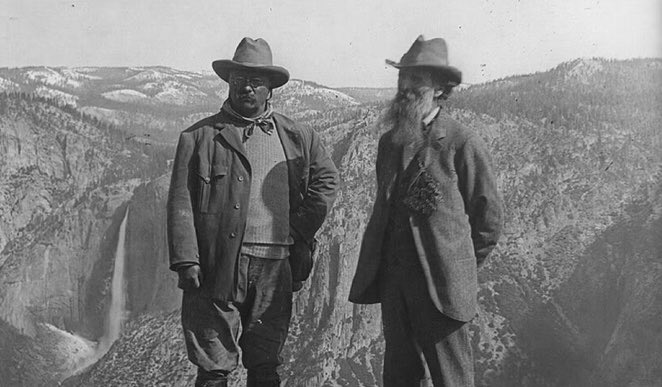
In 1883, John Muir was managing a fruit ranch in Martinez, California, when his longtime traveling companion, S. Hall Young, visited him. Young later recalled Muir expressing his desire to return to the mountains, describing the wilderness as a place where he could go “to learn the news.”
Twenty years later, Muir accompanied President Theodore Roosevelt on a three-day camping trip through Yosemite. Standing together at Glacier Point and gathering around campfires, Muir shared his passion for protecting America’s forests, helping inspire Roosevelt’s commitment to conservation.
@LynGrah77334182@HowardWorf@nickofnz China is actively building 37 nuclear reactors as of late 2026, accounting for roughly half of all global nuclear construction. these 37 units under construction represent a combined net capacity of nearly 40 gigawatts electric (GWe), alongside 60 already operational reactors.
Canadians understand our responsibility to protect nature — both in our own backyard and around the world.
Today, with President @LulaOficial, I announced that Canada is putting half a billion dollars behind Brazil’s landmark rainforest conservation initiative to protect some of the most important ecosystems on earth.
Read more: https://t.co/BLlQljE9Xc
@nickofnz I suggest reading up on the energy stack and the amount of energy needed as everything goes electric. Timing out? There have been nuclear powered submarines since 1952. Batteries aren’t great at minus 40 C.
To launch a lot of rockets, you need to build a lot of rockets.
Our factory is currently producing Electron at a rate of one rocket every 8 days.
From single layers of carbon composite, to firing 3D-printed Rutherford engines multiple times before flight - every step requires precision and paranoia.
This is Electron's journey from production to the pad.
Triple digits 💯
Electron has reached 100 launches faster than any commercially developed rocket in history. With another 100+ launches in backlog, we're just getting started.
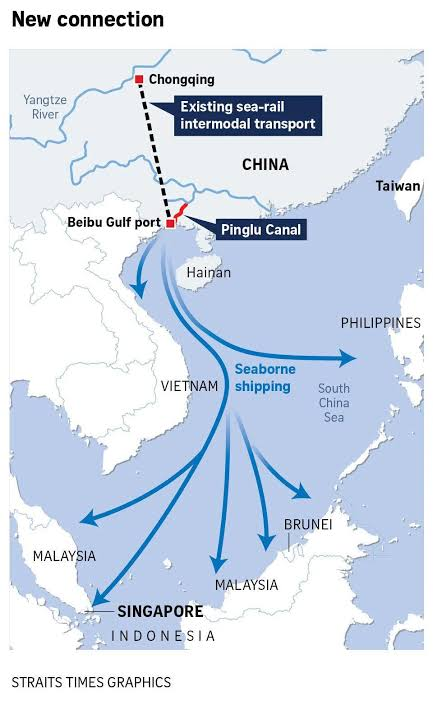
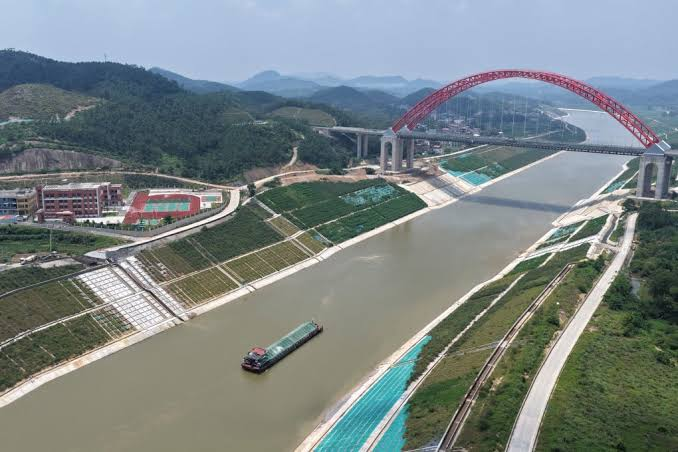
US news tends to dominate the media cycle; but the Pinglu Canal just completed by China (which most of us have never heard about), is a lot more significant than the recent "Blue Tsunami" in US politics.
Are we witnessing the dichotomy of copper in real time?
Copper just had its worst week since March. Chip stocks fell as much as 11% on Thursday. Democrats came out of the midterms calling for a pause on advanced AI and a ban on artificial superintelligence.
But I think the market is wrong here.
Copper futures have spent the past year trading as the cleanest proxy for the AI buildout, so when the AI trade got hit, copper got sold with it.
But as with many things right now, the market is making very little sense.
China's import premium hit $210 a ton on Thursday, matching the highest level since records began in 2012 (what a Chinese buyer pays on top of the exchange price to get copper delivered to the dock).
It climbs only when buyers are competing for a limited pool of metal.
The smelters tell the same story, and I spoke about it earlier this week on X.
Chinese smelters are accepting negative fees, which means they are paying mines for the right to process their ore. Economics dictates that smelters only do that when there is not enough ore to keep the furnaces running.
Outside the US, stockpiles are being pulled into America ahead of a possible tariff, leaving the rest of the world tighter still.
So the paper market sold copper because it is worried about demand two years out, yet the physical market is paying record premiums because it cannot find enough copper today.
The midterm result with the most consequence for copper came out of Texas.
Texas elected a governor who wants to extend the state's pause on new data center approvals - Texas was expected to host 41% of new US data center capacity by 2028. On the surface, it reads as a direct hit to the biggest source of new copper demand in the country.
But I think the sentiment is wrong on timing.
A pause on approvals hits projects that do not exist yet. The data centers going up across Texas today were designed, financed and ordered months or even years ago.
Most of the copper in a data center is not in the servers. It is in the transformers and the miles of high-voltage cable that tie the site to the grid, and that equipment has lead times of up to four years. Anything scheduled to switch on in the next two to three years has already placed its orders.
So that copper is getting delivered regardless of who sits in the governor's office.
Some projects may wait longer for a grid connection. A delay pushes demand out, but it does not remove it.
The effect would land on data centers that would have broken ground from 2029 onward, and the big tech companies building them have already shown they will move to whichever state will take them.
The copper demand moves with them.
The superintelligence ban will not happen for the same reason. Stopping AI development would mean handing the defining technology race of this century to China, and no administration of either party will do that.
China is not pausing anything.
It is building data centers, expanding its grid and buying copper mines around the world. A permitting fight in Austin does not change the direction of global demand.
And look, a new copper mine takes 15 years or more to go from discovery to first production, and the industry is not finding enough new deposits to replace what it is digging up.
Even Freeport’s $4.5B Bagdad expansion in Arizona, one of the largest copper projects in the US, only got board approval this week after years of study. And it's still a 3.5 year build with first production not expected until mid-2030.
If AI demand were really rolling over, the Chinese premium would be falling, smelters would be charging positive fees again and inventories would be building. None of that is happening. Every physical signal is pointing the other way.
What we saw this week was a crowded trade taking a sentiment hit.
The world needs far more copper than it can produce, and that gap will be measured in decades, not election cycles.