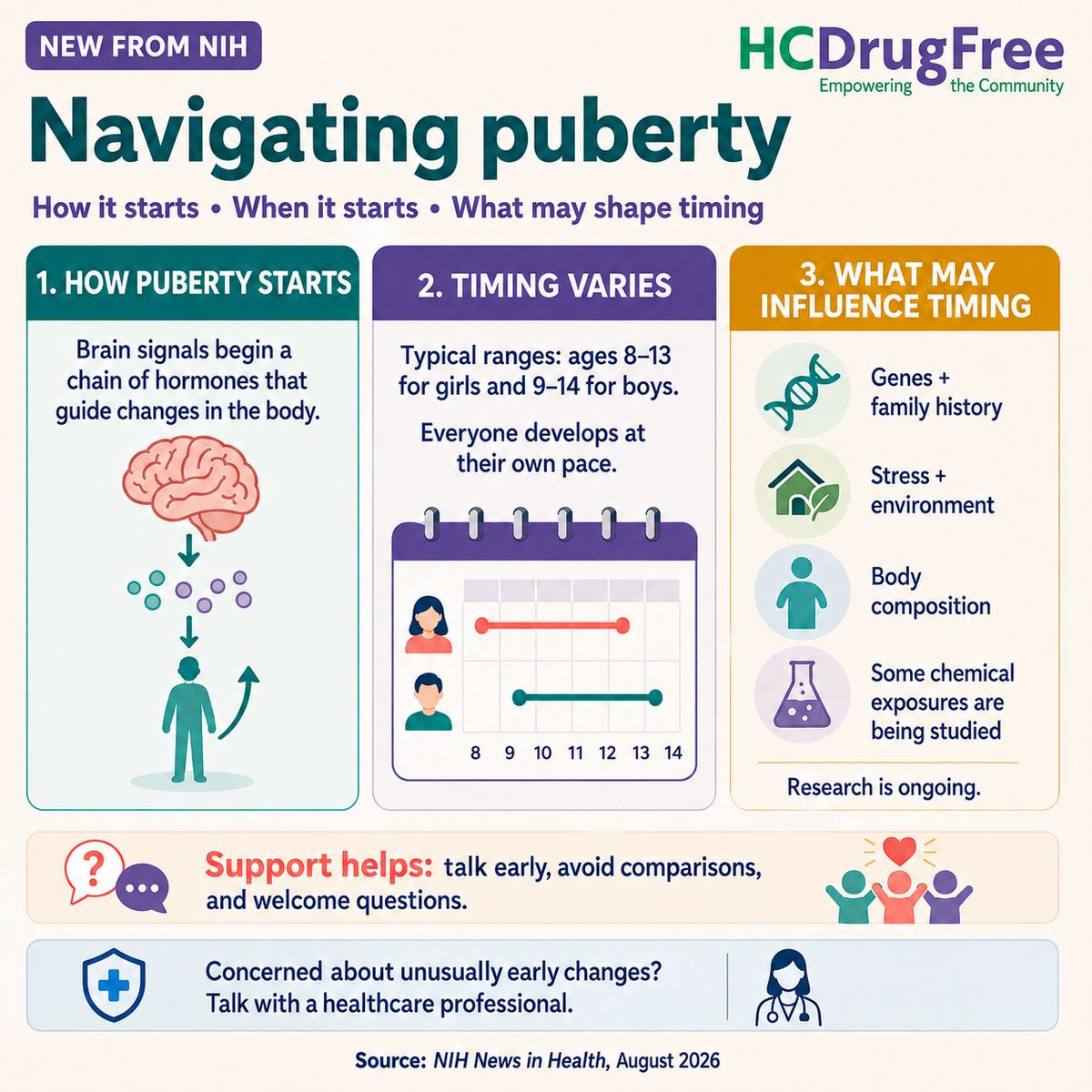
Trusted adults can help by talking about puberty early, avoiding comparisons, welcoming questions, and reminding young people that everyone develops at their own pace. Talk with a healthcare professional about concerns.
Learn more from NIH: https://t.co/MPYY1cJdh7
Puberty is a normal part of growing up, guided by signals from the brain and hormones. These changes can affect the body, mood, sleep, self-image, and relationships.
Timing varies for every young person. NIH identifies typical ranges of ages 8-13 for girls and 9-14 for boys. Genetics, stress, environment, body composition, and other factors may influence timing.
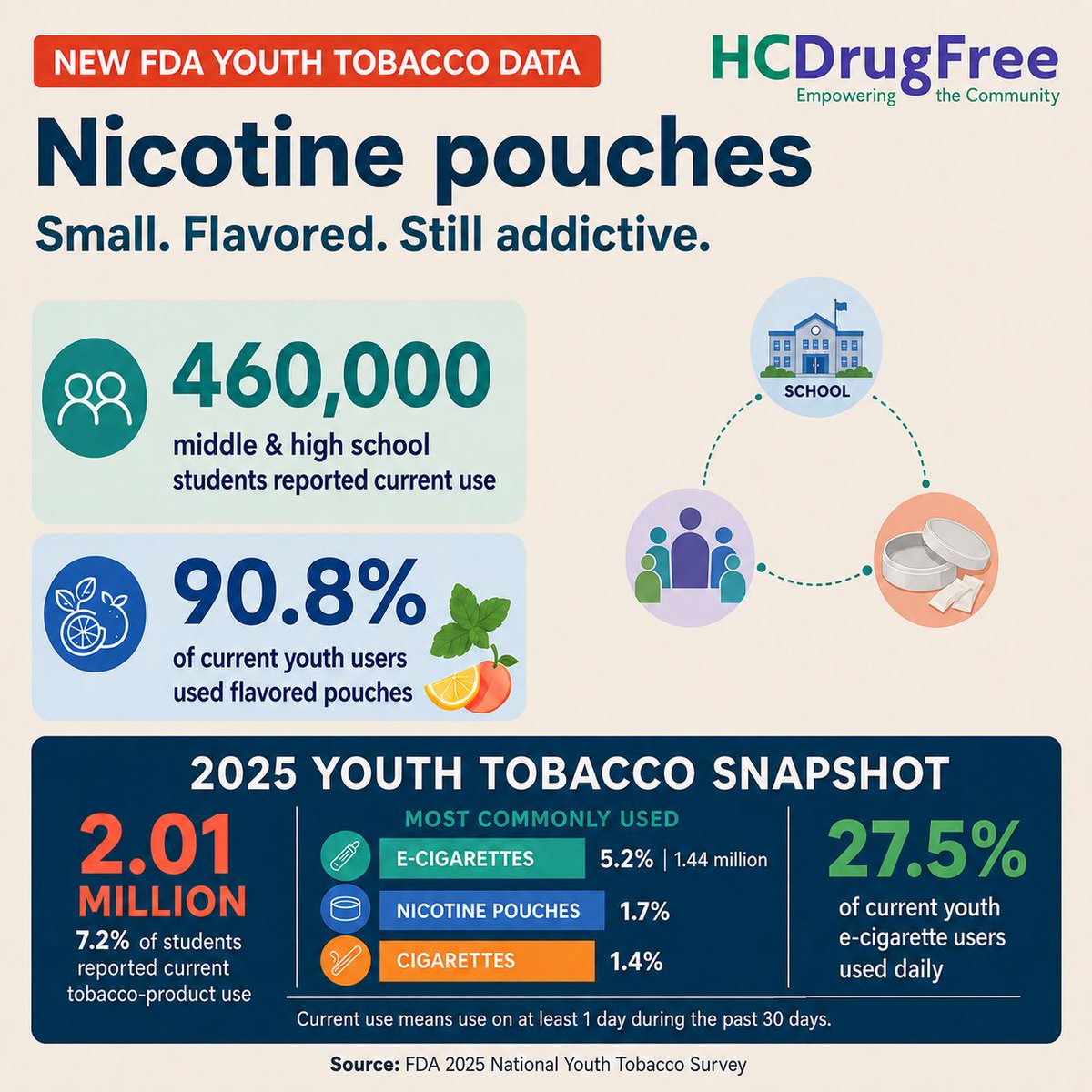
Youth tobacco, e-cigarette, and cigarette use declined from 2022 to 2025. Continued prevention, early conversations, tobacco-free schools, and reducing youth access can help keep this progress moving forward.
FDA findings: https://t.co/JBLlDQLTrf
#YouthTobaccoPrevention
New FDA data show progress in youth tobacco prevention, but concerns remain. In 2025, about 2.01 million middle and high school students, or 7.2%, reported current tobacco product use.
E-cigarettes remained the most commonly used product, with 1.44 million students reporting current use. About 460,000 reported nicotine-pouch use, and 90.8% of those users used flavored pouches.
Greater awareness, preventing or delaying cannabis use, and honest conversations with healthcare professionals can help reduce harm and improve CHS recognition. Read the CDC report: https://t.co/JiZTUtZoro
#HCDrugFree#CannabisAwareness#YouthHealth#CHS#SubstanceUsePrevention
Cannabis hyperemesis syndrome (CHS) involves cycles of severe nausea, repeated vomiting, and abdominal pain associated with prolonged, frequent cannabis use.
CDC analyzed emergency department data from Jan. 2023 to May 2026 and identified 199,565 visits involving CHS. Higher proportions were seen among ages 15-24 and females. Increased recognition and coding may partly explain the numbers.
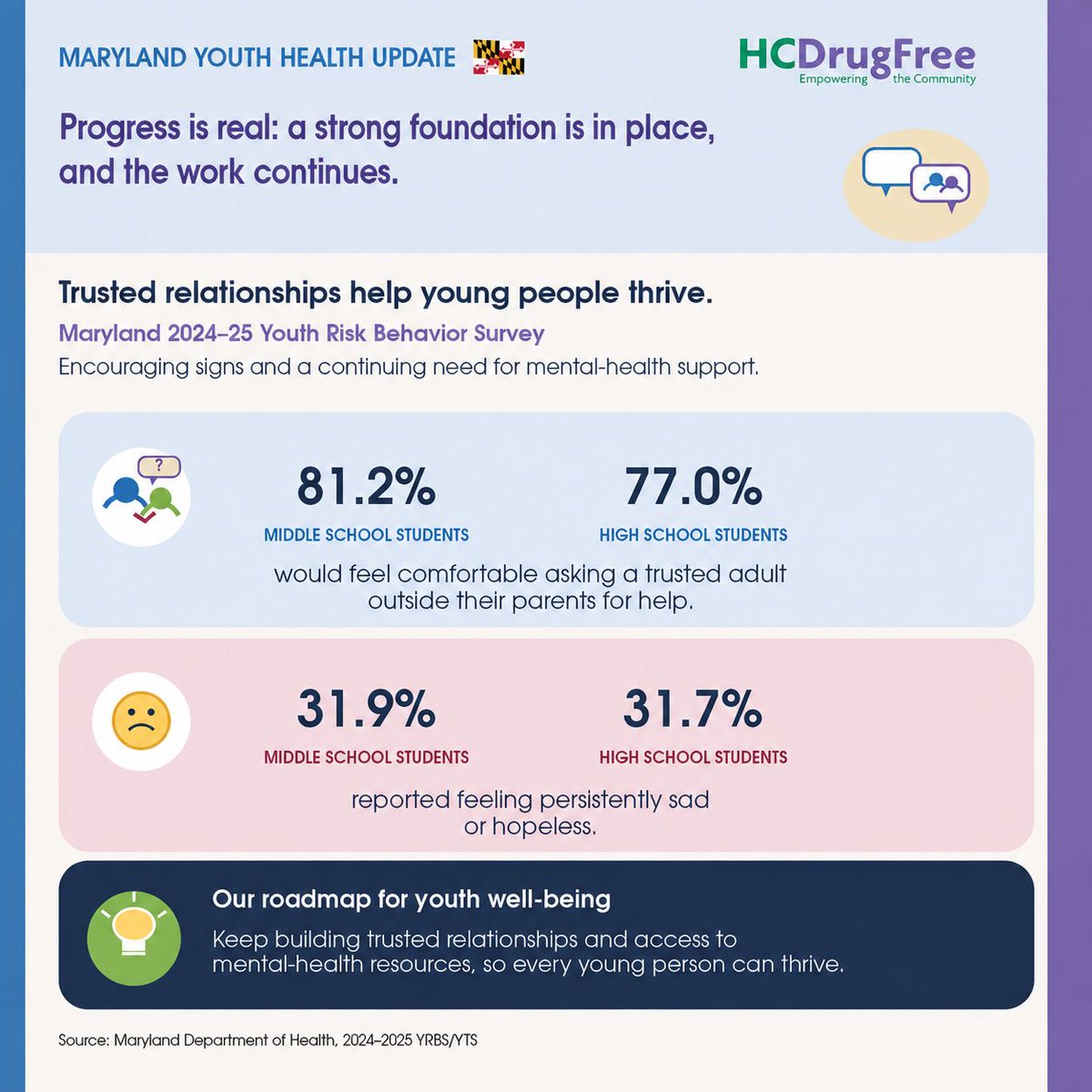
The Maryland 2024–25 Youth Risk Behavior Survey shows encouraging signs: many students would feel comfortable asking a trusted adult for help. At the same time, nearly 1 in 3 middle and high school students reported feeling persistently sad or hopeless.
These results remind us that prevention starts with trusted relationships, early conversations, and making support easier to reach, while we continue building access to mental health resources so every young person can thrive.
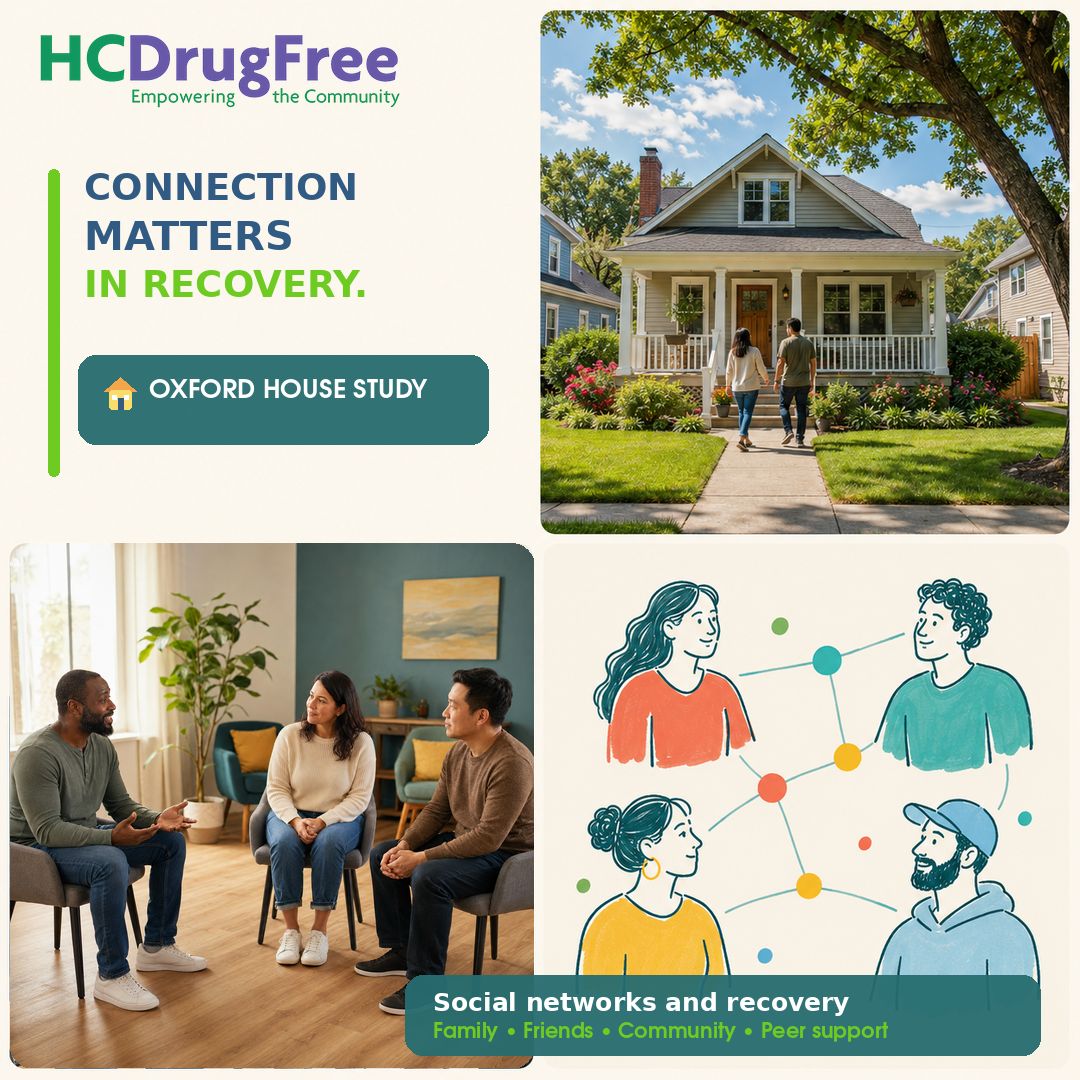
Building healthy connections early may help people talk openly about challenges, seek help when needed, and reduce relapse risk. Learn more: https://t.co/iCedLSyYQB
Researchers followed 602 Oxford House residents for two years. Those with supportive family relationships had better recovery outcomes over time, highlighting the important role that healthy connections can play in recovery.
Family members made up 49% to 70% of the most important people in residents’ support networks across related studies. Support can also come from trusted friends, peers, and welcoming communities.
Emerging substance alert 🚨 : What is 7-OH❓️
7-OH is an opioid-like chemical sometimes marketed as “natural” or “enhanced kratom.” Concentrated products may be sold online and in stores, and can look like familiar items such as gummies or candy.
Keep medications secure and out of reach of children, teens, and pets. Safely dispose of expired or unneeded medication through a drug take-back program or another approved method.
Small Amounts. Huge Consequences.
Raising awareness about how little it takes to cause a fatal overdose helps keep our friends, families, and neighbors safe. It is vital to stay in the know about these substances, talk openly with loved ones, and understand the hidden risks.