It is a reminder that cultures and traditions endure not merely through memory, but through action. Perhaps the question is not why this beautiful tradition faded, but what we did—or failed to do—to preserve it.
https://t.co/4G45WiiZ9n
In 2019, I warned India was risking its Iran partnership by leaning toward the US-Israel-Gulf bloc. Today, with Chabahar stalled, oil ties cut, and silence, that strategic shift in West Asia seems complete and consequential.
https://t.co/DSKHUQNRzR
An encounter over biryani in Istanbul shows how narratives like “food jihad,” “thook jihad,” and “biryani jihad” are spreading globally, reshaping perceptions of Indian cuisine and undermining India’s cultural reputation and soft power.
https://t.co/Mb8oybIYgq
This op-ed looks beyond budget headlines to reveal a pattern of cuts, unspent funds, and dismantled minority education schemes, arguing that minority budgeting has become a test of political intent, democratic accountability & the state’s moral conscience.
https://t.co/q2ewF4U2cO
Maharashtra’s civic polls show a shift in Muslim urban politics, with SP weakened by internal rifts and AIMIM gaining ground through grassroots work. The results signal Muslim voters rethinking loyalties in search of more effective civic representation.
https://t.co/nybW2Jw1y8
The crisis is unfolding around Waqf data in India that begins with a single, unsettling contradiction and fear of vanishing properties.
https://t.co/4PsKdm0xo0
The earlier official claim of more than 8.7 lakh immovable Waqf properties now contrasts sharply with the Union government’s new figure of 5.17 lakh uploads on its UMEED portal, creating a vast and unexplained gap.
https://t.co/QEnOpbFLa9
This dialogue offers a thoughtful discussion on the current state of the Urdu language & its future. According to journalist @afrozsahil, practical, sustained efforts—rather than despair—are essential to nurture a love of Urdu among younger generations.
https://t.co/B56JpntgM9
As Bihar approaches elections, the question has never been more urgent: will education — particularly the madrasa system that shapes the futures of thousands of underprivileged Muslim children — finally find a place in the state’s political agenda?
https://t.co/upC5IN6AT4
Afshan Khan reflects on what #Jamia means to her. As Türkiye marks 102 years of its #Republic, she writes about another celebration close to her heart—the 105th anniversary of #JamiaMilliaIslamia. A heartfelt piece about memory, knowledge, and belonging.
https://t.co/8tKf1xze05
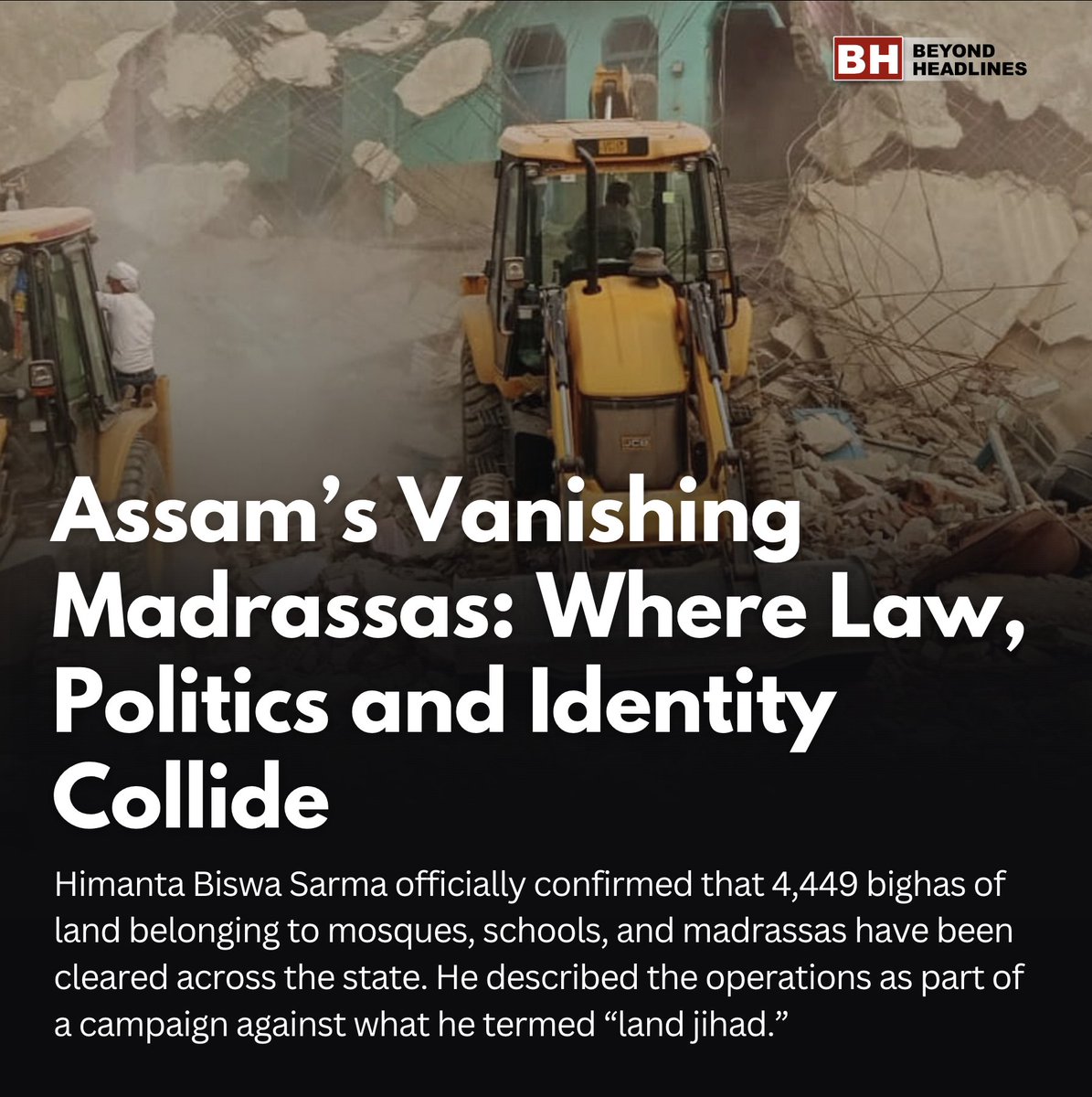
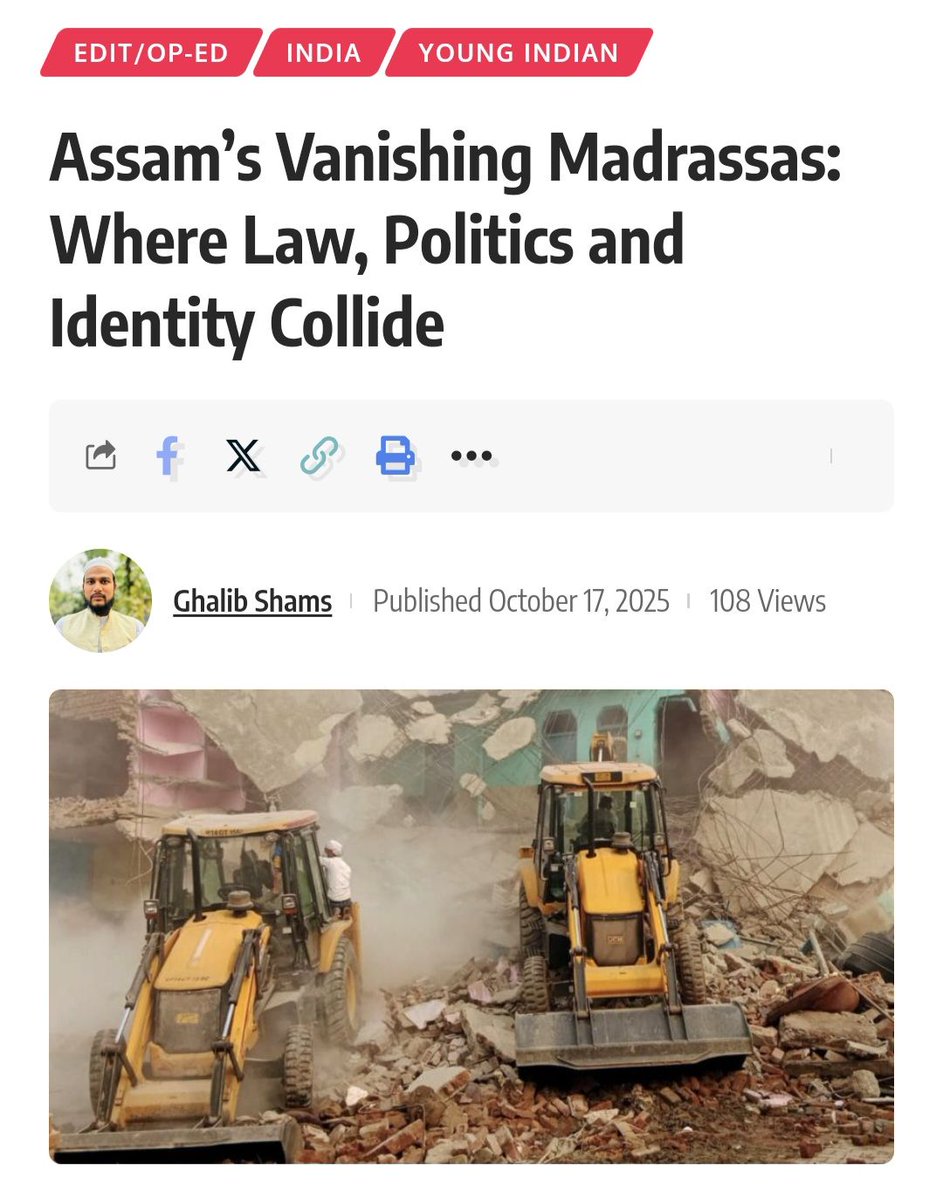
Ground reporting from across Assam reveals a sharp decline in the presence of Islamic educational institutions. Official figures suggest that around 130 madrassas and maktabs have been demolished so far, while all 1,281 government-run madrassas have been converted into regular public schools.
https://t.co/odybudMvPk
The de-recognition of madrassas in Assam is more than an educational policy shift. It reflects a deeper, ongoing social and political debate, where religion, politics, and identity intersect in increasingly complex ways.
https://t.co/K8oG5QWwvH
Seventeen years on, the scars of the Batla House ‘encounter’ remain raw, and justice still feels out of reach for the families. The echoes of the encounter still shape their lives, with justice still seeming far away.
https://t.co/A1ajMxB2Ot
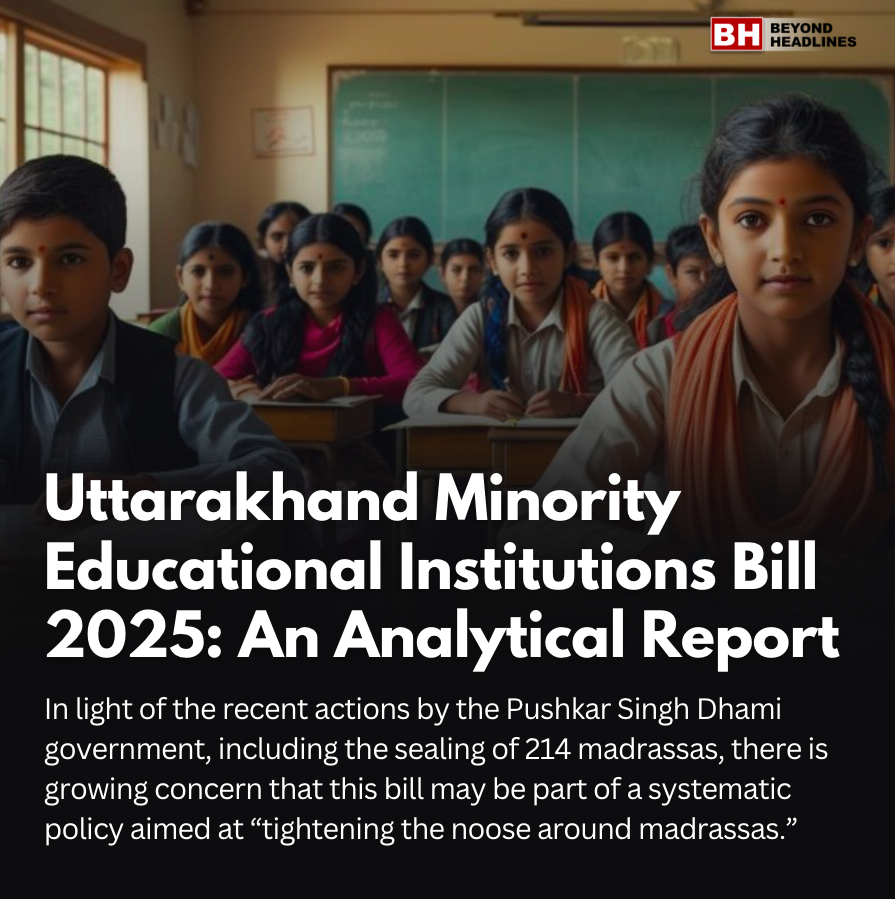
The Uttarakhand government has recently introduced the Minority Educational Institutions Bill 2025, positioning it as a step toward transparency and educational reform. However, the finer details of this bill tell a different story. In practice, it could significantly limit the autonomy of minority educational institutions, particularly Muslim madrassas and religious educational centers. This has raised concerns among Muslim leaders and social organizations, who view the bill as an infringement on the educational freedom of the new generation and a threat to religious liberties.
https://t.co/mZicYlijkL