You are more than your hardest day. Depression can make things feel overwhelming, but it doesn’t define who you are or what comes next.
Take it one day at a time, and remember that you don’t have to go through it alone.
Talking about your mental health takes courage.
When popular librarian and host of Reading Rainbow, Mychal Threets shares openly about his own experiences, he helps make conversations about mental health feel a little more normal and encourages others to speak up.
Medication isn’t the only way that professionals can help you treat depression. There are many different ways including therapy, support groups, medication, and other suggestions that can help you on your journey to recovery.
Supporting someone with anxiety doesn’t mean having all the answers or trying to fix everything for them. Sometimes the most helpful thing you can do is listen without judgment, check in, and let him know he doesn’t have to handle everything on his own.
Setting up healthy habits and routines can have a huge positive impact on our lives, not just on our physical health but on our mental health as well.
What are some of the routines or habits you do to take care of your mental health?
Sometimes we spread ourselves too thin, a handful of stressful things all come up at once, or something unexpected and particularly hard to deal with happens. Whether you’re falling behind at work or school, it’s important to reach out and ask for a hand.
Taking time to check in with your emotions on a regular basis can be a first step toward recovery. Being honest with how you feel can show you what you might need to work on to get better.
How are you feeling lately?
As men, we often feel we should be able to handle whatever life throws at us on our own, but some problems are best dealt with as a team.
Recovering from depression becomes much easier when we bring other people to our side.
“Healing is not a patchwork project and will take time. Therefore, take the time to get healthy!”
Louis, a father and school teacher, shares how taking a medical leave from work to recover from his depression set him on a positive new path.
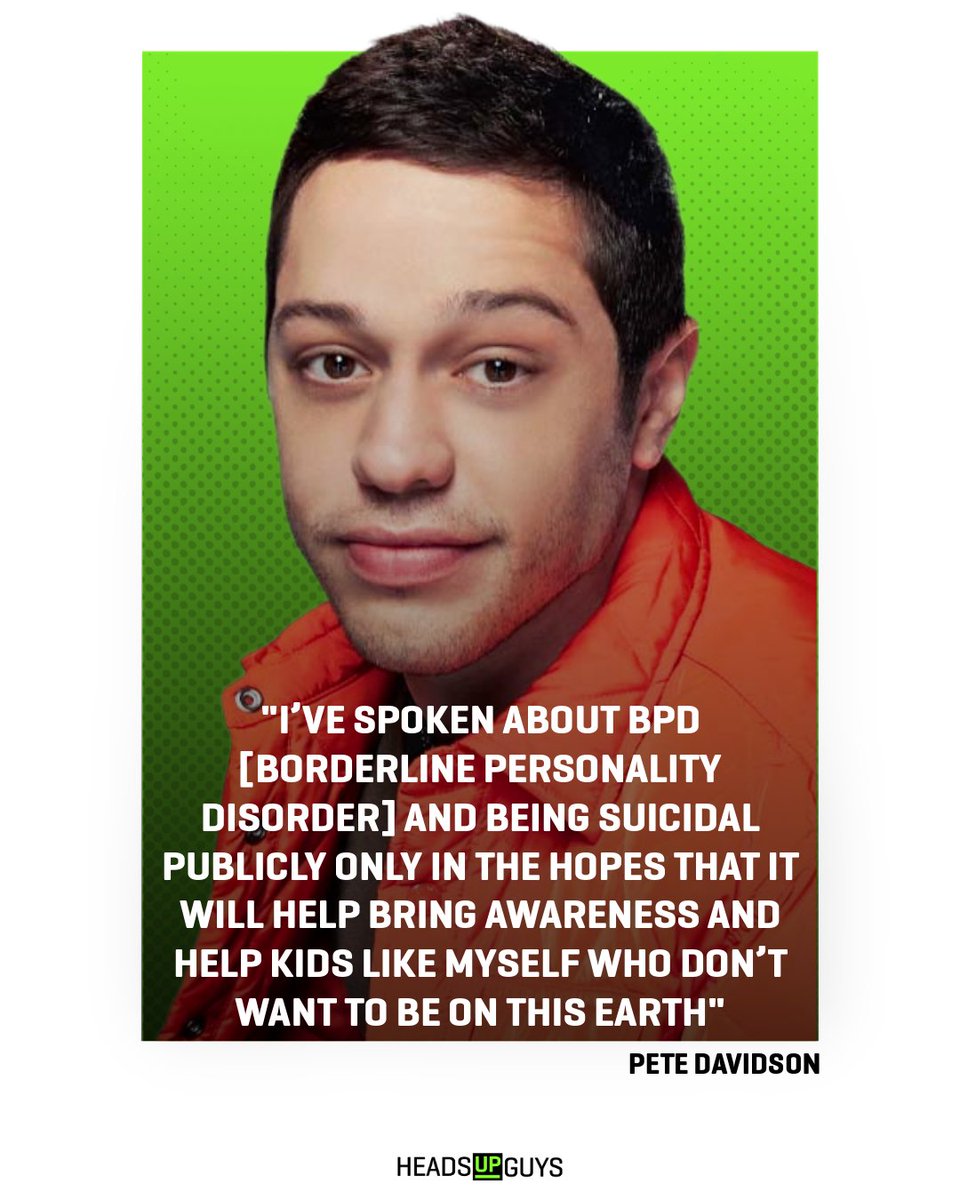
By speaking candidly about his struggles, comedian Pete Davidson has become an advocate for mental health awareness, particularly for BPD and PTSD. His openness has helped destigmatize these conditions and encouraged others to seek help.
Depression can make it feel like nothing will ever change, but that's one of the biggest lies it tells. With the right support, treatment, and time, recovery is possible. You don't have to face it alone.
Musician Bruce Springsteen has been open about the mental health struggles he has experienced over the years and has given credit to therapy and medication for helping him through it.
https://t.co/O39jg89J2q
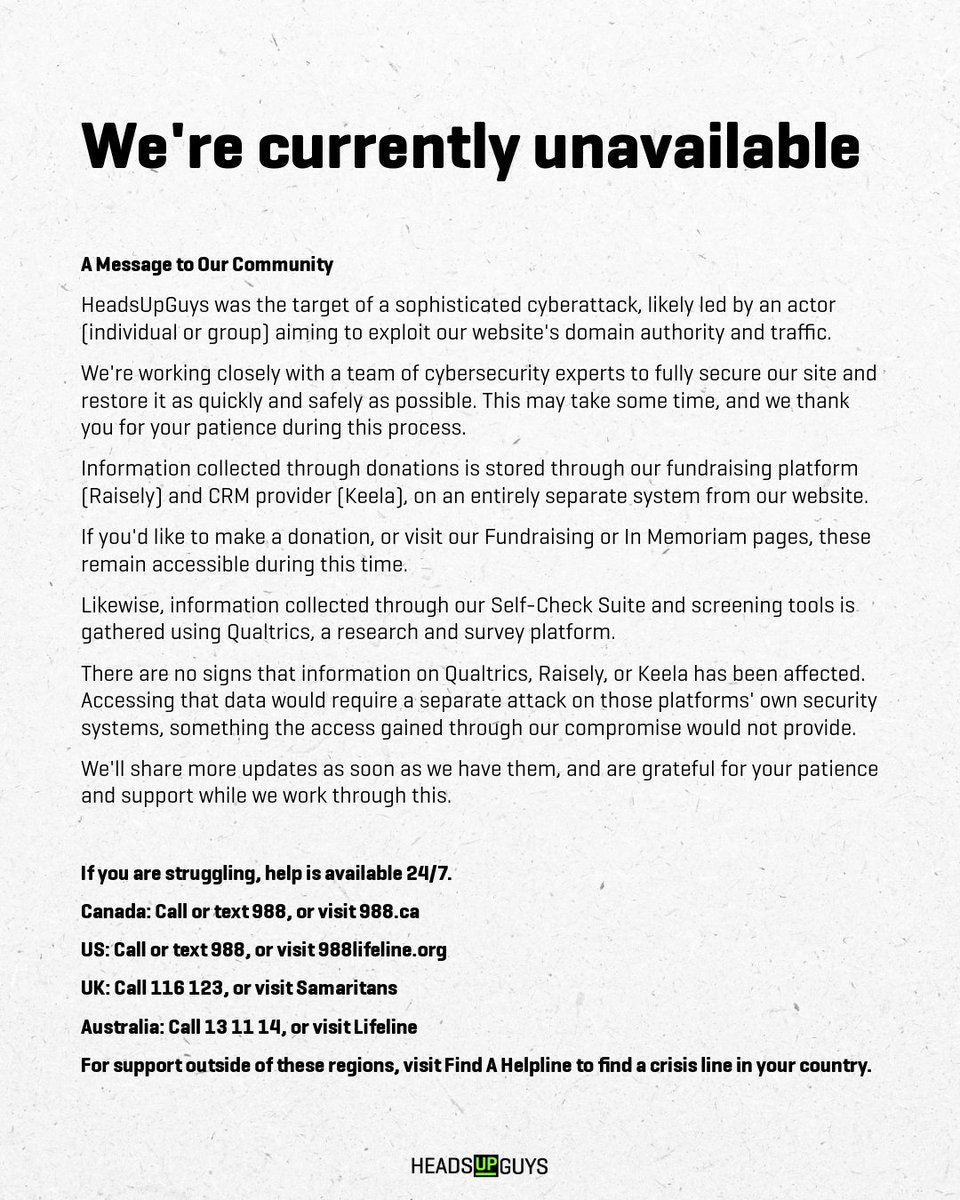
We appreciate your patience during this stressful time, and we want to reassure our community that we are working to restore our website and information as quickly and securely as possible.
If you are struggling there is help available.
Taking place Saturday, October 3, 2026, the event will bring together a large roster of alumni from three of Vancouver’s most celebrated professional sports franchises, along with some of Canada’s top pickleball talent.
https://t.co/LAfY7fzPnP
When things feel overwhelming, it can be hard to imagine that anything will change. But feelings can change. Circumstances can change. And the way you feel today doesn’t have to be the way you feel forever.
"I tackled depression on as many fronts as I could, which for me included therapy, medication, learning mindfulness, & basic healthy habits."-Josh Beharry
Our project manager Josh, shared his story about a suicide attempt & how he worked toward recovery.
https://t.co/pKXCn1jxeN
Today is World Suicide Prevention Day, a day that gives us the opportunity to raise awareness and share resources.
Back in May, we released a PSA that's still reaching people, and WSPD is a chance to help it reach more.
https://t.co/hA5Gc4nrKY
Men account for approximately 75% of suicide deaths, and it is a leading cause of death for men under 50.
For more information, practical resources, and support for men dealing with depression or suicidal thoughts, visit our website at https://t.co/Gz1jhBIB6I
Talking openly about suicide does not encourage someone to take their life or put the idea in their head. In fact, creating space for honest conversations can help someone feel less alone, understood, and more able to access the support they need.