First trailer for Hisko Hulsing's animated short ‘DANSE MACABRE’.
The film is made up of over 75 oil paintings with 2D and CG techniques animated and overlaid onto them.
A single native oak tree supports 550+ species of caterpillars.
A Bradford pear supports about one.
Caterpillars are how songbirds feed their young. Almost all of them. A pair of chickadees needs between 6,000 and 9,000 caterpillars to raise one brood of chicks.
Bluebirds, warblers, vireos, wrens: same story. Adults might eat seeds, but the babies eat caterpillars.
Researchers at the University of Delaware found that yards dominated by non-native plants produce 75% less caterpillar biomass than native-dominated yards.
Chickadees in those yards were 60% less likely to even attempt to nest.
Most caterpillars can't eat non-native plants. They didn't evolve with them. The leaves are chemically wrong.
So when we landscape with crepe myrtle, Bradford pear, ginkgo, Japanese maple, Pieris, we're building a yard that looks alive and is functionally a desert.
The food web starts in your front bed. It's the highest-leverage thing you can do. It's also the thing nobody tells you when you buy a house.
You've seen the meme: one opossum eats 5,000 ticks a season. Unfortunately, it's wrong.
When researchers dissected the stomachs of 32 wild opossums, they found zero ticks. The number came from a single lab study that got stretched into folklore, and it still gets repeated everywhere.
But the opossum doesn't need the lie. It's the only marsupial in North America. It cleans up carrion, rotting fruit, slugs, snails, and the rodents you'd rather not have around. It eats copperheads and rattlesnakes, because it's immune to their venom. And it almost never carries rabies, since its body runs too cool for the virus to take hold.
So when one waddles through the yard at night, you're not looking at a pest, you're looking at the cleanup crew that works for free.
Colombia has drawn a hard line: Bullfighting will be banned nationwide by 2027. Cockfighting by 2028. These public arenas will be turned into spaces for music, sports, and culture. We can move past animal cruelty as a tradition.
If you have a tree taken down, don't pay to haul the logs away. Stack them in a back corner instead and you'll build one of the richest habitats a yard can hold.
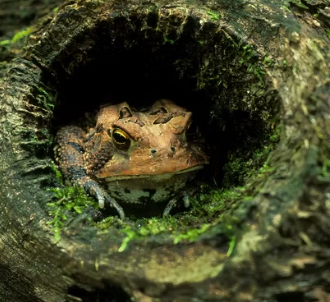
A pile of logs left to rot becomes a whole food chain. Fungi and beetles move into the softening wood. Salamanders and toads tuck into the cool, damp spaces underneath. Snakes hunt the slugs, woodpeckers dig out the grubs, wrens and chipmunks shelter in the gaps.
Here's the part that surprises people: a lot of native bees nest in dead wood. Mason and leafcutter bees move into old beetle tunnels in the logs and raise their young inside them. The deadwood is a maternity ward for threatened bees.
Build it loose, with plenty of gaps and a mix of log sizes. Leave at least one log touching bare soil so fungi can take hold and the whole thing starts to break down.
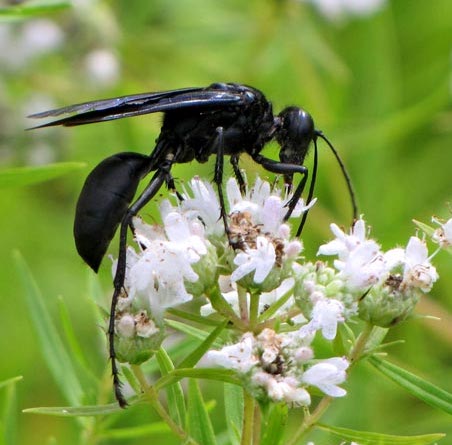
There are about 18,000 species of wasps in North America. Roughly 20 of them can hurt you.
The wasps people fear are all from one family: Vespidae. They make up less than 1% of wasp species on the continent. They build the visible nests, they defend them aggressively, and they're the ones you remember from a bad encounter.
The other 99% live solitary lives and ignore humans entirely. Many can't sting at all. Many more have stingers but never use them on people because they don't have a nest to defend.
What they do instead is hunt other insects. A single mud dauber stocks her nest with paralyzed spiders, including widows and recluses. A braconid wasp lays eggs in tomato hornworms. An ichneumon wasp parasitizes wood-boring beetles that kill ash trees. A cuckoo wasp infiltrates the nests of other wasps and bees. Some species control aphids; others control caterpillars, beetle grubs, or flies.
Most agricultural pest insects in North America are controlled, in part, by parasitic wasps that almost no human ever sees. There are over 25,000 species of ichneumon wasps alone, and they keep entire orders of insects in check.
The five or so wasp species that ruin a picnic in late August are real. The 17,995 species that are running the pest control infrastructure of an entire continent get almost none.