Satellite planes - dwarf galaxies that are located in a flat plane and even rotate in the same direction - are the hot topic of the latest episode of our #IAUS379 Symposium interview series. Don't miss it! 🎥
https://t.co/p9Z1QD6eFs
Overall we find that ~21% of the studied systems are classified as significantly lopsided under any of the metrics, ~16% under the wedge metric alone. In a future study, we will compare these results with expectations from similar systems in cosmological simulations. Stay tuned!
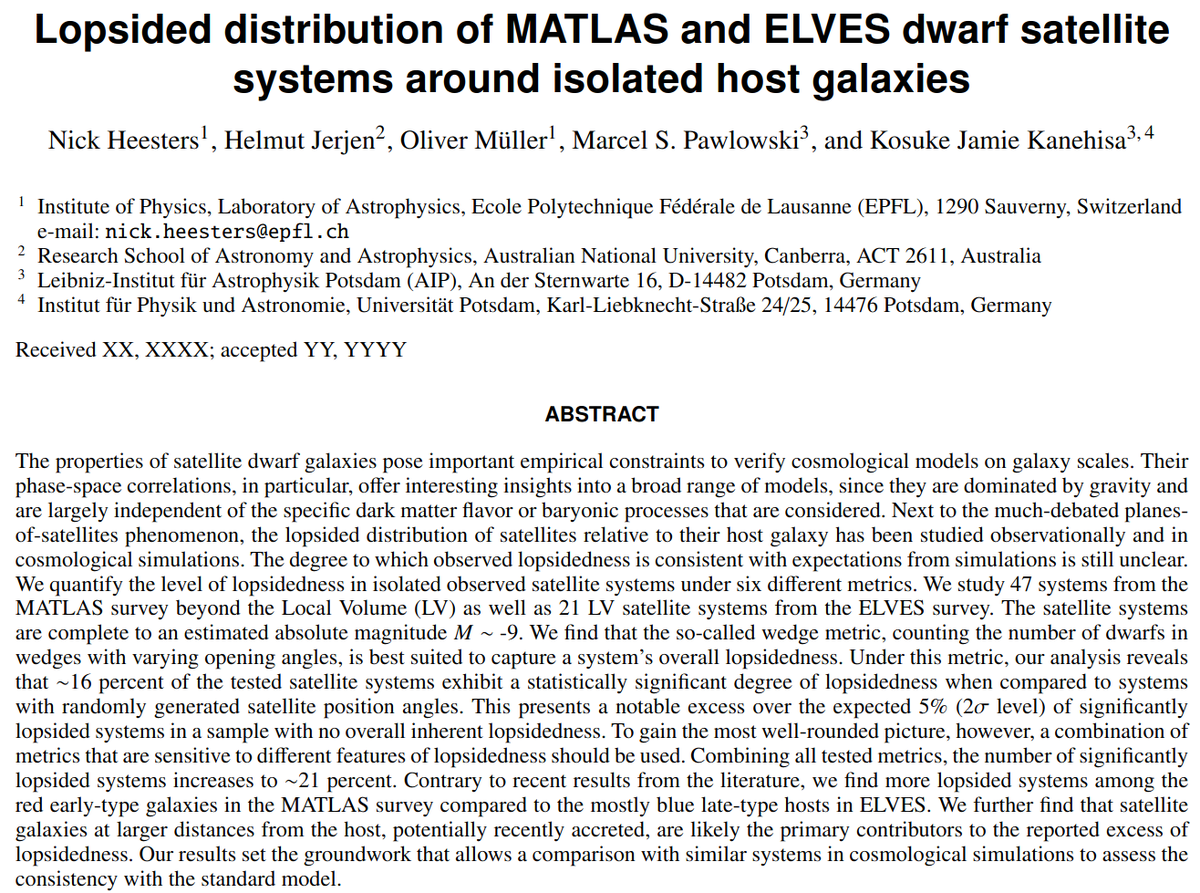
It's paper day! https://t.co/qOjbMW1HuQ, incl. Helmut Jerjen, @VoltarCh, @8minutesold and Jamie Kanehisa. We quantified the degree of lopsidedness in a large sample of isolated satellite systems in the Local Volume and beyond. 🧵
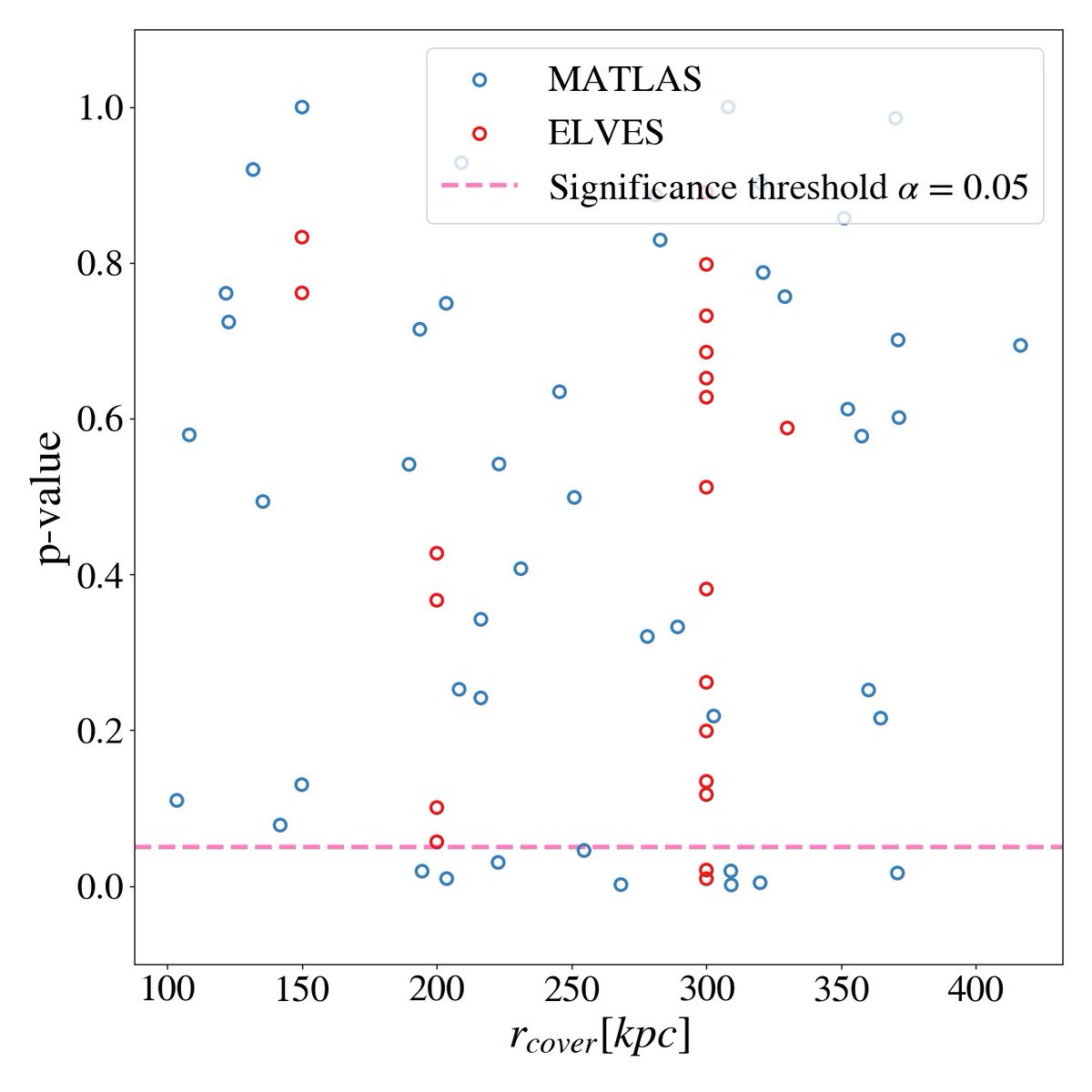
Lastly, we tested the influence of the covered physical radius around the host galaxy in kpc. We conclude that the signal is mostly driven by satellites at larger distances from their host (likely recently accreted), which is consistent with the findings of previous studies.