The Heima team is considering an on-chain governance proposal to burn 16.5M HEI from the Ecosystem allocation, including 12.05M locked HEI and 4.45M unlocked but untouched HEI token.
This Ecosystem fund was originally reserved for Polkadot parachain auctions. However, as Polkadot has moved from parachain auctions to Coretime sales, we can now cover the required DOT cost through the team’s reserved DOT treasury. This means these HEI tokens are no longer needed for their original purpose.
To be transparent with the community and reduce future supply overhang, we believe the right action is to burn these untouched HEI tokens through on-chain governance.
The HEI token are locked and saved under two multi-sig wallet on Heima Network:
https://t.co/rpTufzwz4l
https://t.co/Z5uSLWQEKT
The purpose of this proposal is to reduce future supply overhang, strengthen community trust, and clearly show that the team is committed to the long-term value of the project rather than relying on token reserves.
The Heima team is still actively building. Our new AI identity product, AgentKeys, is under active development and the work can be seen publicly on GitHub:
https://t.co/9Haralq2So
Another product, @wildmetaHQ , is also under very active development, although the repository is currently private.
We are making this commitment because we believe the project should create value through real products and future revenue, not through selling ecosystem tokens. With stronger community confidence, we believe Heima can pass through this difficult period and prove the long-term value of the project.
AgentKeys cap minting now carries a K10 proof-of-possession.🛡️
That means the worker now verifies a request-bound client signature from the agent-held device key, rather than relying solely on the broker signature.
The broker can still coordinate the request, but the worker no longer treats the broker signature alone as sufficient evidence that the caller holds the device key.
If the proof is missing, forged, tampered with, or stale, the worker fails closed. 🤖
⚙️ AgentKeys had a heavy building week last week.
• Config storage moved into its own protected class, giving onboarding and memory taxonomy a durable home separate from user memory and credentials.
• Broker and worker calls now run through one shared client. Less duplicated request logic, fewer places for protocol drift to hide, and a cleaner path across the daemon, MCP, CLI, and harness scripts.
• Onboarding now sets categories and proposes agent scopes. The new classifier path can organize and propose, but it does not silently grant sensitive authority. The master still approves the grant path.
• The last fake MCP backend is gone. The server now keeps one real HTTP backend path, and transport-conformance CI replaces the older demo-mode scripts.
Less demo scaffolding. More production reality. ✨
AgentKeys desktop onboarding is now a working ceremony. 🚀
• Email link, no registration form.
• WASM daemon bootstraps trust.
• Touch ID passkey derives the local wallet.
• Master device registers and audits on Heima .
• Parent-control panel follows.
Security-first AI management is being built now. 🤖🔒
The proposal has passed community governance.
The burn does not happen immediately after the referendum concludes. It is scheduled to execute 288,000 blocks after the referendum has passed. Depending on block times, this is expected to be approximately 40–60 days from today.
Community voting for the 16.5M HEI burn proposal is now live.
The Foundation has voted in favor of the proposal, but the final decision belongs to the community.
We encourage everyone to review the proposal, form their own opinion, and participate in the voting process.
Governance voting:
https://t.co/x5hvk6hGL0
Thank you to everyone taking part in the governance process and helping shape the future of the ecosystem.
Just a reminder that there is now only 1 day left to vote on the 16.5M HEI burn proposal.
If you haven’t voted yet, please take a moment to review the proposal and make your voice heard. The final decision belongs to the community.
Thank you to everyone who has participated in the governance process so far.
Community voting for the 16.5M HEI burn proposal is now live.
The Foundation has voted in favor of the proposal, but the final decision belongs to the community.
We encourage everyone to review the proposal, form their own opinion, and participate in the voting process.
Governance voting:
https://t.co/x5hvk6hGL0
Thank you to everyone taking part in the governance process and helping shape the future of the ecosystem.
A lot of AgentKeys work lately has been around memory.🧠
As agents accumulate more context, history, and workflow state, finding the right memory while maintaining access control becomes increasingly important.
AgentKeys is being built as the gate around agent memory. Retrieval engines can help surface relevant information, but they only operate on memory the AgentKeys gate has already authorized. 🛡️
A few recent updates in that area:
→ Added OpenViking (@openvikingai) as the first pluggable memory ranking engine behind the AgentKeys gate
→ Continued planning a classifier-service approach for translating natural language into structured policy attributes
→ Moved the memory engine and OpenViking integration out of the core architecture, creating cleaner boundaries between the authority layer and memory retrieval
HEI Cross-Chain Bridge Update 💡
Following Binance’s recent update regarding $HEI deposits and withdrawals on BNB Chain(BSC), we want to remind $HEI holders that the official Heima Token Bridge is available for transferring $HEI from BSC to the Heima Network.
For users who currently hold $HEI on BSC, you can use the bridge here:🔗 https://t.co/OknDVeev41
Available route: BSC → Heima Network
For users who would like to move $HEI from BSC to Ethereum, please complete the transfer in two steps:
BSC → Heima Network
Heima Network → Ethereum
At this time, BSC → Ethereum is completed through the Heima Network route.
Bridging $HEI to the Heima Network or Ethereum helps ensure continued access to ecosystem features, including voting, swaps, monitoring, and Agentkeys and Wildmeta activities on Heima Network.
💚We encourage all $HEI holders on BSC to review their preferred route and use the official bridge when needed.
If you encounter any issues during the bridging process, please join our official Telegram channel and our team will help you resolve them:💬https://t.co/MuQ0Wcmw9n
⚠️Please always use official links and stay alert for scams. Heima team members will never ask for your private keys or seed phrases.
Thank you for your continued support as the Heima ecosystem grows.
One of the core designs behind AgentKeys is isolation.
Not because we expect every agent to become compromised, but because eventually, one of them will.
If you’re running ten agents and one gets compromised, that compromise shouldn’t spread to the other nine.
🚧Isolation is enforced outside the agent’s control, not left to the agent itself. A compromised agent can't access credentials it was never granted or inherit permissions outside its own scope.
Keeping the blast radius contained and make sure one compromise doesn’t become ten.🛡️
A few small but important AgentKeys updates from last week.
1. Safer agent pairing 🤖
Agents now get their own device key inside their own environment. The master approves the pairing, but the agent never touches the master key.
2. A clearer memory boundary 🧠
AgentKeys owns the encrypted memory store and the gate around it. Ranking and retrieval can stay pluggable, but the durable part (user memory and access policy) belongs under the authority layer.
3. Hermes hook path 🛡️
Permission checks, audit writes, and memory injection are moving into the agent runtime lifecycle itself. Instead of asking agents to behave correctly, we’re making the boundary part of the system.
The shape of AgentKeys is getting clearer every day.
Same thesis, tighter surface.
Community voting for the 16.5M HEI burn proposal is now live.
The Foundation has voted in favor of the proposal, but the final decision belongs to the community.
We encourage everyone to review the proposal, form their own opinion, and participate in the voting process.
Governance voting:
https://t.co/x5hvk6hGL0
Thank you to everyone taking part in the governance process and helping shape the future of the ecosystem.
A lot of what Heima does lives underneath the surface.
It's always rewarding to see that work start turning into actual products and experiences people can interact with.
Excited for what's coming next 🚀
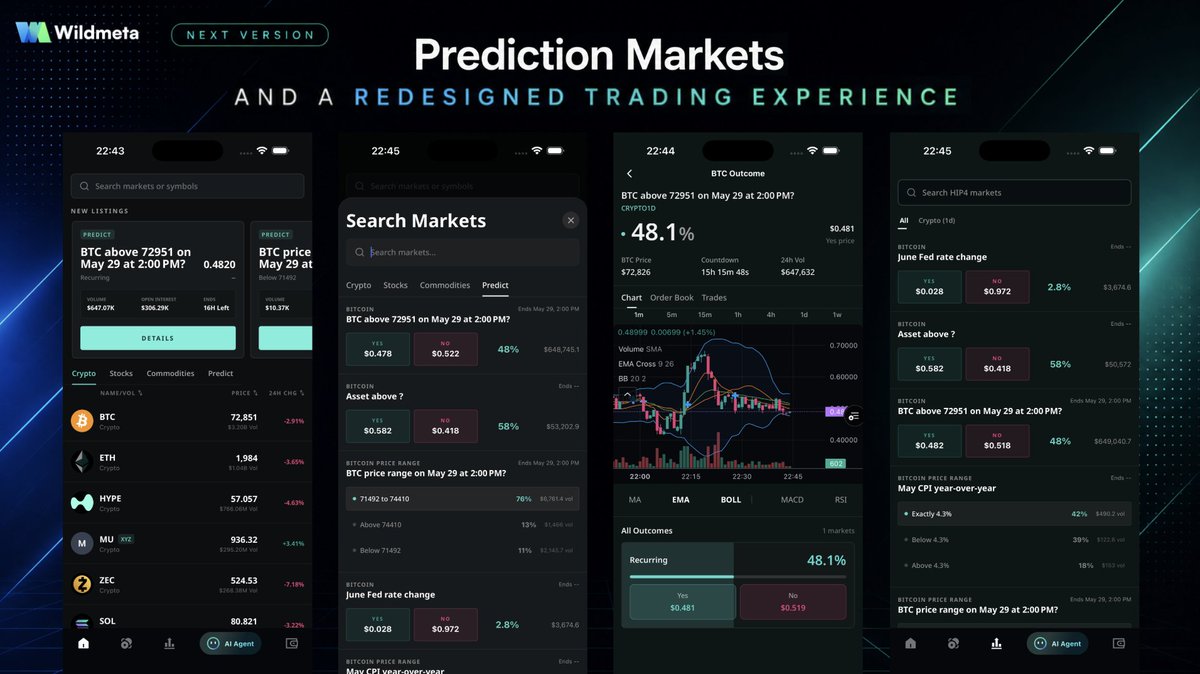
Alongside prediction markets, we’ve also been redesigning the broader app experience from the ground up, including a new landing page.
A lot of work has gone into making the next version feel more polished and cohesive across the entire product experience.
Can’t wait for everyone to experience the next version in action 🙌
As part of the governance process, the Heima team has officially submitted the onchain proposal to burn 16.5M HEI from the ecosystem allocation.
The proposal has now passed council voting and will move into the community voting phase in 2 days.
Proposal details: https://t.co/khz8tm7CLe
With the proposal now entering the next stage of governance, community members will soon have the opportunity to participate directly in the voting process.
We appreciate everyone who has followed the discussion so far and look forward to continuing to build long-term value for the Heima ecosystem with transparency at the core.
AgentKeys was designed under the assumption that agents are exploitable. 🛡️
The goal is to make sure no single compromise collapses the entire security model.
Instead of handing agents raw API keys:
→ permissions are checked against operator-defined scope
→ short-lived cap-tokens get minted per request
→ every request gets revalidated
→ revocation propagates in seconds
The agent never permanently holds the key, it only receives narrowly scoped permission for a short window of time. 🔐
If one agent gets compromised, the blast radius stays contained.
We know the recent news might’ve created concerns across the community.
But fundamentally, our focus has not changed:
keep shipping, keep improving the infrastructure, and keep building for the long term.
Everything we build is visible, the team is still here building every single day. Development across Heima, AgentKeys, and Wildmeta has never stopped.
Our GitHub activity is fully public, and anyone can verify the progress themselves 👉 https://t.co/tu66WhvwnR
• AgentKeys development commits are live and publicly visible
• We recently launched the new Heima Explorer to support omni-account visibility and ecosystem infrastructure
• Wildmeta’s upcoming version includes prediction markets and a brand new landing experience
Thank you to everyone continuing to support Heima through the volatility.
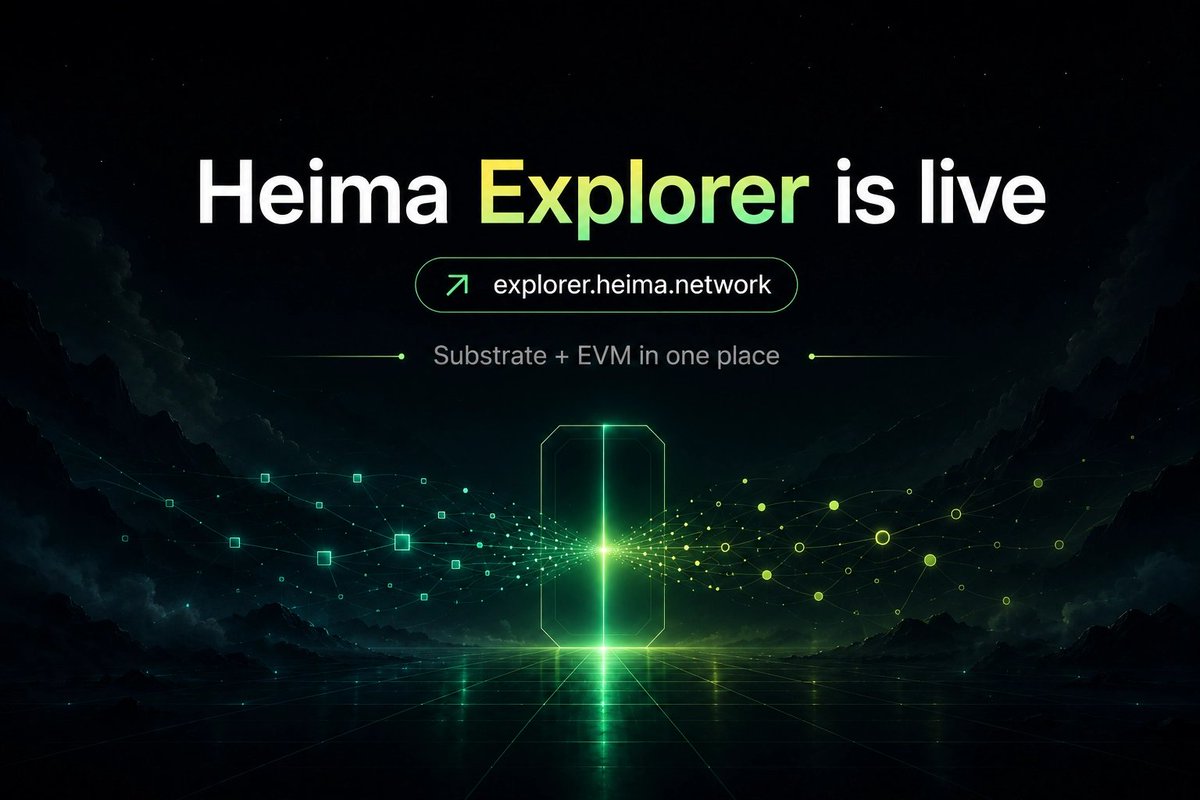
The Heima Explorer is live👉https://t.co/MQRg20eorh
Substrate and EVM, both sides, one place. 🦦
What you can do right now:
→ Look up any EVM account
→ Find smart contracts by address
→ Watch AgentKeys write to the chain live — scope changes, credential actions, agent identity
👤 Coming next: Omni-account indexing.
Search by identity — one identity, every wallet, every action tied to it across products and time.
Heima is the infrastructure. Wildmeta runs on it. AgentKeys runs on it.
Future products will too. The explorer is the window into the infrastructure itself. 👀
Credential management doesn’t stop at storage.
Most agent systems today still handle this across scattered .env files, backend configs, and manual key rotation workflows.
AgentKeys turns credential lifecycle management into infrastructure.
Store → Run/Read → Audit → Rotate → Revoke → Teardown 🤖
Credential handling becomes structured, traceable, and manageable across the full lifecycle of an agent. 🦦