Physiotherapist, PhD Student Laboratory of Biomechanics and Motor Control - LABCOM Sao Paulo State University - FCT - UNESP Presidente Prudente - SP, Brazil
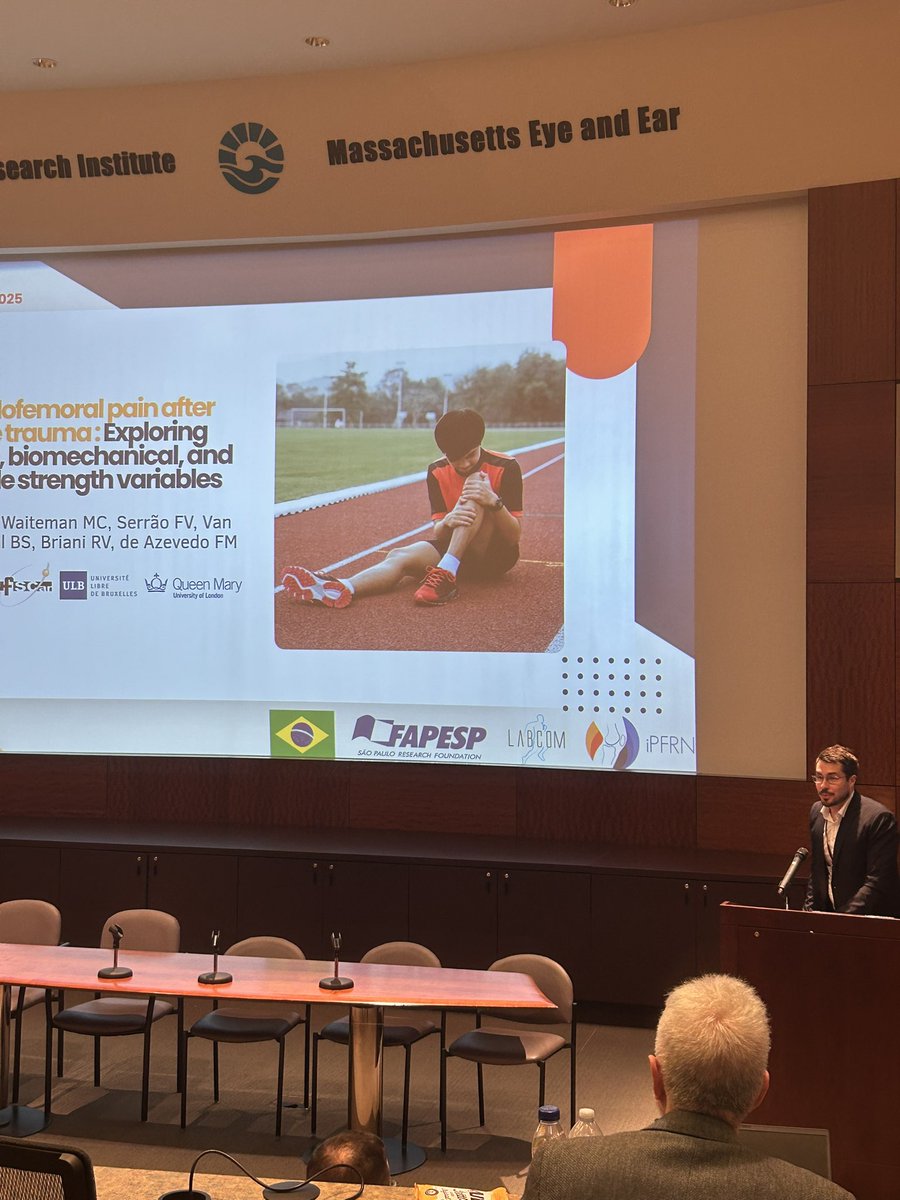
Not all patellofemoral pain is the same.
A history of knee trauma may influence:
- Clinical presentation
- Movement strategy
- Interpretation of biomechanical findings
New paper published👇🏼
https://t.co/4PFiyhTzlb
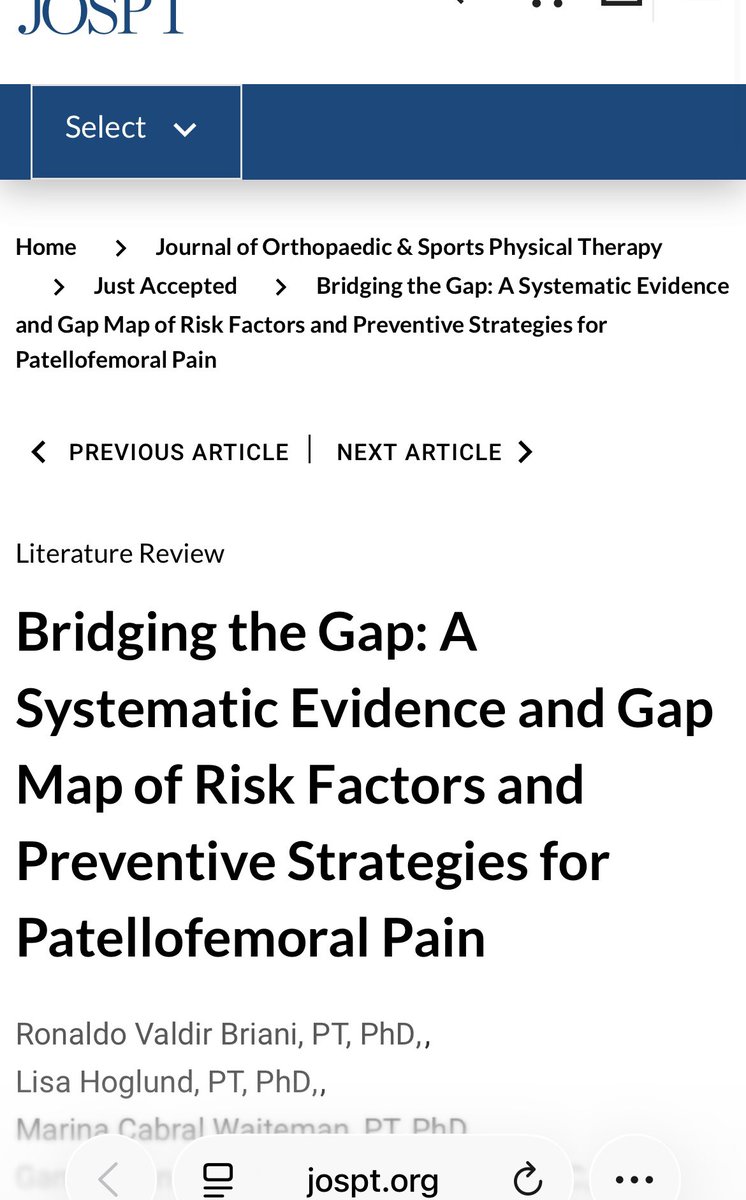
Patellofemoral pain risk factors and prevention: what’s supported by evidence, and where are the gaps? Explore this interesting evidence gap map! https://t.co/IUctM4rISR
New publication out!
✅ Bilateral deficits in single-leg hop for distance performance does not seem to occur concomitantly with sagittal plane movement differences in people with patellofemoral pain as compared to controls.
‼️50 days' free access link: https://t.co/S922d9xQIr
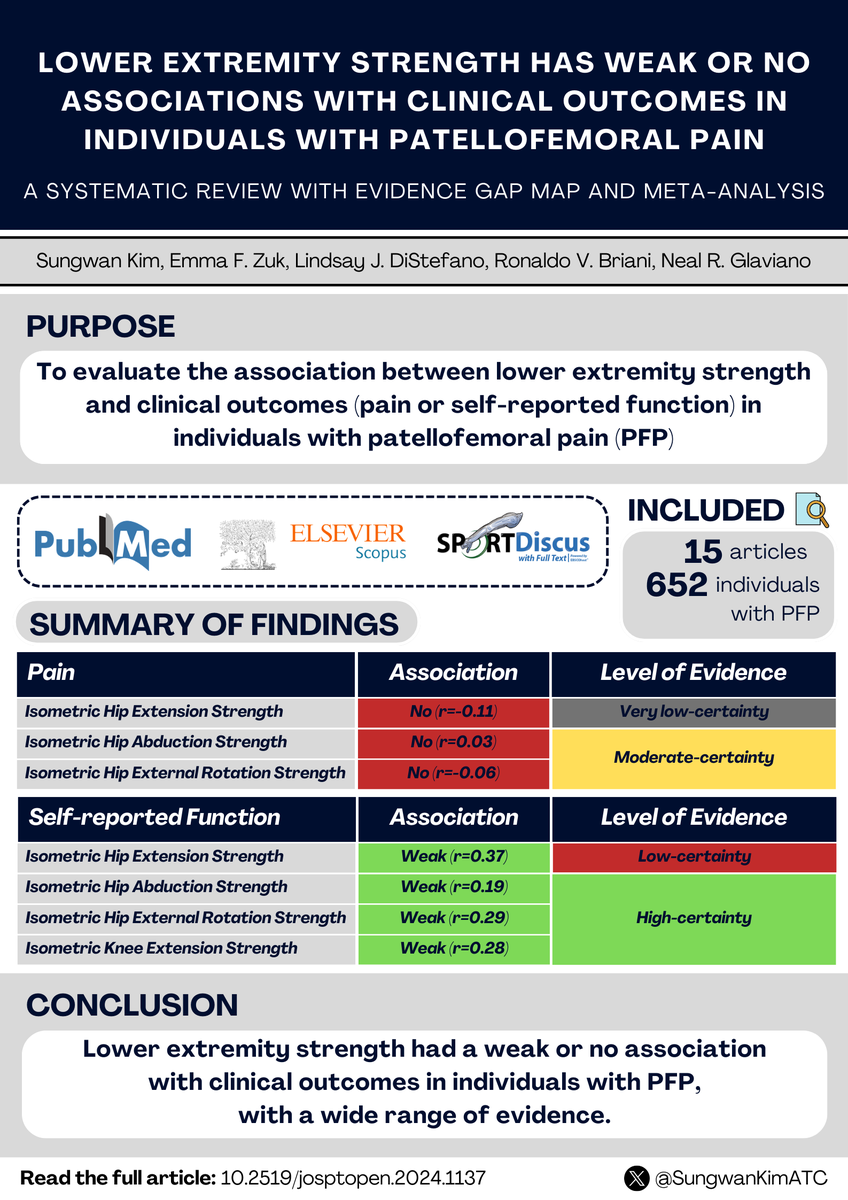
🚨Our newest Systematic Review, including 83 studies, showed large-effect deficits in function of individuals with PFP! However, they were not explained by age, BMI, symptoms duration or pain.
@JAT_NATA
Free Full Text ⬇️
https://t.co/9TBdJ99Y4h
🚨Save the Date! 🚨
#iPFRR25 will take place in Boston USA on 1-4 October 2025.
Mark your calendars 🗓️
Research Retreat 1-3 October (Wed-Fri)
Clinical Symposium 4 October (Sat)
More information to follow. Thanks to hosts #DavidSelkowitz@patellaprof@NealGlaviano
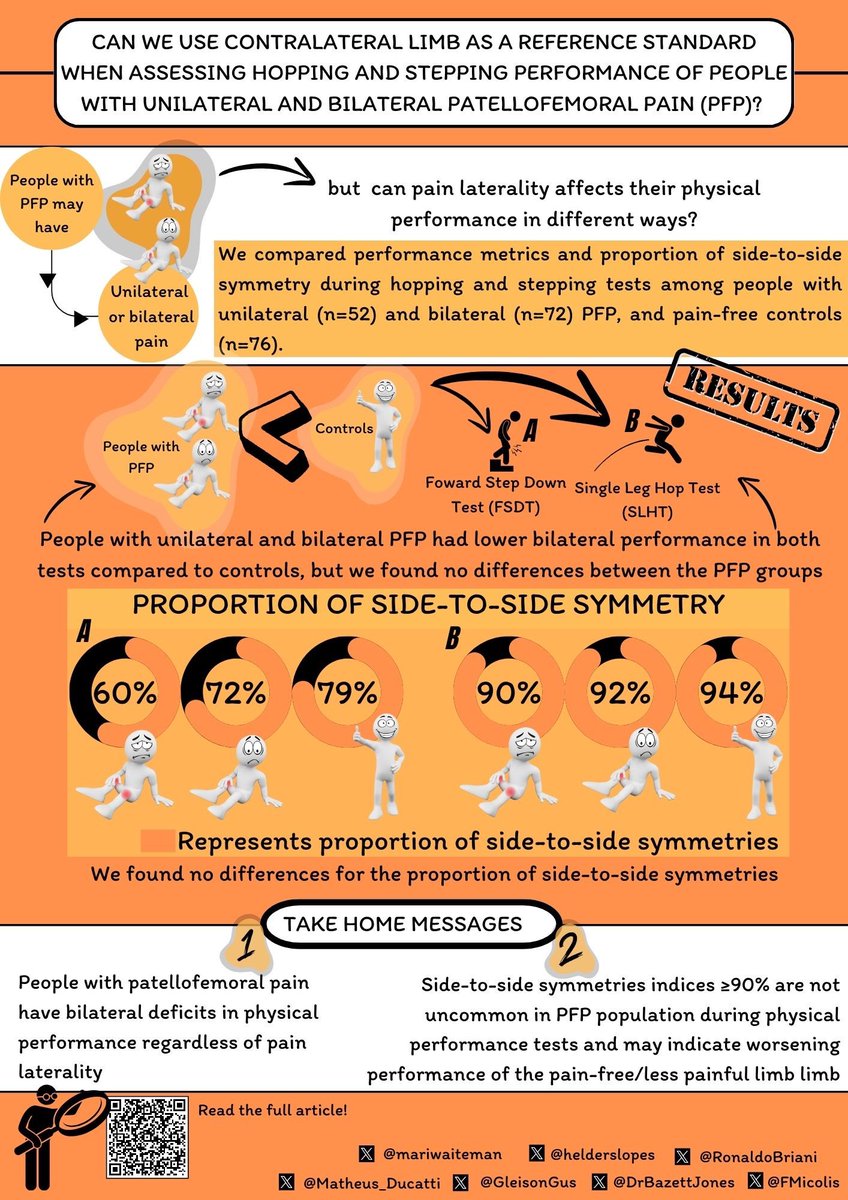
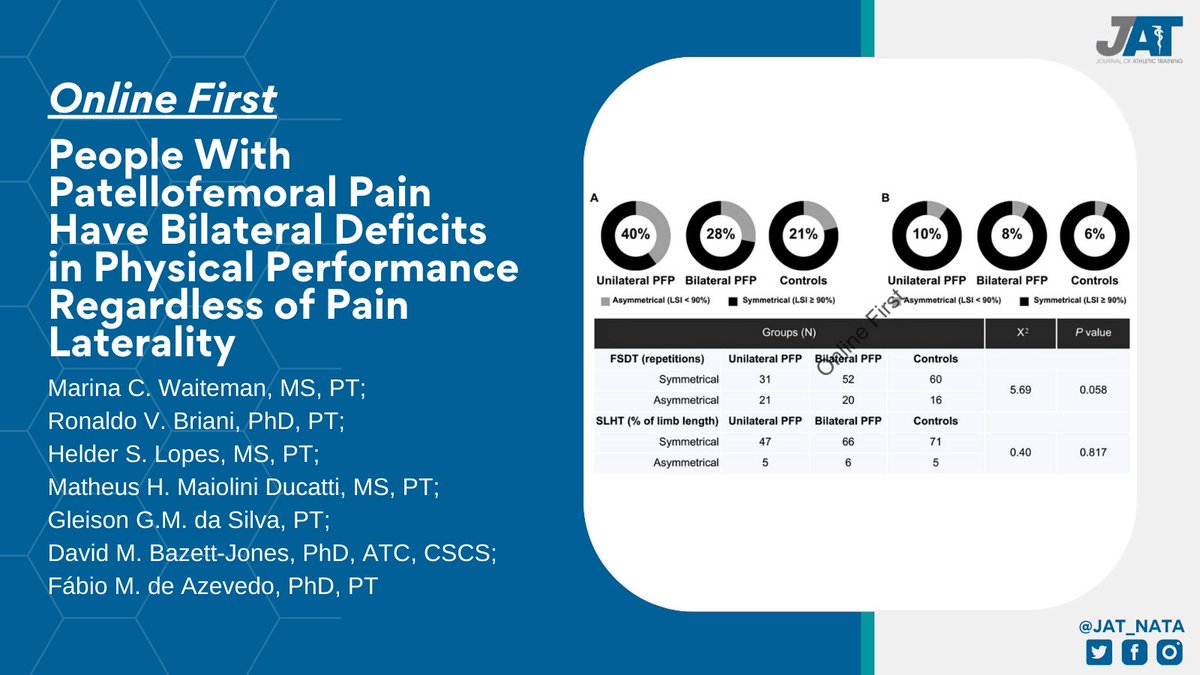
If you still have not read our paper recently published in @JAT_NATA investigating physical performance among people with unilateral and bilateral patellofemoral pain and controls, here it is a summary of our findings. 👇👇👇🤓
Full-text available here: https://t.co/cIHha5yN00
Online First - Marina Waiteman, MS, PT and colleagues compare performance and proportion of side-to-side limb symmetry during the forward step-down and single-leg hop tests among people with unilateral and bilateral PFP, and pain-free controls.
Article: https://t.co/lVJoNd0QmJ
Can we use the contralateral limb as a reference standard when assessing physical performance of people with unilateral or bilateral patellofemoral pain?
Our latest study published in @JAT_NATA has interesting results about this 👆
Full text here: https://t.co/cIHha5yN00
Portable dynamometers are reliable to measure hip muscle strength. Clinicians may rely on these evidence-based recommendations to set up reliable testing protocols 👇👇👇👇
Full-text available here: https://t.co/iWFL28WhqT
Portable dynamometers may be better for tracking trends than for assessing actual strength values taken from movements at the hip...
Lots more, including recommendations on how to set up reliable testing protocols
#Review ➡️ https://t.co/1ZiUTME4HT
#yourJOSPT#Dynamometry