Mother of five, love all things Irish, Notre Dame and Red Sox fan, paleo diet, former diet mountain dew addict, genealogy addict, want to get back to Ireland.
❤️🥹 UNA DE LAS HISTORIAS MÁS LINDAS DEL AÑO.
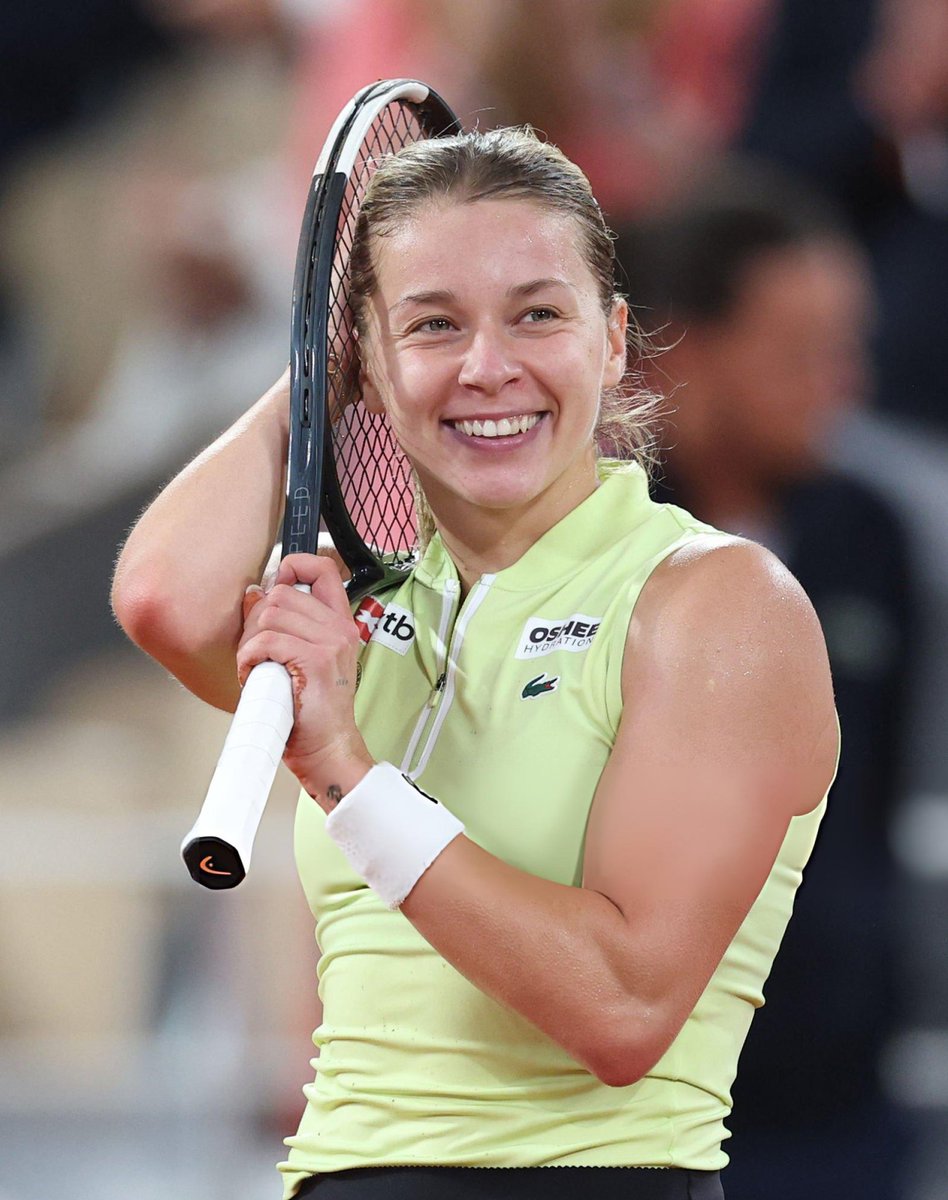
Maja Chwalinska llegó a Roland Garros habiendo ganado 865.000 dólares en toda su carrera, sin sponsors, fuera del Top 100 y luego de haber superado una dura depresión.
Maja Chwalinska se va de Roland Garros como subcampeona, con casi 1,5 millones de dólares en premios, siendo 21° del ranking y con la admiración del mundo entero.
A 24-year-old Polish tennis player arrived in Paris last week ranked 114th in the world, with no sponsors, no guaranteed income, and no certainty she could even pay for her hotel room.
She had to win three qualifying matches just to enter the French Open main draw. Prize money is only paid at the end of the tournament, so a Polish sports drink brand quietly stepped in and covered her hotel bill.
Her name is Maja Chwalinska. And today, she plays in the French Open final.
Before this tournament, she had won exactly one Grand Slam main draw match in her entire career. She had battled depression so severe that in 2021 she couldn't get out of bed. She underwent knee surgery in 2022. She spent years grinding through small tournaments across Europe just to stay afloat.
Then she arrived in Paris, won three qualifiers, and kept winning. Zheng Qinwen. Elise Mertens. Maria Sakkari. Diana Shnaider. Nine straight matches. One set dropped.
She is now the first qualifier in French Open history to reach the final. The last time a qualifier reached a Grand Slam final, it was Emma Raducanu at the 2021 US Open. Raducanu won.
By simply making the final, Chwalinska has earned more prize money than her entire career combined. The runner-up cheque alone is $1.6 million. If she wins today, she takes home $3.25 million.
One week ago she couldn't pay for her hotel room.
Kyle Torgerson, a @MonTechFootball alumnus, is one of five finalists for the @CollSportsComm College Division Videographer of the Year award!
🗞️: https://t.co/rEr70L6td7
#RollDiggs ⚒️
Congrats to @kyletorgerson11, who was named a finalist for @CollSportsComm's College Division Videographer of the Year award! The winner will be announced June 10 at the CSC convention in Las Vegas. #RollDiggs ⚒️
On September 11, 2001, 24-year-old Welles Remy Crowther was working on the 104th floor of the World Trade Center’s South Tower when Flight 175 hit the building.
He was trapped 27 floors above the impact zone a place almost nobody survived.
But instead of only trying to save himself, Welles stayed behind to help others escape.
Before heading into the smoke, he left his mom a voicemail:
“Mom, this is Welles. I want you to know I’m OK.”
Welles was also a volunteer firefighter back home in New York, and he always carried a red bandana his father gave him as a kid.
Survivors later remembered seeing a man with a red bandana covering his face, leading people to safety, carrying injured victims down stairs, and going back up again and again to help more people.
He reportedly saved at least 18 lives before the South Tower collapsed.
For months, nobody knew who “the man in the red bandana” was.
Then in 2002, his mother read survivor stories in a newspaper and realized they were talking about her son.
Welles Remy Crowther will always be remembered as a real hero. ❤️
Rachel Entrekin just ran across Arizona on five-minute naps. She covered 253 miles, nearly 10 marathons back to back, in 56 hours and 9 minutes. Faster than any human has ever done it.
The race starts in the cactus desert near Phoenix and ends in Flagstaff. Runners climb 38,791 feet over the course (taller than Mount Everest). They descend almost 34,000 feet. Daytime in the desert hits the 80s, while overnight on Mount Elden it drops below freezing. The cutoff is 125 hours, and most finishers need every minute of it.
The course runs across trail, rocky dirt roads, and pavement. She held a 13-minute-mile pace, the speed of a steady jog, for two and a half straight days.
Researchers tracking 119 ultramarathon runners found that 74% of people in 100-mile races don't sleep at all during the race. Past 200 miles, the body breaks. Most racers stop and sleep for hours at a time. Entrekin took five-minute dirt naps and kept moving. Her closest rival, Kilian Korth, who won the three biggest 200-mile races in 2025, tried the same five-minute strategy. It didn't work. He ended up sleeping for an hour and finished 78 minutes behind her.
Going that long without sleep is medically dangerous. A 2023 review of ultramarathon research found that in one 152-mile mountain race, about a third of runners who slept under 30 minutes had visual hallucinations. Seeing things that aren't there usually starts after about 24 to 48 hours awake. Severe loss of touch with reality, often called acute psychosis, sets in between 48 and 90 hours. Entrekin ran straight through that entire window without stopping.
Her three Cocodona times: 73:31:25 in 2024, 63:50:55 in 2025, 56:09:48 this year. She has cut 17 hours off her own time in three attempts. The previous overall record, set by Dan Green, was 58:47:18, and Entrekin beat it by 2 hours and 37 minutes. At the finish, she said: "I feel fine, that was insane."
🚨HISTORY MADE!
Rachel Entrekin just won the Cocodona 250 outright — first woman ever to take the OVERALL title!
The 250-mile race from Phoenix to Flagstaff was an absolute beast, and she crushed it in 56:09:48, smashing the previous course record by over 2 hours.
13 minute mile pace for 56 hours!
She only slept 3 times the entire race (one 5-min nap + two 7-min naps) and still dropped the entire elite men's field. Absolute legend!
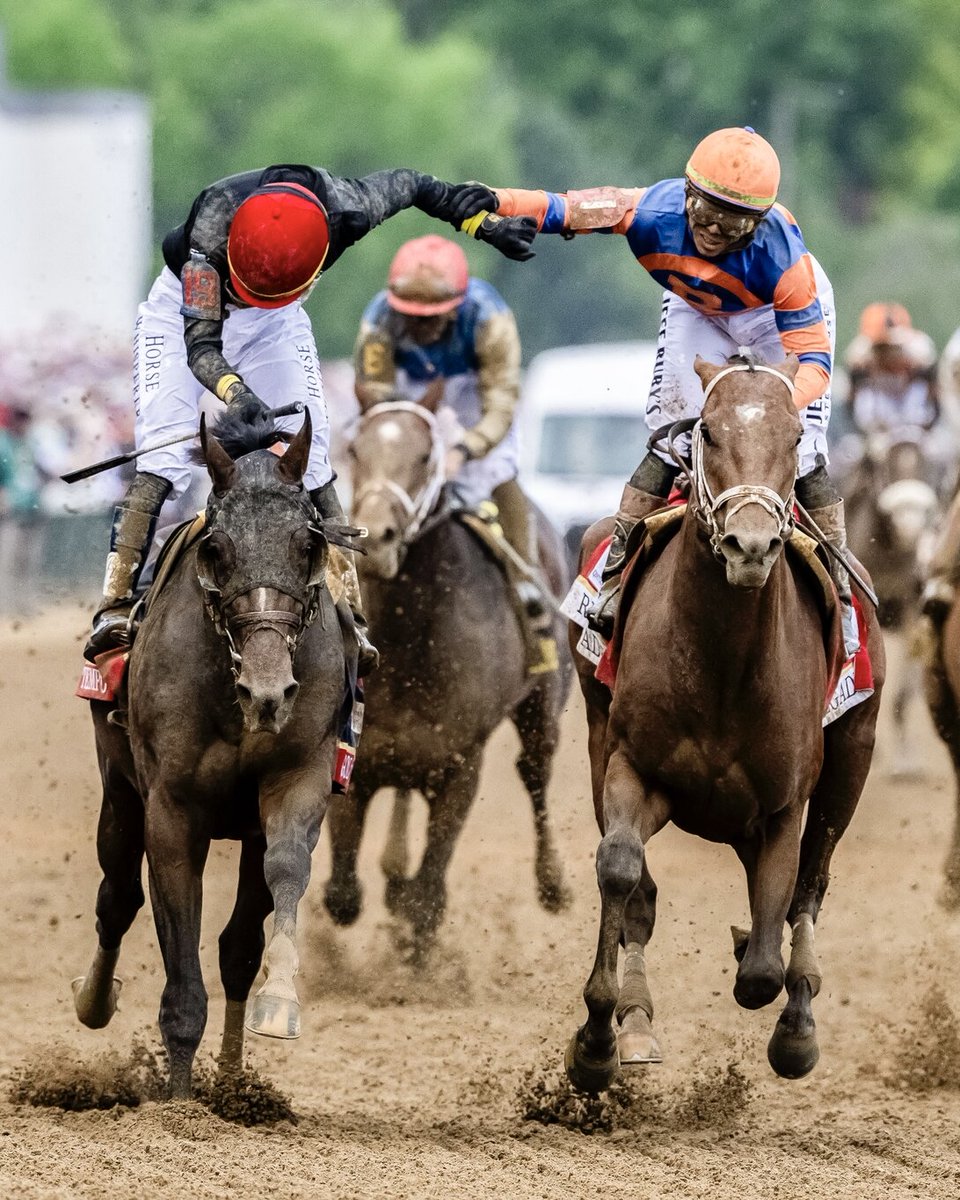
On this Kentucky Derby day, here’s your reminder that Secretariat was faster than any horse who has ever lived. The year is 1973 and this is his track record run. Untouched for 53 years. The GOAT.
🚨 𝑺𝑪𝑯𝑶𝑶𝑳 𝑹𝑬𝑪𝑶𝑹𝑫 🚨
The team of Brooke Zetooney, Rileigh McGree, Lily Meskers, and Callie Wilson run a 44.66 to lower the Montana record by a tenth!
#GrizTF | #GoGriz
Take it from me, a recent empty nester:
The Good Old Days don’t feel like it at the time.
It feels more like hard work and struggle. The days are long but the years fly by.
Then, one day you wake up and the house is quiet.
One of my most cherished memories is coming home from work each day and opening the creaky back door to our 1947 craftsman home.
My 3-year-old daughter (now 21) would drop her toys and run down the hall—her footsteps booming on the old wood floor—to greet me.
I love my life and don’t want to go back, but I do wish I could pass one message across time to 35-year-old me:
You’re living the Good Old Days right now. Savor every moment.