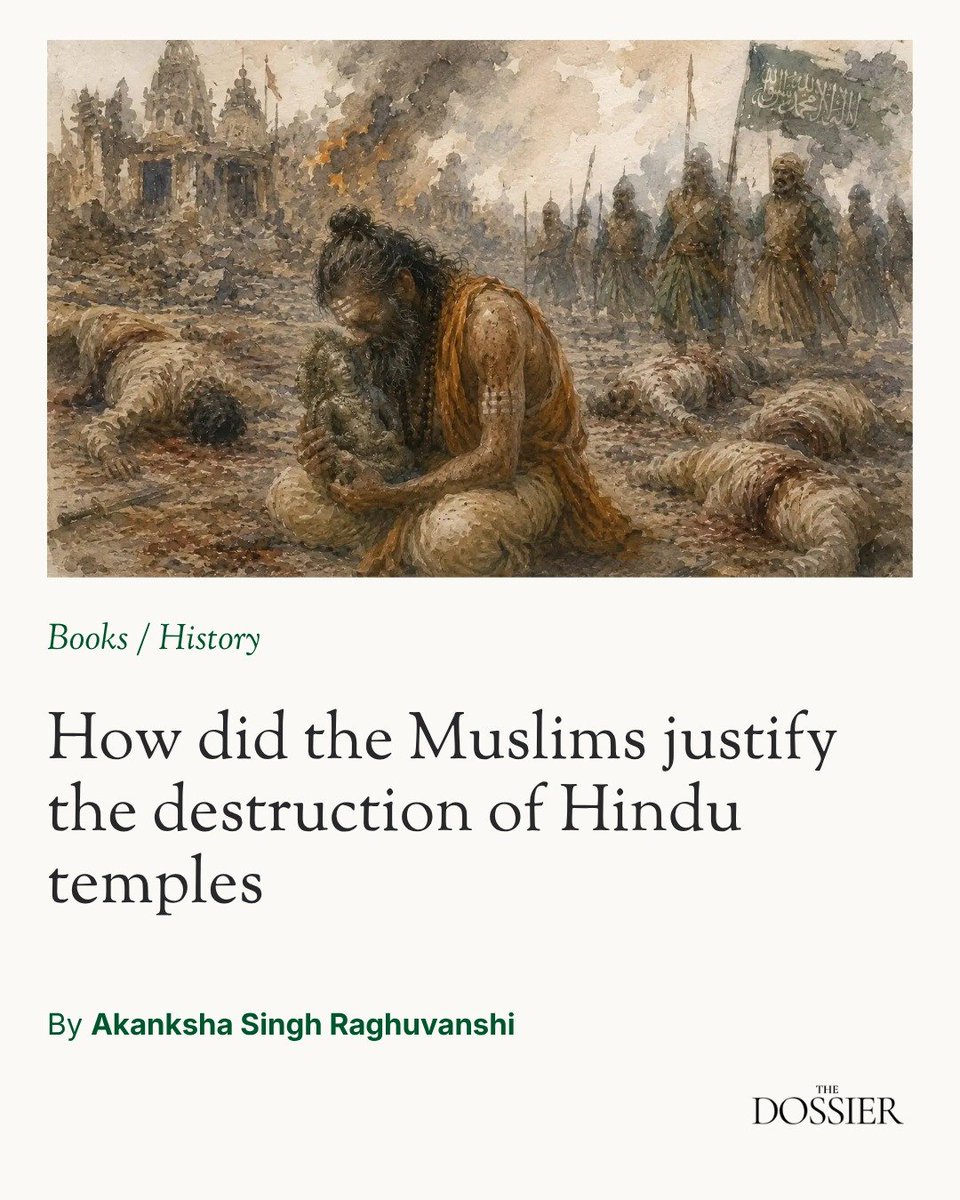
In his celebrated historical work Kitab al-Yamini, Abu Nasr Muhammad ibn Muhammad al Jabbarul-Utbi, who served as the secretary to Mahmud of Ghazni, provides a vivid and detailed account of the conquest of Thaneshwar (present-day Thanesar in Haryana). Al-Utbi writes: ‘The blood of the infidels flowed so copiously that the stream was discoloured, not withstanding its purity, and people were unable to drink it… The victory was gained by God’s grace, who has established Islam for ever as the best of religions, notwithstanding that idolaters revolt against it… Praise be to God, the protector of the world, for the honour he bestows upon Islām and Musulmans.’
What does this quote do? At least, for me, it celebrates the killing of the infidels, a religion, its God and Muslims for a victory. History is not merely a collection of dates, dynasties, and battles. It is the collective memory of a civilization—its triumphs, its wounds, its moments of glory, and its deepest traumas. Some chapters inspire pride; others demand solemn reflection. Among the most painful and transformative periods in the history of Bharat is the long era of Islamic invasions.
By Akanksha Singh Raghuvanshi (@singhhakanksha_)
https://t.co/iD3aMq9OvH