Domain name phrases and expressions are a beautiful thing. Even when they are boring.
I think they are one of the most under-utilized things i marketing.
There are more ways to create domain phrases than you might first think. A little 🧵 1/7
New domain sale just hit my inbox!
Bought this domain in November 2024 at the NamesCon auction in Austin, TX for about $23K.
Hold time: 1 year 6 months
Afternic Commission: 25%
Total Payout: $75,000
Total Profit (before taxes): around $50K
#domains
I love selling domains but sellers let’s understand something. Outbound only works when your domain has a clear path of potential buyers.
If the name obviously belongs to fintech, dental, logistics, whatever, we know exactly who to call and how to frame the value.
A random misspelled word with no obvious meaning or buyer, there’s nobody to pitch. Clients looking for specific domains of course but that’s not the outbound brokers do.
Not every name is outbound material.
💡 Today's Domaining Tip 💡
Don’t sell domains sell risk removal.
“Share a sale to get a sale…” (you know me, I love positive energy manifestation is real)
But here’s what’s best: share how to make a sale… that’s how you actually get one. 💰
The Cheval de Troie strategy, you remember ? : I’ve said it before, trust is everything. In outbound, the goal isn’t cybersquatting or pushing domains blindly, it’s helping people secure their brand. That’s how you enter the door.
If you help someone protect something they care about, you don’t get just one customer… you can turn 10 secure conversations into 100 clients.
At scale, that recurring thousand dollars a month becomes very real, especially now, with AI making execution more feasible than ever.
Most buyers don’t wake up wanting a domain… they wake up worried about brand protection, competition, and missed opportunities. If your outreach positions you as someone who helps them secure their digital identity (not just “own a name”), your conversion rate changes completely.
That shift turns cold outreach into trust-building and trust is what closes deals.
The Sale That Matters
One sale might change everything—but only if you’re still in the game when it happens.
My first #domain sale was around 1999 or 2000 (I don’t remember the exact price). I sold https://t.co/FpD135GK0k to a church in Oregon through outbound email. Since then, I’ve sold names ranging from $20 to $180k. There have been ups and downs, but one thing has remained constant: I keep buying and I keep selling.
This isn’t a maybe—I’m confident that one of these years, a handful of my hand regs will sell for $500k or more. Until then, I’ll keep pushing forward.
Capital is flowing globally—from China to the UAE, Europe, the United States, and South America. Startups and mergers backed by serious money are willing to pay for strong, names. Five years ago, a $1 million domain sale felt rare—almost unbelievable. Now, it’s becoming part of the landscape.
If you want to stay competitive, evolve your thinking. Spend time where founders and investors gather. Learn how they think, what they value, and why they’re willing to acquire a recently registered domain for life-changing money.
The market is shifting in real time. What you knew this morning may already be outdated.
This is just my perspective—but the direction is clear: things are evolving. And trends like AI and data infrastructure aren’t slowing down anytime soon. Even major players like Duke Energy are investing heavily—over $100 billion into data centers and related infrastructure.
Stay in motion. The next sale could be the one that changes everything.
BIN, hand reg, outbound, HT, flip...
We know many of you speak this language fluently.
But for those just getting into domaining, it can feel like a different world.
So we’ve pulled together some of the most common terms to make conversations easier to follow (and join).
BIN
Buy It Now. A fixed price a buyer can purchase at immediately.
Inbound
When the buyer comes to the seller through a lander, marketplace, or search path.
Outbound
When the seller proactively reaches out to potential buyers to pitch a domain.
Flip
Buying a domain with the aim of reselling it relatively quickly for a profit.
Hand reg
Registering an available domain directly, not buying from a prior owner.
Drop reg
Registering a domain the moment it drops and becomes available again.
Aged domain
A domain with an older creation date or prior history.
Floor price
The rough lowest price the market is likely to pay for a type of domain.
Liquid
A domain with strong investor demand and relatively easy resale, often in established short-name categories.
Lander
A for-sale landing page for a domain, usually with inquiry, offer, or BIN options.
Lead
A prospective buyer.
Counteroffer
The seller’s response after receiving an offer.
Comps
Comparable sales used to help price a domain.
Installments
Paying for a domain over time instead of all at once.
LTO
Lease-to-own. A common installment model where the buyer pays monthly toward ownership over a set term.
Carrying cost
The ongoing cost of holding domains, such as renewal fees.
HT
Hold time. How long a domain was held before it sold.
EMD
Exact Match Domain. A domain that exactly matches a search phrase or keyword term.
Trend reg
Registering a domain based on a trend, often with a short window of opportunity.
▫️Patterns and shorthand
LLL / LLLL / 3L / 4L / 5L
Letter-count shorthand for short domains.
CVCV / CVVC / VCVC
Pattern shorthand where C = consonant and V = vowel, used for describing short domains.
NNN / NNNN
Number-only pattern shorthand.
NNL / LNL
Letter-number pattern shorthand.
x, xx, xxx, x,xxx, xx,xxx
Pricing shorthand for ranges, like low xx or mid xxx.
We kept it to the terms that show up most often in everyday conversations.
If you've been in domaining for a while, what would you add for someone just getting started?
💡 Today's Domaining Tip 💡
Outbounding is not just about sending “Do you want to buy this domain?” messages. If you want to actually sell names consistently, you need to show up before the buying intent appears.
There are several ways to do that:
-Introduce yourself properly
-Explain what you do (domain investing / naming / branding)
-Position yourself as the go-to person for future domain or branding needs
The goal is simple: you’re not just selling a domain today, you’re planting a seed.
When people eventually need a name or rebrand, they should already know who to come back to.
That’s how you turn cold contacts into future clients.
💡 Today's Domaining Tip 💡
Abbreviations aren’t just shortcuts, they’re premium brand assets.
Look at how strong concepts compress into powerful domains:
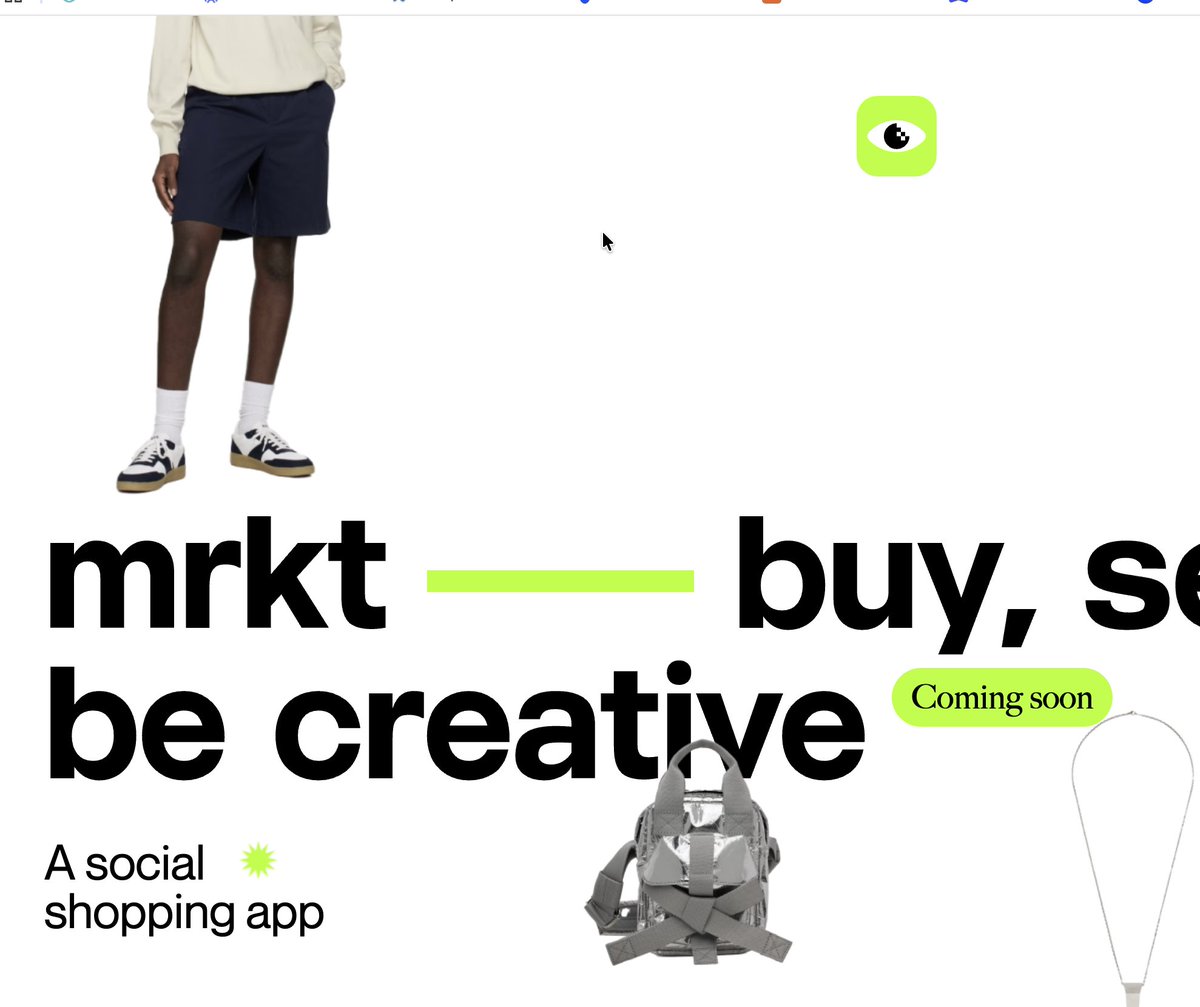
Marketing → mrkt .com / mktg .com
Digital → digi .com / dgtl .com
Growth → grwth .com / grth .com
Brand → brnd .com
Why this works:
• Short = more memorable
• Consonant-heavy = modern tech feel
• Still readable = brandable
🚀 The opportunity:
Thousands of high-value words can be “compressed” into 4–5-6-7 letter domains.
🧠 Pro move:
Focus on clear abbreviations, some you use in your daily industry/job, not random letter drops. If someone can guess the full word, you’ve got a winner.
💰 These are perfect for startups, AI tools, and Web3 brands.
I am the CEO & Founder of the #1 Domain Broker in the world (@mediaoptions), and if I could give everyone one piece of Domain Name advice, it would be this…