Learn how to lower hotline answering-service costs by using software to route calls to the right person, check who is on call, try backup contacts, offer callbacks when no one answers, and keep clear records of each call.
Learn how to keep your existing hotline number when switching systems, including call forwarding, number porting, and running old and new numbers together safely
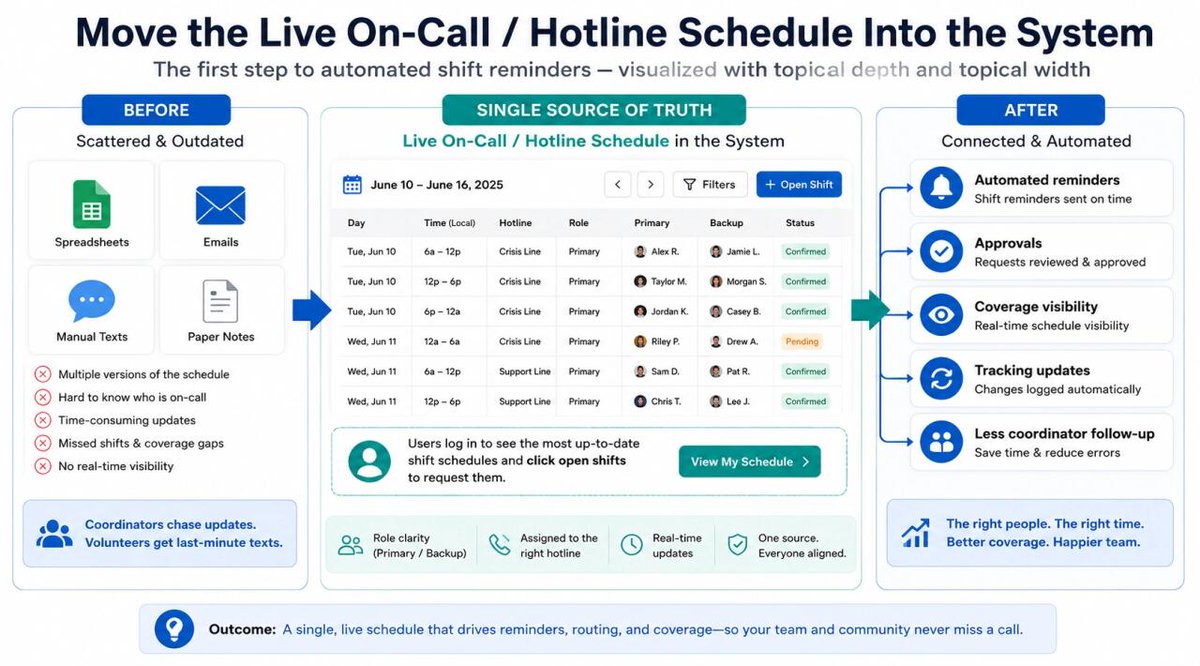
Can calls automatically route based on an on-call schedule? Learn how schedule-based routing uses live shift data, primary and backup responders, escalation rules, fallback logic, and audit logs to keep hotline calls reaching the right person after schedule changes.
Learn how to build a safe and effective hotline, from defining its purpose and training responders to choosing technology, protecting privacy, creating referrals, measuring outcomes, and launching with confidence..
Call answering services often fail crisis hotlines. Learn how routing, callbacks, scheduling, and reporting impact response and what systems must get right.
After-hours answering sounds simple until reality hits. Compare models for hotlines and on-call teams, pricing signals, and common failure patterns early.
Cover crisis calls in Spanish and English without generic scripts. How nonprofits align bilingual answering with language access plans and safer handoffs.
Running on-call operations with separate scheduling and voice systems increases cost and operational risk. An all-in-one platform simplifies setup, reduces failures, and scales better for small teams.
Call forwarding routes calls. Answering services handle intake. This guide adds the third category: schedule-driven escalation with fallbacks and proof.