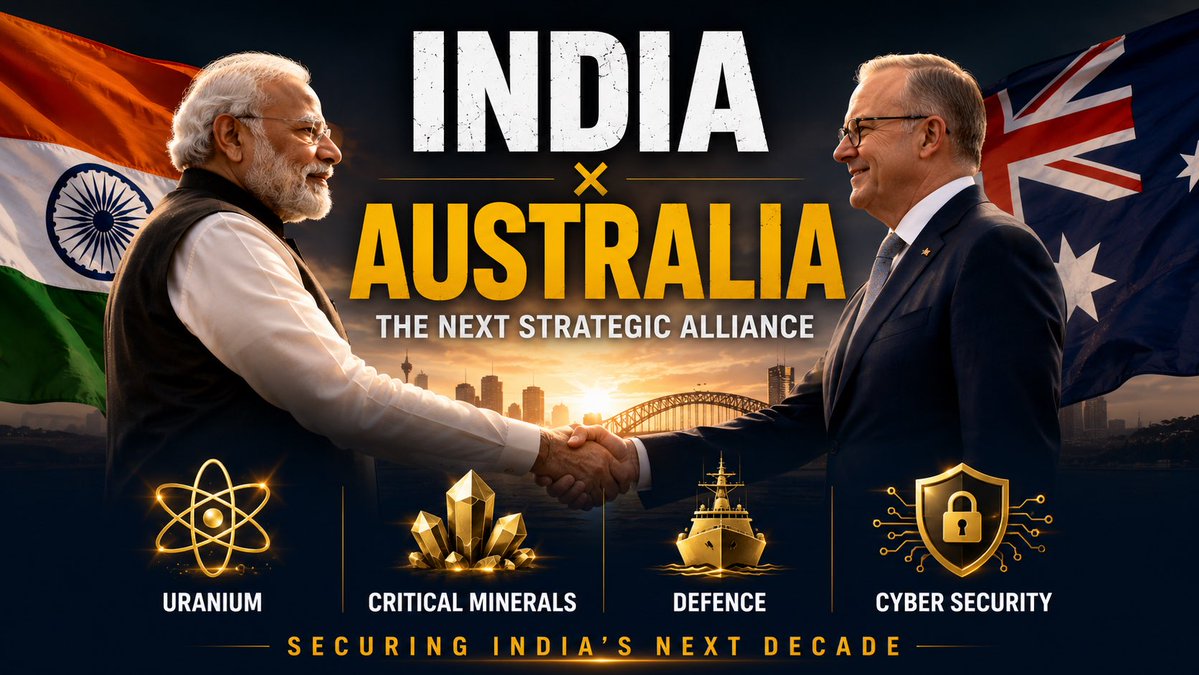
🚨 Modi’s Australia visit wasn’t about optics—it was about securing India’s next decade. 🇮🇳🇦🇺
⚛️ A secure uranium partnership to power India’s expanding civil nuclear programme.
⛏️ A strategic critical minerals corridor to strengthen lithium, rare earth and semiconductor supply chains.
⚓ Deeper defence industrial cooperation, maritime domain awareness and Quad interoperability across the Indo-Pacific.
🔐 New frameworks on cybersecurity and resilient supply chains to reduce strategic vulnerabilities.
Energy. Critical minerals. Defence. Technology.
India and Australia aren’t just strengthening ties—they’re building the strategic foundations of the Indo-Pacific’s future.
🚨
Rahul Gandhi’s 18-Day “Vanishing Act” (June 22 - July 9, 2026)
No rallies.
No roadshows.
No Wayanad visits.
No ground connect.
Just tweets.
While Modi ji leads from the front . Viksit Bharat on the move .
LoP prefers digital comfort & internal party fire-fighting.
Real public leader vs Remote Control Opposition.
#RahulGandhi #VanishingAct
180 km+ range. 450 km/h speed. Sub-5m precision. Jamming & GPS-spoof resistant.
These jet-powered deep-strike drones are built for contested airspace — not fair-weather ops.
The Peacekeeper (Agniveg) has already proven the concept. Scaling this capability is a massive leap for the Indian Army. 🔥
1/3
🚨 India isn’t just buying new drones. It’s redesigning the battlefield.
After ordering 840 long-range loitering munitions, the Indian Army is now preparing a ₹1,500 crore procurement for 36 jet-powered deep-strike drones.
This marks a shift from platform-centric warfare to network-centric warfare—where speed of decision is as decisive as firepower. 🇮🇳
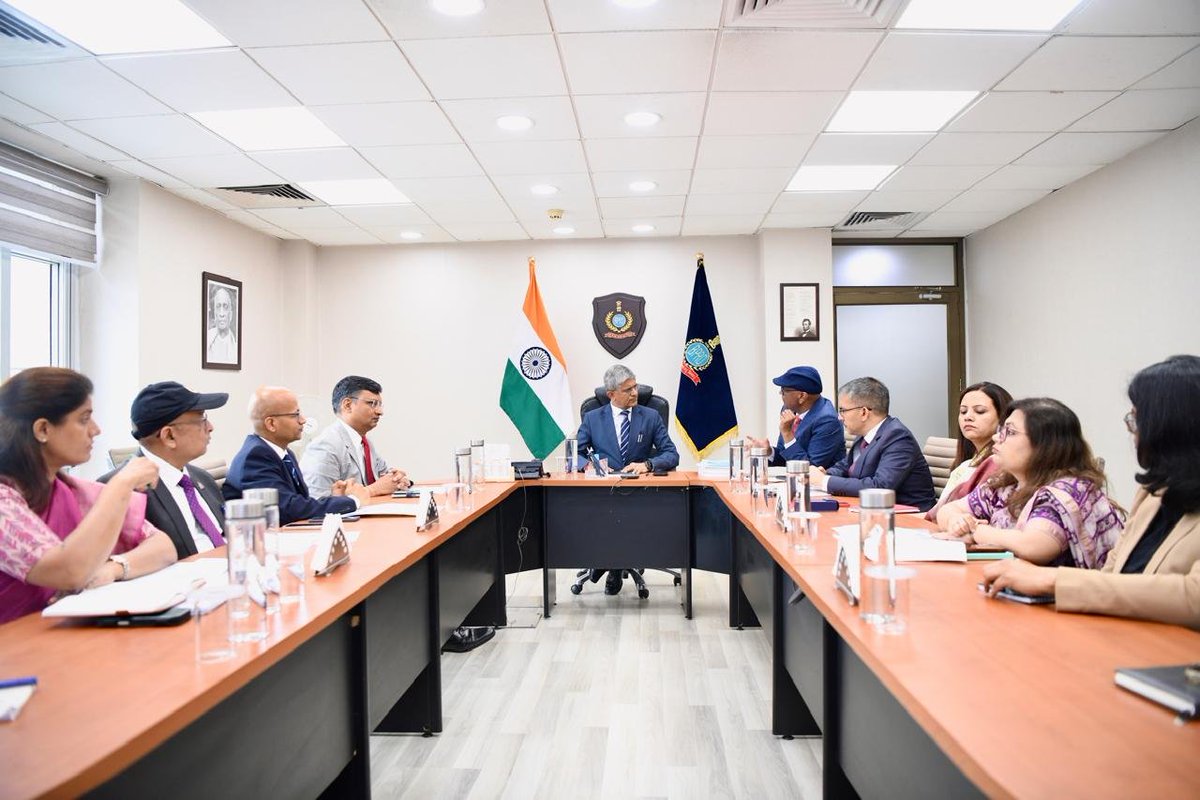
BPR&D welcomes Sh Alok Kumar Mittal, IPS (HY:1993), on assuming charge as DG BPR&D. We look forward to his visionary leadership in further strengthening research, innovation, cap-building & excellence in policing & criminal justice administration. Wishing him a successful tenure
One question:
If the 51% Indian ownership model works for smartphone manufacturing…
Should India adopt a similar approach for semiconductors, EV batteries, telecom equipment and critical electronics?
Curious to hear different views. 👇
🧵 1/5
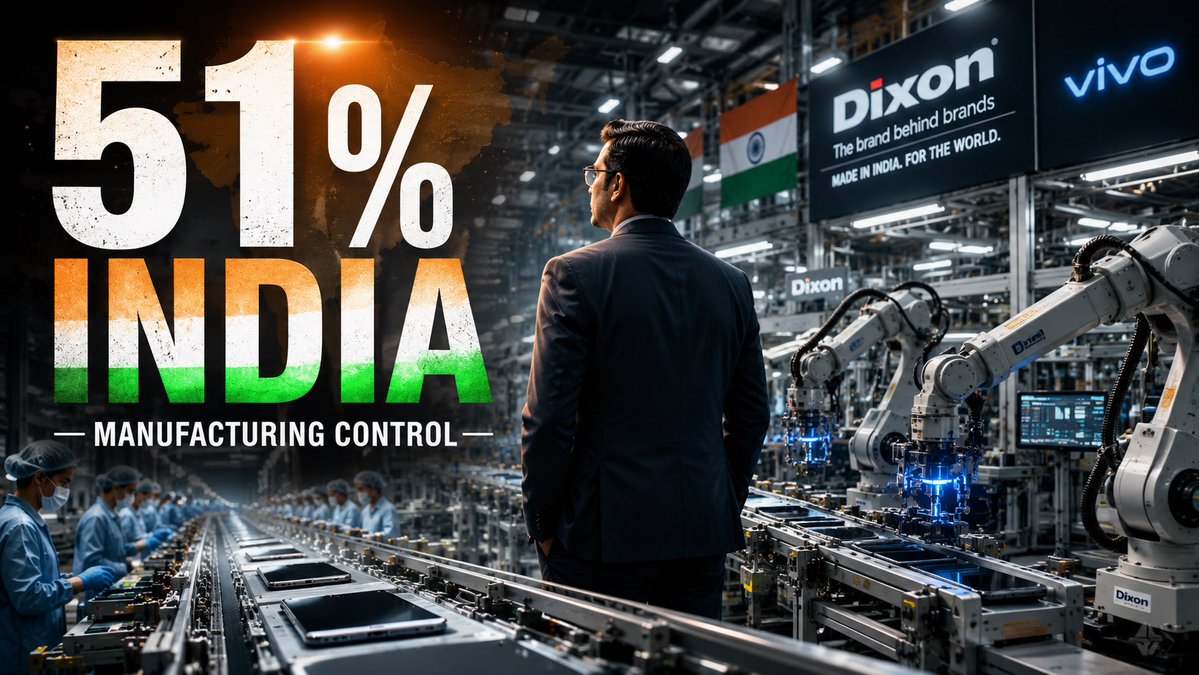
🚨 India just rewrote the rules of smartphone manufacturing.
Most headlines say “Dixon & Vivo form a joint venture.”
The real story is one number:
51%.
An Indian company will own and control the majority stake in one of India’s largest smartphone manufacturing ecosystems.
Here’s why that’s a strategic shift. 👇🇮🇳
5/5
The Dixon–Vivo JV sends a clear signal.
India welcomes global investment.
But increasingly, it wants manufacturing capabilities, decision-making and long-term value creation anchored at home.
That’s how nations build industrial strength—not just factories.
Should India replicate this 51% Indian ownership model in sectors like semiconductors, EVs and telecom?
The most important part isn’t Vivo.
It’s who controls the factory.
Ownership shapes decisions.
Decisions shape supply chains.
Supply chains shape national capability.
That’s why 51% matters.
@aloeareyouokay Australia gets a huge new market for uranium & critical minerals (diversifying from China), mining jobs, and a top-tier Indo-Pacific security partner in India. Plus deeper defence & maritime ties. Win-win, not ‘nothing’. Canceling it would hurt Aussie industry. 🇮🇳🇦🇺
🚨 Every disruption in Hormuz hits Indian pockets hard — 80%+ crude & 60%+ LPG imports at risk. Higher prices, inflation, insurance.
Chabahar isn’t just a port; it’s our bypass to Pakistan & lifeline for INSTC.
Bharat must accelerate alternatives & strategic reserves. No more single points of failure! 🇮🇳🔥
#Chabahar #IndiaFirst
1/7
🚨 India’s biggest strategic investment in Iran is suddenly under pressure.
Chabahar. Hormuz. Oil. BRICS.
The collapse of the U.S.–Iran ceasefire isn’t just another Middle East crisis.
यह भारत की ऊर्जा सुरक्षा और रणनीतिक भविष्य की कहानी है। 🇮🇳🧵
✅ Partially true — India did temporarily transfer operational stake in Chabahar’s Shahid Beheshti terminal to a local Iranian entity post-sanctions waiver expiry (April 2026) to protect against US penalties, with reversion rights.
But today’s US strikes on Chabahar port city + Hormuz chaos still put our strategic investment, connectivity to Afghanistan/Central Asia, & energy security under real pressure.
No room for complacency. Atmanirbhar + multi-alignment is the only way forward. 🇮🇳🔥
7/7
India has navigated Gulf crises before.
But this one combines military escalation, maritime security, energy supply and great-power competition at the same time.
मिसाइलें सुर्खियाँ बनाती हैं।
सप्लाई चेन इतिहास लिखती हैं। 🇮🇳
6/7
The biggest risk isn’t today’s airstrikes.
It’s the possibility that prolonged instability undermines Chabahar’s commercial viability, delays the INSTC, raises logistics costs and strengthens competing regional corridors.
Infrastructure can be rebuilt.
Strategic relevance is much harder to restore.