In transplantation, time is a biological variable.
Once an organ is removed from the donor, a race begins.
Every minute without adequate oxygen delivery affects cellular metabolism.
Every hour of ischemia can influence the future of the graft.
For decades, our main strategy was simple: cool the organ and slow biology down.
Today, transplantation is entering another era.
Machine perfusion allows us to maintain metabolism.
New preservation technologies can protect tissues.
Biomarkers can tell us what is happening inside the graft.
And oxygen therapeutics may increasingly help us control one of the most fundamental variables of all: oxygen availability.
The objective is no longer only to transport an organ faster.
It is to make time less damaging to biology.
And perhaps, eventually, to transform preservation time into therapeutic time.
#OrganDonation #Transplantation #OrganPreservation #Oxygen #MachinePerfusion #Biotechnology
🇺🇸 Always remember. September 11, 2001
25 years have passed, but some images, some moments, and some hours will never fade. I remember exactly where I was. I was in La Rochelle, giving a talk on mass spectrometry, when suddenly cell phones started ringing throughout the room…
8:46 a.m. — American Airlines Flight 11 strikes the North Tower of the World Trade Center.
9:03 a.m. — United Airlines Flight 175 strikes the South Tower.
9:37 a.m. — American Airlines Flight 77 strikes the Pentagon near Washington, D.C.
10:03 a.m. — United Airlines Flight 93 crashes into a field in Pennsylvania after passengers and crew fight back against the hijackers.
In just 77 minutes, the world changed.
🕊️Nearly 3,000 people lost their lives, and more than 6,000 were injured. Behind these numbers were human beings — parents, children, friends, colleagues, dreams and futures.
And beyond that terrible day, countless survivors, first responders and families would carry its physical and psychological consequences for years.
Today is not a day for politics. It is a day for memory, respect and humanity.
In memory of the firefighters who gave their lives trying to save others. Their courage and sacrifice will never be forgotten. 🇺🇸🕊️
We remember the victims.
We remember the injured and the survivors.
We remember their families.
We remember the firefighters, police officers, paramedics and countless ordinary people who showed extraordinary courage.
And we remember the passengers and crew of Flight 93, whose courage in the face of the unimaginable remains a powerful symbol of humanity and sacrifice.
25 years later, we remember. We will always remember. 🇺🇸🕊️
#September11 #NeverForget #September11Memorial #Remember #Courage #Humanity #Peace
🇲🇽 A major step forward for scientific cooperation between Mexico and HEMARINA 🇫🇷
I am deeply honoured by the official announcement from Mexico’s Secretaría de Ciencia, Humanidades, Tecnología e Innovación Secihti, following our meeting with Secretary Rosaura Ruiz Gutiérrez and representatives of the Mexican Ministry of Health.
Together, we explored the medical potential of the extracellular haemoglobin derived from the marine lugworm Arenicola marina 🪱 a universal oxygen carrier that could contribute to addressing critical challenges such as severe burns, diabetic foot ulcers, ischaemia, anaemia and organ transplantation.
Secretaría de Ciencia, Humanidades, Tecnología e Innovación Secihti has announced its intention to establish an interinstitutional working group bringing together health authorities, universities and public research centres to assess opportunities for scientific and technological collaboration around HEMARINA technological platform.
This is precisely how meaningful innovation progresses: when public institutions, scientists, clinicians and biotechnology companies unite around one ambition to transform knowledge into solutions that can save lives and improve patients’ quality of life.
My sincere gratitude to Secretary Rosaura Ruiz Gutiérrez , Ofelia Angulo Guerrero, Gerardo Tamayo Castroparedes, Joaquín Zúñiga Ramos and everyone involved in this promising initiative.
I would also like to warmly thank Craig Cogut from Pegasus Capital Advisors for accompanying and supporting this important journey.
After 30 years devoted to studying this extraordinary marine haemoglobin, seeing new international collaborations emerge remains deeply moving. Nature still holds remarkable solutions for human health. It is our responsibility to understand them—and to make them accessible to those who need them.
The journey continues, with Mexico. 🇲🇽🇫🇷🌊🧬
#HEMARINA #Mexico #Biotechnology #Science #Innovation #GlobalHealth #OxygenTherapeutics #MarineBiotechnology #OrganTransplantation #WoundHealing #ScientificCooperation #Biomimicry
Read more here 👉 https://t.co/1mEP11saPB
🪱🌊 Des origines de la vie à la médecine fondée sur l’oxygénothérapie : les leçons de l’évolution
J’aurai le plaisir d’intervenir au Synchrotron SOLEIL, le lundi 26 octobre 2026 à 14h, pour raconter comment l’étude d’un ver marin, Arenicola marina, nous a conduits à développer de nouvelles solutions thérapeutiques fondées sur le transport de l’oxygène.
Je remercie très chaleureusement les équipes du Synchrotron SOLEIL, le laboratoire d’Eric Larquet , ainsi que la direction générale, pour leur invitation, leur confiance et leur engagement aux côtés de la recherche et de l’innovation. 🙏🔬
Une conférence comme un voyage, depuis l’apparition de la vie sur Terre jusqu’au bloc opératoire, pour montrer comment les solutions inventées par l’évolution peuvent inspirer la médecine de demain. 🧬🫁
Nous plongerons également au coeur de la molécule M101 qui a été visualisée sur le Cryo-microscope Polaris et dont les images ont été analysées sur une ligne du synchrotron avec une résolution de quelques angström inégalée à ce jour !
#SynchrotronSOLEIL #HEMARINA #M101 #Oxygène #Biomimétisme #Biotechnologie #Recherche #Innovation #Médecine #Océan #Science #ArenicolaMarina
Today, more than 100 young European researchers are gathering in Brest to imagine solutions to some of our greatest challenges.
One of them particularly resonates with me:
Restore our Ocean and Waters.
We often talk about protecting the ocean because of climate, biodiversity and food.
But there is another reason.
The ocean is also an extraordinary biological library.
Every marine organism is the result of millions of years of experimentation by evolution.
Some have learned to survive without oxygen.
Others under enormous pressure.
Others regenerate tissues.
Others produce extraordinary proteins and molecules.
I know from personal experience that studying an apparently insignificant marine organism can sometimes lead science somewhere completely unexpected.
My message to the young scientists gathering in Brest for EU TalentOn is therefore simple:
Be curious about what Nature has already invented.
The next breakthrough in medicine, materials or biotechnology may already be swimming in the ocean — or hidden beneath the sand.
Protecting biodiversity also means protecting discoveries we have not yet made.
Welcome to Brest!
#EUTalentOn #Ocean #Biomimicry #Biotechnology #Biodiversity #Science #Innovation
https://t.co/mD5F8qglYv
🙏 Merci pour toutes ces vidéos qui permettent de faire connaître au plus grand nombre les technologies que nous développons à partir de l’hémoglobine d’Arenicola marina. 🌊🪱🩸
Derrière cette innovation se cache une histoire extraordinaire : celle d’un petit ver marin qui, au cours de centaines de millions d’années d’évolution, a développé une hémoglobine aux propriétés remarquables.
🔬 Notre travail consiste à comprendre cette solution inventée par la nature et à la transformer en innovations médicales : préservation des organes 🫀, cicatrisation 🩹, oxygénation des tissus 🫁 et développement de nouvelles solutions de transport de l’oxygène 🩸.
La science prend toute sa dimension lorsqu’elle sort des laboratoires, rencontre les patients et devient compréhensible par tous. 🧬➡️🏥
Alors un immense MERCI à toutes celles et ceux qui filment 🎥, expliquent 🎙️, écrivent ✍️ et partagent 🔁 cette aventure.
Chaque vidéo, chaque article et chaque partage contribue à montrer que la biodiversité marine peut aussi être une formidable source d’innovations pour la médecine de demain. 🌊💙
L’océan recèle encore tant de solutions que nous n’avons pas découvertes.
@humankind_history et Tik tok
#HEMARINA #M101 #ArenicolaMarina #Innovation #Biotechnology #Biomimicry #Ocean #MarineBiology #HealthInnovation #MedTech #Science #Oxygen #FutureOfMedicine
Nearly 4.5 million views. I still find it hard to believe.
When this video about our work at HEMARINA started circulating, I could never have imagined that it would reach so many people around the world.
Today, it is approaching 4.5 million views.
But behind this number, what touches me most are the millions of people who stopped for a few minutes to discover the story of a small marine worm, its extraordinary hemoglobin, and the idea that nature may hold solutions to some of medicine’s greatest challenges.
So, simply: thank you.
Thank you to everyone who watched it.
Thank you to those who shared it with colleagues, friends and families.
Thank you to those who commented, asked questions or helped the story travel across borders. 🙏🙌 please continue to diffuse by crossing the borders.
And a very special thank you to Prodie Santé, Gilles Campedel and Dr. Romain Martinez for believing that this scientific adventure deserved to be told and shared with the world.
Nearly 4.5 million views means nearly 4.5 million opportunities to talk about science, oxygen, blood shortages, biomimicry and the extraordinary medical potential hidden in biodiversity.
When I started studying Arenicola marina 🪱more than 25 years ago, I certainly never imagined that one day millions of people would hear its story.
Science begins with curiosity.
Sometimes, it can travel much further than we ever imagined. 🌊🩸
Thank you for helping this story travel that was recently awarded by the European Inventor Award decerned by the prestigious European Patent Office
#HEMARINA #M101 #Biomimicry #MarineBiology #Innovation #Oxygen #EmergencyMedicine
https://t.co/yvrdsPBdpX
Preserving an organ is no longer enough. We need to understand whether it is truly alive.
For decades, transplantation has relied heavily on time, temperature and relatively indirect indicators of organ quality.
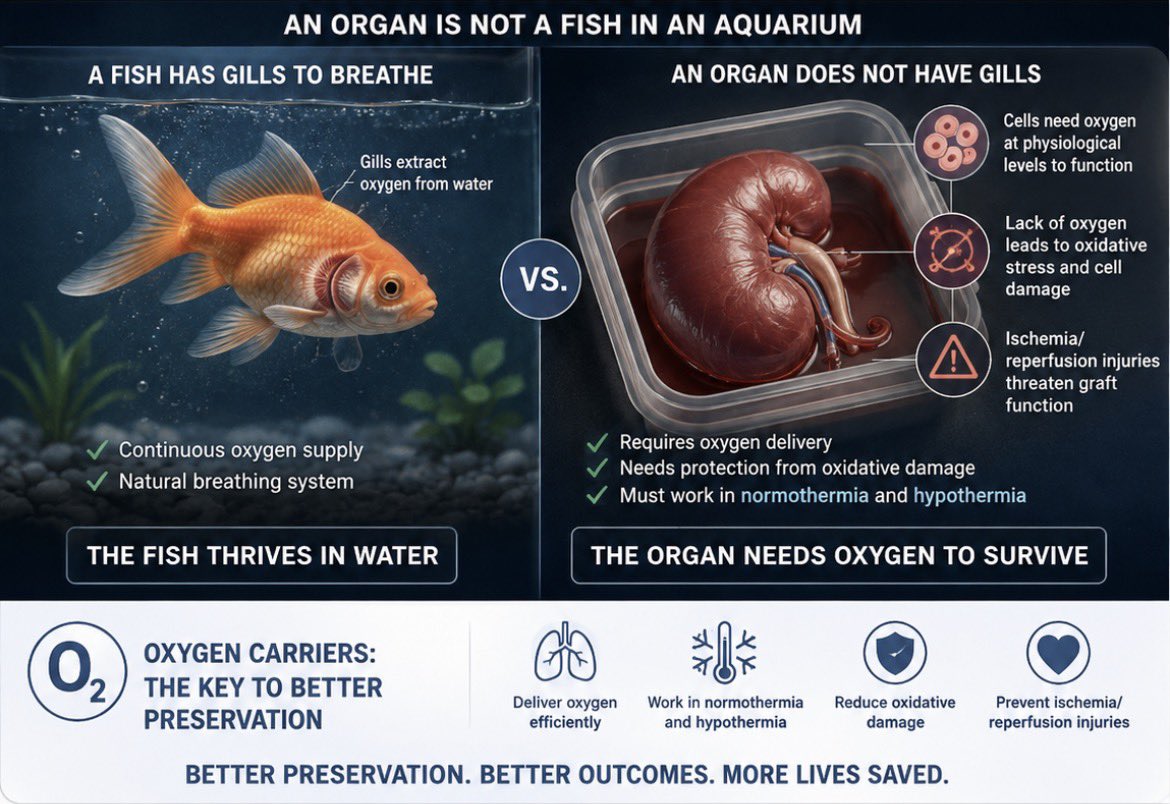
Machine perfusion is changing this but without oxygen carrier inside, they will be always a limitation. Since an organ is not a fish in an aquarium that possess it’s own red blood cells and gills. An organ is deconnected from the vascular system and do not have its own exchange surface.
An organ outside the body is metabolically active and need physiological oxygen. Gaz oxygen will not work and will create always oxidative damages.
It consumes oxygen.
Its mitochondria produce energy.
Its cells metabolize substrates.
It generates measurable biological signals.
Researchers have now shown experimentally that metabolic turnover of ¹³C-acetate during kidney perfusion can distinguish grafts that subsequently recover function from those that do not.
This suggests a fascinating evolution:
Preservation → Perfusion → Measurement → Prediction.
Eventually, perhaps:
Preservation → Diagnosis → Treatment → Transplantation.
The organ between donor and recipient is no longer simply waiting.
It is telling us how it is doing.
Our challenge is learning how to listen.
#Transplantation #OrganPreservation #MachinePerfusion #Metabolism #Biotechnology
https://t.co/uuV9ag95yG
Свечаност доделе Награда за Европског проналазача године одржана је 2. јула 2026. године у Берлину, у организацији Европског завода за патенте – ЕПО.
Представник Завода за интелектуалну својину присуствовао је свечаности уживо, а у видеу вам доносимо део атмосфере са догађаја који слави иновативност, креативност и истрајност проналазача чија решења доприносе напретку друштва.
Ове године награђени су проналазачи у областима прехрамбене технологије, медицине, енергетике, биотехнологије и обновљивих извора енергије.
Добитници награде „European Inventor Award 2026” су:
🏆 У категорији индустрија, победница је Ангелики Триантафилу (Angeliki Triantafyllou), Грчка/Шведска – за ензимски поступак који се користи у припреми напитака на бази овса.
🏆 Победник у категорији малих и средњих предузећа је Франк Зал (Franck Zal), Француска – за решење које користи терапијски потенцијал морских црва, односно универзални носач кисеоника заснован на хемоглобину морских црва, намењен очувању органа и ткива.
🏆 У категорији истраживања победио је Адријан В. С. Хил (Adrian V. S. Hill), Ирска/Уједињено Краљевство – за високо ефикасну вакцину против маларије.
For a long time, biomimicry meant copying Nature.
The shape of a wing.
The structure of a surface.
The mechanics of a shell.
But something profound is changing.
We are increasingly discovering that biology does not simply provide inspiration for technology.
Biology can become the technology.
Researchers at MIT have engineered bacteria that behave like transistors and can be connected into living circuits.
Proteins can become therapeutics.
Cells can become factories.
Microorganisms can become sensors.
Organs outside the body can become therapeutic platforms.
The frontier between biology and engineering is disappearing.
Perhaps the next technological revolution will not simply be bio-inspired.
It will be bio-integrated.
And once again, Nature is showing us that the most sophisticated technologies may already exist in living systems.
#Biomimicry #Biotechnology #SyntheticBiology #Bioengineering #Innovation
https://t.co/QTWsiDyD0M
For decades, transplantation has been constrained by one fundamental reality: there are not enough organs.
Yesterday, that boundary moved.
A genetically engineered pig kidney kept a patient free from dialysis for 271 days.
He subsequently received a human kidney successfully.
This is important not only because of the duration.
It introduces another fascinating possibility:
xenotransplantation as a bridge to transplantation.
We are entering an era where the solution to organ shortage may no longer come from a single technology.
Better preservation.
Machine perfusion.
Organ repair.
Regenerative medicine.
Xenotransplantation.
Different approaches. One objective:
Make more organs available to the patients who need them.
The future of transplantation may not be about choosing between these technologies.
It may be about combining them.
#Transplantation #Xenotransplantation #Biotechnology #OrganPreservation
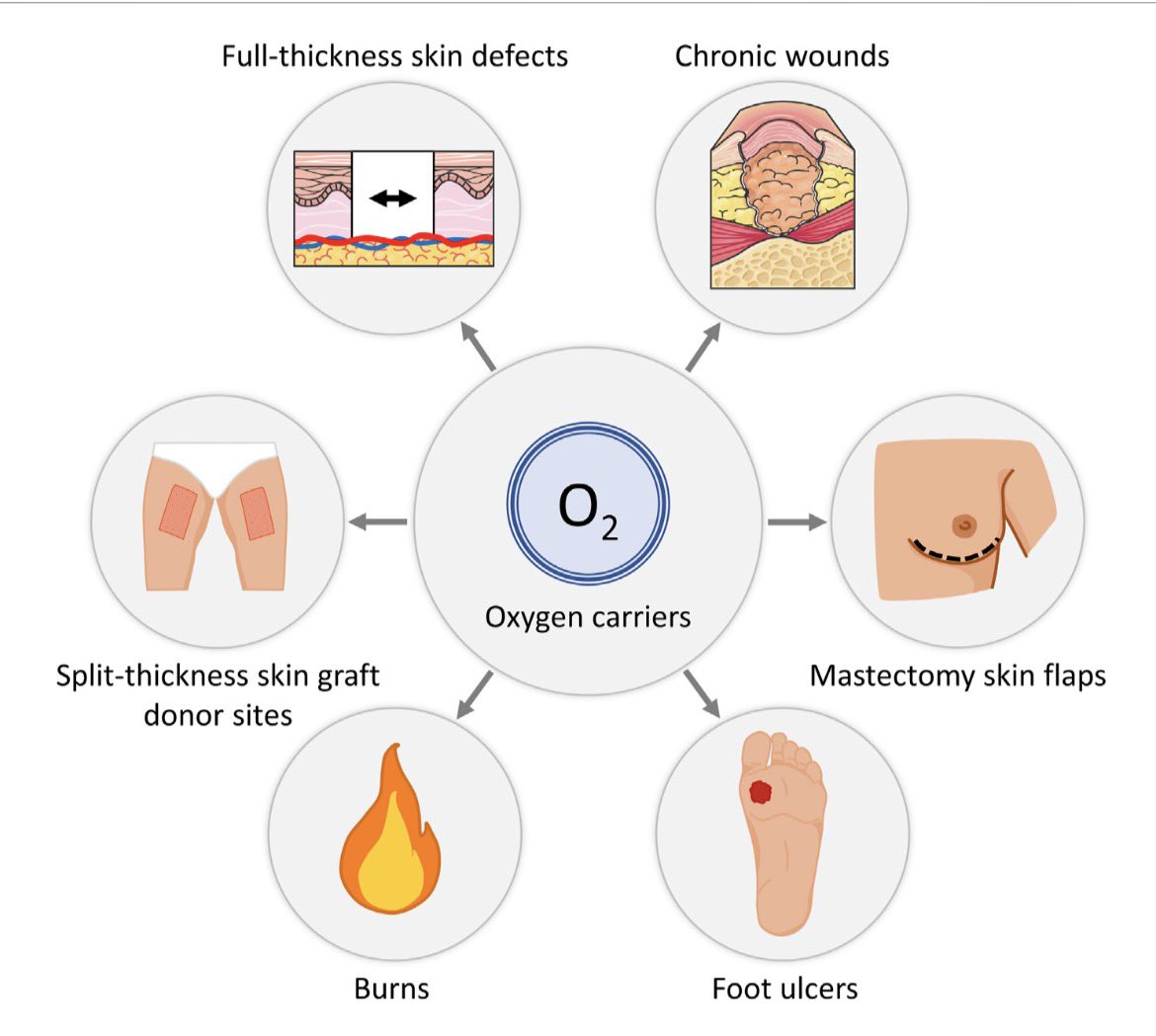
How can we bring oxygen to tissues when blood circulation is severely compromised?
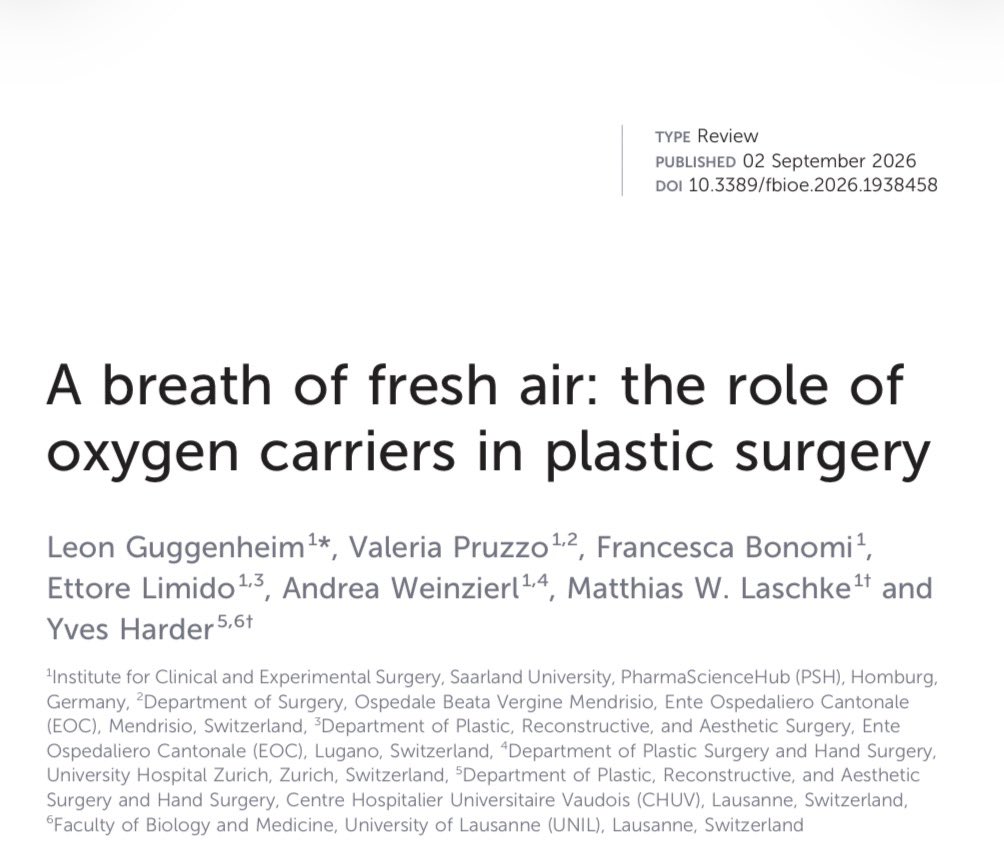
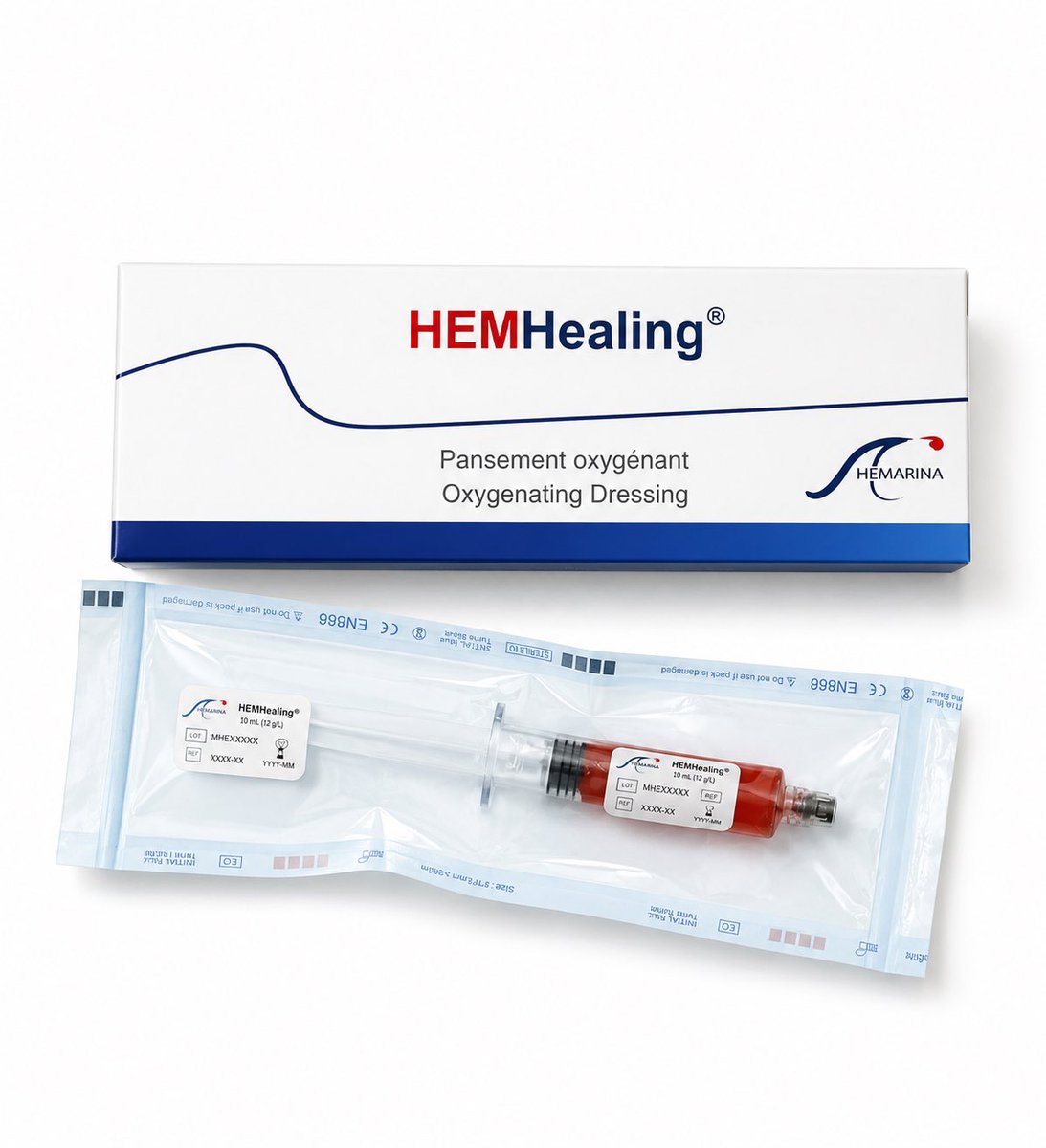
Among the technologies reviewed in this scientific paper, is M101, the extracellular hemoglobin of the marine lugworm Arenicola marina 🪱, and HEMHealing®, our M101-based oxygenating hydrogel.
Among the authors is Professor Yves Harder from Lausanne University Hospital (CHUV / Centre hospitalier universitaire vaudois ), the head of plastic and reconstructive surgery and burn care who was in frontline with his team to treat the burn victims of Crans-Montana.
Indeed, M101 can carry up to 156 oxygen molecules and release oxygen according to the local oxygen gradient. The authors also highlight its intrinsic antioxidant properties.
The paper discusses our first clinical observations in severe burns, including a patient with burns covering 85% of total body surface area. Because donor sites were extremely limited, HEMHealing® was applied to second-degree burns on the chest, abdomen and back. After six weeks, the burn area in these treated regions had been reduced to less than 2%.
What particularly struck me is the authors’ conclusion .
Despite emphasizing that larger randomized clinical trials are now essential, they state that M101’s markedly elevated oxygen-carrying capacity positions it as:
“the most promising candidate”
Nearly 30 years ago, when I began studying the extraordinary respiratory adaptations of a marine worm, I could never have imagined where this research might lead.
Today, we are exploring whether a molecular solution developed by evolution to survive hypoxia could help physicians oxygenate and preserve severely damaged human tissues.
That is what biomimicry means to me: not simply being inspired by nature, but understanding its solutions deeply enough to transform them into medicine.
The early clinical observations are encouraging and a clinical trial needs to be conducted under the Medical Device regulation, since until this summer ANSM recongnize the legal status of HEMHealing.
HEMHealing answer to the framework of a medical device.
From a marine worm to severe burns, sometimes the future of medicine begins where we least expect it.
#HEMARINA #HEMHealing #M101 #BurnCare #WoundHealing #Oxygen #Biomimicry #Biotechnology #RegenerativeMedicine
👉🗞️ doi: 10.3389/fbioe.2026.1938458
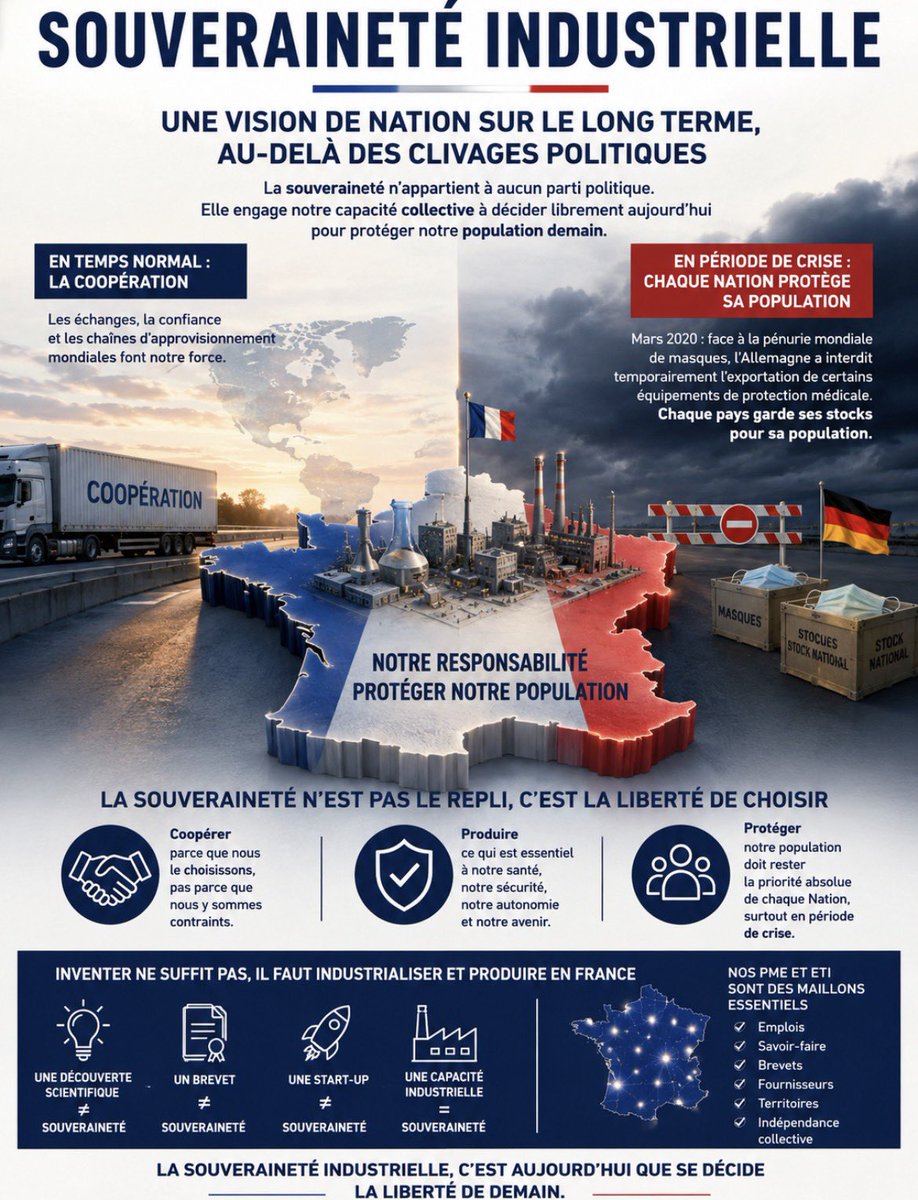
La souveraineté industrielle n’est ni de droite, ni de gauche. Elle est une vision de long terme pour une Nation.
La souveraineté n’appartient à aucun parti politique. Elle doit dépasser les élections, les alternances et les clivages, car elle pose une question fondamentale : quelles capacités devons-nous préserver aujourd’hui pour que la France puisse encore décider librement demain ?
Dans le contexte géopolitique bouleversé que nous connaissons, cette question redevient centrale.
Mars 2020 nous l’a brutalement rappelé. Lorsque les masques sont devenus une ressource stratégique, l’Allemagne a temporairement interdit l’exportation de certains équipements de protection médicale.
Ce n’était pas un jugement contre ses voisins : c’était la responsabilité première d’un État confronté à une crise majeure, protéger sa population.
Lorsque tout va bien, nous coopérons. Lorsque tout devient rare au même moment, chaque Nation cherche d’abord à sécuriser ses stocks et ses capacités de production.
La leçon est simple : nous ne devons jamais abandonner entièrement à d’autres la capacité de produire ce qui peut devenir vital.
Médicaments, dispositifs médicaux, énergie, semi-conducteurs, défense, numérique, biotechnologies…
La souveraineté n’est pas l’autarcie. C’est avoir la liberté de coopérer sans être condamné à dépendre.
Et si une partie de cette souveraineté se jouait justement dans nos PME ?
Parce que les PME sont souvent plus flexibles, plus agiles, plus réactives. Elles innovent rapidement, prennent des risques, préservent des savoir-faire rares et irriguent nos territoires.
La France sait inventer. Notre défi est de savoir industrialiser et produire en France.
Une découverte scientifique n’est pas encore une souveraineté.
Un brevet n’est pas encore une souveraineté.
Une start-up n’est pas encore une souveraineté.
Une capacité industrielle, elle, participe directement à notre souveraineté.
C’est une conviction que nous portons chez HEMARINA depuis près de vingt ans : transformer une découverte issue de la biodiversité marine en technologies médicales développées et produites en France.
J’aurai le plaisir d’intervenir sur ce sujet au FEB à Saint-Malo, jeudi 10 septembre à 11h00, salle Lamennais 3, autour d’une question qui me tient particulièrement à cœur :
« Et si la souveraineté industrielle de la France se jouait d’abord au niveau de nos PME ? »
Parce que la souveraineté industrielle n’est pas un programme électoral.
C’est un projet de Nation. Et la liberté de demain se construit industriellement aujourd’hui.
#Souveraineté #SouverainetéIndustrielle #France #Industrie #PME #Innovation #Biotechnologies #HEMARINA
👉 programme : https://t.co/r5o1JFsbNr
💥 La nature n’a décidément pas fini de nous surprendre.
Des chercheurs viennent de décrire chez les planaires une forme de mort cellulaire jusqu’ici inconnue : la « ruptose ».
Certaines cellules spécialisées, appelées ruptoblastes, peuvent littéralement exploser, libérant brutalement des molécules cytotoxiques capables de participer à la défense contre des bactéries ou au rejet de tissus étrangers.
Encore une histoire de ver 🪱
Ce qui me fascine dans cette découverte, c’est qu’elle vient une nouvelle fois d’un organisme que beaucoup considéreraient comme « simple » : un ver plat.
Et pourtant, derrière cet animal se cache un mécanisme biologique que nous ignorions encore.
C’est une formidable leçon d’humilité.
Nous connaissons l’apoptose, la nécrose, la pyroptose… et nous découvrons encore aujourd’hui de nouvelles stratégies cellulaires inventées par l’évolution.
🌍 Combien de mécanismes biologiques restent encore à découvrir dans les millions d’espèces qui nous entourent ?
🌊 Combien se trouvent dans les océans ?
🧬 Et combien pourraient un jour inspirer de nouvelles approches thérapeutiques ?
La biodiversité n’est pas seulement un patrimoine à protéger.
C’est une immense bibliothèque de fonctions biologiques que nous avons à peine commencé à lire.
C’est précisément pour cela que la recherche fondamentale est essentielle : parfois, observer un organisme apparemment insignifiant peut ouvrir une porte entièrement nouvelle sur la biologie.
Don’t just invent.
First, understand what evolution has already invented.
#Biodiversity #Evolution #Biomimicry #Biotechnology #Immunology #CellBiology #Science #Innovation
👉 https://t.co/rz7VIGLisY
A profound transformation is happening in transplantation.
For decades, organ preservation essentially meant slowing down biological deterioration.
Put the organ on ice.
Reduce metabolism.
Transport it quickly.
Transplant it.
We are now entering a very different era.
An organ outside the body can increasingly be:
perfused → oxygenated → monitored → evaluated → treated.
This changes the fundamental question.
Not simply:
“How long can we preserve an organ?”
But:
“How well can we maintain — and perhaps restore — its physiology before transplantation?”
The time between donor and recipient is progressively becoming a therapeutic window.
And this may ultimately allow us to transplant organs that yesterday would have been discarded.
#Transplantation #OrganPreservation #MachinePerfusion #Biotechnology #Oxygen
Un moment d’une rare intensité aujourd’hui : assister à la prière de l'Angélus à Castel Gandolfo par le pape Léon XIV.
Au-delà de l’émotion, cette rencontre nourrit une conviction profonde : la science n’a de véritable sens que lorsqu’elle se met au service de la vie, des plus fragiles et de l’humanité.
C’est cette mission qui guide HEMARINA depuis sa création : transformer un trésor offert par l’océan en solutions capables de soigner, de réparer et de redonner espoir.
Une image et un instant que je n’oublierai jamais. 🙏
#PapeLéonXIV #Vatican #Science #Humanité #HEMARINA