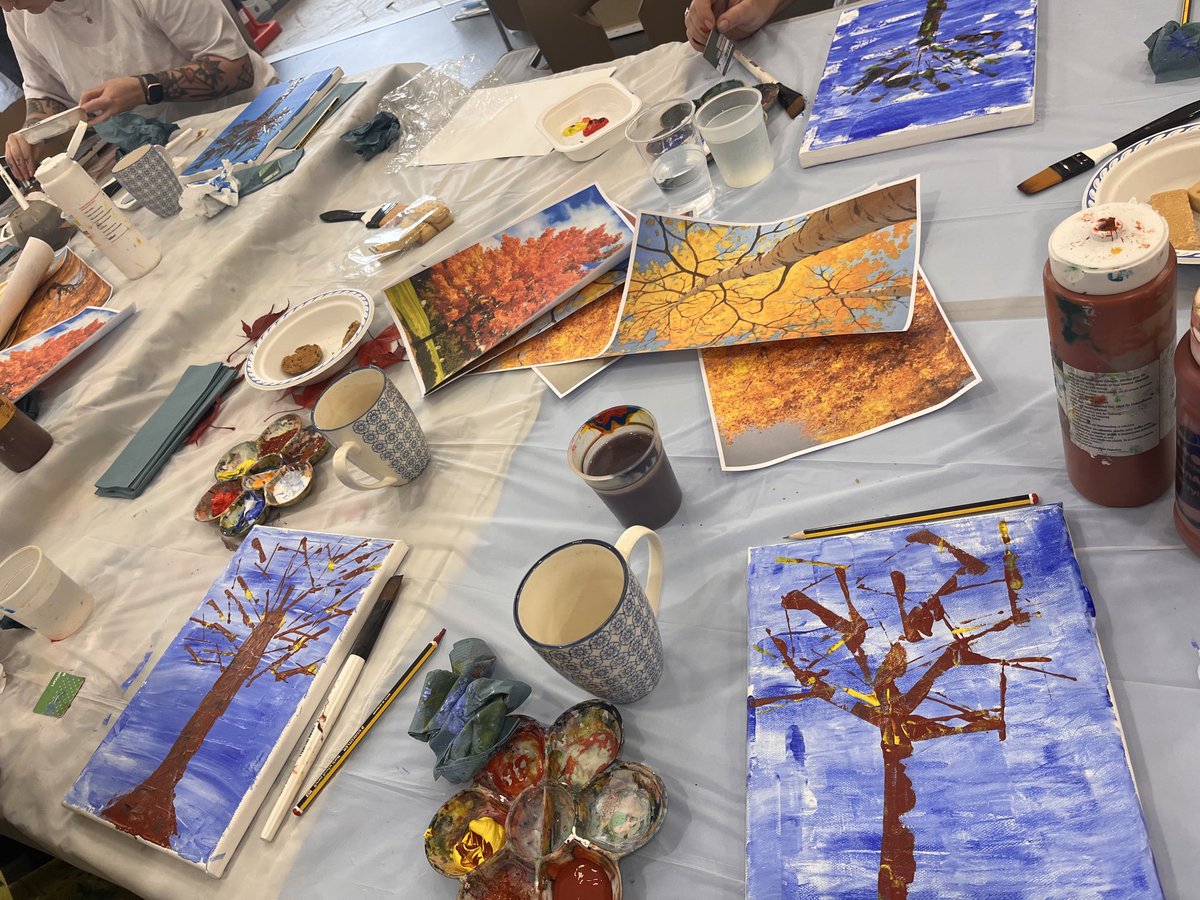
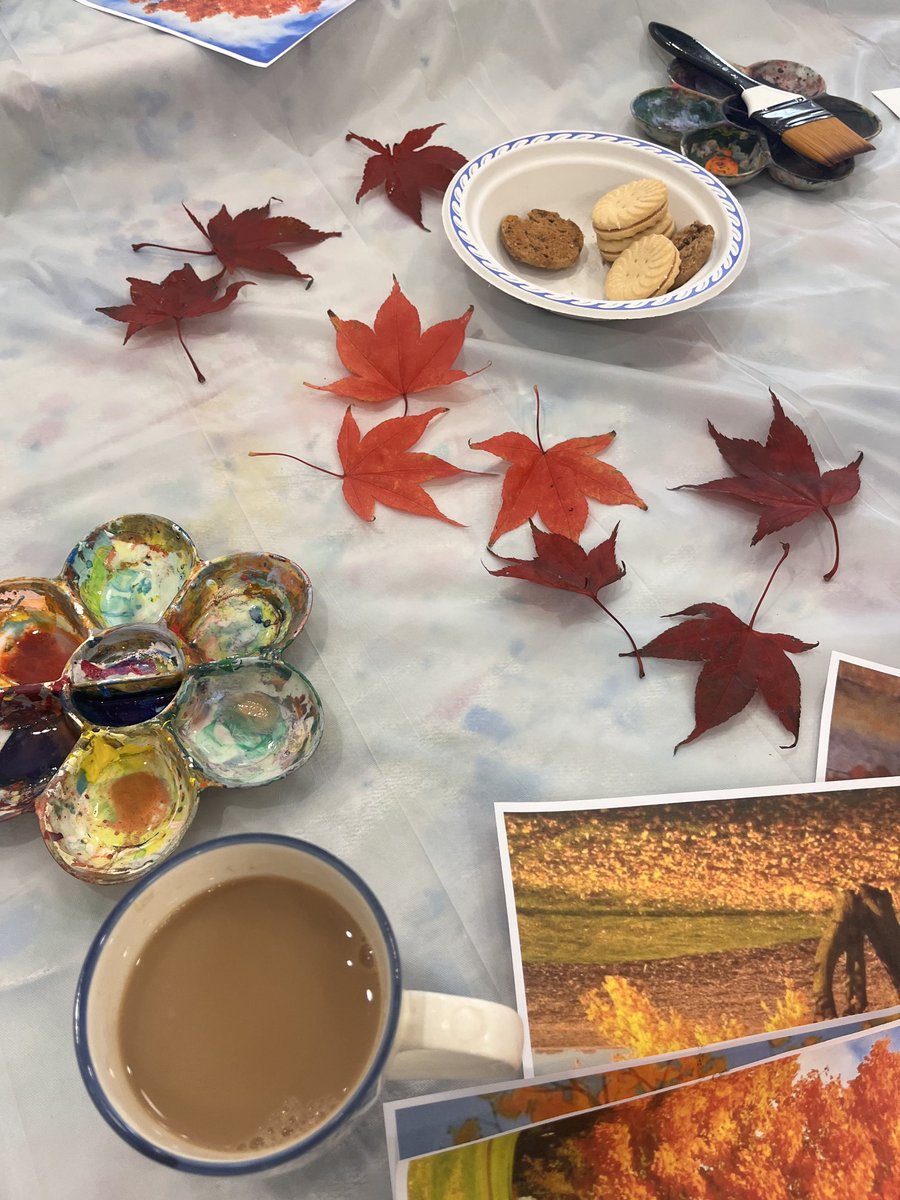
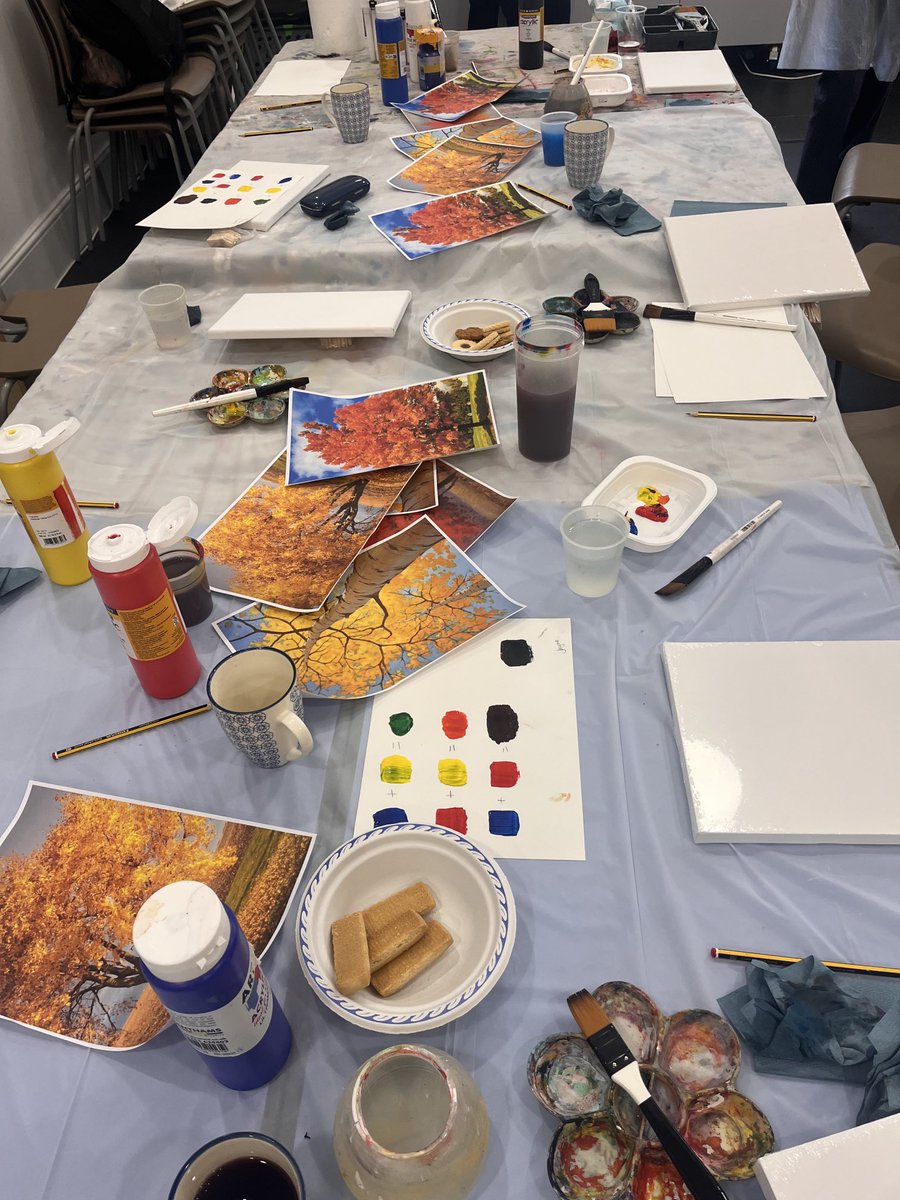
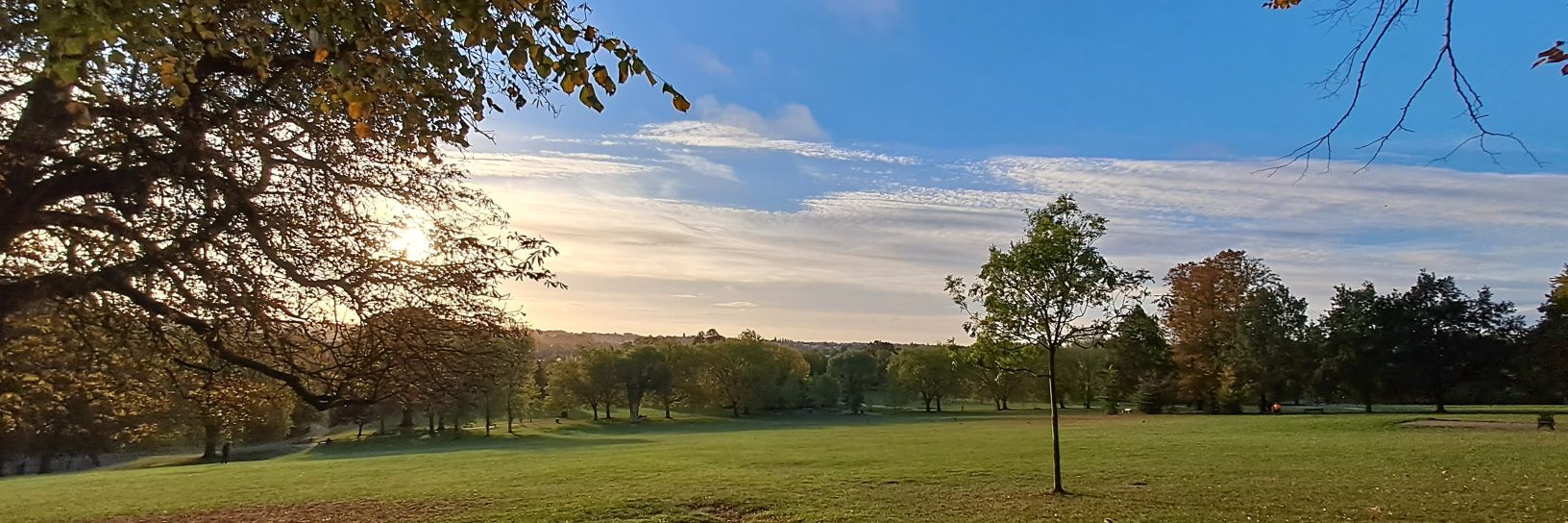
I love being an occupational therapist because I learn about a person's life, understand what gets in the way of their valued occupations and roles, and help them overcome these barriers to make the most of life #ChooseOT#OTWeek2020
https://t.co/37tjiUBcfJ
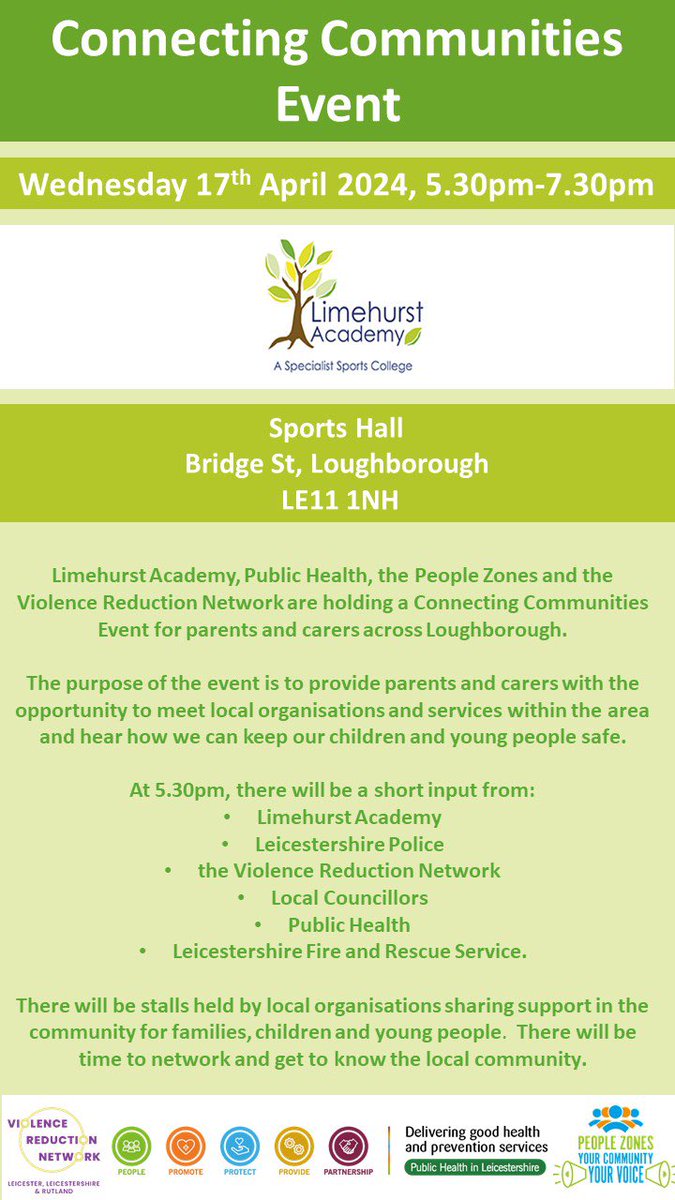
Limehurst Academy, Public Health, the People Zones & the VRN are holding a Connecting Communities event for parents and carers across Loughborough. If you are interested in holding a stall, or attending - drop us an email on [email protected] 🔽 @LimehurstAc
Would you like to help me build an #OccupationalTherapy team in a new forensic mental health facility in south west London. Band 5 post and band 6 available. #ForensicOT
https://t.co/qATTiwo0bM
One quarter of 16-24 year old females have a personality disorder. Soon we can all be all/disordered and we can all feel shame at our vulnerability rather than questioning the systems and society that label people like this.
Research found that [mindfulness & yoga in prisons] have a more positive outcome than sports, gardening, or peer support groups, concluding “the use of yoga, meditation, and mindfulness interventions in the prison setting is well evidenced. #PrisonOT https://t.co/5M7Whpgyg8
I was an NHS doctor,
Then burnout and mental illness happened.
I left medicine but
Without it... I felt lost.
Here are 3 things I learnt from leaving the NHS,
3 things everyone should know.
If we want to build learning systems for improvement, we must encourage our teams to be curious. A culture of curiosity leads to psychological safety, experimentation & problem solving. Yet a recent large study found most leaders regard curious people as "insubordinate" & like them less than people who don't question things. However, curious people who are politically skilled are liked & supported by their leaders. Lessons for leaders AND change agents here. Change agents: how do we express our curiosity in constructive ways, asking the right questions at the right time? https://t.co/EdScd2ixev By @OUOBProf
1st week of our new community hub. Open monthly & available forever to those who have been on probation under our team, in recognition of attachment needs of this population. Space provided by the wonderful St Albans museum
#ProbationOT#OccupationalTherapy#FormingCommunity
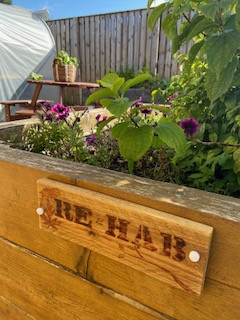
GRH OTs in Rehab held an event to showcase achievements from the gardening group. Patients participated in garden maintenance, growing fruit & vegetables and developing recipes. Development of vocational skills, confidence and increased participation were all positive outcomes
Thoughts on the NHS…..
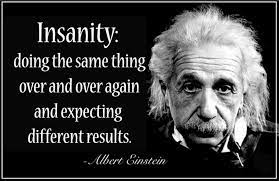
Einstein said the definition of insanity is doing the same thing over and over again and expecting different results.
But this is what is happening in the NHS right now; hoping things will improve when just giving the same failing medicine.
As an A&E doctor, I am proud of what I do and would not want any other job
But I am getting increasingly demoralised that despite best efforts, it can seem like we are moving deckchairs on the NHS titanic and just applying a sticky plaster to ever expanding gaping wounds of deep routed societal problems.
The relentless pressures are getting worse and we are insane if we think the same solutions will solve the problems we have – even with more money and slightly different politics.
We need to have a different approach if we are to have a functioning NHS in the future
We need to look at the issues and potential solutions
1) A large amount of the problems we see are preventable - problems from poor diet, lack of exercise, smoking, drugs and crucially poverty and people’s lack of opportunity and optimism about the future. Efforts should be made to prevent the problems not react to them
2) We must ask ourselves are we doing too much for people and extending their length of life but not addressing if it gives them a quality of life that they would want. Just because we can do so much for patients, doesn’t mean we should.
3) On the whole, the clinician treating you now, are feeling less happy with taking on risk than those ten years ago – hence why there is often over investigation instead of simple reassurance. The risk of being complained about and being sued is one reason. But how to take risk is not taught explicitly and we are losing significant numbers of highly experienced senior decision makers such as GPs who have learnt these skills through years of practice and are replacing them with much more junior staff who are good at working within their defined skills and protocols but who do not have the training and experience to be good “riskaticians”. This is also true of algorhythm based triage systems where the default position is often 999 ambulance and A&E without consideration of this decisions on other patients whose care is delayed because there are only finite resources.
4) We are providing care in the wrong place. I see so many people who could have been cared for by out of hours senior decision makers who can make a judgment call to treat at home, rather than coming to hospital. Instead, paramedics have to bring these complex elderly patients into hospital where they are then seen by junior staff who often can over investigate and admit which leads to deconditioning and deterioration.
5) Medical services are designed around 9-5 Monday to Friday working. This needs complete overhaul so that the same quality of care is provided 24/7
6) The private sector is not the solution. Where profit becomes before patients there is often a hidden bias to overinvesting and over-treating. The money spent on private sector investment run diagnostic centres may well be used in a better way.
7) Mental health care needs to be prioritised as much as medical care. Both are under resourced but the lack of beds and community care for mental health patients creates enormous pressures on emergency services and crucially leads to unacceptable care for the most vulnerable of patients.
8) Any remodelling of the NHS has to be a phased approach – stabilise the current crisis with investment in community as well as hospital care and then longer term transformation so that we truly become a health service rather than a reaction to illness service,
9) Key to a needed NHS transformation is keeping experienced staff and the only way to do this is empowerment of their decision making, flexible working and appropriate renumeration and recognition. The biggest risk to the NHS is that staff will soon stop caring and just go into self-preservation mode. So worry when people like me stop writing messages like this, rather than when we do!
My biggest worry is that politicians won’t want to face up to these incredibly difficult problems and will try and kid themselves and us that a bit more money and tinkering will solve the issue.
It wont. We need radical new thinking now and the politicians to realise this. Without this, the NHS will wither away to be replaced by privatised medicine and the care which will all deserve, will only be available to the richest in society.
Please feel free to share these thoughts so that politicians of all shades can see the reality and thoughts of someone on the front line rather than just the sanitised version of the NHS they are shown.
Thank you for reading my post weekend literary catharsis
Rob Galloway , a tired but still optimistic (just) A&E Doctor.
📷
New Stanford study on how much leaders communicate & the impact it creates. 4 key conclusions:
1) Leaders are nearly 10X as likely to be criticised by their teams for under-communicating than for over-communicating
2) Leaders who under-communicate are seen as having less empathy & less leadership ability by their teams
3) Leaders are judged much more harshly by their teams for under-communicating than for over-communicating
4) Leaders should adjust their communication patterns by communicating more, even if it leads to the (relatively minor) risk of being seen as communicating too much:
https://t.co/haYtF533Bp (paywall sorry). By Francis J. Flynn & @ChelseaLide@AOMConnect
I think newly qualified OTs and AHPs need safe spaces to talk about the reality of the NHS. Analysing stories from practice and it's grim and hard reading. Real investment is needed not just online support . Let's retain the talent not think a folder will do the trick.
I'm encouraged to see this event. I also think the speakers are pretty great at what they do.
An opportunity to hear @reavey_paula Jason Poole, @SallyZlotowitz, Rafia Safdar, Jacqui Dillon, @carlharrispc + @ClassClin speak with an intersectional lens.
https://t.co/UBXluSKAlA