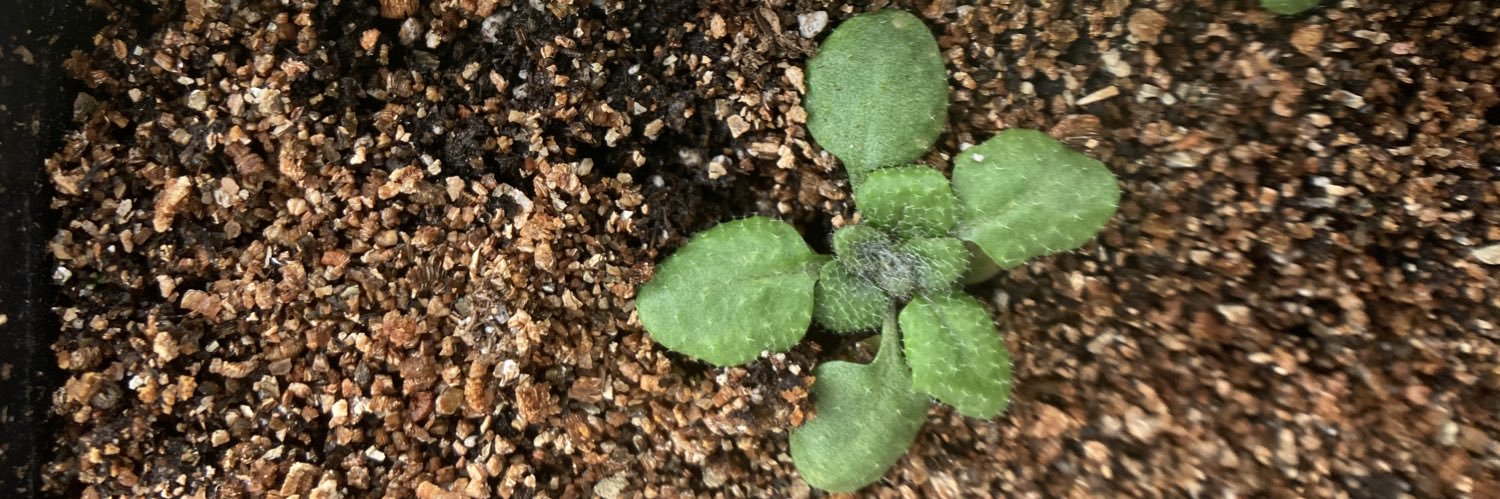
Happy to share our newest publication on florigen sequestration in temperature-responsive flowering. Here, we found that the florigen (FT) interacts with THF1 to prevent precocious flowering, especially under low ambient temperatures.
https://t.co/Yv9oLwjev1
Exciting breakthrough technology from the lab, now live in @CellCellPress ! Instead of cutting the genome where proteins bind (e.g., Cut&Tag), D&D-seq scars the DNA with a deaminase, allowing single cell genome mapping of TFs and chromatin remodellers!
@sobedominik 🙏🙏🙏 for other people not knowing Swift playgrounds, its a free Mac/iPad app to learn swift by programming a 3d character in a 3d world.
Even if you dont wan’t to learn Swift it’s a fun way to learn about functions, conditional logic and loops 🎉 that all program languages use.
🎉🎉🎉 Excited to introduce our recent project FigMirror - a very interesting and useful tool with a simple workflow for making any paper-style figures.
- See a beautiful figure in a paper
- Screenshot it
- Add your own data
- Get a new Matplotlib figure with the same visual style
FigMirror learns the quiet details that make paper figures look polished:
- typography
- spacing
- line weight
- color restraint
- layout rhythm
The key mechanism is Grounded Measurement.
Computer-use AI can point to coordinates inside the reference figure. Code then inspects the pixels, colors, spacing, and layout around those points. This gives the system concrete visual evidence to iterate on.
Our FigMirror draws a candidate figure, compares it with the reference, keeps what works, and improves what still feels off.
Outputs:
- editable Matplotlib code
- camera-ready PDF
It works as both a local Web UI and a Codex / Claude Code skill.
Open source:
https://t.co/zCVM0aAyxp
Try it before your next deadline!
New OA Resource: "A transcriptional atlas of early Arabidopsis seed development suggests mechanisms for inter-tissue coordination" https://t.co/JedqigbwLr
Single-nucleus RNAseq profiling of early Arabidopsis seed development.
Many more examples identified by Reese Richardson (on another site), Johan Duchêne on social media, summarised on For Better Science: https://t.co/QiGB2kohFH
Rising Stars in Plant Sciences 2026 (RSPS2026) | Finalist Oral Presentation Contest | Jun 2 12:55-15:30 & Jun 3 13:00-15:35 (GMT/UTC) | FREE to Watch the Live Streaming via YouTube (https://t.co/A7Rk8uFiWQ) or WeChat (MolPlant Channel)
AI isn’t making scientists irrelevant.
It’s making real scientists more relevant.
The ones who ask sharp questions, have expertise, spot nonsense, and turn ideas into evidence.
Back to basics: judgment, rigor, reproducibility.
Stop the #ScienceCrisis
@Nature This is the original article, published in @CellCellPress where researchers from China and Singapore have managed to transfer functional chloroplasts from spinachs into mouse eye corneal epithelium cells, where they serve as cure. Simply an amazing study!
https://t.co/FQgKsw6jGO
Surprised to discover that Thermo Fisher appears to show a fake western blot for the validation of one of their p53 antibodies. I've added a diagram to show the very similar bands. This does not appear to be one of the "published figures", but their own internal data.
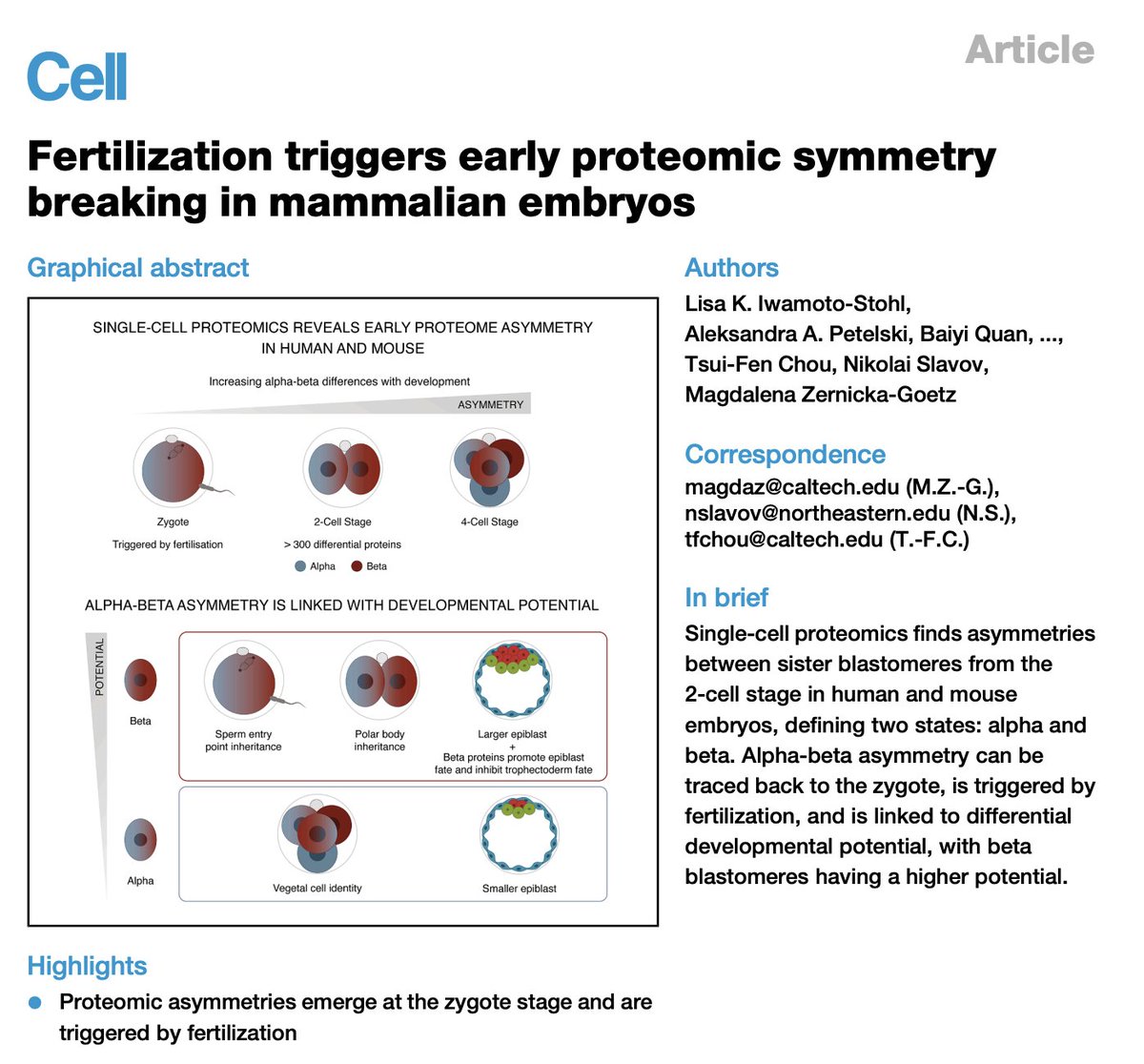
Single-cell proteomics illuminated new mechanisms of mammalian development.
We found that spatially polarized protein distributions and intracellular protein gradients emerge during the earliest stages of mammalian embryogenesis and help bias subsequent cell fate decisions. Critically, these developmental mechanisms are not reflected in mRNA abundance: the key biology resides in the spatial organization, abundance, and asymmetric localization of proteins within and between cells.
The results show that early developmental patterning is associated with polarized localization of specific proteins and coordinated proteomic asymmetries across blastomeres, linking protein organization directly to lineage specification. These findings support a model in which cell fate in the mammalian embryo is not determined solely by stochastic transcriptional programs, but is strongly shaped by inherited and dynamically regulated protein states that establish developmental competence before overt differentiation: https://t.co/lvpZ2TOaIC
Our results depended critically on single-cell proteomics analysis, on direct measurement of the molecular effectors that execute developmental decisions — capturing gradients, localization, stoichiometry, and post-transcriptional regulation. The future of developmental biology will depend increasingly on quantitative single-cell protein measurements capable of resolving the molecular architecture of cell fate determination: https://t.co/92S1z9WEBp
The @ScienceMagazine article fails to mention that Prof. Roger Innes is a member of the National Academy of Sciences @theNASciences and Past-President of @ISMPMI
Breaking news: Indiana University plant microbiologist Roger Innes has been locked out of his laboratory by the school in response to a request by one of his federal funders. The move comes after Innes complained about the government’s prosecution of Chinese postdocs. https://t.co/2I7IpaYoKb
My first podcast is out today with @markwbudde, CEO of @plasmidsaurus.
Plasmidsaurus took whole-plasmid sequencing from $600 to $15 and turned a "boring" service company idea into a hugely successful company that now serves >70,000 scientists.
We talked about what it means to build a "boring" company, whether the Plasmidsaurus idea could apply to other technologies (like CRISPR screens), and why Plasmidsaurus isn't expanding into China. This podcast is made possible by @AsteraInstitute.
00:00 – Enter Plasmidsaurus
01:21 – Reducing sequencing costs by 40x
04:17 – Scaling Oxford Nanopore technology
06:29 – Venture capital and building a "boring" company
13:03 – Plasmidsaurus vs. traditional CROs
22:25 – On selling customer data
30:10 – Building a moat
37:08 – 50-minute results
39:26 – Logistics and the UPS partnership
48:42 – The Chinese market
50:20 – Playbook for new biotech founders
52:31 – The future of biological reasoning and AI
You can find the podcast, THE NEW BIOLOGY, on YouTube, Spotify, and everywhere else.
One of the most-viewed PNAS articles in the last week is “Genome degradation in plant tissue culture.” Explore the article here: https://t.co/71WHp2U6QA
For more trending articles, visit https://t.co/MTAQB64drr.