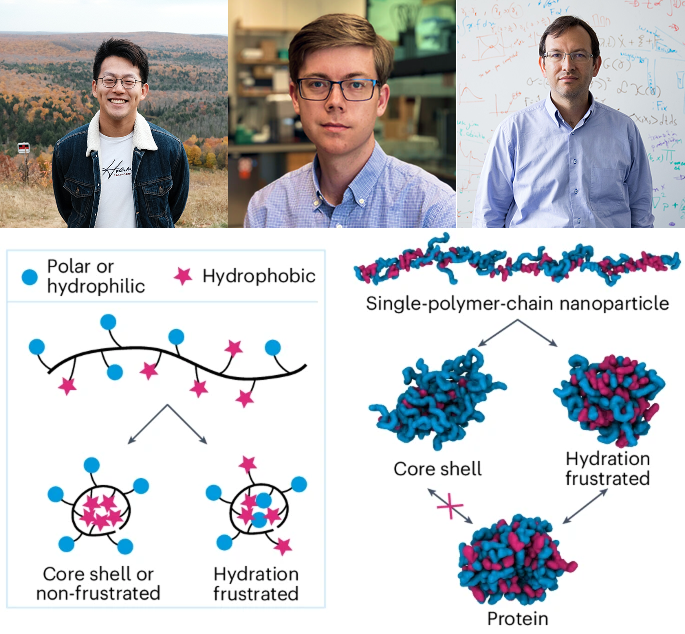
In a new @Nature paper, DMSE Prof. Alfredo Alexander-Katz and colleagues show that synthetic polymers with flexible carbon backbones can behave like proteins—matching and in some cases exceeding key enzyme functions. https://t.co/nsHnb4qdat
Researchers, including DMSE’s Prof. Alfredo Alexander-Katz and grad student Tianyi Jin, developed a fully autonomous platform that can efficiently identify optimal polymer blends for applications like protein stabilization and drug-delivery materials. https://t.co/Djhe8si5KB
One weird trick that proteins use to function? In a new paper for @NatureChemistry , @HerryJin, #JClinic PI @cwcoley, & Alfredo Alexander-Katz show how synthetic polymer nanoparticles can mimic "hydration frustration" a protein behavior using water to enhance activity 💧 1/
Akorfa won the first prize in 2024 Undergraduate Student Poster Competition “Design of Next-Gen Enzyme Stabilizers for Plastic Degradation”! Congrats! #AIChE2024#AIChE#AIChEAnnual
@CellSignal@ElsFoundation@CellCellPress Akorfa Dagadu is an undergraduate at @MIT who, in addition to developing the innovative recycling app Ishara, does research to improve how we create and break down plastics.
Read her essay "Bridging past with progress: My mission in the world of polymers"
https://t.co/asj1pTPttI
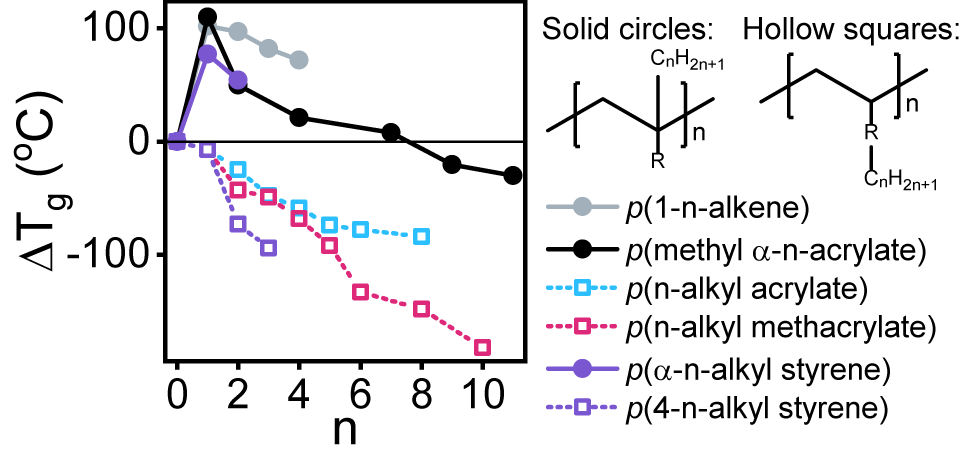
(4/4) In that context, attaching an extra methyl group to the backbone elevates the Tg by almost 100 K! However, attaching an ethyl group to the backbone, or an n-alkyl chain to the side group, causes the Tg to decrease!
(1/4) Watch out for the polar methyl group in PMMA's backbone! We unveil a unified view on the effect of polarity and sterics on glass transition in vinyl-based polymer melt in
@MacroJrnls_ACS. @cwcoley Alfredo Alexander-Katz
https://t.co/Jz3d4q7dpu
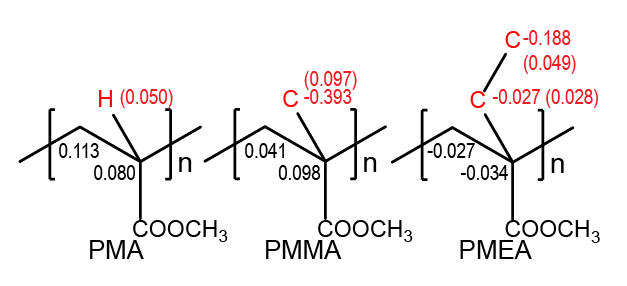
(3/4) The methyl pendant group attached to the backbone is more polar and "bulkier" than its ethyl counterpart, which causes PMMA has the highest Tg. The partial charge presumably arises from the CH-pi interaction between the alpha-methyl group and the carbonyl.
Random heteropolymers can spontaneously stick to and unfold at interfaces, which made for some the coolest figures of my PhD. Check out what it means for polymer and protein behavior now in JCP https://t.co/gGDChgktAH @HerryJin@mit_dmse
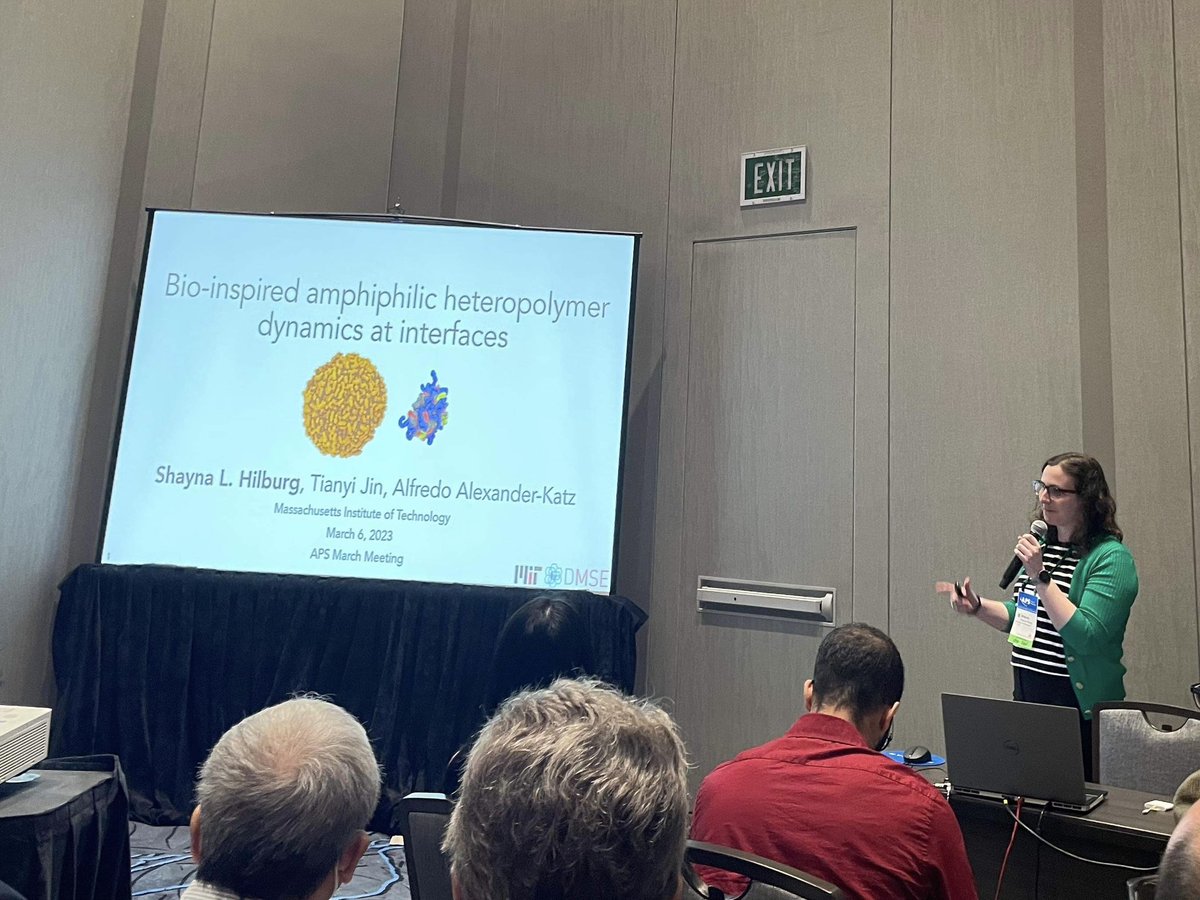
Exciting science-filled week! Presented work from my PhD @mit_dmse with @HerryJin and Alfredo Alexander-Katz, had a poster on my new Postdoc work with @lilopozzo #APSMarch … (1/2)
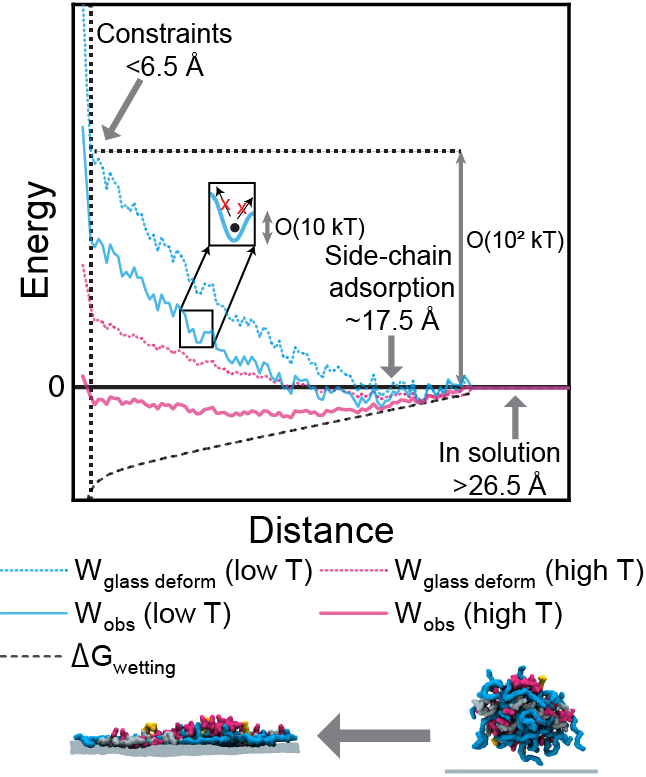
(4/4) What is the origin of these two stable modes? To make the polymer adsorbed, we need to deform the glassy backbone. Neither further adsorption nor recoiling is favorable.
(1/4) How do PMMA-based random heteropolymers behave near a hard substrate, e.g. graphene? Check out our results on the adsorption mechanism in
@MacroJrnls_ACS. Watch out the PEG and glassy backbone! @cwcoley Alfredo Alexander-Katz https://t.co/zNwdvn0knD