<데스노트>를 전부 보았습니다.
작품 자체는 훌륭했습니다.
다만 유감스럽게도 일본의 창작 의식은 한참 낮다고 할 수밖에 없습니다.
어째서 공식 스핀오프 "엘과 라이토의 두근두근 24시간 밀착 수갑 동거생활🩷 ~잠깐, 목욕도 함께?!~" 를 내주지 않는 겁니까?
일본의 미래가 걱정
In Gone with the Wind (1939), Scarlett and Charles had a son named Wade Hampton Hamilton, but his character was completely omitted from the film.
#OldHollywood#Vintage#GoneWithTheWind
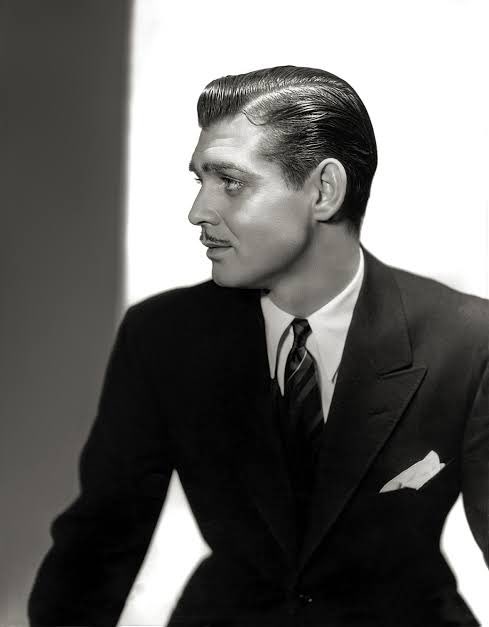
Remembering Clark Gable, “the King of Hollywood”, who died on this day in 1960. The Oscar-winning actor, who is best known for his role as Rhett Butler, has passed from history into legend. Over the course of his career, he appeared in more than 60 films, and despite his matinee idol appearance, was one of the finest actors of Classic Hollywood, and a first rate human being. Gable was born in 1901, in Ohio. In 1930, he was signed to MGM by Irving Thalberg, whose policy was to pair him with female stars who inevitably fell for his overt masculinity. He appeared with Joan Crawford in “Dance, Fools, Dance” (1931), and their electricity so impressed Louis B. Mayer, that he re teamed them in seven more films, during the course of which they had an affair that nearly burned down the town. Gable then appeared with Jean Harlow in the romantic drama “Red Dust” (1932). His “unshaven love-making" with the braless bombshell made him MGM's most important leading man. When Mayer thought he was becoming scabrous and ungrateful, he was loaned to Columbia for “It Happened One Night” (1934), with Claudette Colbert. Gable won the Academy Award for Best Actor, and audiences revelled in the fast-paced, fast-talking comedy, which is arguably the first screwball ever made. Gable's next role at MGM was that of Fletcher Christian in “Mutiny on the Bounty” (1935), a gargantuan success, receiving eight Academy Award nominations, including one for its star. He next made three pictures with Spencer Tracy, in which they were a fortuitous and charming pair. “San Francisco” (1936), with Jeanette MacDonald, was a particular success and remains the third-highest-grossing film of Gable's career. By 1937, Gable was heavily involved with Carole Lombard, who helped persuade him to take on his most iconic role, that of Rhett Butler. He also needed the money to fund his divorce from wife Ria Langham. Gable almost walked off the set when he discovered the “Gone With the Wind” facilities were segregated, with signs reading "White" and "Coloured". The actor telephoned David Selznick and said, "If you don't get those signs down, you won't get me." The signs were taken down. Gable also tried to boycott the film’s premiere in the South, because his friend Hattie McDaniel, who played Mammy, was not permitted to attend. Despite these frictions, his acting was nuanced, subtle and superb. No other actor could have delivered such a layered performance. Initially, Gable had not wanted to cry after Butler inadvertently causes Scarlett to miscarry, but Olivia de Havilland made him, later commenting, "I said, 'You can do it, I know you can do it, and you will be wonderful.’ Well, by heaven, just before the cameras rolled, you could see the tears come up at his eyes and he played the scene unforgettably well.” By rights, he should have won an Oscar, but it went to Robert Donat. Now married to his adored Carole, Gable made the comic Western “Honky Tonk” (1941), with Lana Turner. In 1942, Lombard was killed in a plane crash and the actor went to pieces. He joined the Army Air Forces and hoped he would be shot down while flying missions over Germany. Ironically, he was Hitler’s favourite actor, and the Nazi leader offered a reward to anyone who could capture Gable unharmed. After the War, the quality of his films declined and the actor looked older than his years. One of his better movies was “Mogambo” (1953), opposite Ava Gardner and Grace Kelly, with whom he had a brief affair. Gable left MGM in 1954, dissatisfied with the roles he was given. In 1955, he married former model Kay Spreckels, with whom he was quietly content. Gable's last film was “The Misfits” (1961), written by Arthur Miller and co-starring the latter’s estranged wife, Marilyn Monroe. Many critics regard Gable's performance in the film to be his finest. On November 16, 1960, Clark Gable had a heart attack and died a few hours later, aged 59. His wife was pregnant with his only son, John, who he would never see.
One of Vivien Leigh’s rare screen tests for “Rebecca” (1940), made while the actress was filming “Gone With the Wind.” Vivien desperately wanted to play the second Mrs De Winter, opposite lover Laurence Olivier, who had been cast as Maxim. The film’s producer, David Selznick, was incredulous, saying that Leigh was utterly wrong for the part of the plain and timorous young woman, and added that if “housekeeper Mrs Danvers had dared to bring her breakfast late, Vivien would have thrown the tray at her.” The role went to Joan Fontaine.