They did not take cursive from the schools because children no longer needed it. They took it because of what it was quietly building in them.
Consider what the exercise actually is. A child, six years old, is handed a pen and asked to draw a single unbroken line that becomes a word. The wrist must float. The fingers must hold a living pressure, never quite the same twice, always correcting. The eye must follow the ink forward and trust the hand to finish what it has begun. There is no lifting, no stopping, no starting over mid-word. The loop must close. The ascender must rise and return. The sentence must travel from one margin to the other as a single continuous gesture, and at the end of it the hand must still be steady.
Twelve years of this. Every day. Ten thousand small acts of sustained, self-correcting attention, carried out below the level of conscious thought, until the motion belongs to the body and the body belongs to the motion.
This is not penmanship. It is the slow construction of an interior form.
The hand that has learned to carry a line without breaking it is the hand of a mind that has learned to carry a thought without breaking it. The two are not metaphors for one another. They are the same faculty, trained in the same child, by the same daily discipline. Continuity of the stroke becomes continuity of the reasoning. The patience of the loop becomes the patience of the argument. The commitment to finish a word one has started becomes the commitment to finish a sentence, a paragraph, a life's idea, without reaching for the nearest distraction halfway through.
Print is a different creature entirely. Print lifts. Print stops. Print assembles a word out of separate, stamped, interchangeable pieces, each one beginning and ending in isolation. A mind raised only on print learns to think the way print is made, in discrete tokens, in replaceable units, in fragments that can be recombined by any outside hand without the owner noticing the substitution. It is precisely the shape of thought a language model produces. It is precisely the shape of thought a language model can steer.
Cursive is kata. This is the whole of it. A form repeated daily, for years, not for the sake of the form but for what the repetition lays down in the practitioner beneath the form. The swordsman does not train kata so that one day he may fight in kata. He trains it so that when the moment comes and there is no time to think, the movement is already inside him, older and deeper than thought, and it rises on its own. Cursive was the kata of the literate mind, the daily quiet drilling of continuity, of patience, of a line held steady under the long pressure of its own length. And the signature it produced at the end, that small flourished mark unique to a single human being on earth, was only the outward proof of an inward form no machine and no other hand could ever reproduce.
Take the kata away and the practitioner is left with vocabulary in place of faculty. He can recognise a whole thought when he encounters one. He cannot carry one himself. He can admire a finished argument. He cannot sustain one long enough to close its loop. He begins books he does not finish, sentences he does not end, ideas he abandons the moment the screen in his palm offers him a brighter one. And when the machine begins feeding him tokens in the exact shape his schooling taught him to receive, he meets it with no interior resistance at all, because no interior form was ever built in him to push back with.
They removed it quietly, across a generation, and they removed it in the last years before the machines arrived. Twelve years of daily practice in unbroken, embodied, self-authored thought, gone from the curriculum of almost every child in the Western world, just as the instruments designed to complete their sentences for them came online.
The hand forgets. The mind, having never been taught the kata, forgets a thing it never knew it had.
That is what cursive was. That is what was taken. And that is why the thought of anyone who still writes by hand, in long unlifted lines, remains, quietly, stubbornly, and without their ever needing to announce it, their own.
Now the question stands open. What else has been banned, phased out, quietly retired from the curriculum and from common life over these same decades, under the same soft excuses? Mental arithmetic. Memorisation of poetry. Latin. Logic as a formal subject. Map reading. Knot work. The keeping of a commonplace book. The reading aloud of long passages in class. Singing in parts.
What was each of those actually building in the child, beneath the surface of the lesson, and whose interest was served by its disappearance?
Frank Zappa was decades ahead of his time. In 1981, he said this:
"Schools train people to be ignorant. They give you the equipment that you need to be a functional ignoramus."
"They prepare you to be a usable victim for a military industrial complex that needs manpower."
"As long as you're just smart enough to do a job, and just dumb enough to swallow what they feed you, you're going to be alright."
"Schools mechanically and very specifically try and breed out any hint of creative thought in the kids that are coming up."
In 1900, John D. Rockefeller controlled approximately 90 percent of all petroleum refining in the United States. He was, by some calculations, the richest private individual who had ever lived.
He had a problem. Scientists were discovering that compounds derived from coal tar, a petroleum byproduct, could be used as synthetic medicines. Aspirin, derived from coal tar, had been launched by Bayer in 1899. The petroleum waste stream Rockefeller had previously had to dispose of could now be sold back to the public as medicine at a markup of roughly 10,000 percent.
He had another problem. American medicine in 1900 was a competitive ecosystem of homeopaths, herbalists, naturopaths, osteopaths, midwives, and traditional doctors who used food, plants, water, and lifestyle as the primary tools of healing. Approximately half of all American medical schools taught some form of natural or alternative medicine.
Rockefeller bought into the German pharmaceutical industry, eventually taking a substantial stake in IG Farben, the conglomerate that included Bayer, BASF, and Hoechst. He then commissioned a report.
The report was written by Abraham Flexner, an educator with no medical training, funded by the Rockefeller and Carnegie Foundations, and published in 1910. It declared that natural and alternative medical schools were unscientific quackery. It recommended the closure of more than half of all American medical schools and the standardisation of the rest around medicine based on synthetic patented drugs.
Congress acted. Half of American medical schools closed within a decade. The remainder accepted Rockefeller and Carnegie funding on the condition that their curricula be reorganised around pharmaceutical treatment. Nutrition was removed. Herbal medicine was removed. Lifestyle intervention was removed. The doctor's job was redefined: diagnose the symptom, prescribe the drug.
The drugs were petroleum-derived. The petroleum was supplied by Rockefeller-controlled refineries. The medical schools were funded by Rockefeller. The journals were funded by Rockefeller. The AMA was supported by Rockefeller. The hospitals were funded by Rockefeller.
By 1925, the American medical system was a vertically integrated extension of the petroleum industry, operating under the marketing slogan that it was scientific.
This is the system that exists today.
The pharmaceutical industry generates approximately $1.5 trillion in annual revenue. The American population, 4 percent of the global total, consumes approximately 50 percent of all pharmaceuticals manufactured.
The system was not designed to make people healthy. The system was designed to manage symptoms in a way that produces lifetime customers. A healthy patient is a former customer. A managed patient, who takes the pill every day for the rest of their life, is an annuity.
The objective has always been to keep you in that profitable corridor between healthy and dead.
Long enough to keep buying. Not so well that you stop.
The doctor who advises you to fix your metabolism by changing your diet is, from the point of view of the system that trained him, a defective product. The doctor who prescribes you a statin, a metformin, an antidepressant, and a blood pressure medication for life is performing exactly as designed.
The system was designed by an oil baron who needed to sell the waste products of his refineries.
It still functions, 116 years after the Flexner Report, exactly the way he designed it.
You are the customer.
The corridor is where you live.
🚨 ISRAELI OFFICIAL THREATENS THE WORLD LIVE 🔥
"Anyone who criticizes Israel is our enemy.
We will watch you through Google.
We will expose your weaknesses.
We will get you fired from your job.
And if you own a business, we will bankrupt you."
This is not a random activist speaking.
This is an official from the Israeli Embassy in Washington.
This is exactly what Zionism has become.
A global intimidation machine that threatens your livelihood if you dare speak against them.
Share before they try to delete it.
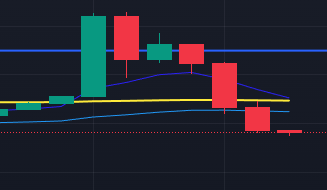
The chart of things most people can't sell on a DEX and launched really really close to 0 is pretty funny. 553,777% lol. Should nuke down quite hard in about 13.5 hours, cuz the price is too high.
🚨 Why is the British Empire in full panic mode?
It's not about missiles. It's about a "boring" document that just ended their financial control over America.
NATO generals are screaming for war. MI6 is coming out of the shadows. Russia is calling them out.
☀️ GMGM PulseChain lets look at some bullish HEX stats for the day
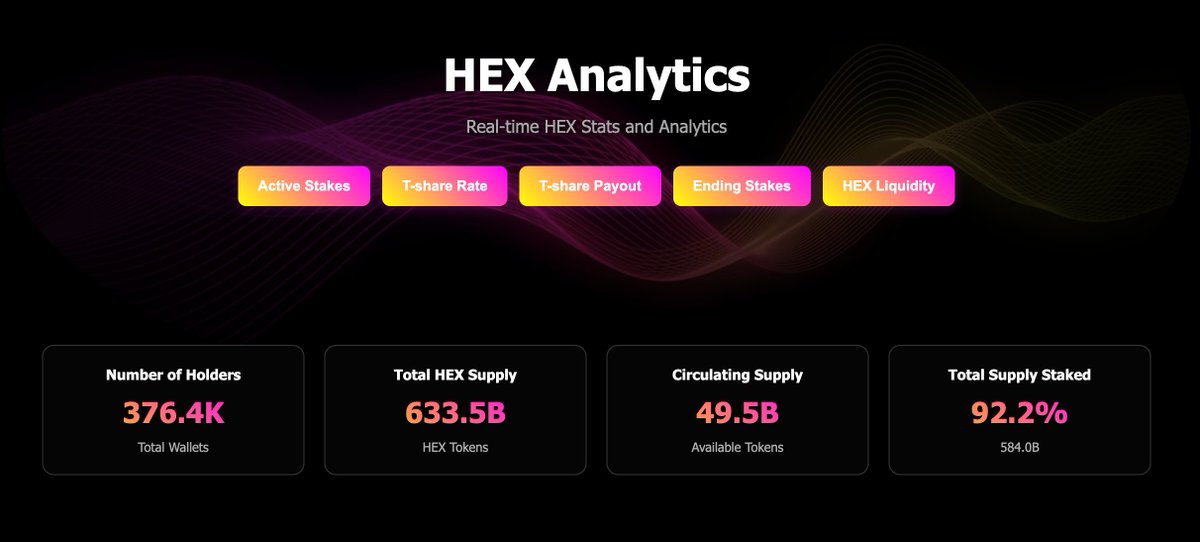
92.2% of the HEX supply is Staked - 584.0B HEX tokens out of the 633.5B supply
That leaves us with Liquid HEX supply: 49.5B HEX
Liquid value: ≈ $173.45M USD
⚡️ PulseChain Dead address holds - 12.54M HEX - 0.0253% - $43.9K
🪙 PulseChain Treasury bought in 2024 holds - 176.03M HEX - 0.356% - $616.8K
🐋 GodWhale holds 4.93B HEX liquid - 9.9596% - $17.27M
(Godwhale has never sold so for this we are counting the HEX as taken off the market)
10.33% in total of the 49.5B HEX remaining is effectively also taken off the market
- That leaves 44.38143B HEX supply - less than 7% of the original 633.5B total supply circulating
🟡 There are other liquid wallets that have never sold and some are unstaked HEX OA daughter wallets
- To get exact numbers for these is harder, but you could assume another 10% of the 49.5B HEX is taken off the market
- 39.43B HEX roughly remaining - 6% of the original 633.5B total supply if you include the guesstimated % in other dormant wallets
Roughly 500M HEX are for sale - 1.0101% of the liquid supply - $1.75M
A $2M buy on HEX would move the price nearly a 10X (given no sell pressure)
HEX currently has the lowest liquidity set up out of all of the core assets
HEX has the least number of larger liquid sell pressure compared to PLS and PLSX:
🦈 - HEX 67 - PLS 105 - PLSX 72
🐬 - HEX 810 - PLS 970 - PLSX 983
Most of the HEX ‘OGs’ who made it big in HEX sacrificed their HEX for PLS and PLSX, it gave HEX a bad name but they are in other assets now
In 2020/21 we seen a lot of movement with HEX liquidity, where it would be correlated and decorrelated to other assets at points in the market,
Since PulseChain launched it HEX has mostly been correlated to PLS, this has been the downfall
To many surprise most of the damage to the HEX chart over the last 2 years has been its correlation to PLS, yes there has been some larger HEX sellers, but overall HEX would be much higher currently if it was not tied to PLS
We seen the HEX OA stake a large portion of its HEX
- this was to protect users from inflation and also killed the OA could nuke any second narrative
Most hated, lowest liquidity, now low inflation, lowest sell pressure
Will 2026 see the return of HEX?
❤️💛💚💙
🚨 JUST IN 🚨
PulseChain is absolutely melting faces today, with $PLS up +10% due to the intense CryFagging essays released over the weekend.
PulseX is up +21% as the Market realises that PulseX is a Protein Version of Uniswap.
I’m more confident and excited about PulseChain than ever. The security, utility, and stability are sound.
I recently had a conversation with a for-profit blockchain executive (I’ll keep it vague). They faced competition backed by over half a billion dollars. This company, however, focused on what truly matters. And guess what? They’ve now dominated the space, securing almost every deal. Why? Because having a secure and stable blockchain is crucial for actual users.
PulseChain’s ecosystem continues to grow, attracting more attention daily. While some individuals focus solely on charts, others recognize opportunities that others overlook. I understand that charts can influence emotions, and it’s challenging to resist their impact. However, just like that blockchain company, persistence and focus are key.
I rarely look at charts, personally.
> world’s largest asset manager
> world’s third largest asset manager
> europe’s largest asset manager
> europe’s second largest asset manager
all launched tokenized funds on ethereum.
ethereum is taking over the world