Liam McEneaney: comedian, writer, filmmaker. From Showtime, WTF with Marc Maron, TV
Comedy special 'Liam McEneaney: West Coasting' hits Amazon Prime Oct. 2025
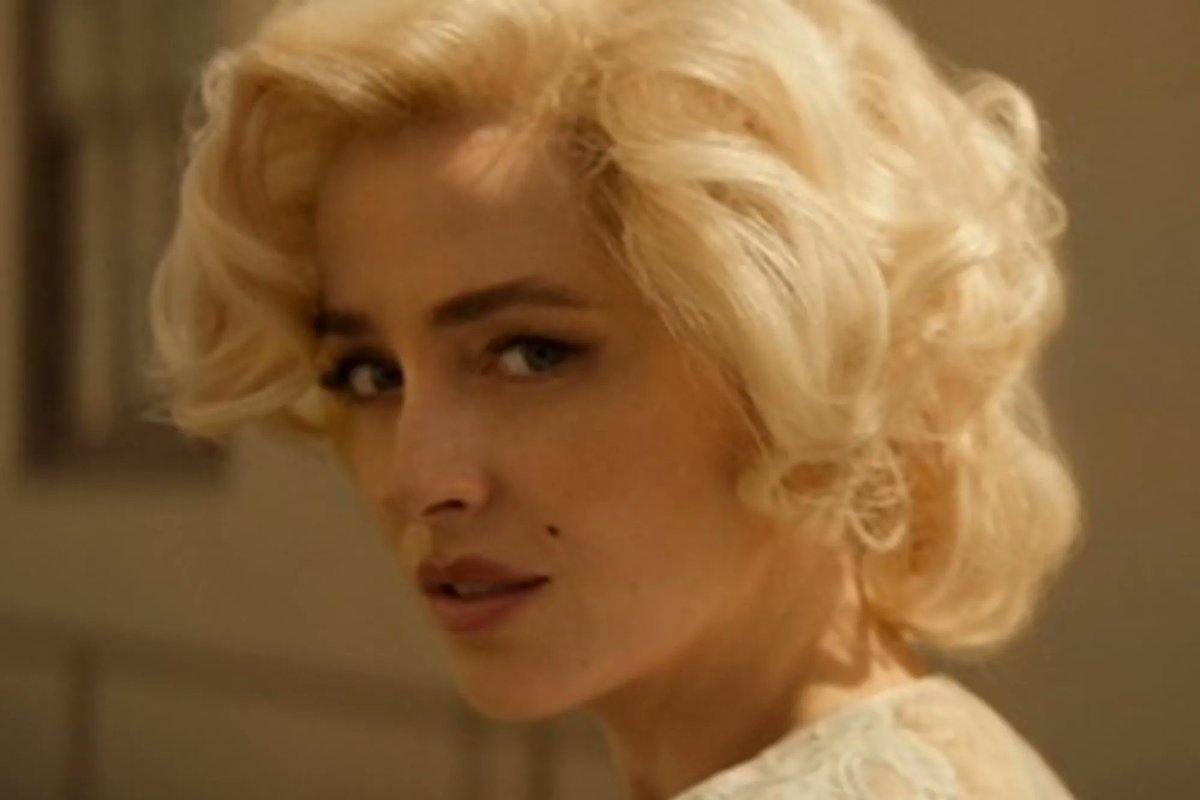
Maggie Gyllenhaal experimented with AI to transform Dakota Johnson into Marilyn Monroe for her short film “Flesh Impact” but scrapped it.
"The people who commissioned this project from me asked me to use AI. And I thought — I mean, they weren’t using OpenAI, they were using licensable AI, training it off of Marilyn Monroe films that we had licensed. And I went for it. I was like, all right, I’m curious, I don’t know, let’s see. The idea was that we trained it on her, we then put her face on Dakota’s face. We worked hard at it, and in the end, I threw it away because what was coming through Dakota playing Marilyn Monroe was so much more moving, human, alive. It fundamentally did not work. All the reasons we decided to make this project to begin with were, were, were, were killed off in the AI version.”
https://t.co/66PWBWJTJN
🎬In his 1980 film, Robert Altman had a clever way of showing Bluto ‘seeing red’ when Olive Oyl arrives with Popeye. There was no digital effect or color filter added. The crew created the entire look: dressing the set in red, bathing everything in red light, and putting Popeye, Olive and Swee’Pea in matching red outfits.
Old-school movie magic
EYES WIDE SHUT: THE MISSING 20 MINUTES
You know, this is as good a time as any to finally address the missing 20 minutes from Eyes Wide Shut. It’s a story that has been circulating for many years, so let me tell you what I actually know and don’t know.
For context, my father always had his outtakes incinerated once a film was finished, specifically to prevent the studio from later re-editing his work or creating alternative versions.
There has been a lot of speculation that some 20 minutes were removed from Eyes Wide Shut after he died. This will be very disappointing to many people, but I certainly did not hear anything about a missing 20 minutes at the time, nor have I heard anything since that would confirm such a section ever existed. I guess you could stop reading right here. But if you’re interested in the details, please read on.
Of course, I was not in a position to know everything that may have happened before or immediately after my father’s death. At the time, I was living in Los Angeles, writing the score for a different movie. I flew to England, utterly traumatized, to be there for the preparations for my father’s funeral and burial. But I had to return to LA the day after his burial—stricken with grief and exhaustion—to complete the score I was contractually obligated to finish, which I barely managed. So I wasn’t there, in more ways than one, for whatever discussions may have followed.
The only alteration I heard about at the time was the use of CGI—computer-generated figures—to obscure some of the nudity in the orgy scene, which Warner Brothers wanted in order to secure an R rating for the film. But I did not hear that any shots or scenes were removed.
When my father died, Eyes Wide Shut had reached picture lock and was moving through the final stages of post-production. It had just been shown to the studio heads, I assume with a temporary music track, while the final sound mix and some of the music work were still to be completed.
This was 1999, in the era of physical film distribution. The film was edited on Avid, but that should not be confused with the kind of permanent digital archive people imagine today. The Avid material consisted of standard-definition video transfers made from the rushes—720 × 576 pixels—and used for editing. They were working copies, not a high-resolution digital preservation of the original negative. There wasn’t a high-resolution digital version of every take sitting on a server somewhere, as people might reasonably imagine today.
There were, of course, all the 35mm rush prints, as well as the original camera negative containing the outtakes. Eventually, long after the film was finished and released, the 35mm rush prints and the original negative of outtakes were incinerated. The original master negative of the finished film and the intermediate film elements made from it were, of course, kept in storage.
Once the picture was locked, the original camera negative would have been physically cut to match the final Avid edit. Once the negative itself had been cut, you couldn’t simply undo those cuts and rearrange the film: each cut destroyed a frame at both the head and tail of the shot. The master negative of the finished film was then used to make interpositives, from which internegatives were made, and those internegatives would have been used to make the 35mm theatrical release prints. The original negative of the outtakes never went through that process because, of course, those shots were not part of the finished film.
Someone might say, “But then, if the missing 20-minute edit exists, it would be preserved on the Avid!” But editing the film on Avid does not mean all of that material was preserved indefinitely. This was not an era in which every piece of editorial media was automatically retained on servers for decades, and I have no knowledge of whether any of the Avid editorial material from the production still exists. That’s a question for the …
CONT. Thread👇
This week's episode of "Top 3", is up on the YouTube channel. This week, @HeyItsLiam debates the Top 3 Sitcoms of the 1990s with @FrankConniff, @JoelMadison, and @CWerthmann.
Watch, like, subscribe, and share:
https://t.co/ZWkDDaraTL
@aleclennonsoft In 1965 alone, Dylan releases Bringing It All Back Home in March, writes and records “Like a Rolling Stone” in June, releases Highway 61 Revisited in August, and by the end of the year is already recording Blonde on Blonde.