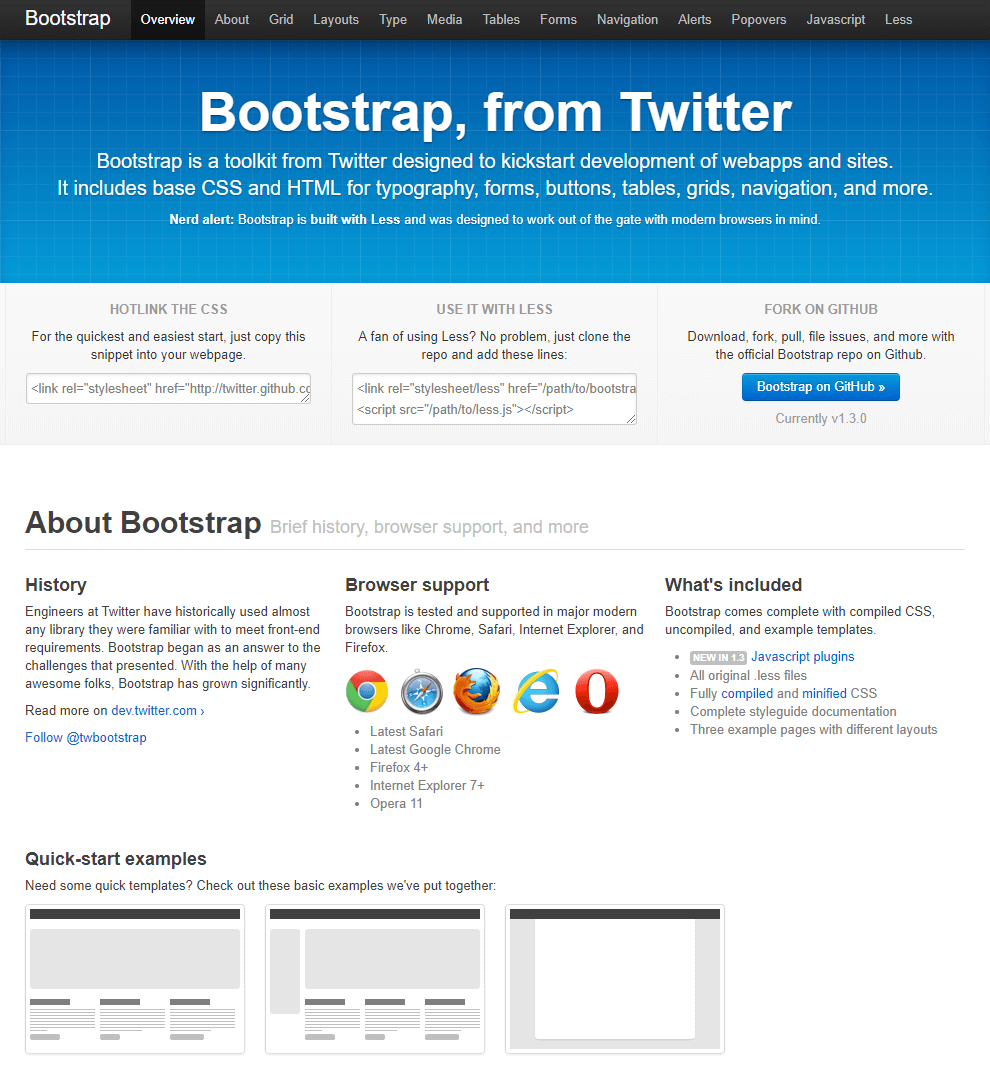
On August 19, 2011, Web developers Mark Otto and Jacob Thornton of Twitter began creating the CSS framework Bootstrap in mid-2011. The framework was originally developed to help maintain the HTML/CSS and JavaScript code consistency in Twitter applications.
Alright. I want you to read this.
Earlier today, I released a new component.
What you see is the finished result.
What you don’t see are the days of planning, research, testing, designing, simplifying, throwing ideas away, and trying again before I felt it was ready.
Within hours, it had been copied and ported to another framework by pointing an agent at my code.
Of course, it’s open source. They were allowed to do it.
And I’ve been around long enough, with multiple successful products, that I don’t care.
But what if this was someone’s first product?
What if they spent months building it, launched on Friday, and by Monday it had been cloned by agents, repackaged, and made free?
What happens when your second product is copied?
Your fifth?
Your tenth?
What happens when every new idea immediately becomes the next prompt?
What happens when your roadmap, your changelog, and your launch announcements become someone else input prompts?
What happens when models become good enough to copy bigger ideas?
What happens when “just execute better” stops being the answer?
What happens when “just build bigger” or “think wider” stops being enough?
What happens when both ideas and execution become cheap?
What happens when the creator pays the full cost of creativity but everyone else pays nothing to reproduce it?
What happens to creativity when AI makes copying effectively free?
What happens to the will to create when AI makes copying effectively free?
Look, copying is not new.
Copying at this speed, cost, and scale is.
People will tell you to think bigger.
But nobody starts "bigger".
Every one of us here started by making something small.
You keep going because, somewhere along the way, the work is rewarded.
Maybe people use it.
Maybe they pay for it.
Maybe they simply recognize the thought, effort, and care that went into it.
Copying once demanded effort.
You had to study the work and understand it to copy it.
That effort created appreciation for the person who made it.
Not anymore.
Creativity begins with small steps.
If we make those first steps feel pointless, we don’t just lose small products.
We lose the people who might have gone on to build the big ones.
We are uniquely positioned here.
We get to use and experience this life-changing technology before almost everyone else.
How we use it will set the default everywhere else.
That default will spread to writing, design, music, research, and every other field where someone still has to take the first creative risk.
We can use AI to build great things.
Or we can use it to strip every new idea for parts.
We decide.
I just initialized a TanStack Start project with @vite_js Plus CLI `vp create @tanstack/start` and added netlify and using pnpm, but the project had two problems:
1. `Cannot GET /` problem, fixed it by adding `vite: { installDevServerMiddleware: true }` to the `tanstackStart()` plugin in the vite config file.
2. Also, the pnpm dev script was using `vite` command `vite dev` to run the project instead `vp dev`.
I know this command is a shorthand community template as it is stated in the docs, but I couldn't find the template to add a PR.
Initialized another project with TanStack CLI `@tanstack/cli@latest create` but it didn't have that problem.
It was time for a refresh branding! 🚀
My personal portfolio is live!
Made with @tan_stack Start and @hero_ui
Let me know what you think! 👇
https://t.co/EGeyCgzUq8
Someone forgot to configure the trailing slash redirect at @GeminiApp😅
https://t.co/m694nGSUNO => Works
https://t.co/Ad0DgtQDi8 => 404
Not a must-have, but a nice-to-have fix
Yes: handwriting still matters.
A new study has confirmed that writing by hand activates far more complex and widespread neural networks in the brain than typing, underscoring its importance for learning and memory.
Researchers at the Norwegian University of Science and Technology used a high-density EEG cap with 256 electrodes to record brain activity in university students. They found that the intricate, sensory-rich movements involved in handwriting, especially cursive, trigger highly synchronized brain waves across extensive areas of the parietal and central regions. These coordinated patterns are strongly linked to memory formation, cognitive processing, and encoding new information.
In contrast, typing, which involves repetitive, simpler finger movements, produced significantly less neural connectivity and engagement. The difference was striking: the brain appears much less active during digital writing.
The researchers conclude that the unique motor and sensory experience of holding a pen plays a key role in brain development and learning. As a result, they argue that handwriting instruction should remain a core part of education to support deeper comprehension and cognitive growth in the next generation.
[ “Handwriting vs. Typing: A High-Density EEG Study on Brain Connectivity During Learning” — Norwegian University of Science and Technology (published in Frontiers in Psychology, 2025)]