High Country Observations works where agriculture, natural resources, regulation, technology, and rural business meet.
We provide consulting and field technology for the people and businesses working on the ground, while independently reporting on the systems shaping American land, water, food, wildlife, energy, and rural communities.
Our purpose is simple: understand how these systems actually work, help people navigate them, and bring practical solutions to the places where policy meets the real world.
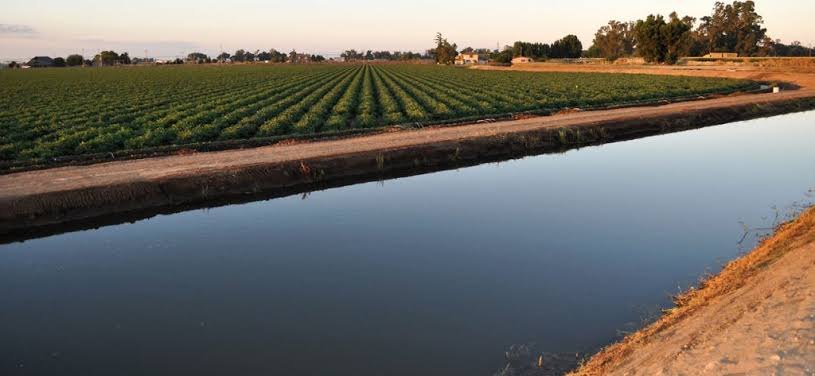
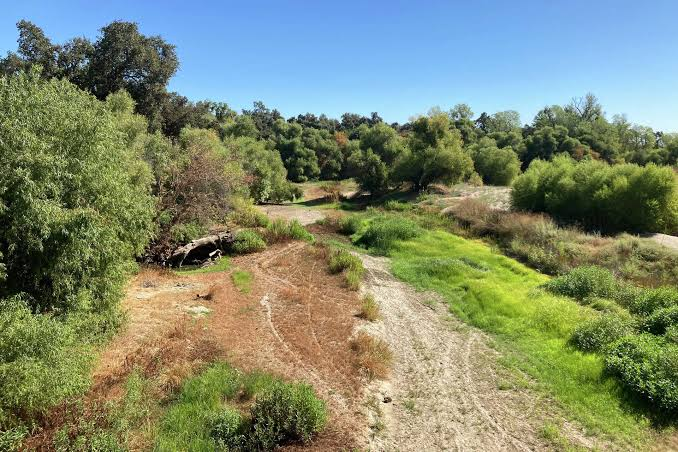
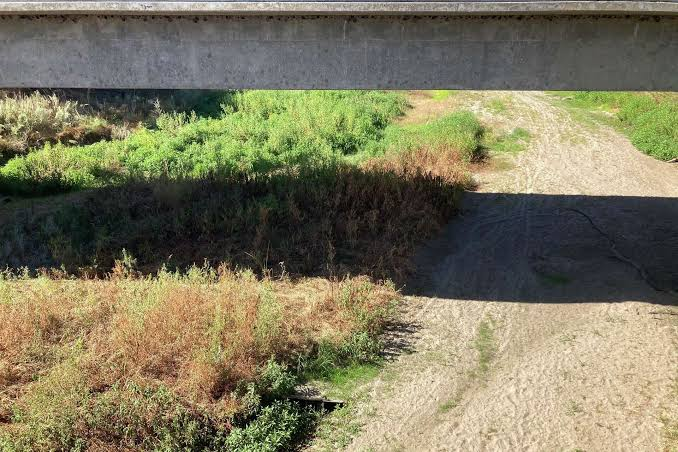
California water regulators have identified a troubling explanation for why a five-mile stretch of the Merced River ran dry during the 2022 drought.
The state's water-rights system allowed enough water to be diverted that the lower river could lose its entire flow, even while emergency drought restrictions were in place.
The Merced originates in the Sierra Nevada, flows through Yosemite National Park and supplies agricultural communities in the San Joaquin Valley.
By the summer of 2022, a stretch near its confluence with the San Joaquin River had become disconnected, leaving fish habitat dry and interrupting an important migration corridor.
State investigators examined diversion records, streamflow measurements and the legal rights held by water users.
They found that diversions under water rights not subject to curtailment could account for the river's disappearance.
Unauthorized withdrawals and groundwater pumping were not identified as major causes.
California's water-rights system gives priority to certain longstanding claims, including senior appropriative and riparian rights.
During drought, regulators can restrict some diversions while others continue under legally recognized priorities.
That system protects established water users, including farmers whose operations depend on reliable access.
But the Merced investigation exposed a serious weakness: the combined exercise of those rights can leave insufficient water in the channel.
Monitoring also proved inadequate.
Regulators lacked timely measurements of diversions and river conditions, making it difficult to identify the developing problem before the channel dried.
River flows support groundwater connections, recreation, riparian habitat and downstream water quality.
California is considering stronger monitoring and revised flow requirements through its broader Bay-Delta planning process.
Those measures remain unfinished, and their implementation could affect agricultural water availability.
The Merced case illustrates a difficult question facing the West: how to protect established water rights while preventing entire river reaches from disappearing during drought.
Without changes to monitoring, operations or minimum-flow protections, similar conditions could return.
A five-mile stretch of California's Merced River ran dry for months in 2022.
State investigators found that existing water rights allowed diversions large enough to exhaust the river's flow.
The problem wasn't simply drought. California's water system had no effective safeguard to keep that stretch flowing.
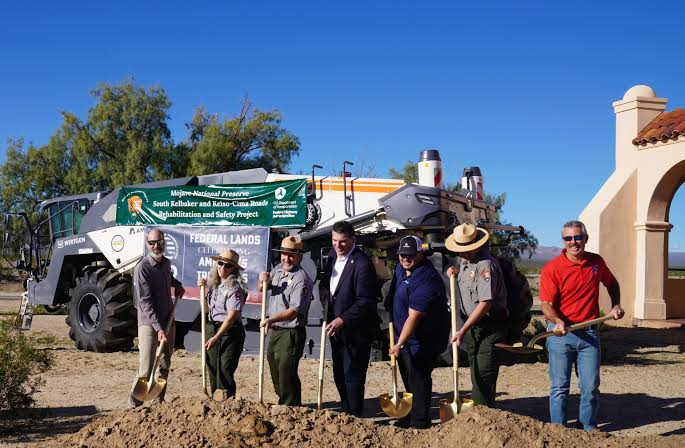
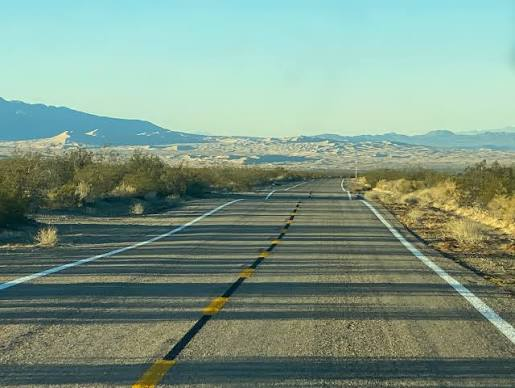
The National Park Service has begun a $66.5 million road rehabilitation project in California's Mojave National Preserve, addressing one of the biggest challenges facing remote public lands: keeping them accessible.
Construction began November 14, with the agency announcing the project November 16.
The work will rehabilitate approximately 42 miles along Kelso-Cima Road and South Kelbaker Road, two important routes through the preserve.
The project includes $38.3 million from the Legacy Restoration Fund, established through the Great American Outdoors Act in 2020.
Mojave National Preserve covers approximately 1.6 million acres of desert landscapes, including Joshua tree forests, volcanic formations, sand dunes and historic mining sites.
Much of the preserve's visitor access depends on traveling substantial distances between destinations.
When major roads deteriorate or wash out, access to trailheads, campgrounds and historic sites can become difficult or impossible.
Flash flooding is a particular concern.
Although the Mojave Desert receives relatively little annual precipitation, intense storms can send large volumes of water through normally dry washes.
Those flows can undermine pavement, damage drainage structures and leave roads impassable.
The rehabilitation project is intended to improve road safety, address deferred maintenance and strengthen the routes against future flooding.
Better roads can also improve access for emergency responders and maintenance crews.
Construction may create temporary travel disruptions, and visitors should check current road conditions before entering the preserve.
Across the West, public access depends on roads, bridges and drainage systems that require ongoing maintenance.
The project is underway, but the National Park Service has not announced that the rehabilitated roads are complete.
Mojave National Preserve is beginning a $66.5 million project to rebuild 42 miles of desert roads.
The work targets deteriorating pavement and flood damage along two major routes.
In a landscape where washed-out roads can cut off entire sections of public land, reliable access is a major conservation and recreation issue.
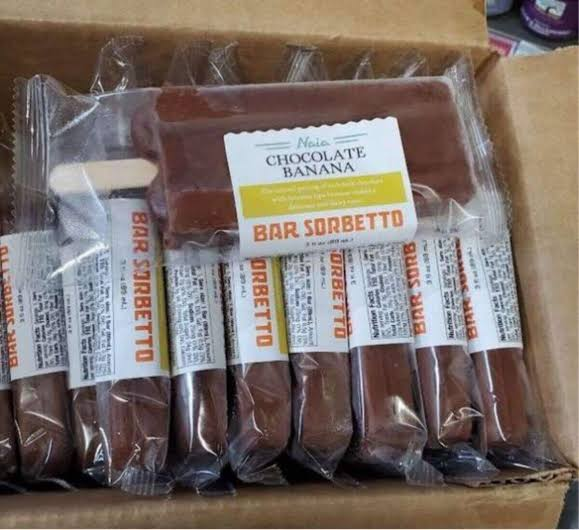
A California frozen dessert manufacturer has recalled certain Chocolate Banana Bar Sorbetto products after discovering that some packages contain a different product with undeclared allergens.
Naia Inc., based in Hercules, California, announced the recall November 16. The FDA published the notice November 17.
The affected products were distributed through grocery stores, supermarkets and other retailers in Northern California and Reno, Nevada.
The recall covers 3-ounce Chocolate Banana Bar Sorbetto products sold between October 7 and November 13, 2026.
Affected wrappers carry one of four best-by date codes:
BB/05/2027
BB/06/2027
BB/07/2027
BB/08/2027
The problem involves a packaging mistake.
According to the company, a small but unknown quantity of pistachio gelato bars was packaged in wrappers identifying the contents as Chocolate Banana Bar Sorbetto.
The chocolate banana packaging does not disclose pistachios, milk or eggs.
That creates a serious risk for consumers with allergies or severe sensitivities to those ingredients.
A person buying a product labeled as sorbetto may reasonably expect different ingredients than those found in a dairy-based pistachio gelato.
The company says the incorrectly packaged bars have a creamy beige appearance, rather than the dark chocolate color of the correctly labeled product.
However, consumers should rely on the package identification and date codes rather than appearance alone.
As of the November 16 company announcement, no illnesses had been reported in connection with the recall.
Anyone who purchased an affected product should return it to the place of purchase for a full refund.
Consumers with questions can contact Naia at 510-724-2479.
The recall is limited to the identified Chocolate Banana Bar Sorbetto products and date codes, not the company's entire frozen dessert lineup.
FDA recall: Naia Chocolate Banana Bar Sorbetto sold in Northern California and Reno, Nevada.
Some bars were mistakenly packaged with pistachio gelato, leaving pistachios, milk and eggs undeclared.
Check 3 oz bars with best-by dates Oct. 5–8, 2027. Return affected products for a refund.
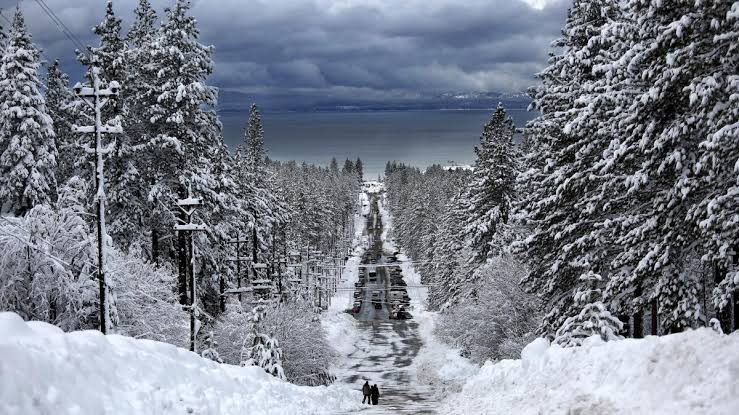
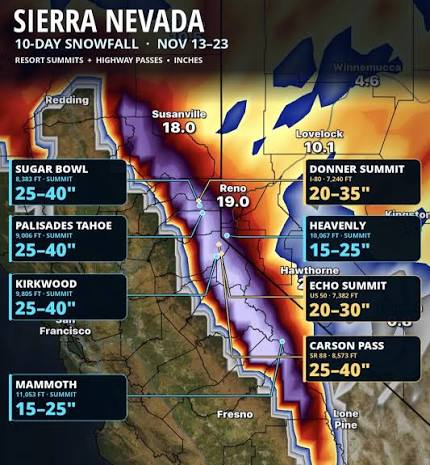
A major Pacific storm is bringing heavy rain and mountain snow to California, offering an early-season boost to the Sierra Nevada snowpack while creating hazardous conditions for travelers.
The National Weather Service has issued winter storm warnings across the northern Sierra and southern Cascades.
Forecasters expect two to four feet of snow above 5,000 feet, with locally as much as five feet at the highest elevations.
Lower elevations could receive substantial rainfall, while strong winds may produce blowing snow and severely reduced visibility in the mountains.
The storm is associated with an atmospheric river, a concentrated corridor of moisture transported through the atmosphere.
These systems supply a substantial portion of California's annual precipitation.
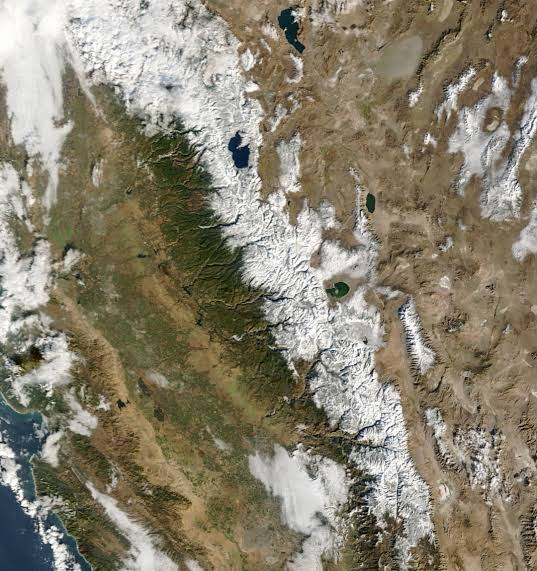
When that moisture falls as mountain snow and remains frozen through winter, it can help replenish reservoirs during spring and summer as temperatures rise.
The Sierra Nevada snowpack acts as a natural seasonal reservoir, storing water that eventually enters rivers, reservoirs and irrigation systems.
That process supports California's farms, cities and hydroelectric facilities.
However, heavy rainfall can also create localized flooding, particularly in foothills and urban drainage systems.
Mountain highways may experience difficult travel conditions, chain requirements and temporary closures.
For water managers, the distinction between snowfall and rainfall is important.
Snow that remains in the mountains provides a longer-term water supply, while rain can run off quickly and create short-term flood hazards.
It is too early to know how much of this storm's snow will survive into spring.
Its contribution to next year's water supplies will depend on temperatures and precipitation throughout the rest of winter.
California's Sierra Nevada could receive 2–4 feet of snow this week, with up to 5 feet at the highest elevations.
An atmospheric river is bringing heavy precipitation, strong winds and flooding concerns.
The snow is welcome for Western water supplies, but one storm won't erase years of reservoir deficits.
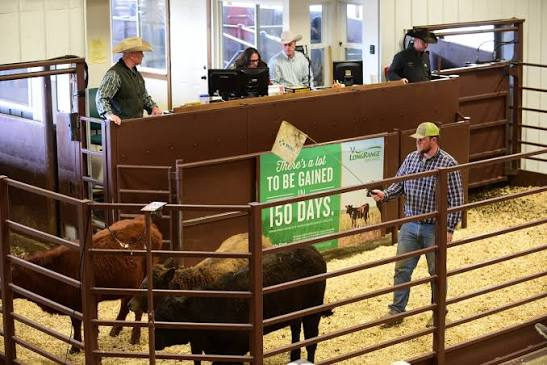
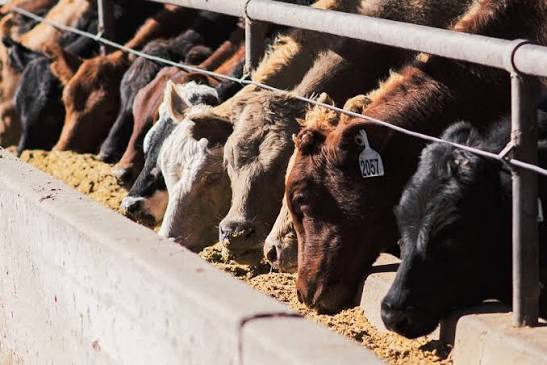
Texas cattle feeders are dealing with an expensive consequence of the nation's shrinking cattle herd: keeping feedlots full now requires substantially more capital.
In November 17 reporting from RFD-TV, Texas Cattle Feeders Association representative Josh Winegarner described how limited calf supplies are increasing the cost of purchasing replacement cattle.
Years of drought and herd liquidation reduced the number of breeding cows across the country. Rebuilding that supply takes time.
Even when ranchers begin retaining more heifers, those animals must mature, produce calves and raise them to marketable weights before additional cattle reach feedlots.
That creates a difficult situation for feedyard operators.
A feedlot purchasing expensive feeder cattle has more money committed to each animal before accounting for feed, labor, financing, veterinary care and transportation.
Higher purchase prices can increase borrowing needs and make a yard more vulnerable if finished cattle prices weaken.
Winegarner says some operators have responded by concentrating cattle in fewer facilities, allowing them to maintain occupancy and spread operating expenses across more animals.
Strong consumer demand for beef continues supporting the market, but favorable demand does not eliminate the cost of carrying expensive inventory.
The pressure also moves differently through the cattle business.
Cow-calf producers selling calves may benefit from elevated prices, while buyers farther down the supply chain must manage those same prices as an expense.
The situation is particularly relevant across the Southern Plains, where drought has repeatedly affected herd numbers and forage availability.
Meaningful herd expansion will depend on ranchers having enough pasture, water, financing and confidence in future returns to retain breeding animals.
Until additional calves enter the supply chain, feedlots will continue competing for a limited supply.
USDA's next Cattle on Feed report, scheduled for November 20, should provide another measure of placements and feedlot inventories.
Texas feedlots are paying more to fill their pens as the U.S. cattle herd remains tight.
Some operators are consolidating cattle into fewer yards to control costs.
Strong beef demand is keeping the industry moving, but fewer available calves mean more capital tied up in every animal.
Federal wildlife managers in Alaska have approved an increase in subsistence caribou harvest limits after population growth raised concerns about pressure on the animals' winter range.
The Federal Subsistence Board voted November 16 to increase the allowable harvest from one to two caribou for eligible hunters pursuing the Kukaklek Shelf population within Katmai National Preserve.
The decision applies to the 2026–27 winter season.
Eligible residents include those from Igiugig, Iliamna, King Salmon, Kokhanok, Levelock, Naknek, Newhalen and South Naknek.
The change was requested through a special action process and modified following recommendations from the Bristol Bay Subsistence Regional Advisory Council.
According to federal officials, the Kukaklek Shelf caribou population has increased in recent years.
That growth has created concerns about overgrazing and deterioration of the habitat supporting the herd.
Caribou depend on adequate seasonal forage, and excessive grazing pressure can affect the vegetation available to animals in subsequent years.
The board concluded that a higher harvest limit could provide additional subsistence opportunities while helping maintain the population at sustainable levels.
The decision also recognizes the practical challenges of hunting in remote Alaska.
Travel can require considerable time, fuel and expense. Allowing an eligible hunter to harvest two animals during a successful trip can make better use of those resources and provide additional food for local households.
The board also expanded eligibility to communities with documented histories of hunting caribou in the area.
However, the change is not a statewide increase in caribou bag limits.
It applies to a specific population, geographic area and group of federally qualified subsistence users.
Hunters must obtain the required state registration permit and follow applicable regulations.
The federal in-season manager will announce the season dates.
The decision illustrates how wildlife management sometimes requires increasing harvest opportunities when a growing local population begins placing pressure on its own habitat.
Alaska is allowing eligible subsistence hunters to take two caribou instead of one in part of Katmai National Preserve.
The reason is the local herd has grown enough to raise concerns about overgrazing.
Federal managers say the change could improve food access while helping protect the range.
A nearly 90-year-old pecan-growing property in East Texas is being preserved as the site of a future state park.
The Texas Parks and Wildlife Foundation acquired approximately 650 acres along Lake Palestine in Henderson County on October 1.
The property was previously part of Texas Pecan Nursery and has been associated with the Pollard family since 1940.
Located between Tyler and Athens, the tract includes pecan orchards, pine forests, ponds and shoreline along the roughly 25,000-acre reservoir.
The foundation has invested more than $10 million to acquire and protect the property.
The land is expected to transfer to the Texas Parks and Wildlife Department in late 2027, when funding from the state's Centennial Parks Conservation Fund becomes available.
That transfer will not mean the park immediately opens.
State officials will still need to develop plans for public access, recreational facilities, roads, trails and long-term management.
The acquisition addresses a growing challenge across the West and South: large, relatively undeveloped properties with access to lakes and rivers are increasingly valuable for private development.
Once divided into smaller parcels, restoring public access or protecting connected habitat becomes considerably more difficult.
The former nursery property offers opportunities for hiking, wildlife viewing, fishing access and other outdoor recreation, although specific facilities have not been finalized.
Its mix of forests, agricultural land and water also supports wildlife, including deer, bobcats and waterfowl.
The Texas Parks and Wildlife Commission discussed the acquisition in August before the foundation completed its purchase.
For now, the land remains a future park site rather than an operating state park.
The next major step is transferring the property to the state and determining how to make it accessible without losing the natural features that made it worth protecting.
A 650-acre Texas pecan farm is being preserved for a future state park.
The property along Lake Palestine includes orchards, pine forests, ponds and valuable lake frontage.
After generations in agricultural use, the land is being protected from development and eventually opened for public recreation.
While announced by the USDA, the Forest Service actually handles the applications and issues the grazing permits.
Each advertised allotment has its own prospectus with application instructions and the responsible Forest Service office. Here's the application folder: https://t.co/4fHRmdLReE
You can also start here: https://t.co/ppPgn4aUNt and contact the ranger district where you're interested in grazing.
The Forest Service is opening applications for 165 vacant grazing allotments across eight Western states.
USDA wants to expand livestock grazing on national forests, but some allotments have remained unused because they're difficult or uneconomical to operate.
The question now is how many ranchers can make them work?
A major federal permitting overhaul is moving closer to a Senate vote, with potentially substantial consequences for energy development, mining and infrastructure across the American West.
On November 16, senators voted 70–27 to invoke cloture on a substitute amendment to the Bipartisan American Affordability and Jobs Act.
The procedural vote limits further debate and moves the legislation toward additional votes expected November 18.
It does not constitute final passage.
The legislation seeks to shorten federal review timelines and reduce permitting uncertainty for major projects.
Its provisions address environmental reviews, electric transmission development and several federal laws governing natural resources and infrastructure.
Supporters argue that lengthy approval processes discourage investment, raise construction costs and delay projects needed to meet growing electricity demand.
That argument has particular relevance in Western states, where transmission lines, mines, energy facilities and transportation projects often cross extensive federal lands.
But faster permitting also raises questions about the quality of environmental review and opportunities for affected communities to challenge decisions.
Opponents have expressed concern that changes to federal environmental laws could limit public participation and make it harder to address damage to water resources, wildlife habitat and culturally important sites.
For ranchers and private landowners, transmission development presents another concern.
New infrastructure may improve electricity availability while creating disputes over rights-of-way, land restoration and compensation.
Senators have filed amendments addressing some of those issues, although filing an amendment does not mean it will receive a vote or become law.
The next scheduled Senate action concerns the substitute amendment and further procedural steps.
Even if the Senate approves the package, it would still need to clear the remaining legislative process before becoming law.
For Western communities, the central issue is whether faster decisions can be achieved without sacrificing meaningful review or protections for existing land uses.
The Senate voted 70–27 to advance a major federal permitting overhaul.
The bill could change how energy projects, mines and transmission lines are reviewed across the West.
Supporters want faster approvals. Critics worry about weaker environmental safeguards.
Final passage is still pending.
Idaho is attracting new investment in geothermal energy, with companies committing nearly $8 million for the opportunity to explore underground heat resources on federal land.
The Bureau of Land Management announced November 17 that its latest geothermal lease sale received $7,924,129 in winning bids across 23 parcels totaling approximately 71,411 acres.
The parcels are located in Cassia, Clark, Elmore, Owyhee, Twin Falls and Washington counties.
Geothermal energy uses heat from beneath the Earth's surface to generate electricity or provide direct heating.
Unlike wind and solar generation, a geothermal power plant can operate continuously when sufficient underground heat and fluid resources are available.
That makes geothermal particularly interesting as Western utilities face growing electricity demand and the need for dependable generation.
But leasing land does not mean a power plant is coming.
Winning bidders must complete the necessary payment and administrative requirements before BLM can issue leases.
Companies would then need to evaluate underground temperatures, geology, water availability and drilling costs to determine whether commercial development is feasible.
Exploration and construction activities involving surface disturbance require additional federal review and authorization.
Those reviews can involve groundwater protection, wildlife habitat, existing land uses and access to public lands.
For Idaho communities, successful projects could eventually create construction work, specialized operating jobs and additional tax revenue.
Federal geothermal leasing also generates revenue through bonus bids, rental payments and potential future royalties, with proceeds distributed under applicable federal revenue-sharing rules.
However, the $7.92 million announced today represents winning bids, not a guaranteed stream of future production revenue.
The results also illustrate a broader shift in Western energy development.
Geothermal resources have historically received less attention than oil, gas, wind and solar, partly because exploration can be expensive and uncertain.
New drilling techniques and demand for reliable electricity have renewed interest in those resources.
The immediate development is the lease sale. The next question is which companies proceed with exploration and whether they discover resources capable of supporting commercial production.
Idaho just attracted nearly $8 million in winning bids for geothermal leases covering 71,411 acres of federal land.
Unlike wind and solar, geothermal power can operate around the clock.
But these leases are only the first step. Exploration must establish whether the underground heat can be developed economically.
The nation's winter wheat crop is showing improvement heading into dormancy, although conditions vary considerably across the Great Plains.
USDA's November 16 Crop Progress report rated 53% of winter wheat acreage in good or excellent condition as of November 15.
That represents a four-percentage-point improvement from the previous week and is eight points above the comparable rating a year earlier.
Kansas, the country's largest winter wheat-producing state, recorded one of the more encouraging changes.
Its good-to-excellent rating climbed six points to 57%.
Recent rainfall across portions of the Plains likely contributed to improved conditions, although individual fields vary with planting dates, soil moisture and local weather.
Across the state line, Oklahoma presents a different picture.
Only 35% of its winter wheat was rated good or excellent, down one point from the previous week.
That difference is important because winter wheat must establish adequate roots and plant growth before colder temperatures slow development.
Good fall establishment can help a crop withstand winter conditions and resume growth in spring.
However, a favorable November rating does not guarantee a strong harvest.
Winterkill, spring drought, late freezes, disease and grain-filling temperatures can all change the final outcome.
USDA also reported that 82% of the national winter wheat crop had emerged, slightly ahead of the five-year average of 81%.
Planting was complete in Colorado, Idaho, Nebraska and Washington, according to the latest state-level figures.
For growers, the immediate concern is getting adequate moisture into the soil before winter dormancy.
For grain buyers, the improving national ratings offer an early indication of crop potential, but production estimates remain months away.
The contrast between Kansas and Oklahoma is a reminder that statewide and national averages can conceal very different conditions on neighboring farms.
Winter wheat is improving across much of the Plains.
USDA now rates 53% of the national crop good or excellent, up four points in a week.
Kansas climbed to 57%, but neighboring Oklahoma remains at just 35%.
The same crop is heading into winter under very different conditions.