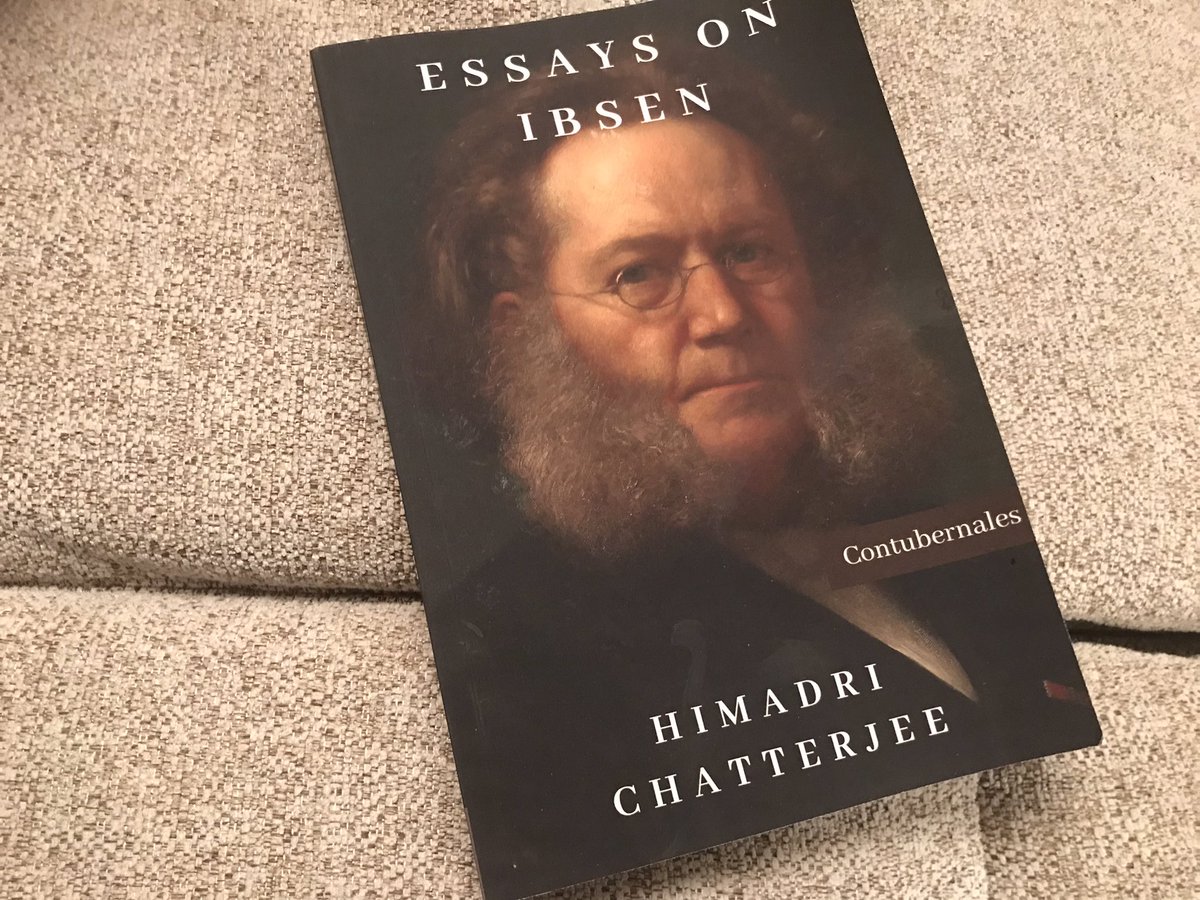
This book is on a subject very close to my heart, and I can only hope my love of these plays come through. As well as my thoughts on them, of course.
You may order it from https://t.co/kUyM7ii0v2 , or from https://t.co/BuJhzZRY1E .
Late night Friday. Time for a whisky, and a classic Hammer horror.
This one isn't perhaps quite top drawer Hammer, but it dates from the vintage years, is directed by the great Terence Fisher, and it's been years since I last saw it.
@grailcountry@nguyenhdi@kalezelden Sometimes "I'm sorry, I didn't express myself well" is a better, more dignified response than "You missed my point".
But I'm frankly bored with this exchange now: it's becoming extremely silly. If you really think Shakespeare's language wasn't refined, fair enough.
@grailcountry@nguyenhdi@kalezelden To say Shakespeare’s language is “not refined” seems to me a very odd thing to say in any context, but I do take your point now that you have clarified what you had intended.
@grailcountry@nguyenhdi@kalezelden Thank you for clarifying that: that had not been clear in your earlier tweets.
Shakespeare does, I think we agree, write in many different registers; and so much of it is indeed, by my understanding, “refined”, it seem pointless and frankly perverse to deny him that quality.
@grailcountry@nguyenhdi@kalezelden You had said, quite clearly, that “his language is not refined” (see quoted tweet). Not “it’s not always refined” - no-one would have any quarrel with that - but it’s “not refined”.
If you’re now modifying what you’d said, I think we can all accept that.
@nguyenhdi@kalezelden It's structurally verse, but his language was not refined, it was original and innovative, but not refined, you are simply wrong about the facts here.
@grailcountry@nguyenhdi@kalezelden Shakespeare’s language is varied - he was, after all, a dramatist, speaking in different voices - but it’s often very refined indeed, given, at least, my understanding of refinement. So I can make sense of your argument, could I ask you what you mean by “refined” in this context?
A Norway fan has gone viral for not taking part in their Row celebration after matches and won't do it if they win the World Cup
"It’s factually wrong; they didn’t row, they sailed over the Atlantic”
@PuzzlerSharpe@nguyenhdi I can understand his choice, but if I were translator of a past text that depicts a world far removed from the modern, I think I’d try to avoid terms that suggest modernity, as too close a proximity to the modern world can be jarring.
2/2
@PuzzlerSharpe@nguyenhdi Of course, translators are faced with valid choices. In Rutherford’s translation of Don Quixote, say, he has Quixote dying of “depression”, which, though accurate in meaning, is modern.
1/2
@PuzzlerSharpe@nguyenhdi That the past world had values so alien to our own presents huge challenges for both translator & reader, but no-one said grappling with classics is easy. Of course it’s difficult. If a translation that doesn’t confront me with these difficulties, I’d feel I’ve been fobbed off.
@PuzzlerSharpe@nguyenhdi A good translation of a work from the past should invite readers into that past world, and help them understand the values that were then prevalent. It should not pretend that that past world was more or less like our own.
I make this merely as a general observation.
@d4doome I can’t stand films with messages myself, but the kind of film I’m thinking of (The Last Detail, Cabaret, Chinatown, The Godfather, The Outlaw Josey Wales, Cross of Iron, etc) while addressing serious themes, don’t strike me as message movies. I like the seriousness, I must admit
@d4doome Yes, Dracula has often been seen as such - especially in John Badham’s 1979 film with Frank Langella. I prefer Dracula as the epitome of sheer evil, myself!