This is a quarter-turn valve, and it is nearly two thousand years old. It was buried at Pompeii in AD 79 and the bronze under the volcanic crust still shows how it worked. Inside the body sits a tapered plug with a hole bored through it.
Line the hole up with the pipe and water flows. Turn it ninety degrees and the hole sits across the flow and stops it. Turn it part way and you throttle it. The tap in a Pompeii display case and the tap in a modern hardware shop work on the same principle.
The part that impresses me is not the design but the consistency. Analyses of Roman water valves report an alloy of roughly 73 percent copper, 18 percent lead and 9 percent tin, holding steady across the empire, and Vitruvius lists ten standard sizes of lead pipe named for their circumference. Somebody wrote the specification and everyone followed it.
Where else do you see that kind of standardization before the modern era?
Here is the uncomfortable part about the cup marks at Karahan Tepe. A hole cut into exposed bedrock has nothing above or below it to date.
No layer, no deposit, no charcoal. Some of these may be eleven thousand years old and contemporary with the enclosures.
Some may have been cut by a shepherd three thousand years ago on the same rock. We cannot currently tell them apart.
Fair point. Karahan Tepe is a Neolithic site in southeastern Türkiye, around 11,000 years old, close to Göbekli Tepe. The holes in the rock are called cup marks. The problem is that carved rock cannot be dated directly, so we cannot say if they were cut by the builders of the site or by someone much later.
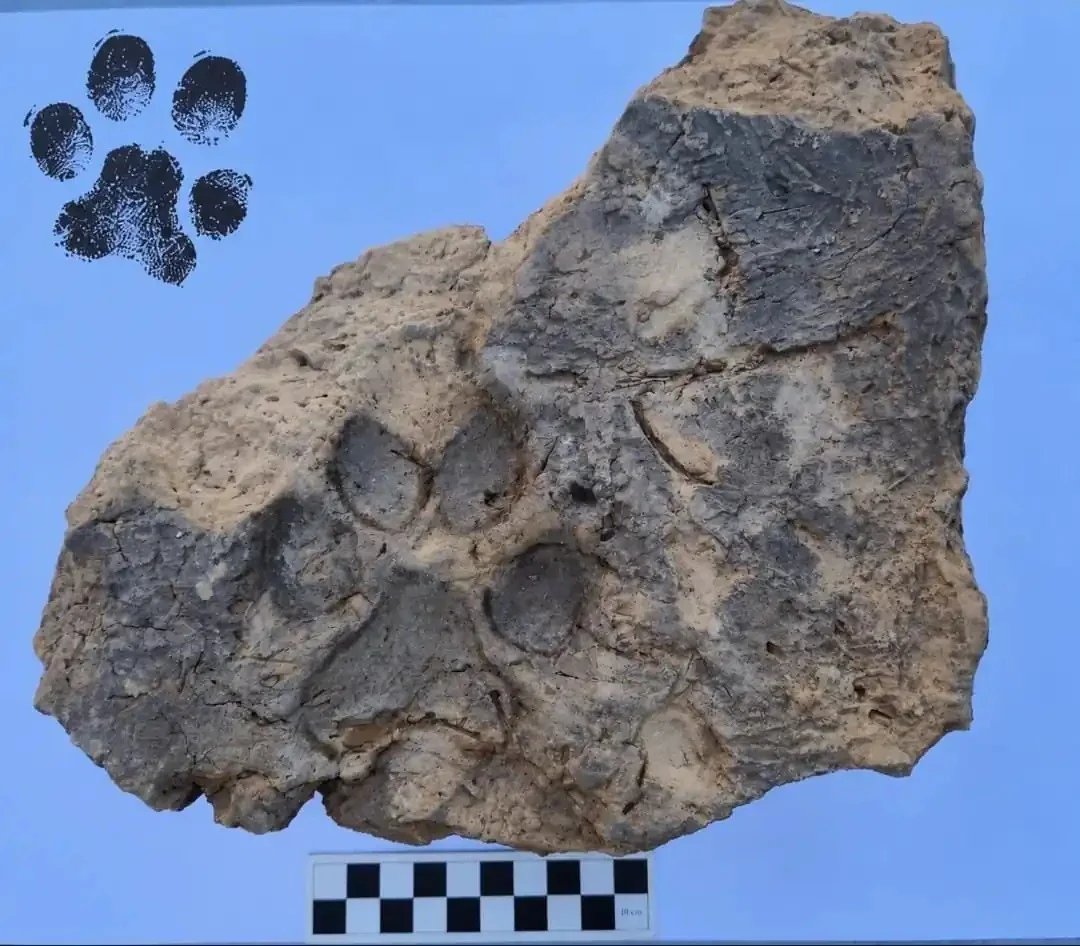
A dog walked across a soft mudbrick at Tavşanlı Höyük in Kütahya, western Türkiye, about 4,000 years ago.
The brick was set into a house wall. The house later burned and collapsed, and the fire likely helped preserve the prints. Türkiye’s Culture Minister announced the find on 26 October.
Tavşanlı Höyük is a Bronze Age city of roughly 45 hectares, and its ancient name is still unknown.
The Mask of Agamemnon is gold foil weighing about 60 grams. This one is solid gold at around 673 grams, more than ten times the weight, made for a Thracian buried near Shipka in Bulgaria in the late fifth century BC.
Every other gold mask from this part of the world is thin sheet. The Svetitsa mask is the only one with real mass behind the face.
These figures are hollow because they were built around bundles of reeds and twigs tied with twine, and the reeds rotted away. What survived is a plaster shell, made of the same lime plaster the people of ‘Ain Ghazal used on the walls of their houses.
The impressions left inside are clear enough that microscopists identified the reed species, and it still grows along the river below the site.
They were made around 6750 BC, with a second group following roughly two centuries later, which puts the oldest of them close to nine thousand years old.
Both groups came out of the ground in the 1980s, on the edge of Amman in Jordan, buried beneath the floors of houses that had already been abandoned. Thirty-two figures in total, found in two caches, one in 1983 and one in 1985.
Look again at the disc and crescent carved above the figures. That pairing is Punic, the sign of Baal Hammon, and it kept being cut into stone in North Africa for centuries after Carthage was destroyed, by then under the Roman name Saturn.
Around 1,500 stelae of this family have been catalogued, running from the fifth century BC to the fourth century AD. Roman frames, older symbols.
Pavlopetri, the 5,000 Year Old Greek Town the Sea Swallowed
Pavlopetri, Greece. A planned Bronze Age town with streets, courtyards and tombs, now resting 3 to 4 metres under the sea.
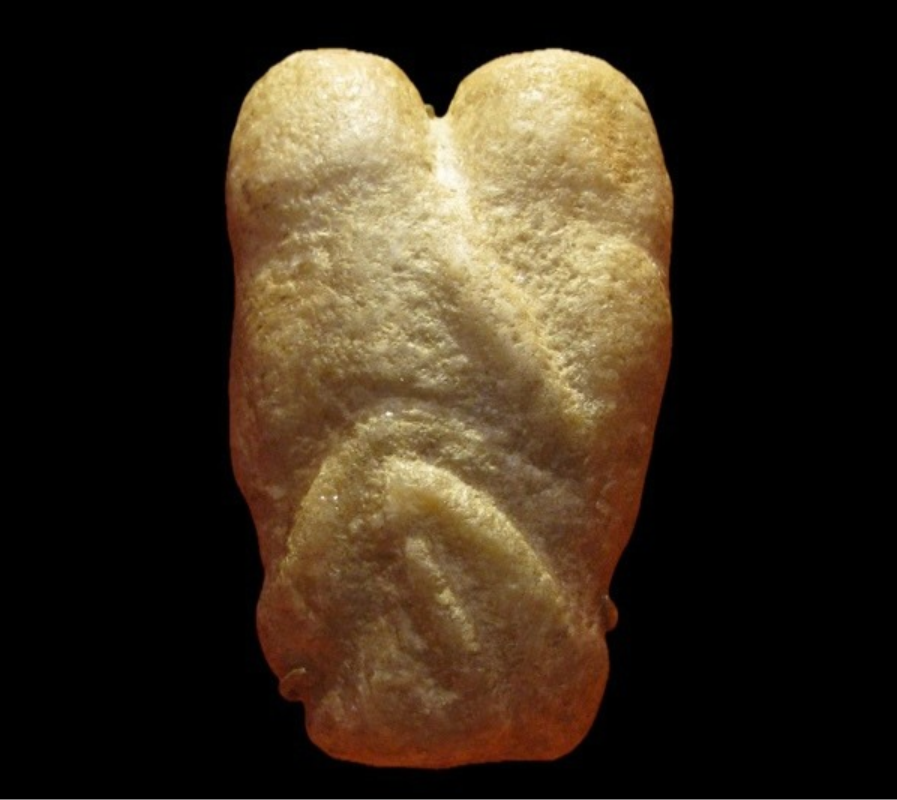
The Ain Sakhri Lovers, an 11,000-Year-Old Couple Carved in Stone
11,000 years ago, a Natufian carver in the Judean Desert took a calcite cobble about the size of a hand and picked away its surface until two lovers appeared.
They sit face to face. One figure’s arms hold the other’s shoulders, knees bent up beneath. Both faces are left blank, and turning the stone changes what its curves suggest.
The Ain Sakhri Lovers, now in the British Museum, are widely called the oldest known sculpture of a couple making love. A Bedouin found it in a gorge near Bethlehem, and in 1933 the prehistorians Henri Breuil and René Neuville recognised it in a small museum there.
The sarcophagus in this water used to stand on dry land beside a working port.
From around 200 BC the bay silted up and İztuzu beach closed the mouth, leaving Kaunos about eight kilometres inland and killing the trade it lived on.
The marshes that replaced the harbour also gave the city a reputation for fever. What does a port do when the sea leaves?
The text on this cliff is funnier than it looks. Carved twenty metres up the rock of Van, it runs in three columns, Old Persian, Elamite and Babylonian, 27 lines each, all saying the same thing.
Here is what it says:
“A great god is Ahuramazda, the greatest of gods, who created this earth, who created that sky, who created man, who created happiness for man, who made Xerxes king, one king for all, one ruler for all.
I am Xerxes, the great king, the king of kings, king of all kinds of peoples, king of this earth great and wide, the son of king Darius, the Achaemenid.
King Xerxes says: King Darius, my father, by the grace of Ahuramazda built much that was good, and he gave orders to dig this niche out, but because he did not make an inscription, I ordered this inscription to be made.”
An imperial monument whose real subject is an empty panel his father left behind.
Between 57,000 and 27,000 years ago, hunter-gatherers in the Southern Caucasus lived in small, scattered groups, yet they were never isolated.
Obsidian tools from Ararat-1 Cave in Armenia show stone carried and resharpened across 40 to 200 kilometers, with shared toolmaking traditions linking whole regions.
The shift from the Middle to the Upper Paleolithic looks gradual, with different cultures coexisting for thousands of years. Connection may have mattered as much as adaptation.
Twelve thousand years ago, at the point where the Batman river joins the Tigris, people built round stone houses and buried their dead beneath the floors they walked on.
Around two thousand graves have come out of Körtik Tepe, more than any other site of its age in Western Asia, and almost every one held something made with care.
This is what people were doing before farming, before pottery, before writing.
What everyone photographs at Perrhe is the necropolis, which the ministry calls the largest in the region, with family vaults cut for three to eight bodies and underground chambers reached by steps.
The living city stayed almost untouched until recently. Excavators have only lately begun working the settlement area itself. Why do you think the dead so often survive better than the living?
The oldest swords ever found came out of this mound. Nine of them, cast from an arsenic-copper alloy around 3300 BC, three inlaid with silver, stacked together with lance tips inside a mudbrick palace at Arslantepe near Malatya.
They predate the next oldest swords known anywhere by roughly a thousand years, and they were sitting in the building where the accounts were kept.
These tombs are usually described as plain rock-cut chambers, and they were not.
Dowel holes and channels for cast metal show that three of the five once carried separately carved columns and pediments across their fronts, all of it now gone.
The sequence here also runs backwards from the rest of Anatolia, where Greek facades replaced local forms rather than the other way round. What else do we call austere simply because the decoration fell off?
New on Ancient Content: “The Room With No Door”
A sealed tomb under a man-made mountain at Gordion, and the king inside it is not the one everyone thinks.