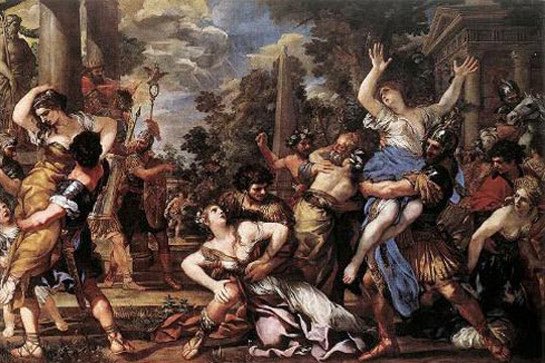
Valentine's Day, a beloved holiday celebrated on February 14th, has deep connections to Saint Valentine, a Christian martyr who lived during the 3rd century AD. The true identity and story of Saint Valentine are shrouded in mystery and multiple accounts exist, adding to the intrigue surrounding this figure.
Mv favorite historical account is that Saint Valentine was a Roman priest during the reign of Emperor Claudius II. At that time, Claudius I had forbidden soldiers from marrying, believing that unmarried soldiers were more devoted to their duty. However, Saint Valentine defied this decree and continued to perform secret marriages for young couples who sought his help. When his actions were discovered, Saint Valentine was imprisoned and later executed on
February 14th.
Another tale suggests that Saint Valentine was imprisoned for his Christian faith and while in jail, he healed the blind daughter of his jailer. Just before his execution, he wrote her a farewell letter, signing it "Your Valentine," hence the origin of the phrase commonly used on Valentine's Day cards.
Regardless of the specific details, Saint Valentine became associated with love, compassion, and the defiance of unjust laws. Over time, his martyrdom and acts of love inspired the celebration of Valentine's Day as a day to express affection and devotion.
Today, Valentine's Day is celebrated worldwide, with people exchanging cards, gifts, and tokens of love. The holiday has evolved into a celebration of romantic love, where couples express their affection through gestures of appreciation and spend quality time together. While the historical details of Saint Valentine's life remain somewhat elusive, his legacy lives on in the spirit of love and compassion that permeates Valentine's Day. #ancienthistory #romanempire #catholichistory #historicalfigures #historical #valentines #saintvalentinesday #valentinesday #loveday #loveday
Valentine's Day, a beloved holiday celebrated on February 14th, has deep connections to Saint Valentine, a Christian martyr who lived during the 3rd century AD. The true identity and story of Saint Valentine are shrouded in mystery and multiple accounts exist, adding to the intrigue surrounding this figure.
Mv favorite historical account is that Saint Valentine was a Roman priest during the reign of Emperor Claudius II. At that time, Claudius I had forbidden soldiers from marrying, believing that unmarried soldiers were more devoted to their duty. However, Saint Valentine defied this decree and continued to perform secret marriages for young couples who sought his help. When his actions were discovered, Saint Valentine was imprisoned and later executed on
February 14th.
Another tale suggests that Saint Valentine was imprisoned for his Christian faith and while in jail, he healed the blind daughter of his jailer. Just before his execution, he wrote her a farewell letter, signing it "Your Valentine," hence the origin of the phrase commonly used on Valentine's Day cards.
Regardless of the specific details, Saint Valentine became associated with love, compassion, and the defiance of unjust laws. Over time, his martyrdom and acts of love inspired the celebration of Valentine's Day as a day to express affection and devotion.
Today, Valentine's Day is celebrated worldwide, with people exchanging cards, gifts, and tokens of love. The holiday has evolved into a celebration of romantic love, where couples express their affection through gestures of appreciation and spend quality time together. While the historical details of Saint Valentine's life remain somewhat elusive, his legacy lives on in the spirit of love and compassion that permeates Valentine's Day. #ancienthistory #romanempire #catholichistory #historicalfigures #historical #valentines #saintvalentinesday #valentinesday #loveday #loveday
Valentine's Day, a beloved holiday celebrated on February 14th, has deep connections to Saint Valentine, a Christian martyr who lived during the 3rd century AD. The true identity and story of Saint Valentine are shrouded in mystery and multiple accounts exist, adding to the intrigue surrounding this figure.
Mv favorite historical account is that Saint Valentine was a Roman priest during the reign of Emperor Claudius II. At that time, Claudius I had forbidden soldiers from marrying, believing that unmarried soldiers were more devoted to their duty. However, Saint Valentine defied this decree and continued to perform secret marriages for young couples who sought his help. When his actions were discovered, Saint Valentine was imprisoned and later executed on
February 14th.
Another tale suggests that Saint Valentine was imprisoned for his Christian faith and while in jail, he healed the blind daughter of his jailer. Just before his execution, he wrote her a farewell letter, signing it "Your Valentine," hence the origin of the phrase commonly used on Valentine's Day cards.
Regardless of the specific details, Saint Valentine became associated with love, compassion, and the defiance of unjust laws. Over time, his martyrdom and acts of love inspired the celebration of Valentine's Day as a day to express affection and devotion.
Today, Valentine's Day is celebrated worldwide, with people exchanging cards, gifts, and tokens of love. The holiday has evolved into a celebration of romantic love, where couples express their affection through gestures of appreciation and spend quality time together. While the historical details of Saint Valentine's life remain somewhat elusive, his legacy lives on in the spirit of love and compassion that permeates Valentine's Day. #ancienthistory #romanempire #catholichistory #historicalfigures #historical #valentines #saintvalentinesday #valentinesday #loveday #loveday
(The Origins of Valentine’s Day Before Christianity Took Over Rome)
Lupercalia: Ancient Roman Festival of Fertility, Purification, and Love
Lupercalia, an ancient Roman festival held on February 15th, was a vibrant celebration of fertility, purification, and romantic relationships. The festival involved young men called Luperci performing rituals that included sacrificing goats and a dog, followed by cutting their skins into strips known as “februa.” As the Luperci ran through the streets, they playfully touched people, particularly women, with the februa, believed to bestow fertility and ward off malevolent spirits.
Lupercalia also embraced the spirit of love with activities like matchmaking lotteries, where temporary partnerships were formed, often leading to courtship and marriage. Anonymously exchanging love notes or tokens added a touch of mystery and excitement to the festival, allowing individuals to express their affection discreetly.
The festival’s festive and relaxed atmosphere provided an opportunity for young people to engage in flirtation, fostering connections based on shared interests and attractions. Lupercalia was a time when social norms were temporarily set aside, allowing for more playful and lighthearted interactions. It was an occasion where young men and women could freely express their romantic desires and explore potential relationships.
Lupercalia contributed to the celebration of romantic relationships in ancient Rome by creating a joyful and accepting environment. The festival provided a space where young people could meet, connect, and pursue courtship, all within the context of fertility and love. #ancientrome #romanempire #valentinesday #ancienthistory #love #loveday #ancienttraditions
(The Origins of Valentine’s Day Before Christianity Took Over Rome)
Lupercalia: Ancient Roman Festival of Fertility, Purification, and Love
Lupercalia, an ancient Roman festival held on February 15th, was a vibrant celebration of fertility, purification, and romantic relationships. The festival involved young men called Luperci performing rituals that included sacrificing goats and a dog, followed by cutting their skins into strips known as “februa.” As the Luperci ran through the streets, they playfully touched people, particularly women, with the februa, believed to bestow fertility and ward off malevolent spirits.
Lupercalia also embraced the spirit of love with activities like matchmaking lotteries, where temporary partnerships were formed, often leading to courtship and marriage. Anonymously exchanging love notes or tokens added a touch of mystery and excitement to the festival, allowing individuals to express their affection discreetly.
The festival’s festive and relaxed atmosphere provided an opportunity for young people to engage in flirtation, fostering connections based on shared interests and attractions. Lupercalia was a time when social norms were temporarily set aside, allowing for more playful and lighthearted interactions. It was an occasion where young men and women could freely express their romantic desires and explore potential relationships.
Lupercalia contributed to the celebration of romantic relationships in ancient Rome by creating a joyful and accepting environment. The festival provided a space where young people could meet, connect, and pursue courtship, all within the context of fertility and love. #ancientrome #romanempire #valentinesday #ancienthistory #love #loveday #ancienttraditions
(The Origins of Valentine’s Day Before Christianity Took Over Rome)
Lupercalia: Ancient Roman Festival of Fertility, Purification, and Love
Lupercalia, an ancient Roman festival held on February 15th, was a vibrant celebration of fertility, purification, and romantic relationships. The festival involved young men called Luperci performing rituals that included sacrificing goats and a dog, followed by cutting their skins into strips known as “februa.” As the Luperci ran through the streets, they playfully touched people, particularly women, with the februa, believed to bestow fertility and ward off malevolent spirits.
Lupercalia also embraced the spirit of love with activities like matchmaking lotteries, where temporary partnerships were formed, often leading to courtship and marriage. Anonymously exchanging love notes or tokens added a touch of mystery and excitement to the festival, allowing individuals to express their affection discreetly.
The festival’s festive and relaxed atmosphere provided an opportunity for young people to engage in flirtation, fostering connections based on shared interests and attractions. Lupercalia was a time when social norms were temporarily set aside, allowing for more playful and lighthearted interactions. It was an occasion where young men and women could freely express their romantic desires and explore potential relationships.
Lupercalia contributed to the celebration of romantic relationships in ancient Rome by creating a joyful and accepting environment. The festival provided a space where young people could meet, connect, and pursue courtship, all within the context of fertility and love. #ancientrome #romanempire #valentinesday #ancienthistory #love #loveday #ancienttraditions
(The Origins of Valentine’s Day Before Christianity Took Over Rome)
Lupercalia: Ancient Roman Festival of Fertility, Purification, and Love
Lupercalia, an ancient Roman festival held on February 15th, was a vibrant celebration of fertility, purification, and romantic relationships. The festival involved young men called Luperci performing rituals that included sacrificing goats and a dog, followed by cutting their skins into strips known as “februa.” As the Luperci ran through the streets, they playfully touched people, particularly women, with the februa, believed to bestow fertility and ward off malevolent spirits.
Lupercalia also embraced the spirit of love with activities like matchmaking lotteries, where temporary partnerships were formed, often leading to courtship and marriage. Anonymously exchanging love notes or tokens added a touch of mystery and excitement to the festival, allowing individuals to express their affection discreetly.
The festival’s festive and relaxed atmosphere provided an opportunity for young people to engage in flirtation, fostering connections based on shared interests and attractions. Lupercalia was a time when social norms were temporarily set aside, allowing for more playful and lighthearted interactions. It was an occasion where young men and women could freely express their romantic desires and explore potential relationships.
Lupercalia contributed to the celebration of romantic relationships in ancient Rome by creating a joyful and accepting environment. The festival provided a space where young people could meet, connect, and pursue courtship, all within the context of fertility and love. #ancientrome #romanempire #valentinesday #ancienthistory #love #loveday #ancienttraditions
(The Origins of Valentine’s Day Before Christianity Took Over Rome)
Lupercalia: Ancient Roman Festival of Fertility, Purification, and Love
Lupercalia, an ancient Roman festival held on February 15th, was a vibrant celebration of fertility, purification, and romantic relationships. The festival involved young men called Luperci performing rituals that included sacrificing goats and a dog, followed by cutting their skins into strips known as “februa.” As the Luperci ran through the streets, they playfully touched people, particularly women, with the februa, believed to bestow fertility and ward off malevolent spirits.
Lupercalia also embraced the spirit of love with activities like matchmaking lotteries, where temporary partnerships were formed, often leading to courtship and marriage. Anonymously exchanging love notes or tokens added a touch of mystery and excitement to the festival, allowing individuals to express their affection discreetly.
The festival’s festive and relaxed atmosphere provided an opportunity for young people to engage in flirtation, fostering connections based on shared interests and attractions. Lupercalia was a time when social norms were temporarily set aside, allowing for more playful and lighthearted interactions. It was an occasion where young men and women could freely express their romantic desires and explore potential relationships.
Lupercalia contributed to the celebration of romantic relationships in ancient Rome by creating a joyful and accepting environment. The festival provided a space where young people could meet, connect, and pursue courtship, all within the context of fertility and love. #ancientrome #romanempire #valentinesday #ancienthistory #love #loveday #ancienttraditions
(The Origins of Valentine’s Day Before Christianity Took Over Rome)
Lupercalia: Ancient Roman Festival of Fertility, Purification, and Love
Lupercalia, an ancient Roman festival held on February 15th, was a vibrant celebration of fertility, purification, and romantic relationships. The festival involved young men called Luperci performing rituals that included sacrificing goats and a dog, followed by cutting their skins into strips known as “februa.” As the Luperci ran through the streets, they playfully touched people, particularly women, with the februa, believed to bestow fertility and ward off malevolent spirits.
Lupercalia also embraced the spirit of love with activities like matchmaking lotteries, where temporary partnerships were formed, often leading to courtship and marriage. Anonymously exchanging love notes or tokens added a touch of mystery and excitement to the festival, allowing individuals to express their affection discreetly.
The festival’s festive and relaxed atmosphere provided an opportunity for young people to engage in flirtation, fostering connections based on shared interests and attractions. Lupercalia was a time when social norms were temporarily set aside, allowing for more playful and lighthearted interactions. It was an occasion where young men and women could freely express their romantic desires and explore potential relationships.
Lupercalia contributed to the celebration of romantic relationships in ancient Rome by creating a joyful and accepting environment. The festival provided a space where young people could meet, connect, and pursue courtship, all within the context of fertility and love. #ancientrome #romanempire #valentinesday #ancienthistory #love #loveday #ancienttraditions
The Modest Halftime Shows of the 1958 NFL: A Simpler Era of Entertainment
In 1958, the NFL halftime show was a relatively simple affair compared to the extravagant productions we see today. During that time, halftime shows primarily consisted of marching bands, cheerleaders, or local entertainment acts. The focus was more on providing a brief break from the game rather than being a major spectacle. Halftime shows often featured local high school or college marching bands showcasing their musical talents. Occasionally, there would be small performances by acrobats or dancers. These halftime shows aimed to entertain the crowd and maintain their enthusiasm during the break, but they were not the grandiose spectacles we are accustomed to today. #halftimeshow #halftime #history #nfl #nflhalftimeshow #SuperBowl #SuperBowl2024 #SuperBowlLVIII
Eros: The Greek God of Love and
Eros, known as the Greek god of love and desire, played a significant role in ancient mythology and culture. Depicted as a youthful and mischievous figure, Eros was often portrayed as a winged boy armed with a bow and arrows. According to Greek mythology, he was the son of Aphrodite, the goddess of love, and Ares, the god of war.
Eros' arrows were said to have the power to make mortals and gods alike fall in love. These arrows could inspire feelings of passion and desire, leading to romantic relationships and unions. Eros himself was not immune to love's influence and was often depicted as being in love with Psyche, a mortal princess.
One famous myth involving Eros is the tale of Eros and Psyche. In this story, Psyche was forbidden from looking upon Eros' face, but her curiosity got the better of her. When she accidentally saw him, Eros fled, leaving Psyche to embark on a quest to win back his love.
Through various trials and challenges, Psyche proved her devotion, and ultimately, Eros forgave her and they were united.
Eros' influence extended beyond mythology and into ancient Greek culture. The concept of love, as represented by Eros, was highly regarded and celebrated. The Greeks recognized different types of love, including eros (romantic love), philia (friendship), and agape (unconditional love)
Eros' imagery and symbolism continue to resonate in modern times.
The word "erotic" derives from his name, and his depiction as a cherubic figure with wings has become a popular motif in art and literature. Eros remains an enduring symbol of love and desire, reminding us of the complexities and joys that come with matters of the heart.
#Eros #love #ancienthistory #ancientgreece #ancientgreek #greekmythology #ancientbeliefs #ancient #history #HistoricalRomance
Eros: The Greek God of Love and
Eros, known as the Greek god of love and desire, played a significant role in ancient mythology and culture. Depicted as a youthful and mischievous figure, Eros was often portrayed as a winged boy armed with a bow and arrows. According to Greek mythology, he was the son of Aphrodite, the goddess of love, and Ares, the god of war.
Eros' arrows were said to have the power to make mortals and gods alike fall in love. These arrows could inspire feelings of passion and desire, leading to romantic relationships and unions. Eros himself was not immune to love's influence and was often depicted as being in love with Psyche, a mortal princess.
One famous myth involving Eros is the tale of Eros and Psyche. In this story, Psyche was forbidden from looking upon Eros' face, but her curiosity got the better of her. When she accidentally saw him, Eros fled, leaving Psyche to embark on a quest to win back his love.
Through various trials and challenges, Psyche proved her devotion, and ultimately, Eros forgave her and they were united.
Eros' influence extended beyond mythology and into ancient Greek culture. The concept of love, as represented by Eros, was highly regarded and celebrated. The Greeks recognized different types of love, including eros (romantic love), philia (friendship), and agape (unconditional love)
Eros' imagery and symbolism continue to resonate in modern times.
The word "erotic" derives from his name, and his depiction as a cherubic figure with wings has become a popular motif in art and literature. Eros remains an enduring symbol of love and desire, reminding us of the complexities and joys that come with matters of the heart.
#Eros #love #ancienthistory #ancientgreece #ancientgreek #greekmythology #ancientbeliefs #ancient #history #HistoricalRomance
Cupid, the mischievous god of love and desire in ancient Roman mythology, has woven his way into the tapestry of Valentine's Day through a captivating journey. Cupid's origin can be traced back to the ancient Greek god Eros. The Romans adopted and adapted the Greek concept of Eros into their own mythology, renaming him Cupid. In Roman mythology, Cupid was the son of Venus, the goddess of love, and Mars, the god of war.
Cupid's association with love and desire made him a beloved figure in ancient Roman culture. His image as a young boy with wings, armed with a bow and arrow, became iconic. According to legend, Cupid had the power to make people fall in love by shooting them with his magical arrows. If struck by a golden arrow, one would experience passionate love, while a strike from a lead arrow would cause aversion and indifference.
The connection between Cupid and Valentine's Day can be traced back to the ancient Roman festival of Lupercalia. Celebrated in mid-February, Lupercalia was associated with fertility and love. During this festival, young men would draw the names of young women from a box, and they would then be paired together for the duration of the festival, often leading to romantic relationships.
As Christianity spread throughout the Roman Empire, the early Christian Church sought to replace pagan celebrations with Christian holidays. In the 5th century, Pope Gelasius I declared February 14th as St. Valentine's Day, in honor of St. Valentine, a Christian martyr who lived during the 3rd century. The exact origins of St. Valentine's story are shrouded in mystery, but he became associated with love and courtship.
Over time, St. Valentine's Day began to be associated with romantic love and affection. This is where Cupid gracefully enters the picture. Cupid's image as the god of love and desire perfectly aligned with the sentiments of this special day. Gradually, the image of Cupid as a cherubic, arrow-shooting figure was meshed with the celebration of St. Valentine's Day.
The connection between Cupid and Valentine's Day grew stronger during the Middle Ages when the tradition of exchanging handmade love notes and tokens of affection became popular. Cupid's presence was often portrayed on these tokens, symbolizing the power of love and the notion that one's heart could be pierced by the arrow of affection.
So, you see, Cupid's timeless association with love, combined with the Christian celebration of St. Valentine's Day, led to his meshing into the fabric of this romantic holiday. Today, Cupid remains an iconic symbol, adorning cards, gifts, and decorations during Valentine's Day, reminding us all of the enduring power of love. #Cupid #Valentines2024 #ValentinesDay #History
Valentine's Day, a beloved holiday celebrated on February 14th, has deep connections to Saint Valentine, a Christian martyr who lived during the 3rd century AD. The true identity and story of Saint Valentine are shrouded in mystery and multiple accounts exist, adding to the intrigue surrounding this figure.
Mv favorite historical account is that Saint Valentine was a Roman priest during the reign of Emperor Claudius II. At that time, Claudius I had forbidden soldiers from marrying, believing that unmarried soldiers were more devoted to their duty. However, Saint Valentine defied this decree and continued to perform secret marriages for young couples who sought his help. When his actions were discovered, Saint Valentine was imprisoned and later executed on
February 14th.
Another tale suggests that Saint Valentine was imprisoned for his Christian faith and while in jail, he healed the blind daughter of his jailer. Just before his execution, he wrote her a farewell letter, signing it "Your Valentine," hence the origin of the phrase commonly used on Valentine's Day cards.
Regardless of the specific details, Saint Valentine became associated with love, compassion, and the defiance of unjust laws. Over time, his martyrdom and acts of love inspired the celebration of Valentine's Day as a day to express affection and devotion.
Today, Valentine's Day is celebrated worldwide, with people exchanging cards, gifts, and tokens of love. The holiday has evolved into a celebration of romantic love, where couples express their affection through gestures of appreciation and spend quality time together. While the historical details of Saint Valentine's life remain somewhat elusive, his legacy lives on in the spirit of love and compassion that permeates Valentine's Day. #ancienthistory #romanempire #catholichistory #historicalfigures #historical #valentines #saintvalentinesday #valentinesday #loveday #loveday
Josephine Myrtle Corbin, a remarkable historical figure, was born in 1868 in Tennessee, United States. She possessed a rare condition known as dipygus, which resulted in her having two sets of legs. This condition occurred due to the incomplete separation of conjoined twins during embryonic development.
Josephine's lower body was fused together, but she had two distinct pelvises and four legs. Despite this anomaly, she had control and sensation in both sets of legs, enabling her to walk and perform various activities using either pair. Her condition made her a subject of fascination and curiosity during the late 19th century.
Born into a modest family, Josephine's unique physiology presented her with opportunities for financial independence. She became a performer in sideshows and circuses, captivating audiences worldwide with her extraordinary anatomy. Her ability to walk and perform tasks using her four legs showcased her dexterity and control, making her a popular attraction wherever she went.
In addition to her dipygus condition, Josephine had a variation in her reproductive system. She possessed two fully-formed vaginas and uteri, a rarity among humans. Each uterus was capable of supporting a pregnancy, defying conventional notions of human anatomy.
Josephine's fame as a sideshow performer reached its peak during the late 19th century. Audiences were captivated by her ability to navigate daily life using her unique physiology. Her performances provided her with financial stability and allowed her to live a comfortable life.
Despite her public persona, Josephine also had a personal life. In 1884, she married Clinton Bicknell, and together they had five children. Josephine's reproductive system, with two vaginas, allowed her to conceive and carry multiple pregnancies to term. She gave birth to four daughters and one son, showcasing the extraordinary capabilities of her body.
Josephine Myrtle Corbin passed away in Cleburne, Texas, on May 6, 1928. Due to the extraordinary interest in her anatomy and the fear of grave robbers stealing her corpse, her casket was covered in concrete. Various family members took turns keeping watch until the concrete was fully cured, ensuring the protection of her remains.
Her unique physiology continued to attract attention even after her death. Medical practitioners and private collectors offered significant financial compensation for her corpse. However, her family guarded her grave to preserve her dignity and prevent exploitation.
Josephine Myrtle Corbin, a remarkable historical figure, was born in 1868 in Tennessee, United States. She possessed a rare condition known as dipygus, which resulted in her having two sets of legs. This condition occurred due to the incomplete separation of conjoined twins during embryonic development.
Josephine's lower body was fused together, but she had two distinct pelvises and four legs. Despite this anomaly, she had control and sensation in both sets of legs, enabling her to walk and perform various activities using either pair. Her condition made her a subject of fascination and curiosity during the late 19th century.
Born into a modest family, Josephine's unique physiology presented her with opportunities for financial independence. She became a performer in sideshows and circuses, captivating audiences worldwide with her extraordinary anatomy. Her ability to walk and perform tasks using her four legs showcased her dexterity and control, making her a popular attraction wherever she went.
In addition to her dipygus condition, Josephine had a variation in her reproductive system. She possessed two fully-formed vaginas and uteri, a rarity among humans. Each uterus was capable of supporting a pregnancy, defying conventional notions of human anatomy.
Josephine's fame as a sideshow performer reached its peak during the late 19th century. Audiences were captivated by her ability to navigate daily life using her unique physiology. Her performances provided her with financial stability and allowed her to live a comfortable life.
Despite her public persona, Josephine also had a personal life. In 1884, she married Clinton Bicknell, and together they had five children. Josephine's reproductive system, with two vaginas, allowed her to conceive and carry multiple pregnancies to term. She gave birth to four daughters and one son, showcasing the extraordinary capabilities of her body.
Josephine Myrtle Corbin passed away in Cleburne, Texas, on May 6, 1928. Due to the extraordinary interest in her anatomy and the fear of grave robbers stealing her corpse, her casket was covered in concrete. Various family members took turns keeping watch until the concrete was fully cured, ensuring the protection of her remains.
Her unique physiology continued to attract attention even after her death. Medical practitioners and private collectors offered significant financial compensation for her corpse. However, her family guarded her grave to preserve her dignity and prevent exploitation.