So... what's up with these anti-vaping ads?
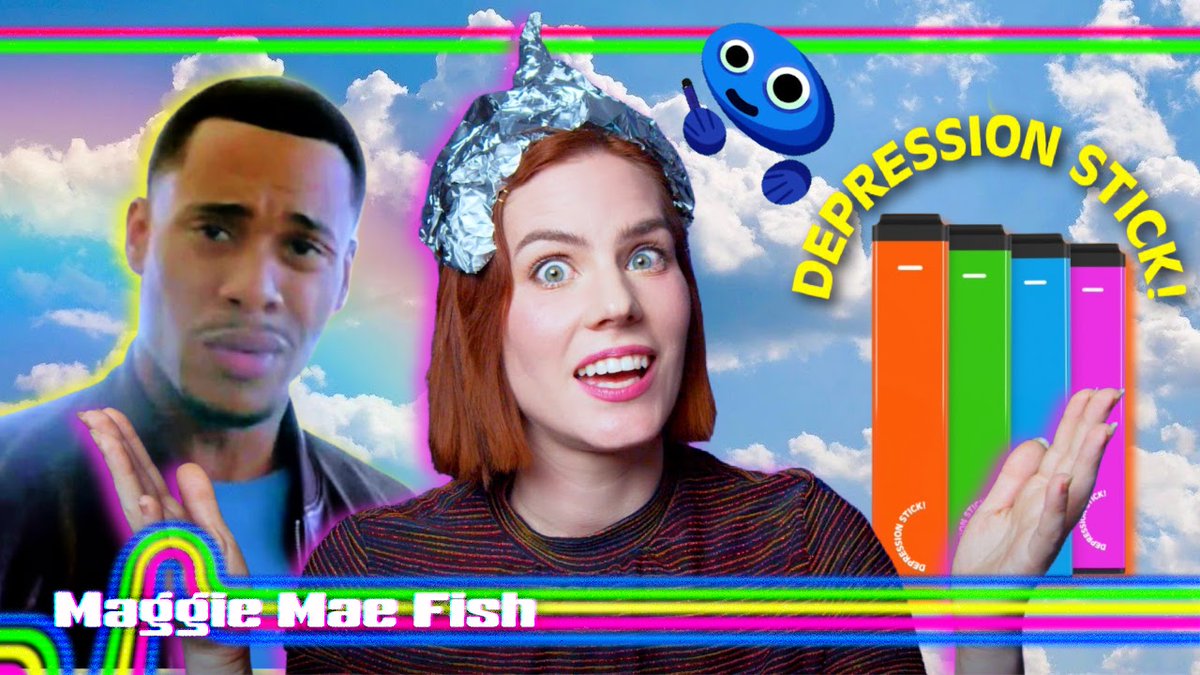
"Thank you for Watching" my new video where I D.A.R.E. to investigate exactly how effective these PSAs are.
Do Anti-Vaping Ads want you to Vape?
😶🌫️https://t.co/zHbQ9WUj9v
@MedlawDan@DrSinhaEsq@SLULAW Seems alright given the scope constraint.
However, the debate on obvious judicial pitfalls seems to obfuscate more relevant causes for FDAs slow-burn "regulation".
Most unsure why it [9] quotes PSTF, when clearly not up to speed.
https://t.co/wvTi3sWpK7
@psychheals Use frequency is a function of steady nicotine-only leveling in absence of MAOIs and prolonged dopamine highs.
(Though interaction from e.g. adapted caffeine consumption patterns are less well researched.)
@jennifer_plumb Embellishments aside, glad you wrote nicotine dependence.
But what did the 3% originate from? Isolated from device power and plume size, that's at best irrelevant or arbitrary to quantify any prevention effect from.
(Impression being to curtail cessation efficacy under pretense.)
@hapn_news @AlexWodak To be fair, having some vendors there would spur some pharmacy superstition and more quit attempts. Such "regulation" improving safety is a smokescreen however. It's merely an obstruction scheme to prevent convenient consumer access to NVPs (quitting aid is a byproduct really).
@hapn_news @AlexWodak Valid question, but you kinda answered it yourself.
It's not just affordability but approval inhibition.
There's also no indication the FUD and lobbying wouldn't also affect pharmacy-grade vapes (and TBH technology isn't quite there yet for e.g. sonic vaporizers.)
@RenateKuenast 130.000 Menschen sterben am Verbrennungsrauch - nicht am Tabak oder Nikotin.
Tabakerhitzer sind überdies nicht nur Nikotin (ähnliche psychoaktive Zusätze wie in Zigaretten).
Aber Parallelnutzungs-Aromen (tabak-ähnlich) tragen gewiss nicht zum Senken der Raucherquoten bei.
@KelliDrenner @RedfearnMike@Sphinx1738_ Neither is zero risk bias.
Abstinence immediacy isn't realistic for everyone. And continued smoking not necessarily a choice.
@pharmacistfi Good find. But TL; didn't skim. Aren't the "lower levels" still from a mist of undiluted diacetyl upon the unsuspecting cell cultures?
Not sure that's even an indicator study. Let alone validating the flawed premise or the authors` insinuated urban myth.
https://t.co/VW4F289QX9
Anyone want to play bingo?
🤦♀️Popcorn lung
🤦♀️e-cig use an important risk factor for COVID-19
🤦♀️adolescent e-cig users 5x more likely to be diagnosed w COVID-19
Bonus:
🤯Exposing cells to pure diacetyl vapor produces toxicity
🤯From a @Nature journal
https://t.co/h49jM0L8iy
@pharmacistfi Also sorry. I realize that was just an aside.
It just so happens to be a fairly strong quality indicator. It's not even a hypothetical hazard, but a fictional one.
Thanks for the context and the sourcing hints. (Kinda liked parts of the video, btw.)
@pharmacistfi Sure. but avoiding an already excised ingredient isn't very feasible. And thus apractical alarmism.
By the same logic, one would have to warn about water in e-liquids. Because people have drowned.
Except that such hazards also never applied to NVPs.
https://t.co/xhFxFQrttK
@pharmacistfi That was a precautionary ban. None of the commercial liquids had concentrations close to combustibles prior.
https://t.co/Cac8EOpDzA
Was mainly a hazard, not a risk. Diacetyl nowadays persists as processing remnant (flavouring agent amalgamations). Or in low-quality CN imports.
@stevesvapes More of a spam victim (and inadvertent multiplexer) really. It's quite shocking how much research was spent on this video, yet still parroted the misattribution FUD. ("Let's ignore all the indicators, so we just can't be sure if some wasn't from nicotine vapes.")
@JoossensLuk@BathTR@SimonChapman6 No doubt @BathTR contributed to reducing industry interference. But they resorted to becoming astroturf contractors.
Habitual slander undermines credibility. They’re likely a cuckoo`s egg for genuine tobacco control.
@AleksiHupli@PekkaPuska1@SuomenASH@STM_Uutiset@EHYTry Prevention objectives aren't even contrary to disease/death reduction for PWS.
It's much easier to portray pouches as remedy (medicalized messaging/labels) than engage with the enforcement overhead of illegalization.
(Unless shirky principle guides policy recommendations.)
@DonWeatherburn@2casey451@EvertRauwendaal@AlexWodak The corollary to the current approach is that access obstruction isn't equivalent to prevalence reduction (for at-risk pop). And it's not super likely to.
I mean the "new" prescription/criminalization scheme might do some. But could be offset by eradicating compliant vendors.
@JohnLaprise @EdwardHubert4@asaca_au None of the documented hazards amount to a risk profile comparable to smoking. Less toxin exposure is pretty much always preferable to continued smoking (which is the inevitable outcome for half of all PWS).
Utopic ideals and public health outcomes differ in this instance.
@sipherglobal Bland packaging, *believable* health warnings, and remedy portrayal are less likely to stoke reactance.
And if preventing non-smoker uptake was the goal, then obstructing the prime use case will achieve the opposite.
Even rudimentary regulation outperforms black markets there.
@sipherglobal The article also shows a more probable prevention method has been overlooked.
If only 40% recognize NVPs as smoking cessation (thus a remedy, like hemorrhoid creme) the risk xaggerations and push towards illicit sales will achieve little.