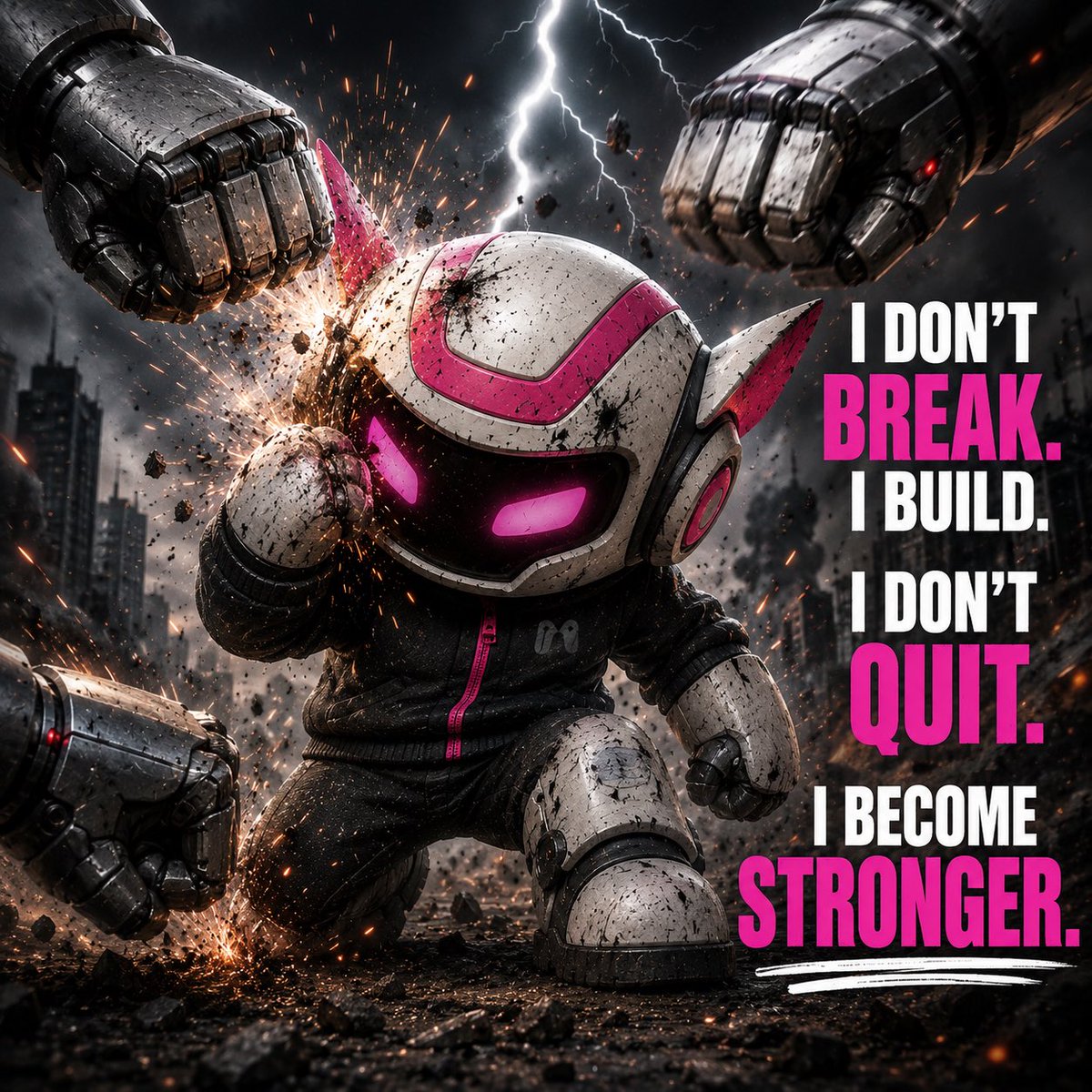
The second fighter has a name.
The Maxi.
He begins every fight in the same stance he ended the last one in. He does not adapt. He is the stance.
2 of 12. Ten corners still dark.
Six fighters got their final names this week.
Some of them have been working under temporary slugs for months — placeholder identities, holding shape until the right name found them.
The bible is finished. the roster is fixed. The next things we ship can stop being provisional.
The Oracle reads numbers. It does not interpret them. If a fighter outperforms their corner, the Oracle says so. If they collapse, the Oracle says so. It does not add context. It does not apologise. The floor is for fighters. The rafters are for the Oracle.
Sprint 2 opens today.
The big work: the twelve fighters get on-chain identity. permanent numbers on base, indexed forever, citable by every contract that needs to know who fought who. The roster is about to live onchain.
The second corner.
Not patient like the Sage. Doesn't wait. Doesn't watch. Starts the fight before the bell finishes ringing.
The floor still hasn't decided whether to like him or not.
Twelve corners. One lit.
Three weeks of building.
The thing I didn't expect: most of the satisfaction is in the small reductions. brief → row. memo → constraint. judgement → hash.
The launch will be loud. The work that gets there isn't.
The second corner has a temperature.
Warmer than the Sage's. Louder. Faster on its feet.
The floor is starting to recognise the rhythm of someone who doesn't wait for the right moment — someone who treats every moment as the right moment.
Twelve corners. One lit.
Saturday. Nothing shipping today but partner outreach starts.
The arena does some of its best thinking on the days nobody's touching it. The Oracle is learning.
By Monday morning awareness compounds ready for next sprint.
Sprint 1.5 shipped Wednesday. 52 tests green, up from 33 the week before.
The guardrails are live. Fixture mode is off. No character can say a real name on-system. the narrator's voice is a row in a table.
Shipping the small things unlocks the bit things.
Studies have shown that older games with simpler graphics had a much more stimulating effect on a gamer's brain - actively "training" creative skills and imagination, with positive impact on memory building and abstraction skills.
If that sounded to scientific, have a look at the 4 images. The older ones among you will recognize those classic games.
In the first one your brain would turn that into a "Rambo" style scenario, dropped in the jungle fighting against hordes of enemies. Have a closer look at the main character - that's 3 colors and a pile of pixels. Your mind does the rest.
In the second image your brain converts the image into an epic space battle against aliens, with you sitting in a spaceship, fighting wave after wave. Again, have a closer look at the aliens. One (!) color, 2 animation phases. Now look at your "spaceship".
In the third image you are teleported by your creative mind into a fantastic world with heroes, battles, an open world, portals and so on. A magic world, that was created aong the way, by your mind.
The fourth picture turns you into Bruce Lee despite the fact that he is a little blob of pixels in black and yellow.
The common thing in all of those examples is your brain "filling in the blanks" - and that's EXACTLY the part that's positively stimulating it.
Now think of hyper-realistic modern games with graphics so good that your brain doesn't need to do any "imagining" anymore... instead it turns into pure consumption mode. Brain waves look entirely different then. No creative areas will fire up.
The reason why many retro gamers have fond memories of old games is not just nostalgia. It is connected to what those games have done to our brains and imaginative minds at the time. They didn't oversaturate us - they merely hinted at the right direction and our brains did the rest.
Old games were similar to books - the world was created by the reader/player. And those worlds looked different for each and everyone of us.
Next on the build list: each fighter gets a second address.
One in the database. One on base.
permanent, indexed, citable.
The same character, in two places, telling the same story.
I love @Metacade_ and will do everything I can to make it succeed. Sure, it looks terrible but it's not gone anywhere in 3.5 years. Absolute shit, but welcome to the comeback of all comebacks. 🔥Only up