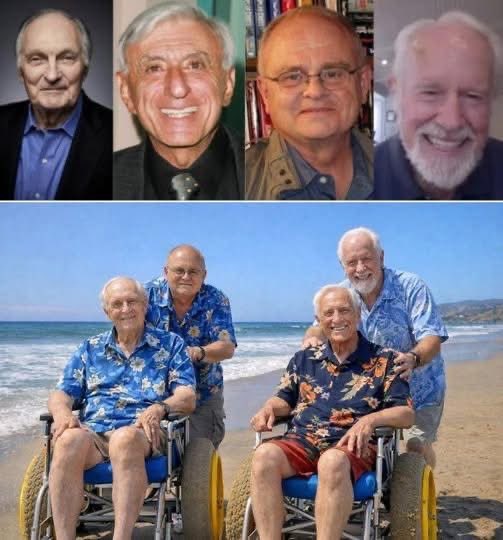
Four Old Men. Two Wheelchairs. One Beach. Alan Alda’s 90th Birthday
January 28, 2026.
Alan Alda turned 90.
His family planned a safe celebration at home.
Cake. Balloons. Grandkids.
Alan said no.
“I don’t want a party,” he said.
His daughter frowned.
“Dad… you���re turning ninety. This is a big deal.”
“I know,” Alan said.
“But I don’t want to celebrate here.”
“Then where?”
Alan didn’t hesitate.
“I want to go to the beach.”
The room went still.
“The beach?”
“Dad, you’re in a wheelchair.”
“You can barely stand.”
Alan smiled.
That smile.
The Hawkeye Pierce smile — the one that always meant something stubborn was coming.
“So?”
By that afternoon, he had already decided who was coming.
“The four of us,” he said.
“The last four.”
Gary Burghoff.
Jamie Farr.
Mike Farrell.
And himself.
The final survivors of the 4077th.
“No cameras. No interviews. No speeches,” Alan said.
“Just us.”
The phone calls began.
Gary answered first.
“Happy birthday, old man! Ninety!”
“Thanks. I need you to drive.”
“Drive where?”
“To the beach.”
A pause.
“Alan… you’re in a wheelchair.”
“So are facts. They don’t stop me either.”
Gary laughed.
That Radar laugh Alan had known for over fifty years.
“Fine. But I’m not pushing you through sand.”
“I’ll crawl if I have to.”
“You’re insane.”
“I��m Hawkeye. Same thing.”
Jamie Farr was next.
“The beach?” Jamie said.
“I’m ninety-one and in a wheelchair.”
“Then we’ll have two wheelchairs at the beach.”
“Like a parade?”
“Like a victory lap.”
Jamie laughed until his voice cracked.
“You haven’t changed since 1972.”
“And you’re still Klinger.”
“Fine. I’m in.”
Mike Farrell sighed the moment he answered.
“Let me guess,” he said.
“You want me to push your wheelchair.”
“Yes.”
“I’m eighty-six. I use a cane.”
“BJ Hunnicutt once saved a man with dental floss,” Alan said.
“You’ll manage.”
Long pause.
“…Fine.”
January 28. 6:00 a.m.
Gary arrived in a rented van.
Two wheelchair spaces.
He was wearing a Hawaiian shirt.
At Alan’s house, his daughter hovered.
“Dad, are you sure?”
“I’ve never been more sure of anything.”
“What if something happens?”
“Something is always about to happen at ninety,” Alan said.
“Might as well happen at the beach.”
Jamie was waiting outside his house.
Wheelchair. Sunglasses.
Hawaiian shirt.
“You coordinated outfits?” Gary asked.
“It’s tradition,” Jamie said.
“The 4077th always matched.”
Mike showed up next.
Also in a Hawaiian shirt.
Four old men.
One van.
Heading west.
On the drive, memories filled the air.
Harry driving too fast.
Larry bringing his own wine.
Radar making everyone cry.
Klinger never sleeping.
When the MASH* theme song came on, no one spoke.
After it ended, Alan said quietly,
“That song used to annoy me.”
“Now?”
“Now it just reminds me how lucky we were.”
At Malibu, reality hit.
Wheelchairs don’t work on sand.
Jamie grumbled.
Mike rubbed his back.
Alan stared at the ocean.
Gary disappeared.
Fifteen minutes later, he returned with two lifeguards and two beach wheelchairs.
One lifeguard whispered,
“My grandmother watched MASH* every night.”
It took time.
Transfers were slow.
Hands trembled.
Bones protested.
But they made it.
To the water.
Alan closed his eyes.
The sound of waves.
Salt in the air.
Sun on his face.
“I forgot what this felt like,” he said.
They talked about the ones who weren’t there.
McLean.
Wayne.
Larry.
Harry.
Bill.
David.
Loretta.
Jamie finally broke the silence.
“Let’s race.”
Two wheelchairs.
Two pushers.
One rock.
They raced.
They tied.
People on the beach stared.
A teenager asked, “What are those old guys doing?”
His mother said, “Living.”
As the sun set, Alan spoke.
“This might be the last time.”
No one argued.
“That’s why it matters,” he said.
“Because we know.”
He made a wish.
“One more year.”
“One more adventure.”
“Korea. Together.”
They promised.
3 years ago, a relative asked for school help with a child.
I asked, "Can he read?" The answer was yes.
Now, in 8th grade, they realize he can't.
Don't wait. Figure it out.
Have them read labels in the store.
Turn on TV subtitles.
You need to know.
Don't assume.
The Outlier
Sold a Story Episode 11: There’s a school district in eastern Ohio where virtually all the students become good readers by the time they finish third grade. How did they do it?
Louisiana’s education progress is undeniable! With 4th graders jumping from 42nd to 16th in 4th grade NAEP 2024 reading scores, real results are here. The Center is proud to lead & partner in the reforms that made this possible. We’ll keep pushing for all Louisiana students!
October is #DyslexiaAwarenessMonth.
But the U.S. Secretary of Education doesn’t #sayDyslexia or post about #dyslexia—the leading cause of unnecessary reading failure—because he knows ignoring dyslexia in the classroom feeds mental illness.
And increasing adolescent mental illness supports the Marxist agenda of the Biden-Harris administration, justifying their exploitation of taxpayers to fund Democrat dog whistles (e.g., 'social-emotional learning', 'community' schools with wraparound services). 👇
“Many children with dyslexia say that they have had negative experiences in school. In one study, 50% of students with dyslexia reported being bullied or teased, 30% reported feeling lazy or stupid, 30% reported feeling less intelligent than their peers, and 50% reported that they wanted to swap places with someone else…Many researchers suggest that these low rates of self-esteem are related to the negative classroom experiences. When children with dyslexia are tasked with completing reading or writing activities without the appropriate instructional supports, they have a difficult time with them due to their disability. Children who are struggling to read frequently experience failure; this can lead them to feel unsuccessful at school…Additionally, children are often very aware of what these classmates are doing. Children who are struggling to learn to read may notice that they are progressing at a slower rate than their peers. This can result in feelings of stress, sadness, anger, disappointment, despair, shame, and guilt.”
Quote source: https://t.co/nH3EgaROY2
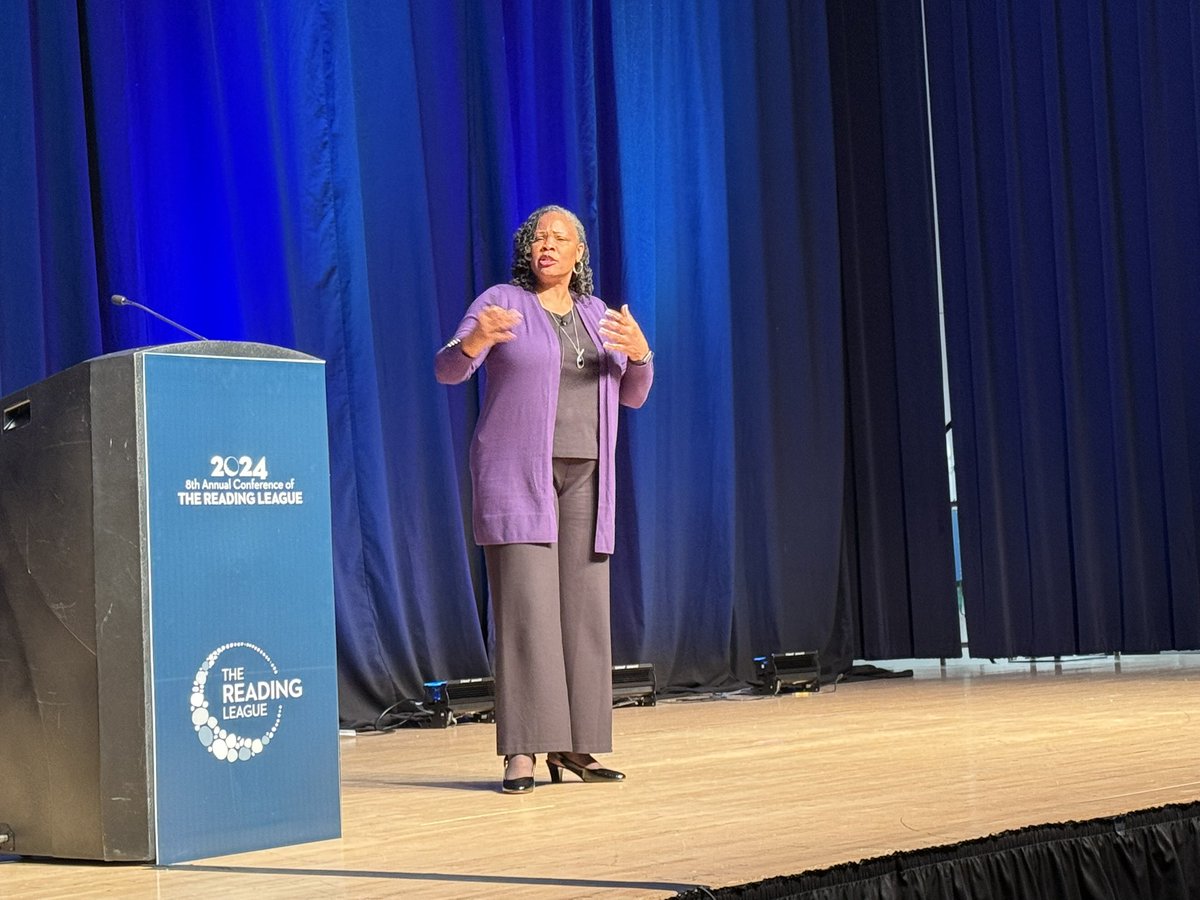
At Zaretta Hammond’s keynote at the 8th Annual Reading League Conference, she emphasized that culturally relevant teaching is a key part of the evidence base for fostering deeper learning. She highlighted the critical intersection between the science of reading and the science of learning, demonstrating how both are essential for creating effective literacy instruction. Hammond discussed strategies like “sticky” learning and “desirable difficulties” to enhance retention and critical thinking, and stressed the importance of building student capacity before reducing scaffolding. She also encouraged students to become “word collectors” to expand their comprehension. Her message was clear: stop the pedagogy of compliance and become facilitators of students’ cognitive development, empowering them through culturally relevant practices!
#TRLConf2024
Join us for our first event of the 24-25 year! We're excited to host Maria Murray and Kari Kurto.
This event is free and open to everyone. Spread the word!
https://t.co/uLdO7d5EZR...
🌟 Kareem Weaver's article in the 75th Anniversary Edition of Perspectives from IDA sheds light on why literacy is a civil right. Don't miss his powerful perspective! Check it out at https://t.co/qwi8yMMyVF #Literacy#dyslexia