Believers - at your workplace:
1. Don't complain
2. Watch your words
3. Encourage others
4. Pray for your team
5. Walk away from gossip
6. Work like it's worship
7. Do everything with excellence
Honor Christ in all you do.
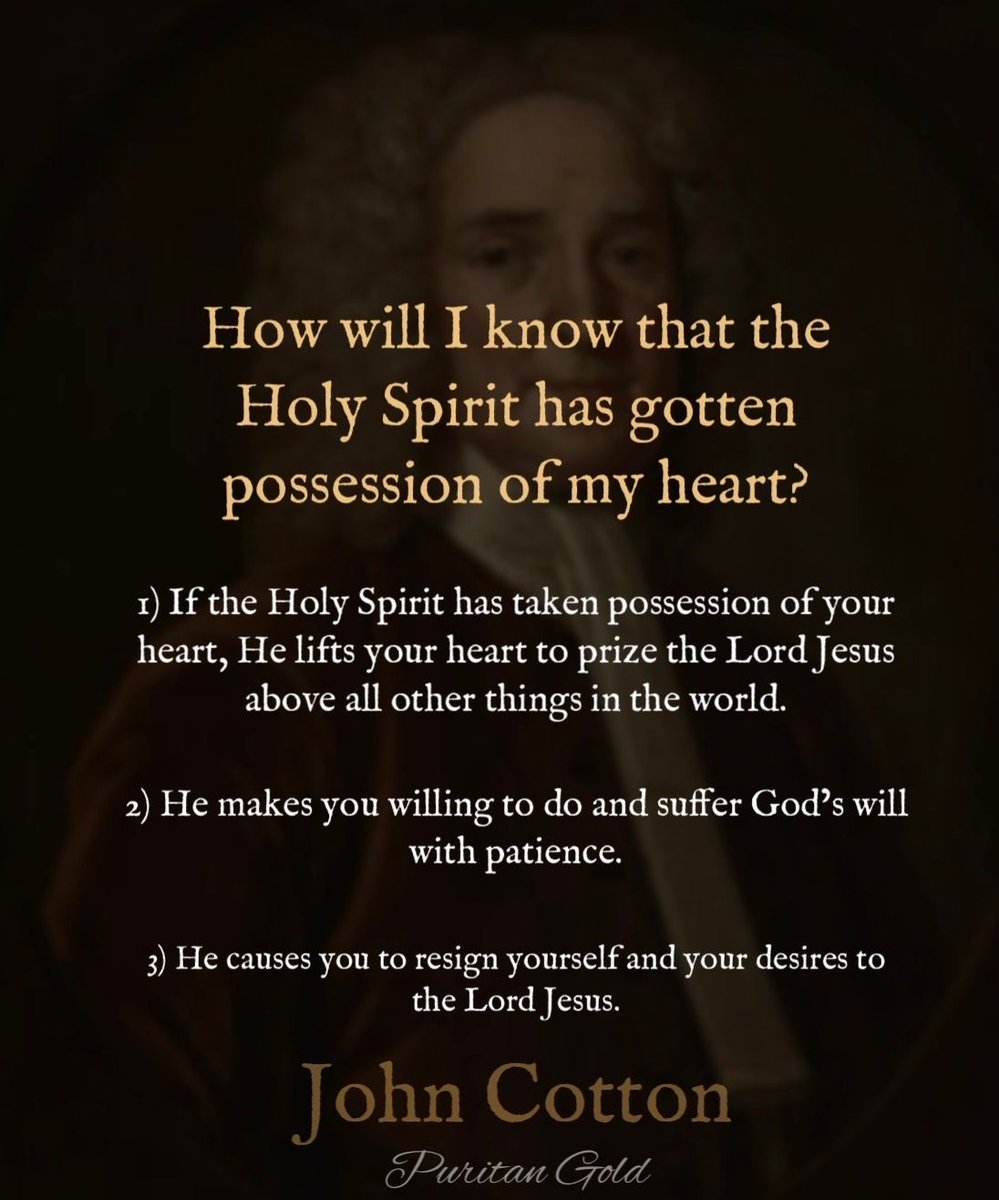
Chapter 18, section 2, of WCF/2LCF is helpful on the issue of assurance of salvation:
The “infallible assurance of faith [is] founded on
“[1] the blood and righteousness of Christ revealed in the Gospel;
“and also upon [2] the inward evidence of those graces of the Spirit unto which promises are made,
“and on [3] the testimony of the Spirit of adoption, witnessing with our spirits that we are the children of God; and, as a fruit thereof, keeping the heart both humble and holy.”
Joel Beeke comments, “Assurance grows by faith in the promises of God, by inward evidences of grace, and by the witness of the Spirit. Each of these kinds of assurance should be diligently prayed for and pursued; none should be separated from the others[,] for undue emphasis on one will lead to a distortion of the others” (Quest for Full Assurance, 285).
He goes on to summarize a comment from Ernest Reisinger, who observes insightfully:
“To hold to assurance by means of the first (i.e., the promises of God) without affirming the second (i.e., Christian character and conduct) and third (i.e., the Spirit’s witness), is antinomianism. To hold exclusively to the second without the first and third is legalism. To maintain the third at the expense of the first two, is ‘either hypocrisy or the deepest self-delusion or fantasy’” (Beeke, Quest, 285n43).
I think that is exceptional. If you insist upon assurance without any reference to the work of God in your changed life, you’ll be an antinomian.
If you insist upon only looking at your changed life, without the objective promises and the internal testimony of the Spirit, you’ll be a legalist.
And if you look at only the testimony of the Spirit, you’ll become a mystic with no basis in objective, measurable reality.
We need to make use of all three means of fighting for assurance of faith.
People often apply Paul’s “tentmaking” (Acts 18:3) to missionary work, which is a fine thing to do. But something far bigger is happening here.
Yes, Paul was literally a tentmaker. Yet his occupation carries rich theological overtones. For just as Jesus deliberately chose fishermen (Matt. 4:18) to become fishers of men (Matt. 4:19), the Lord does something similar with the apostle Paul:
Ad fontes: The Greek word for “tentmaker,” skēnopoios (σκηνοποιός), is a compound: it joins the verb poieō (ποιέω, “to make”) with the noun skēnē (σκηνή).
In the NT that second word is sometimes rendered “tent” (Heb. 11:9) or “dwelling” (Luke 16:9), but it is far more commonly translated “tabernacle” (Acts 7:43–44; 15:16; Heb. 8:2, 5; Rev. 21:3). Similarly, in the Septuagint (LXX)—the Greek translation of the OT—the same term repeatedly refers to the tabernacle itself (Ex. 25:9; 26:1, 6–7, 9, 12–18, 22–27; 27:9, etc.) and/or the “tent of meeting” (Ex. 27:21; 28:43; 29:4, 10–11, etc.).
Even the permanent temple that later replaced the tabernacle is poetically called a “tent” in the Psalms (Ps. 27:4–5; Ps. 41:5 LXX [cf. Ps. 42:4 MT]). And in Amos 9:11—which James applies to Paul’s Gentile missionary activity in Acts 15:16—the word skēnē (σκηνή) refers to the restored lineage or dynasty of David, pointing to the fulfillment of God’s promise in 2 Samuel 7:12–13: “I will raise up your offspring after you… and he shall build a house for my name, and I will establish the throne of his kingdom forever.”
Still with me? Now recall Jesus’ earthly trade. He was, quite famously, a tektōn (τέκτων)—a “carpenter” (Matt. 13:55; Mark 6:3). It’s not a bad translation, but it doesn’t capture the fullness of that term’s use in the OT. Again, in the LXX, the same Greek word is used of the craftsmen who built, and later repaired, the temple (2 Sam. 5:11; 1 Kgs. 7:14; 2 Kgs. 12:11–12; 22:5–6; 1 Chron. 22:15; Ezra 3:6–7). That’s quite a different image than a cabinetmaker.
In other words, Jesus Christ, the Son of David (Luke 1:39; Rom. 1:5), is the one who took on flesh and “tabernacled” among us (John 1:14). As the master tektōn, he came to build the true house of God—which is his body (John 2:19–21), and, by extension, the people who are joined to him by faith (1 Cor. 3:16–17; Eph. 2:21). With that great work complete, the apostle Paul is commissioned to start living, tabernacle-like outposts of the Lord’s temple (i.e., the church) in every corner of the world.
So, yes, Paul literally sewed canvas and stretched leather. But in the providence of God, his earthly occupation was a symbol of his heavenly mission: to raise portable sanctuaries where the presence of God would dwell among the nations.
“I don’t feel the Spirit leading me to obey.”
The Spirit’s motion is not your rule, but the word of God; the Spirit is the helper, but the word is our standard, so that it is a dangerous mistake to think you may not go to duty but [only] when the Spirit moves.
—Ralph Erskine
Consider some of the emphases in Antinomianism. Antinomians who were identified by the Westminster divines included men like John Eaton, Tobias Crisp and Robert Towne, among others. Antinomians tended to teach that the law of God was no longer obligatory for the believer. They considered the gospel to abolish and replace the law. It is important to understand that not all who taught antinomian forms of theology were consistently antinomian in their practice. But antinomian theologies often eventually lead to antinomians practices. The following problems are often noteworthy in antinomian theology.
First, antinomians emphasize the grace of the gospel of Christ far above the law of God. Antinomians believe that they have truly come to understand grace. Antinomians may speak of God's law in their teaching, but it will always in a subordinate place, only mentioned; rather than thoroughly taught and pressed. They so emphasize the gospel and grace that God's grace does away with any real need to exert diligent effort (2 Pet 1:15) and strive (Heb 12:14) to obey God's law. This often leads believers to conclude that the law does not really require full and actual obedience of them. Christians under antinomian teaching will start to think grace essentially means that God tolerates their sins, that they are free to coast, or at least to relax and wait on God's grace to start working obedience in them. Notice the similarities here between antinomianism and the relaxed law of legalism. Both legalism and antinomianism relax God's law. But the true grace of God never relaxes or minimizes God's law (Matt 5:19; Jude 4).
Second, antinomians say it is wrong to obey God just because He commands obedience. They react strongly against the idea of obeying God's law as law. But Psalm 119:4 says, “You have commanded your precepts to be kept diligently.” Antinomians undermine the moral obligation and authority of the law, either by insisting that it has no commanding force at all, or by insisting that believers are only required to obey when their hearts are so captivated by the gospel of grace that they are freely and inwardly compelled to obey. The problem with this is that God's law does not come with conditions (Matt 5:17-19). It does not say, “You only have to obey when you are ready.” It always says, “You must obey, and you must obey right now perfectly, completely and for all the right reasons.”
Third, antinomians collapse justification into sanctification. While legalists teach that you must be sanctified to be justified, antinomians teach that you are sanctified by your justification. Justification by faith alone is essentially the whole of salvation for antinomians. Sanctification is of far lesser importance, or is only attained by focusing exclusively on your justification, such that sanctification simply flows without the commanding authority of the law and without effort to put to death the deeds of the body and to put on holiness. Antinomians often teach that sanctification is nothing other than “getting used to your justification.” The problem here is that justification and sanctification are distinct blessings of union with Christ in the covenant of grace, both of which are necessary in salvation (Rom 6:1-23).
Fourth, antinomians are allergic to the idea that God rewards obedience. Antinomians think that to obey God for reward is wrong, that our obedience should be motivated exclusively by the historic work of Christ on the cross and never by any future rewards promised by God. While it is true that believers can never earn any rewards, and it is true that all believers share in the same infinite heavenly reward because of Christ, Scripture also teaches that God rewards the faithfulness of believers as grace upon grace. God rewards believers with the knowledge and enjoyment of Himself, according to Hebrews 11:6, which says, “And without faith it is impossible to please him, for whoever would draw near to God must believe that he exists and that he rewards those who seek him.” In John 14:21 Jesus says, “Whoever has my commandments and keeps them, he it is who loves me. And he who loves me will be loved by my Father, and I will love him and manifest myself to him” (emphasis is mine). Paul says in Colossians 3:23-24 says, “Whatever you do, work heartily, as for the Lord and not for men, knowing that from the Lord you will receive the inheritance as your reward. You are serving the Lord Christ” (emphasis is mine). See also Matt 10:40-42; Eph 6:8; 1 Tim 6:18-19.
Fifth, antinomians resist the idea of divine discipline for sin. They do not think of suffering in this life as God's gracious training, or discipline, intended to refine and transform His people. Instead, they tend to view it as part of the natural effects of the curse in general, something to be endured while longing for heaven, but they resist the idea that suffering is personally directed to them to increase their holiness. But Scripture teaches that God afflicts believers, even through the sins of others, to train and discipline them and to make them more like Christ (Heb 12:5-11; Prov 3:11-12). James 1:2-3 says, “Count it all joy, my brothers, when you meet trials of various kinds, for you know that the testing of your faith produces steadfastness.” Many antinomians also resist church discipline (Matt 18:15-20; 1 Cor 5:9-13), saying that we should not judge anyone for their sins. But Jesus says in John 7:24, “Do not judge by appearances, but judge with right judgment.” 1 Corinthians 5:12 clearly says, “Is it not those inside the church whom you are to judge?”
Sixth, antinomians minimize Christ. This is their most egregious transgression. While claiming to exalt Christ, to love His grace and His salvation, they actually minimize Christ in two respects. First, they minimize the person of Christ. Jesus Christ is true God and true man, united in one person. Christ obeyed the law of God according to His human nature, not only as our substitute, but also as an example of obedience to the law. 1 Peter 2:21 says, “For to this you have been called, because Christ also suffered for you, leaving you an example, so that you might follow in his steps.” Second, antinomians minimize the work of Christ. Christ not only died to purchase our justification, but He also died to purchase our sanctification, which includes obedience to the law by the power of the Spirit at work within us. Titus 2:14 says that Christ “gave himself for us to redeem us from all lawlessness and to purify for himself a people for his own possession who are zealous for good works.” Thus, antinomians minimize the person of Christ, who is an example of our obedience, and the work of Christ, which not only purchased our justification, but also the work of the Spirit for our sanctification.
The term "theological liberalism" is thrown around a lot.
When push comes to shove though, it still boils down to Richard Niebuhr's summation of what theological liberalism truly is: "A God without wrath brought men without sin into a kingdom without judgment through the ministrations of a Christ without a cross" (Kingdom of God in America, 193).
Liberal/progressive Christianity is more than that but it is no less than that, and it will always come down to it. Niebuhr's words 89 years ago are just as applicable in 1937 as they are today.
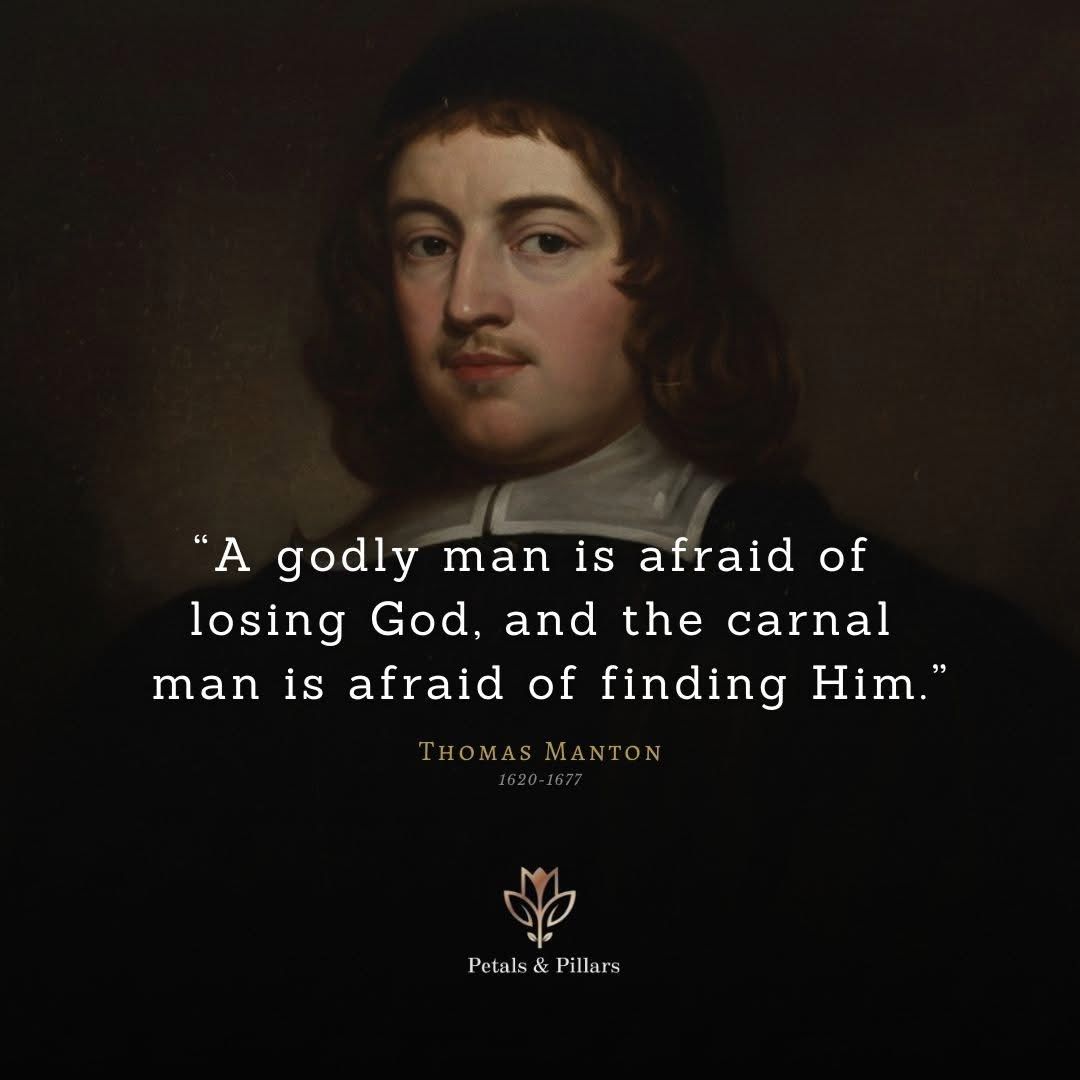
We are in a hurry for mercy, slow to duty. We cry, How long? But how justly may God cry, How long?
We complain of the delay of the promise; God may more justly complain of the delay of our obedience.
—Puritan Thomas Manton, Works 7:369






![dougponder's tweet photo. People often apply Paul’s “tentmaking” (Acts 18:3) to missionary work, which is a fine thing to do. But something far bigger is happening here.
Yes, Paul was literally a tentmaker. Yet his occupation carries rich theological overtones. For just as Jesus deliberately chose fishermen (Matt. 4:18) to become fishers of men (Matt. 4:19), the Lord does something similar with the apostle Paul:
Ad fontes: The Greek word for “tentmaker,” skēnopoios (σκηνοποιός), is a compound: it joins the verb poieō (ποιέω, “to make”) with the noun skēnē (σκηνή).
In the NT that second word is sometimes rendered “tent” (Heb. 11:9) or “dwelling” (Luke 16:9), but it is far more commonly translated “tabernacle” (Acts 7:43–44; 15:16; Heb. 8:2, 5; Rev. 21:3). Similarly, in the Septuagint (LXX)—the Greek translation of the OT—the same term repeatedly refers to the tabernacle itself (Ex. 25:9; 26:1, 6–7, 9, 12–18, 22–27; 27:9, etc.) and/or the “tent of meeting” (Ex. 27:21; 28:43; 29:4, 10–11, etc.).
Even the permanent temple that later replaced the tabernacle is poetically called a “tent” in the Psalms (Ps. 27:4–5; Ps. 41:5 LXX [cf. Ps. 42:4 MT]). And in Amos 9:11—which James applies to Paul’s Gentile missionary activity in Acts 15:16—the word skēnē (σκηνή) refers to the restored lineage or dynasty of David, pointing to the fulfillment of God’s promise in 2 Samuel 7:12–13: “I will raise up your offspring after you… and he shall build a house for my name, and I will establish the throne of his kingdom forever.”
Still with me? Now recall Jesus’ earthly trade. He was, quite famously, a tektōn (τέκτων)—a “carpenter” (Matt. 13:55; Mark 6:3). It’s not a bad translation, but it doesn’t capture the fullness of that term’s use in the OT. Again, in the LXX, the same Greek word is used of the craftsmen who built, and later repaired, the temple (2 Sam. 5:11; 1 Kgs. 7:14; 2 Kgs. 12:11–12; 22:5–6; 1 Chron. 22:15; Ezra 3:6–7). That’s quite a different image than a cabinetmaker.
In other words, Jesus Christ, the Son of David (Luke 1:39; Rom. 1:5), is the one who took on flesh and “tabernacled” among us (John 1:14). As the master tektōn, he came to build the true house of God—which is his body (John 2:19–21), and, by extension, the people who are joined to him by faith (1 Cor. 3:16–17; Eph. 2:21). With that great work complete, the apostle Paul is commissioned to start living, tabernacle-like outposts of the Lord’s temple (i.e., the church) in every corner of the world.
So, yes, Paul literally sewed canvas and stretched leather. But in the providence of God, his earthly occupation was a symbol of his heavenly mission: to raise portable sanctuaries where the presence of God would dwell among the nations.](https://pbs.twimg.com/media/HGMaCI-XsAAGP5A.png)
![alfredsparks's tweet photo. “I don’t feel the Spirit leading me to obey.”
The Spirit’s motion is not your rule, but the word of God; the Spirit is the helper, but the word is our standard, so that it is a dangerous mistake to think you may not go to duty but [only] when the Spirit moves.
—Ralph Erskine https://t.co/mVMRD6xTif](https://pbs.twimg.com/media/HFYn30VboAAsCf7.jpg)