Hindustan Waste Treatment Pvt. Ltd. | A subsidiary of SFC Environmental Technologies Ltd. | Transforming municipal solid waste into sustainable energy solutions
Compressed Biogas (CBG) is chemically similar to CNG and can be used across transport and industrial applications.
Produced from organic waste like MSW, agro-residues and animal waste, CBG can help create a domestic clean fuel pathway.
#CBG#CompressedBiogas#HWT
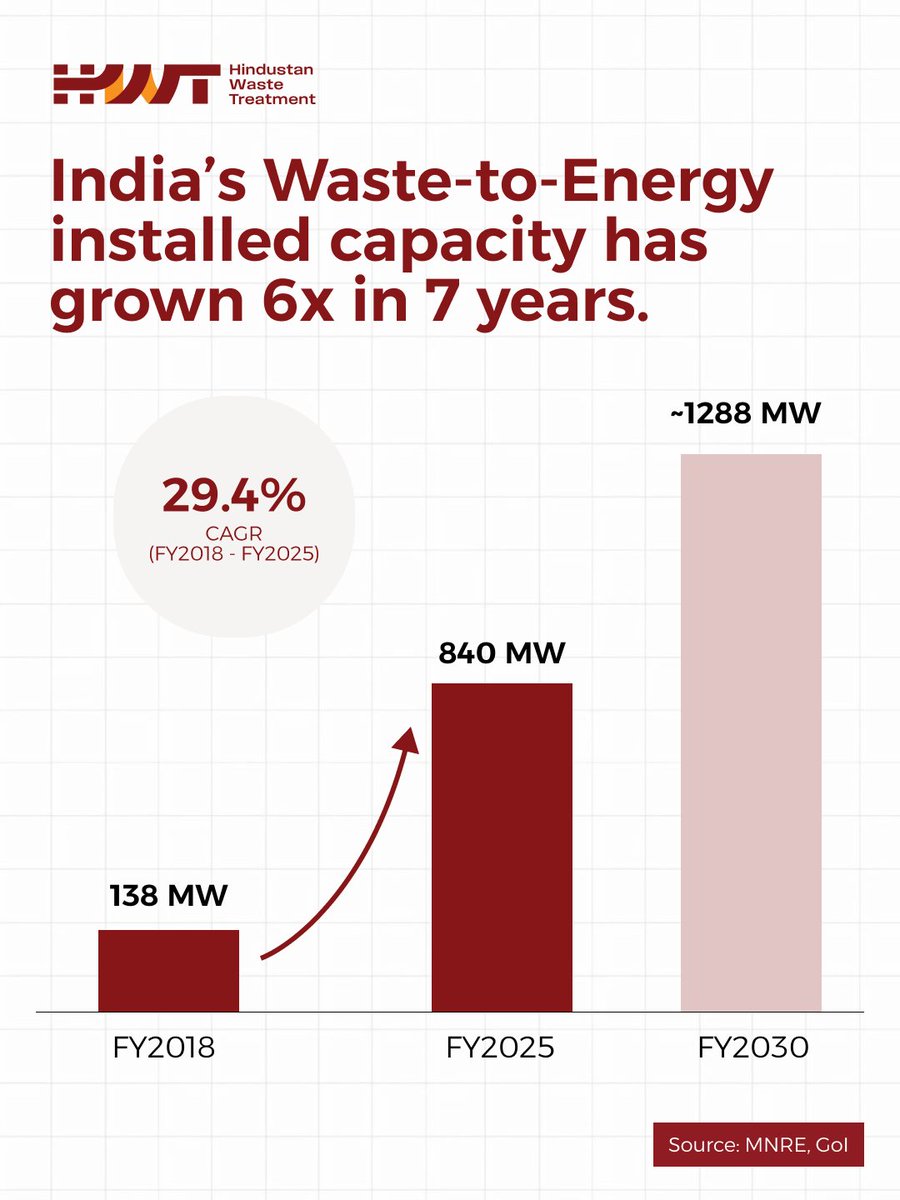
India’s Waste-to-Energy capacity grew from 138 MW in FY2018 to 840 MW in FY2025, a ~29% CAGR.
Installed capacity is projected to approach 1,288 MW by FY2030, driven by urbanisation, regulation and rising waste generation.
#WasteToEnergy#HWT#MunicipalSolidWaste
Waste is not just something to be disposed of.
Through scientific treatment, organic waste can become biogas and compost, while recyclable materials can be recovered for further use.
A step towards a more circular approach to waste management.
#HWT#WasteTreatment
From waste generation to collection, transportation and treatment, every stage of the MSW value chain matters.
HWT focuses on treatment - designing, building and operating infrastructure that turns collected waste into recoverable resources.
#HWT#MSW#WasteTreatment
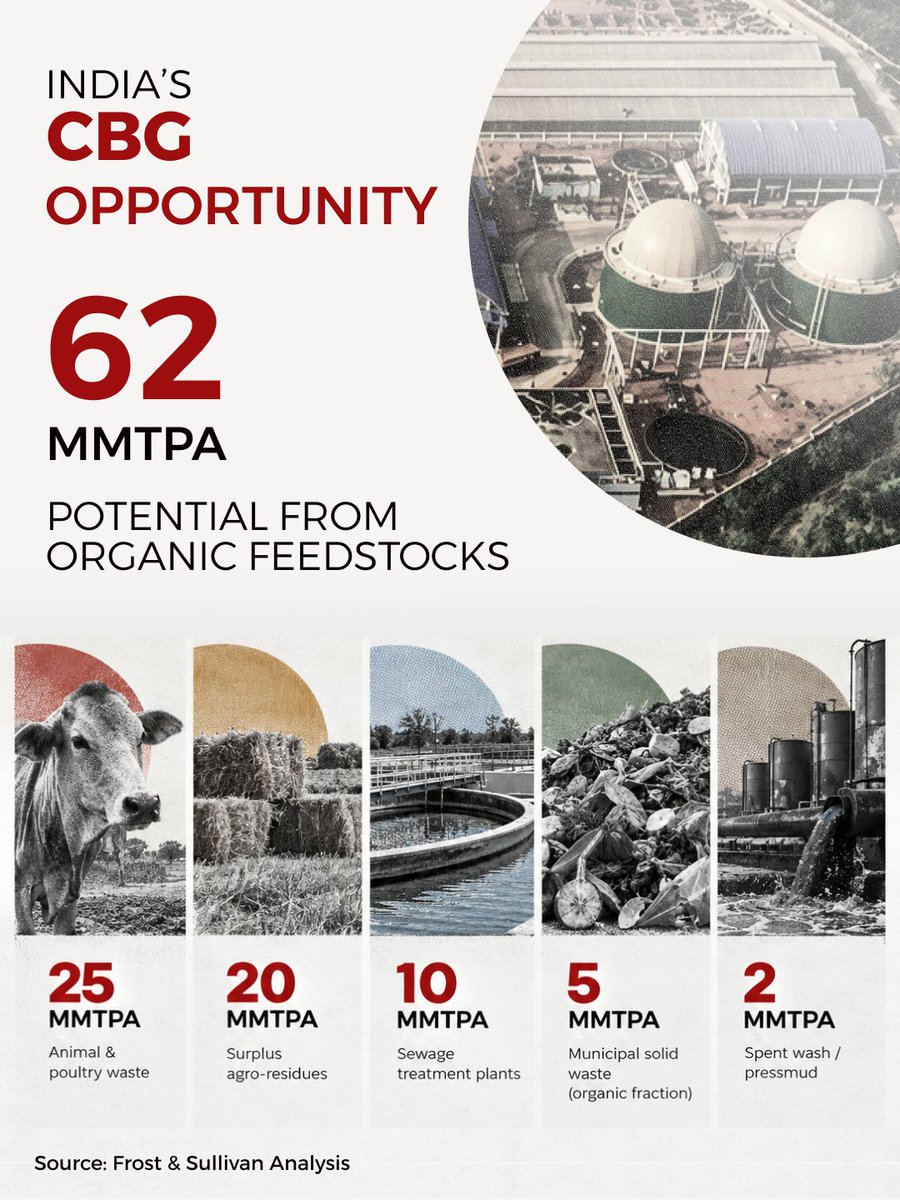
India has an estimated 62 MMTPA potential for CBG across organic feedstocks, from agro-residues and animal waste to MSW, sewage and pressmud.
The opportunity lies in converting this feedstock potential into usable CBG.
#CBG#CompressedBiogas#HWT
Building a waste treatment facility is only one part. Keeping it running is what makes the infrastructure work.
At HWT’s North Goa Plant, 10 years of O&M has supported sorting, bio-methanation, composting and resource recovery.
#OperationsAndMaintenance#MunicipalSolidWaste
India’s waste sector contributed ~1,200 kilotons/year of PM2.5 emissions in 2020, with levels projected to rise with increasing waste generation.
Scientific treatment helps reduce emissions at source.
#HWT#AirQuality#WasteManagement
India’s CBG ecosystem is entering a new phase.
With initiatives like SATAT, GOBARdhan and CBG Blending Obligations, the focus is shifting towards organised production of Compressed Biogas from waste and biomass.
#CBG#BioCNG#HWT
Integrated solid waste treatment is about recovering value from every fraction.
Biogas, compost, recyclables and RDF - each output finds a useful purpose, turning municipal waste into resources through a circular approach.
#HWT#CircularEconomy#WasteTreatment
India generates 62+ MT of waste annually. 43 MT is collected, but only 12 MT is treated before disposal, while 31 MT reaches waste yards.
The gap highlights the need for organised waste treatment infrastructure.
#HWT#MunicipalSolidWaste#SolidWasteManagement
Integrated solid waste treatment recovers value from every fraction. Wet waste produces biogas, electricity & compost.
Dry waste enables recovery of 25+ recyclable categories, with the balance becoming RDF. Less than 5% goes to landfill.
#ResourceRecovery#MunicipalSolidWaste
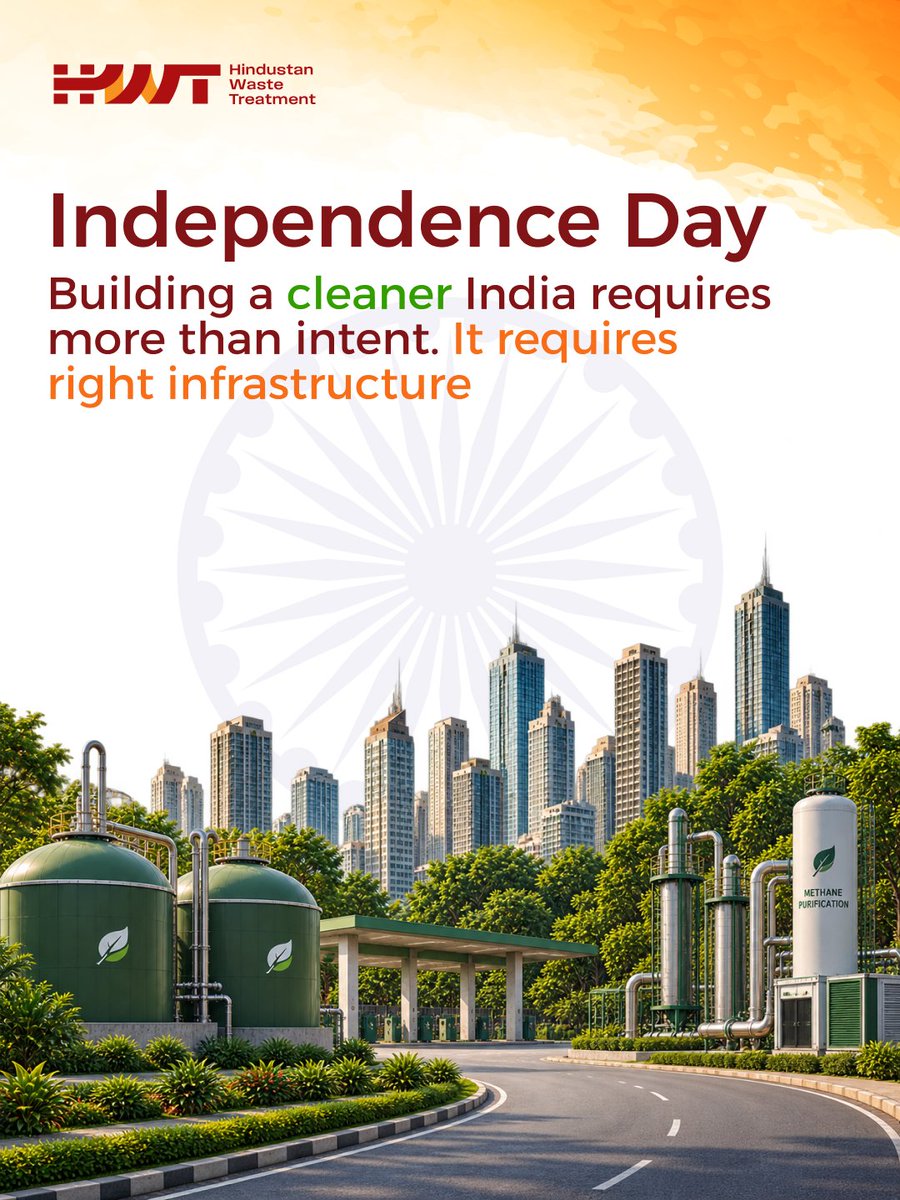
Swachh Bharat set a national goal: source segregation, door-to-door collection and scientific waste management.
Organised treatment facilities, biogas plants and resource recovery systems help turn that goal into reality.
Happy Independence Day.
#IndependenceDay#HWT
Agricultural waste from crop residues and paddy straw to press mud and animal waste, holds strong biogas potential.
Through anaerobic digestion, agro-waste can become methane-rich CBG for transport and industry, with digestate as organic fertiliser.
#HWT#CBG#Biogas
The CBG Blending Obligation marks a key shift for India’s clean fuel ecosystem.
By requiring CBG blending in fuel infrastructure, it can support large-scale production from municipal solid waste and biomass.
#HWT#CBG#CompressedBiogas#WasteToEnergy
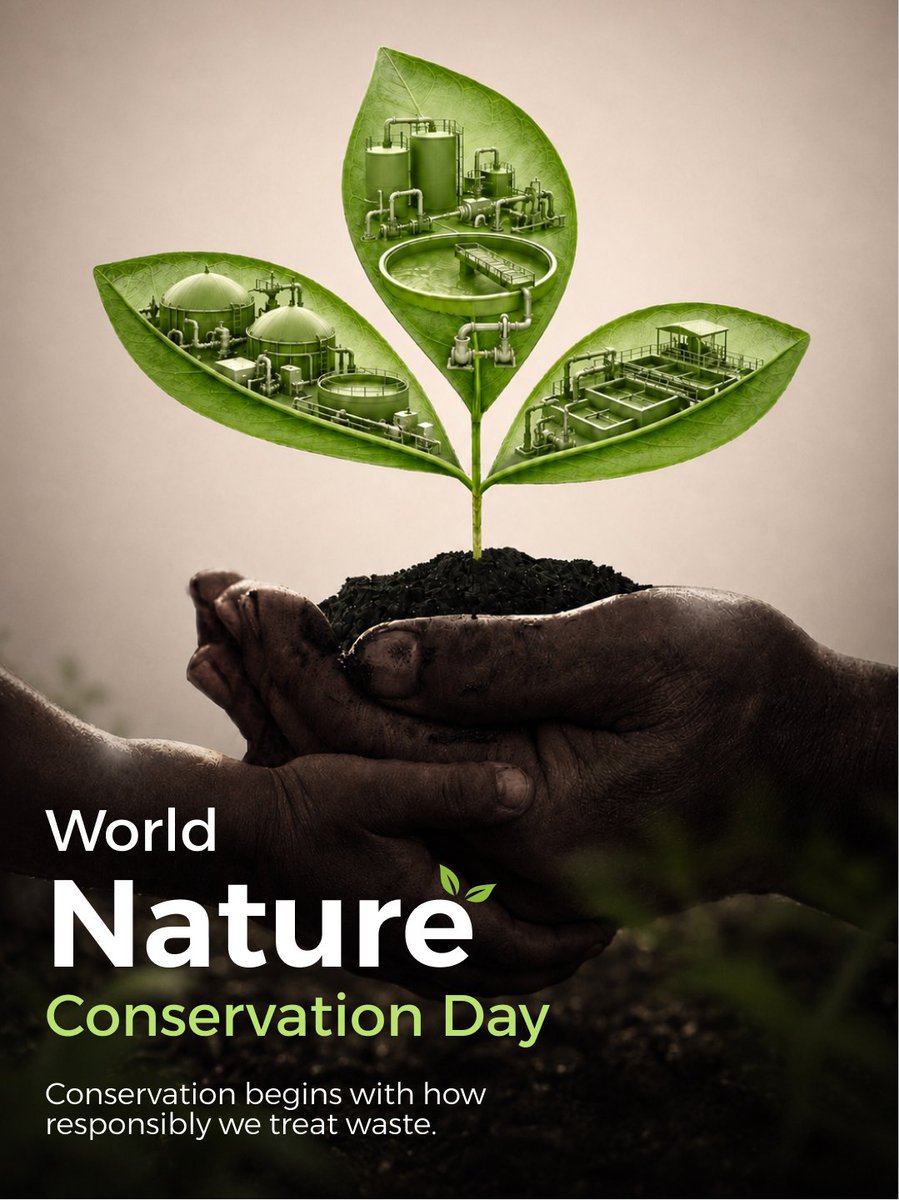
Conservation is not only about protecting what remains untouched, but also about responsibly treating what we leave behind.
This #WorldNatureConservationDay, HWT remains focused on solid waste treatment, thoughtful engineering and resource recovery.
#HWT#WasteTreatment
A biogas digester creates the controlled conditions required for anaerobic digestion, where organic matter breaks down in the absence of oxygen and produces biogas.
#HWT#BioMethanation#Biogas#WasteToEnergy
One input stream. Multiple useful outputs.
Through biomethanation, organic municipal waste generates biogas and digestate. The digestate is then processed into organic compost.
#HWT#WasteTreatment#Compost#CircularEconomy
India’s solid waste framework continues to evolve - from MSW Rules 2000 to SWM Rules 2016, CBG Blending Obligation and SWM Rules 2026.
The direction is clear: stronger segregation, scientific processing and resource-focused waste management.
#HWT#SolidWasteManagement
Waste should not simply end at landfills.
With risks like greenhouse gas emissions, land use and soil or groundwater contamination, organised municipal solid waste treatment is a more responsible alternative.
#HWT#MunicipalSolidWaste#WasteToEnergy
Not all waste ends at the landfill.
The dry fraction remaining after recyclable recovery is converted into RDF, a valuable fuel source used for energy generation and as an alternative to coal in cement plants.
#HWT#ResourceRecovery#RDF