🌌 Cosmic Daredevil: This Star is Pushing Einstein’s Relativity to the Breaking Point
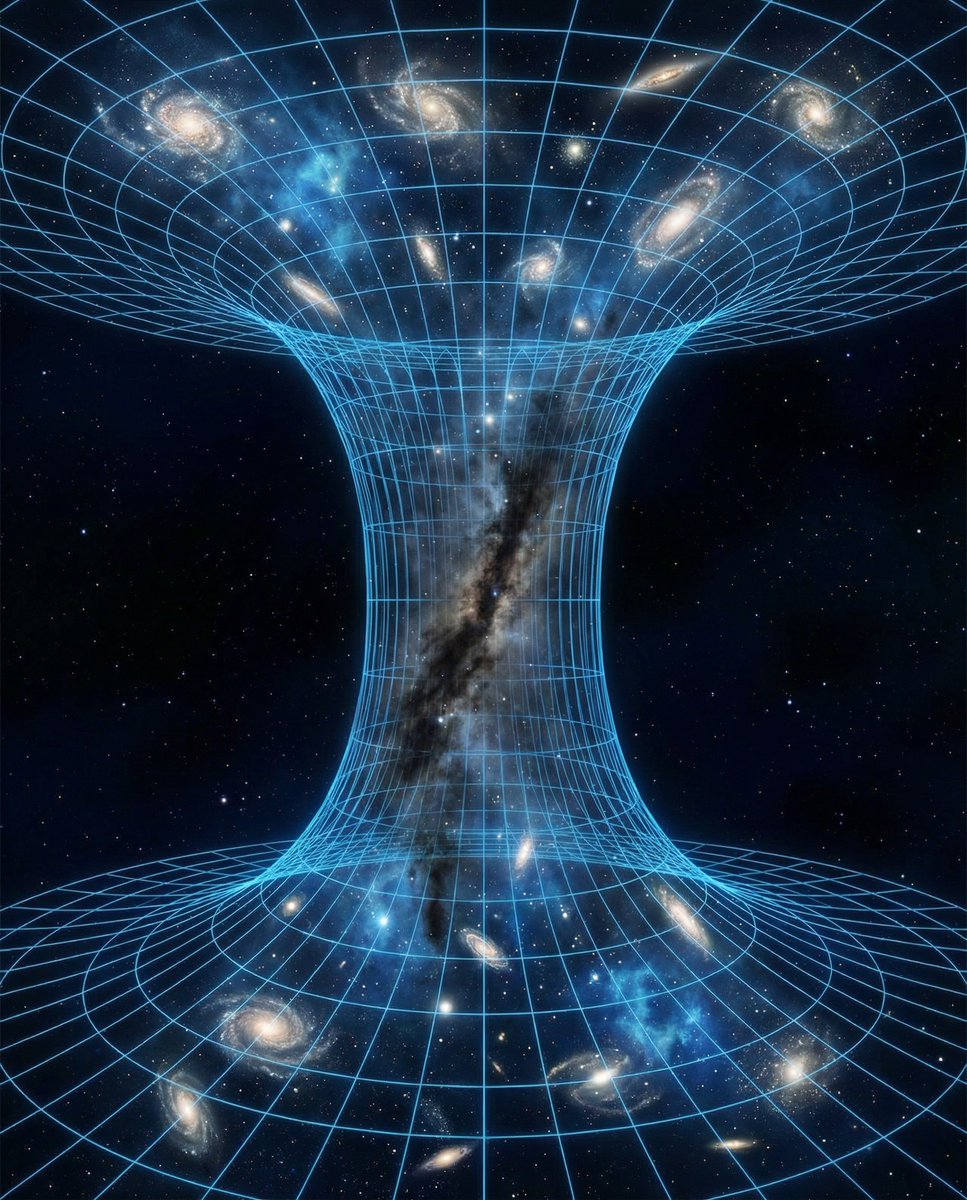
Astronomers have discovered an extreme star named S301 — a sun-like star that orbits our galaxy’s supermassive black hole, Sagittarius A* (Sgr A), every *8.7 years**. That’s the shortest orbital period ever seen among the S-stars circling the Milky Way’s center.
What makes S301 truly special? Its orbit is wildly elliptical. At its closest approach (periapsis), it screams past the black hole at more than 8% the speed of light, coming within just 140 Schwarzschild radii (about 24 AU). If Sgr A* sat at the center of our Solar System, this star would plunge between the orbits of Uranus and Neptune every few years.
This blistering speed and proximity make S301 the most relativistic star we’ve ever observed — the perfect natural laboratory for testing Einstein’s general relativity (GR) in extreme conditions.
Why it matters:
Its orbit shows dramatic perihelion precession — the point of closest approach advances by a whopping ~2 degrees per orbit. (For comparison, Mercury’s famous precession is tiny — less than a human heartbeat per orbit.)
Scientists can now study subtle effects like gravitational redshift and the transverse Doppler effect in real astrophysical conditions.
Over time, with future giant telescopes like the Giant Magellan Telescope, we’ll probe even higher-order relativistic effects and test alternative gravity theories that might bridge GR with quantum mechanics.
For now, observing S301 is tough — the galactic center is shrouded in dust, and the star is faint in infrared. But its motion alone already gives us an unprecedented window into the weird physics near a supermassive black hole.
S301 isn’t just orbiting — it’s stress-testing the very fabric of spacetime.
Published on arXiv (2026)
🪐 Saturn from Within: Cassini’s Final Shot
In 2017, the Cassini spacecraft executed a daring maneuver, flying right between the planet and its rings. It was one of the mission's riskiest—yet most valuable—moments.
O Monte Everest parece gigantesco… até ser comparado ao Monte Olimpo, em Marte.
Com 8.849 metros de altitude, o Everest é o ponto mais alto da Terra. Já o Monte Olimpo, o maior vulcão conhecido do Sistema Solar, alcança impressionantes 21.900 metros de altura, cerca de 2,5 vezes mais alto.
Mas o que realmente surpreende não é apenas sua altura. O Monte Olimpo possui aproximadamente 600 quilômetros de diâmetro, uma extensão tão colossal que, se você estivesse em sua base, dificilmente conseguiria enxergar o topo devido à curvatura do próprio horizonte marciano.
Essa diferença existe porque Marte tem uma gravidade muito menor que a da Terra e não possui placas tectônicas ativas. Isso permitiu que o vulcão crescesse continuamente durante milhões de anos, sem ser deslocado sobre pontos quentes, como acontece em nosso planeta.
O Monte Olimpo é um lembrete impressionante de que, quando olhamos para o Sistema Solar, a realidade muitas vezes supera a imaginação.
Jupiter doesn’t do “Northern Lights” — it does cosmic warfare.
Captured by the , this polar aurora is 1,000× stronger than Earth’s, powered by a magnetic field 20,000× more intense and fueled by volcanic chaos from .
Earth glows. Jupiter erupts.
Güneş Sistemi’nin galaksi içinde nasıl yol aldığını gösteren bir animasyon.
Bunu izledikten sonra gezegenleri artık düz bir daire üzerinde dönüyormuş gibi hayal etmek zor.
Se o TON 618, um dos maiores buracos negros conhecidos, estivesse à mesma distância de Alpha Centauri, o sistema estelar mais próximo do nosso 40 trilhões de quilômetros da Terra, assim pareceria nosso ceu mesmo durante o dia.
Перед вами первое в истории видео, снятое на iPhone в космосе.
Экипаж «Артемида-2» заснял, как Земля заходит за луну — для этого использовали iPhone 17 Pro Max и 8-кратный зум.
Причина, по которой крупные астероиды не падают на Землю каждый день и не вызывают катастроф, заключается в том, что гравитация Юпитера притягивает астероиды и защищает внутренние планеты
Лично я благодарен Юпитеру. Мы любим тебя, Юпитер.
Get Ready.. Prepare yourself to witness history unfold right before your eyes! 🚀
For the first time ever, the entire Orientale Basin, a massive and mysterious region on the Moon’s surface, has been fully captured thanks to the efforts of NASA’s Artemis II crew. This remarkable achievement marks a huge step forward in space exploration, revealing a breathtaking new view of our celestial neighbor. The clarity and detail in this historic image are absolutely stunning! 🌕🛰️ As we move further into space, it reminds us of the endless wonders still waiting to be discovered.
🪖 В проваленій мобілізації досі немає винних. Продовжуються ці мільйон відео бусифікацій, де мордасті і дня не служивші ТЦК-шникі (такі самі мусора) товчуть, б'ють, тягають в��іх. Дійшло до того, що військових у відпустках товчуть, тягають, — військовослужбовець ЗСУ «Киянин»
«В країні відсутня правоохоронна система. Якби вона була присутня і дієздатна з залізними яйцями Верховна Рада, а не такі як сидить метадонова голова Коля Котлєта і розказує, що військові не повинні звільнятись. Треба цю метадонову голову вивезти в район Новопавлівки — вибереться, значить вибереться, а не вибереться, значить все».
2015 год. Россия уже оккупировала Крым и часть Донбасса.
Канцлер Германии Ангела Меркель: «Мы хотим строить безопасность Европы вместе с Россие��, а не против нее. У кризиса в Украине нет военного решения. Поставки вооружения не помогут Украине».
Подмахивали людоеду как могли
28 февраля, если позволит погода, не забудьте посмотреть на небо: большая часть планет Солнечной системы выстроиться в линию, напоминая нам о том, какой прекрасной может быть Вселенная.
Наша галактика летит сквозь пространство Вселенной со скоростью около 600 километров в секунду (2.2 млн. км/ч) — эта цифра определяется относительно древнейшего света Вселенной, реликтового излучения. И не просто летит, а машет кры��ьями, как огромный скат. Меня иногда укачивает