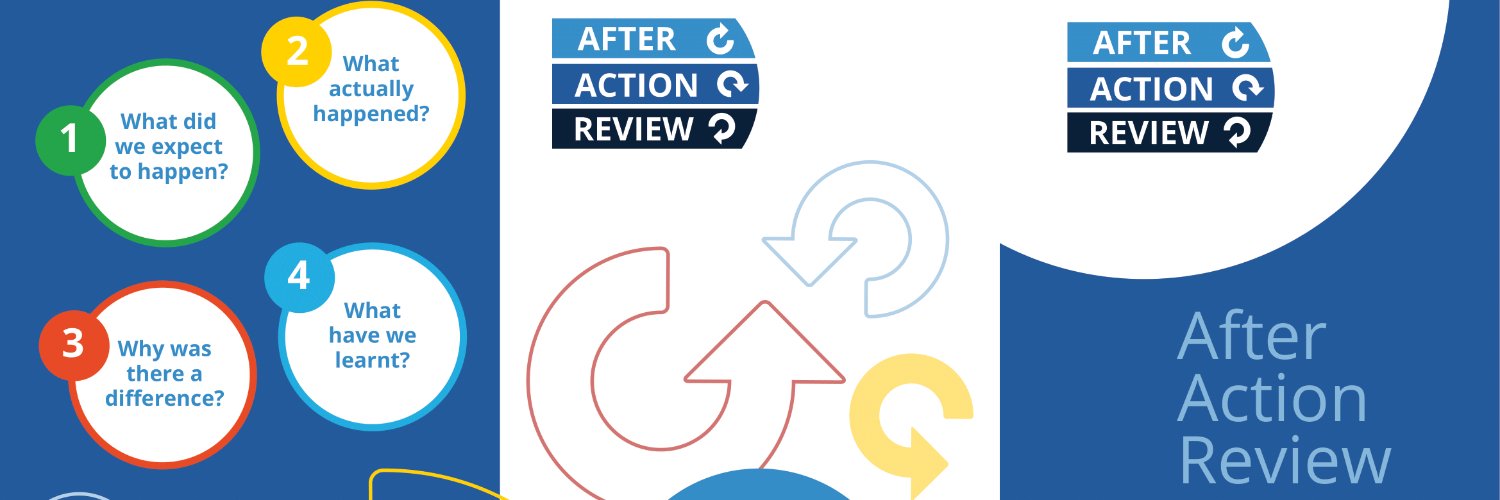
New open-access study from @iCAARE_Study led by @MaireadFinn, provides new research evidence on the enablers and barriers of AAR implementation in an Irish hospital. Link to article can be accessed here:
https://t.co/IskrPNzfLh
#iCAAREstudy#AAR#TDF#LoveIrishResearch
New open access article led by @SiobhanMCarthy, provides video resources designed to educate healthcare staff about a methodology known as After Action Review (AAR).
Read here: https://t.co/HUEjqKHeca
A new open-access resource has been developed to educate healthcare staff about the benefits of After Action Review (AAR).
The debrief technique can support social and near-to-real-time learning from patient safety and everyday events.
➡️ https://t.co/VvwtcRssWy
#RCSIeducate
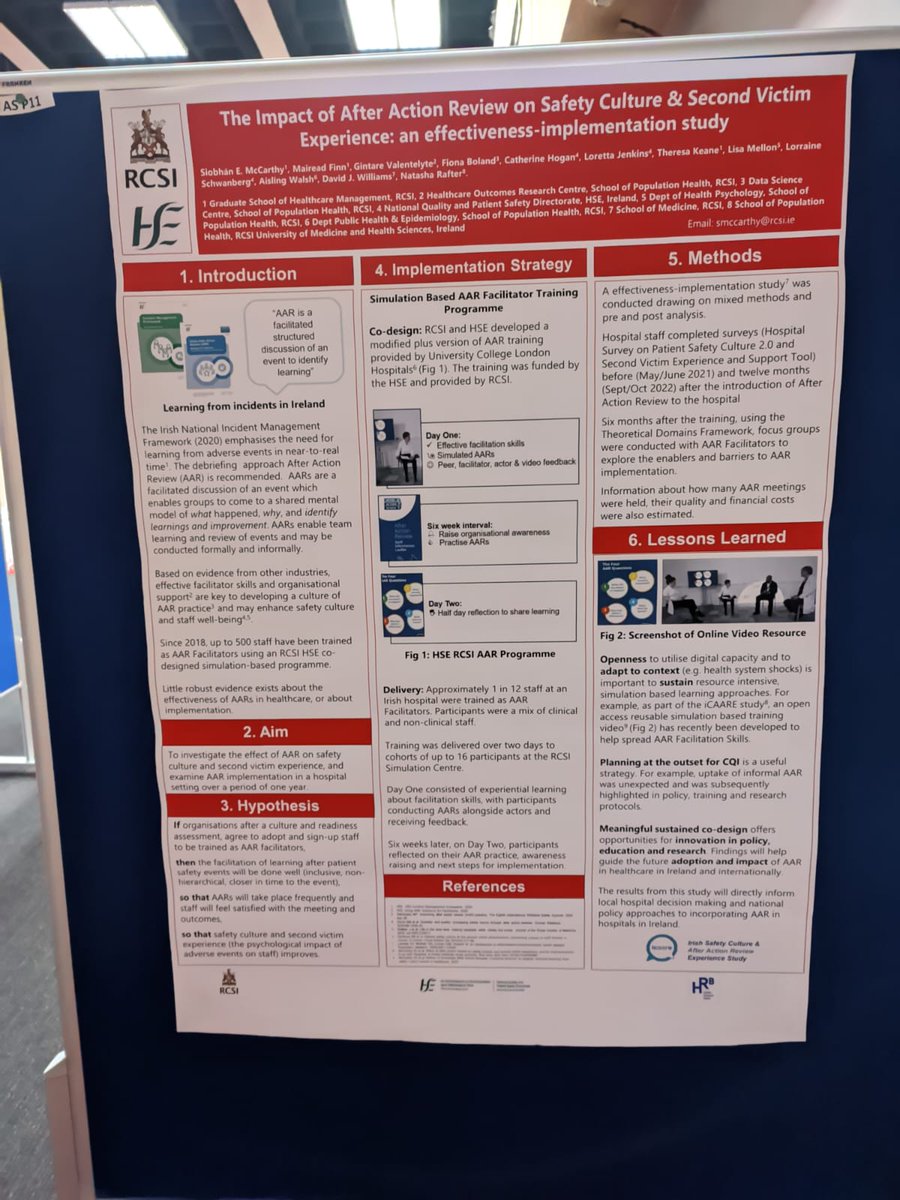
And we're all set for this year's RCSI Research day! Come check out our iCAARE study poster led by @SiobhanMCarthy and colleagues - Stand ASP11! @RCSI_Irl#ResearchDay2023
Thank you to all who came to our presentation @HSJptsafety
For those of you wanting more insight into our team’s QI process, change cycles, data collection and multidisciplinary team engagement please watch the video below. #HSJpatientsafety (1/2)
https://t.co/j3OcPRwGhu
Thank you @JoMurrayWxAHSN for sharing such a perfectly concise summary of my story about an experience that shifted our team’s perspective from seeing QI as an ‘added extra’ to embracing it in our approach to finding solutions to delivering better and more effective patient care
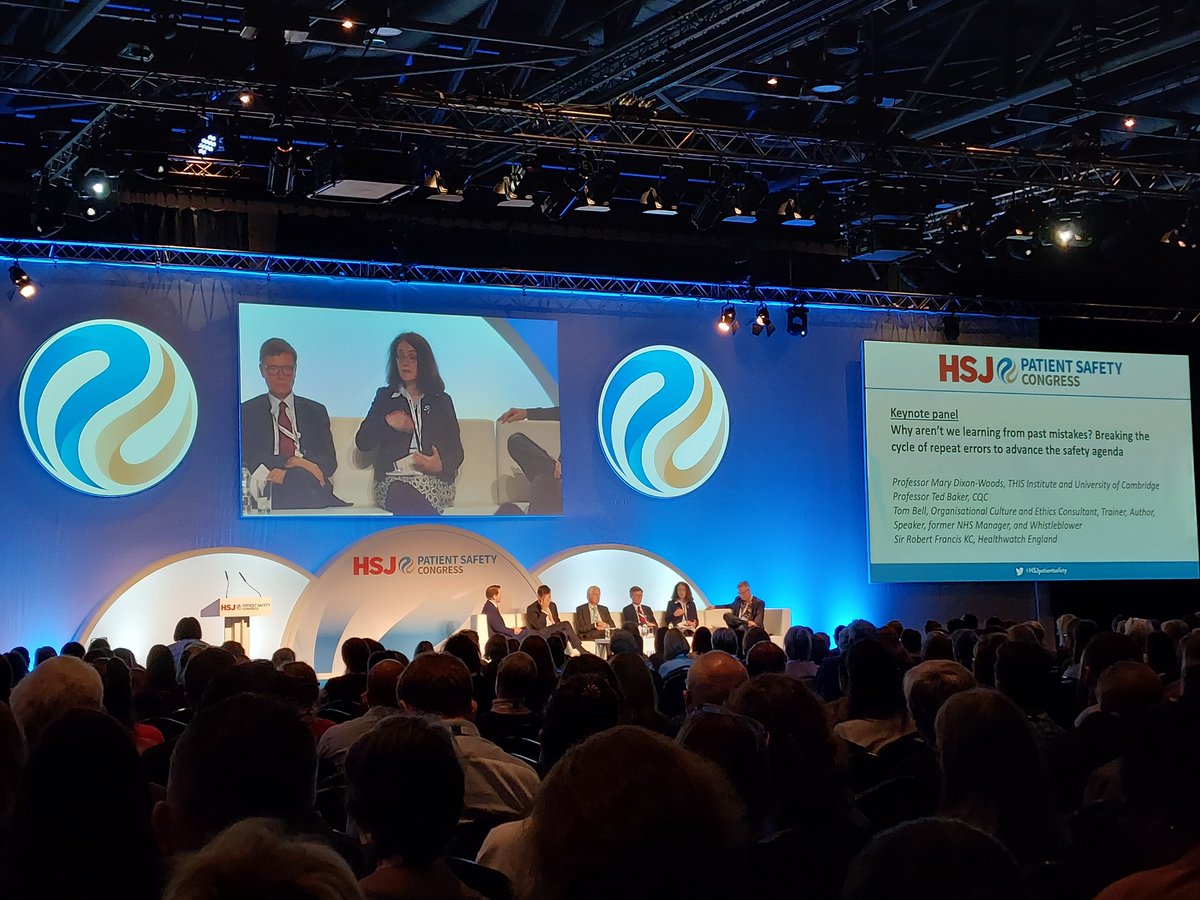
“I’m still writing about the same things I’ve been writing about a decade ago.” @ShaunLintern says. Curious to listen in on the keynote on “Why aren’t we learning from past mistakes” #HSJpatientsafety
Delighted to share our new paper - published today!
We explore the underpinning sociocultural contexts of NHS organisations who *respond to* and *use* online patient feedback differently @LawtonRebecca @Laurainbradford@janekohara https://t.co/mVJggY9eFf
Delighted to attend #HSJpatientsafety Congress 2022 - how can we learn and design learning systems? @MaryDixonWoods: importance of understanding context, especially structural helplessness and inertia, and using evidence to scrutinise all elements of a system.
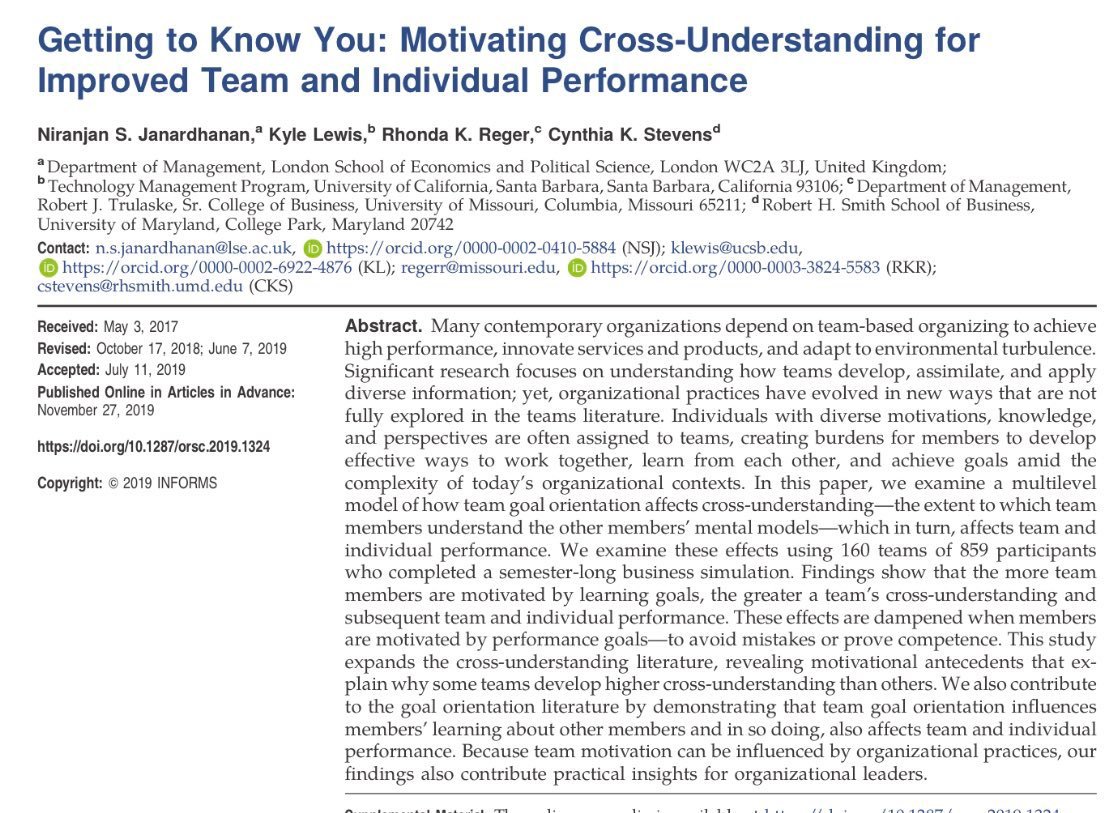
Teams need to focus on learning, not just doing.
When teams focus only on getting a job done, they perform worse than teams that also spend time learning from each other. Groups should be encouraged to think about learning for the future, not just on what they are doing now.
Do open-ended questions help healthcare teams to debrief effectively?
@Mi_Minka and colleagues found that when debriefers pair their observations and opinions with open-ended questions & ask specific questions, they can help participants to reflect. https://t.co/a0NzNPr0x0
What does a ‘high-reliability organisation’ look like in health care?
This qualitative study explored the perspectives of 71 participants on the ‘Caring Safely’ programme, implemented at a Canadian paediatric referral centre. https://t.co/bSUv49m6XA
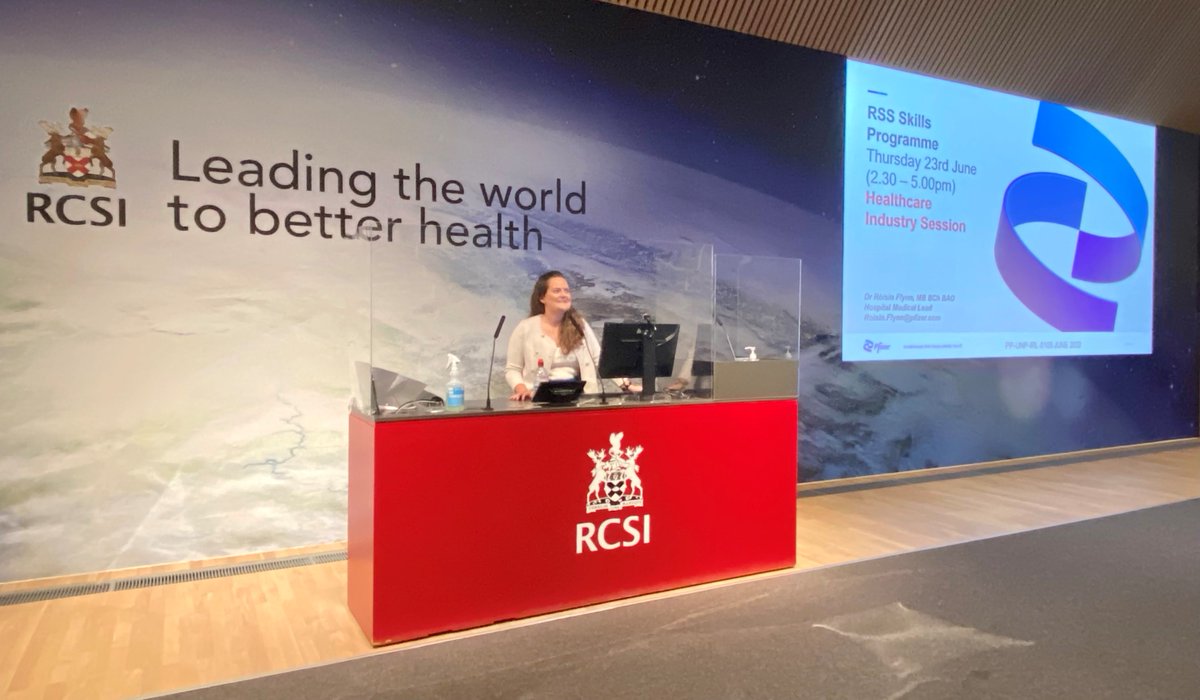
Some fantastic talks from @GSK, @perrigocompany and @Pfizer_Ireland at the inaugural @RCSI_Irl Research Summer School "Healthcare Sector: An Industry Perspective" session for our undergraduate students participating in this year’s Research Summer School Programme @RCSI_Research
Join our MSc in Healthcare Management programme information session with Programme Director, Dr Eidin Ni She.
Tomorrow, 28th June at 2pm (Dublin time)
Register now: https://t.co/USKjwCPPnu
Prof McMurray writes on the challenges of coping with difficult emotions at work, including responsibilities of self, professions, and employers (he also takes us inside a prison!)
Check it out here: https://t.co/lAQ3etOOba
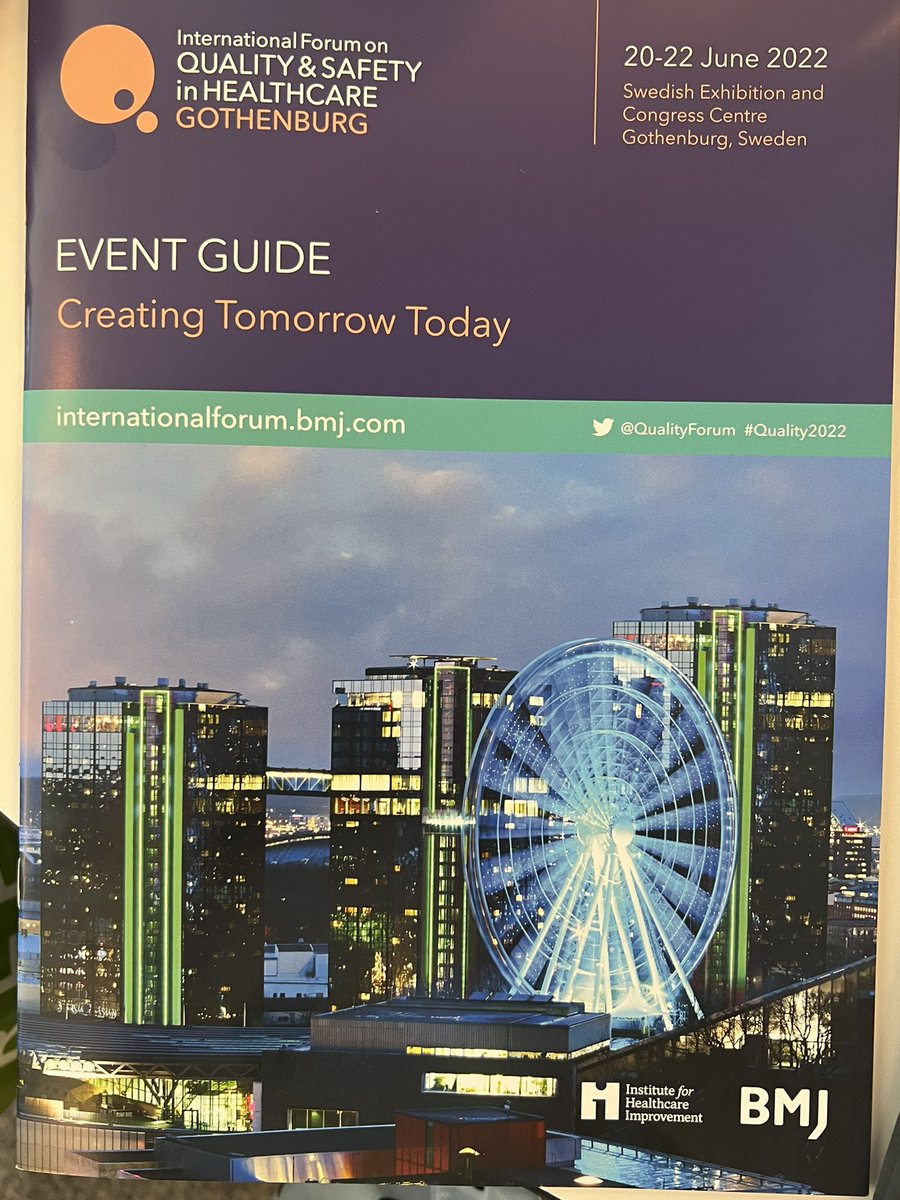
The International Forum on Quality & Safety in Healthcare starts tomorrow. There will be 2,400 improvers at the venue in Gothenburg. Everyone can join in by following hashtag #Quality2022 on Twitter. @Mental_Elf will be live tweeting. The keynote speeches will be streamed live
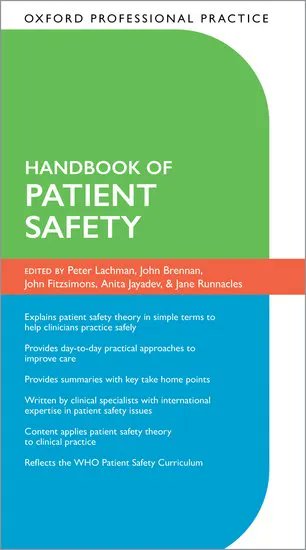
.@doctor_oxford read your review of @Jeremy_Hunt book on #patientsafety We need to know how to be safe - so look at our new @OUPMedicine @OUPAcademic Handbook of Patient Safety written by people who are in the frontline - translation of theory to action https://t.co/LtC9fuaXtF
Must watch 1 minute video at the end.
"I know what to do but my hands are tied by the constraints in my system"
@davidjvaughan @CarmelanndDaly @itsthatgirlsuzi @theseant
Developing Individual “Resilience” Isn’t Enough to Heal Moral Injury https://t.co/phxFbTCfOd via @TheIHI
Safer Together: A National Action Plan to Advance #PatientSafety includes foundational ways to prioritize safety for staff, caregivers, and patients. https://t.co/6vh4PRKTZ3
#NursesWeek