We have an internal pipeline on Women's Health and reproductive endocrinology, and multiple big pharma partnerships. As a young company these deals have driven $50M in revenue and today we're profitable as a result.
Delighted to share the double-expansion of our collaboration with @pfizer , expanding on AI-driven small molecule drug design as well as broadening into payload design for Antibody-Drug Conjugates (ADCs)...
➡ Endpoints News Story: https://t.co/0QWRujpeOS
#NEWS: Today we're excited to announce a double-expansion of our collaboration with @pfizer. We'll be expanding our existing AI Lab partnership, while also launching a new partnership to develop novel payloads for Antibody-Drug-Conjugates (ADCs)...
This expanded collaboration spotlights the versatility and validation of Proton, our drug discovery platform. Personally, I'm excited by the growth of PostEra from pioneering AI research in medicinal chemistry to a TechBio...
Jesus said to her, "I am the resurrection and the life. The one who believes in me will live, even though they die; and whoever lives by believing in me will never die. Do you believe this?” John 11:25
He is risen
I would not recommend to make the below your mantra for AI in drug discovery.
- Metadata is key - no amount or mixture of data without enough information about the context in which the data were generated will give you generalizable insights, nor will you have any hope to understand the operating range of your predictions.
- Forget end-to-end. Focus on preprocessing and data curation and insert your models at the right place. Your gradient will happily latch onto any however minute batch effect, data bias or idiosyncrasy of your data collection - don’t let it fool you.
- Scale is nothing without context and curation (see above).
Biology is not NLP nor computer vision.
If you need a reminder that static protein structures aren’t ground truth, here you go. Does a great job highlighting some challenges any AI/ML drug discovery approach is going to face.
h/t @pwk2013 for sending my way
https://t.co/N8PQwlVw68
Sweet baby Jesus. Several others have pointed this out now, but here’s an apparently peer-reviewed article full of AI-generated gibberish images. I can’t even find it in myself to laugh because this is a reprehensible breakdown at every possible level. 🤦♂️
https://t.co/v3LGgd97Kl
📢Today marks a significant milestone as we announce our new #AI collaboration with Amgen! Alongside our existing collaborations with Pfizer and the NIH, this collaboration will go such a long way in helping us advance drug discovery and bring more cures to patients.
Subsequent to the work described in the paper, we nominated a preclinical candidate, now undergoing IND-enabling studies by @DNDi.
We also launched @asap_discovery to expand the vision, with funding from NIAID to work on picornavirus, flavivirus and broad spectrum CoV.
Our journey towards a COVID antiviral - from crowdsourcing to delivering robust leads with machine learning-driven med chem - is published in @ScienceMagazine! An exhilarating global effort involving 200+ scientists:
https://t.co/a53Io9M7La
The COVID Moonshot project has just been published in @ScienceMagazine! Take a read of our journey to develop patent free COVID antivirals. 🧵...
Read the full article ➡️ https://t.co/WlDUHVg6r8
#AI#OpenScience#Covid
Princeton undergrad says the quiet part out loud: we are not here to learn; we are focused on extracurriculars and activism; and we don’t want to spend time studying.
Why go to *Princeton* then?!
“Further, classes are known for assigning 200 or more pages of reading each week that frustrated students can barely finish, and I frequently hear students complain about extremely time-intensive problem sets that are unrelated to both lecture material or final examinations, causing me to wonder how these problem sets actually enrich students’ minds.
The implications of such rigor extend past students’ academic pursuits and into their extracurricular life. Often, we find that rigor either makes students less engaged in extracurriculars or, when they are actively involved, they must choose having strong extracurricular involvement over fulfilling academic involvement. On the one hand, Princeton students are often described by campus activists to be far less engaged with political protests than students at peer institutions, demonstrated — for example — by Princeton’s lackluster Divest protests compared to Yale, Harvard, or Penn."
https://t.co/1adC9gJMvk
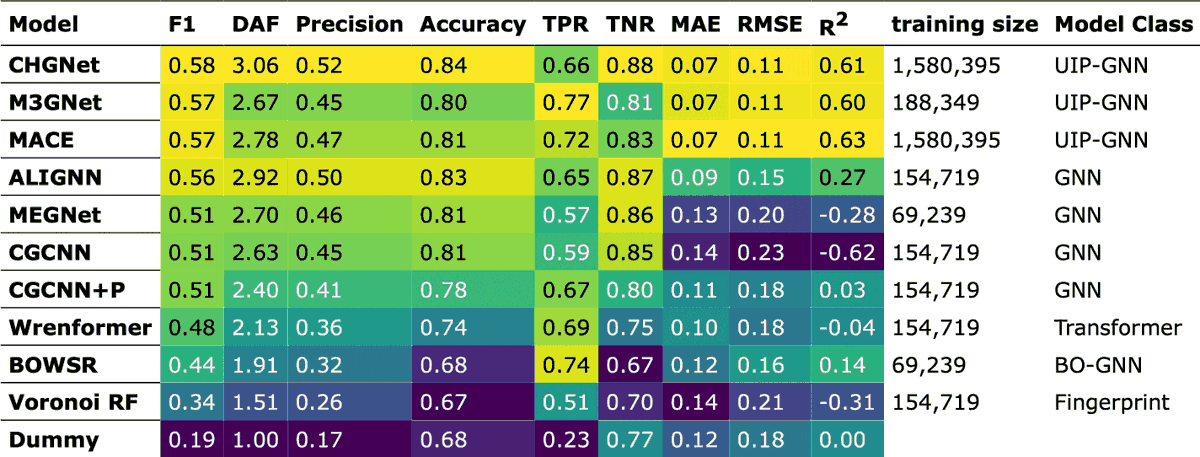
Matbench Discovery just hit v1 on arXiv and PyPI! 🎉
1️⃣ TL;DR
We built a way to test how well ML models can predict stable crystals to accelerate materials discovery. 🧪
ML has come a long way since @ChrisJBartel et al. 2020 https://t.co/SlLGUHTH5p
Startups are incredibly binary and compounding is powerful. Many successful leaders run out of juice after their first mega exit.
It takes incredible amount of intrinsic motivation to keep stewarding new ventures well after it makes purely economic sense to do so.
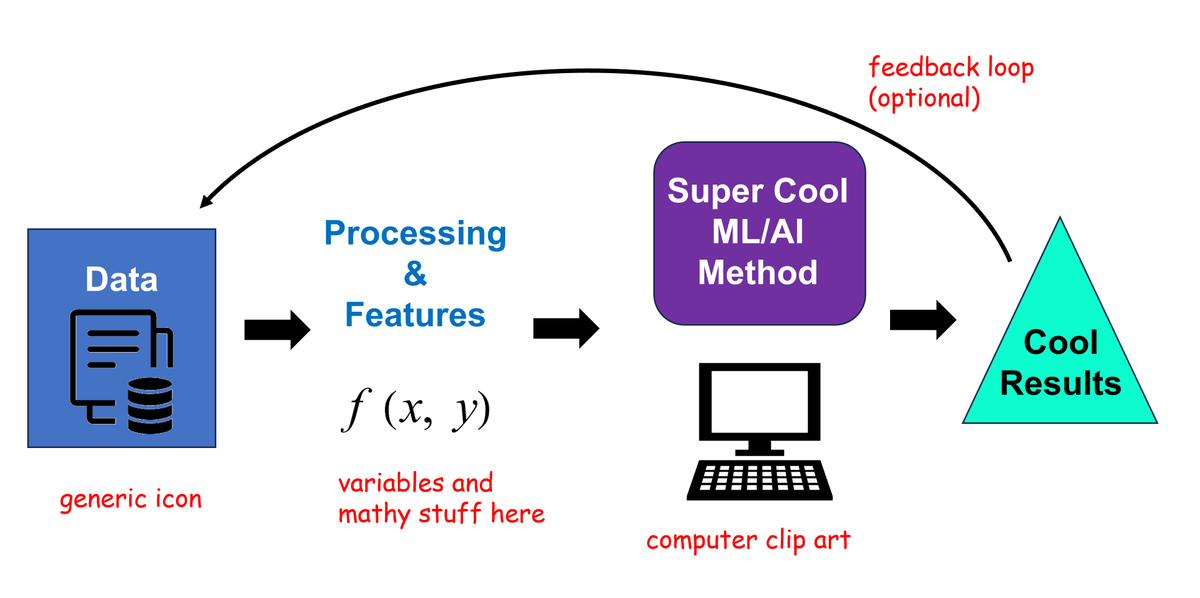
OK, can we PLEASE stop including these kind of figures in EVERY ML/AI materials paper... we don't need the "blocks with arrows" diagram anymore... unless there is something new/novel/innovative/critical in the figure, drop it.
#SCOTUS: @Harvard/@UNC admissions programs violate the Equal Protection Clause. Universities "have concluded, wrongly, that the touchstone of an individual’s identity is not challenges bested, skills built, or lessons learned but the color of their skin." https://t.co/2PZY8zn34V
Just overheard a college-age job candidate regurgitating de-growth points about how neoliberalism is ruining the Earth in a job interview
YIKES
If young people don't believe a better world is possible through innovation and business, society is screwed.