The Amazing American Revolution — Prologue
The American Revolution of 1775 was the long awaited answer to more than a decade of British efforts to tighten control and extract revenue from the colonies that had grown used to governing themselves.
For most of the eighteenth century Britain practiced what later historians called salutary neglect. The colonies raised their own taxes, ran their own assemblies, and fought their own local wars. Then the French and Indian War (1754–1763) changed everything.
Britain and her American subjects defeated France and won half a continent. The victory was glorious, but the bill was staggering. Britain’s national debt had nearly doubled. Looking across the Atlantic, Parliament decided the colonies would help pay for their own defense and for the empire that protected them.
The first measures arrived quickly. The Proclamation of 1763 forbade settlement west of the Appalachians, angering land-hungry colonists. The Sugar Act of 1764 tightened customs enforcement. Then the Stamp Act of 1765 went further; becoming the first direct internal tax levied on the colonies by Parliament. Legal documents, newspapers, playing cards, even dice required a government stamp. The cry that rose from Boston to Charleston was simple and revolutionary: No Taxation Without Representation.
Resistance was immediate and organized. Stamp distributors were hung in effigy and forced to resign. Merchants signed non-importation agreements and The Stamp Act Congress met in New York to petition the King. In the streets, the Sons of Liberty enforced the boycott with threats and tar. Parliament repealed the Stamp Act in 1766, but at the same moment passed the Declaratory Act asserting its full authority to legislate for the colonies “in all cases whatsoever.”
New duties followed under the Townshend Acts of 1767 with taxes on glass, lead, paint, paper, and tea. Customs collectors and British troops arrived to enforce them. In Boston the presence of redcoats turned everyday friction into open hostility. On the cold night of March 5, 1770, a crowd of working men and boys confronted a sentry on King Street. Reinforcements arrived. Snowballs, clubs, and insults flew. Someone shouted “Fire.” When the smoke cleared, five colonists lay dead in the snow. One of them was Crispus Attucks, the first martyr of the American Revolution. The event was instantly labeled the Boston Massacre. Engravings of blood on the cobblestones spread through the colonies.
Britain partially retreated again, repealing most of the Townshend duties but deliberately leaving the tax on tea as a symbol of parliamentary authority. In 1773 the Tea Act tried to help the struggling East India Company by allowing it to sell surplus tea directly to the colonies at a lower price whilst still carrying the hated tax. To many colonists it looked like a trap: cheaper tea that would establish the right to tax them forever.
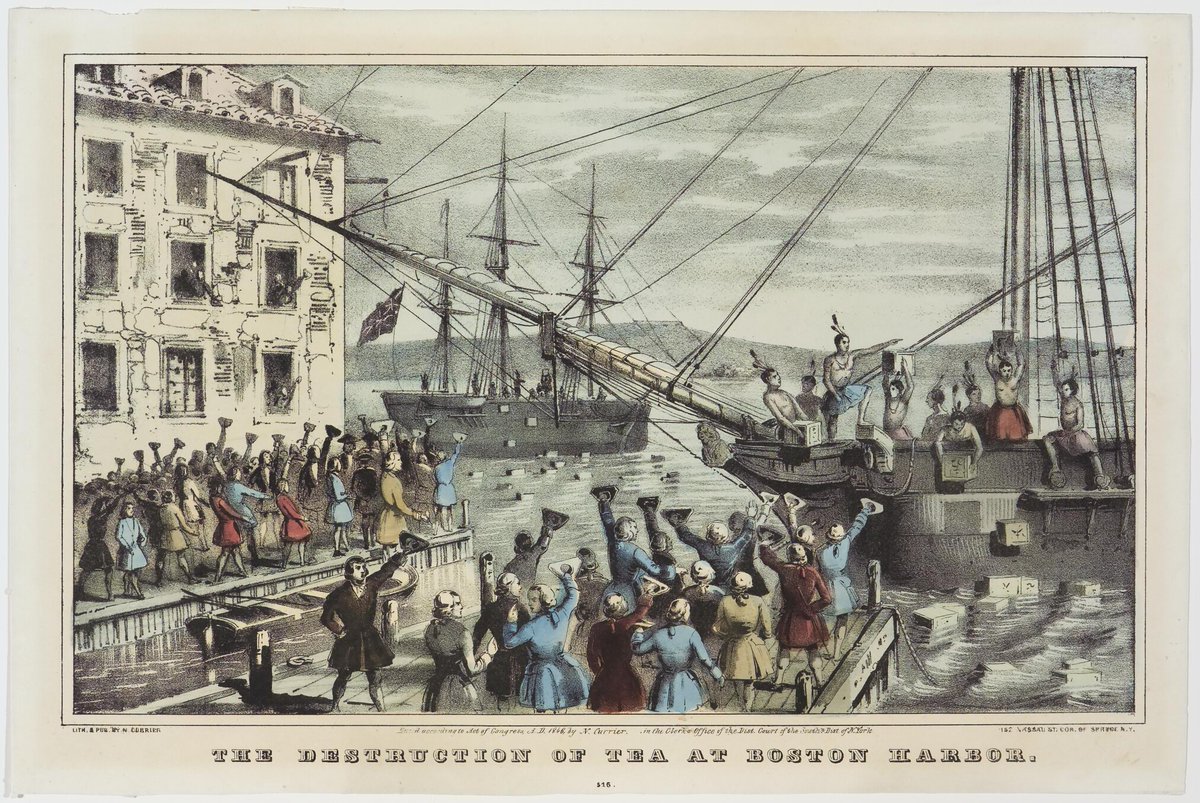
On the night of December 16, 1773, roughly fifty men disguised as Mohawk Indians boarded three ships in Boston Harbor. In three hours they smashed open 342 chests and dumped roughly 90,000 pounds of tea into the cold water. The Boston Tea Party was deliberate, disciplined, and public. No one was hurt, yet the message was unmistakable.
London’s answer was the Coercive Acts (Intolerable Acts). The port of Boston was closed until the tea was paid for. The Massachusetts charter was rewritten, town meetings restricted, and the royal governor given sweeping new powers. British officials accused of crimes could be tried in England. Troops could be quartered in private buildings. A separate Quebec Act expanded the boundaries of Catholic Quebec and seemed to threaten the land claims of the northern colonies.
Instead of isolating Massachusetts, the Intolerable Acts united the colonies. In September 1774 the First Continental Congress met in Philadelphia. Delegates from twelve colonies petitioned the King, approved a colony-wide boycott, and began to speak of American rights as something that existed independent of Parliament’s will. Local committees of safety then formed. Militia companies drilled and stores of powder and lead were quietly gathered and moved.
By the spring of 1775 the colonies were no longer merely protesting. They were preparing. The direction of pressure for twelve years had been one way: from London asserting control, taxing without consent, occupying cities, and punishing resistance. The colonies had answered with petitions, boycotts, and, finally, with organized defiance.
The American Revolution did not begin with a declaration of independence or a single shot. It began with a tax, a massacre in the snow, and a harbor full of tea.
The Amazing American Revolution — The Fall of Charleston (1780)
Savannah was the door. Charleston was the house.
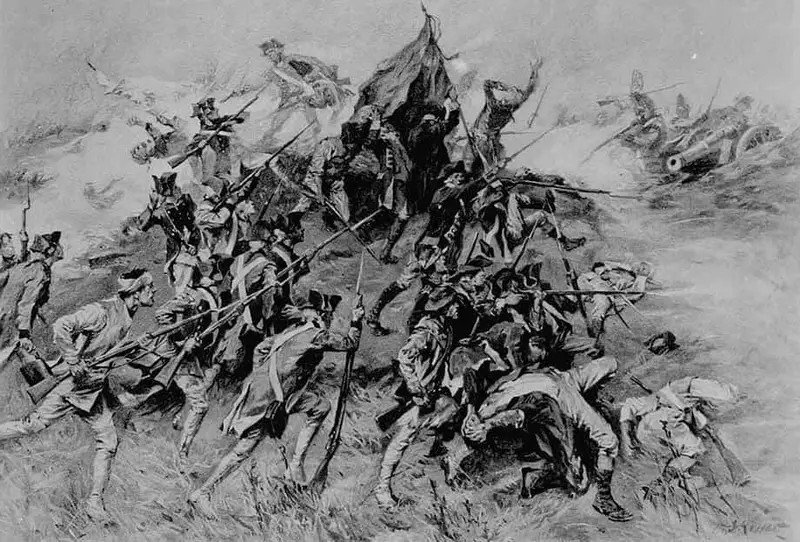
In October 1779 the French fleet came back. d’Estaing and the Americans tried to take Savannah the way they had failed to take New York. The ditches were deep. The assault on the ninth of October broke on the works. Count Pulaski died in the charge. The fleet sailed away again. The British still held the sea, and now they held the first southern port they had chosen.
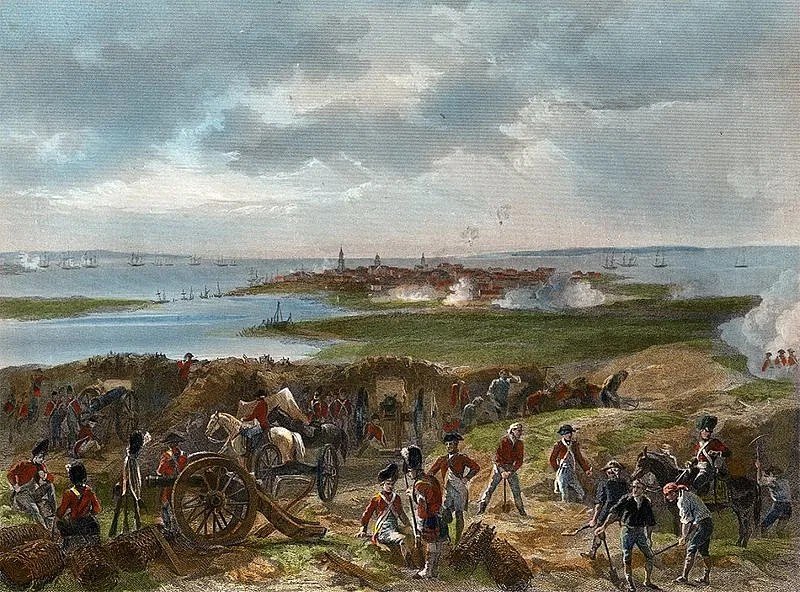
Clinton read the lesson. In December he left New York with a real army and a real fleet. He did not come to raid. He came to take the richest city in the South and the army that sat inside it. By February 1780 the ships were off the Carolina coast. By April the lines were drawn around Charleston. Benjamin Lincoln had walls, militia, and no way out once the harbor was closed.
The siege was not a hot field like Monmouth. It was hunger, guns, and time. The British walked their batteries closer. The ships sealed the water. On May 12, 1780 Lincoln surrendered. More than five thousand men laid down their arms. It was the largest American surrender of the war. The gold that had followed the British from Philadelphia now sat in a southern port that could feed an army and buy the loyalty of the country around it.
Washington still sat in the hills above New York. That army was still the proof that the United States existed. But the proof no longer covered the map. Georgia was gone. South Carolina’s capital was gone. The neighbors who had been asked to choose a side now had a British army in their streets and British gold in their markets.
Congress sent Horatio Gates south with the reputation he had won at Saratoga. The partisan bands in the swamps and the backcountry had not yet been named in the official story. Benedict Arnold’s wound was still not only in his leg.
A city could fall and the cause could still live. That had been true of New York and of Philadelphia. Charleston asked a harder question. If the South rose for the King, there would be no second Valley Forge to walk out of. There would only be the long road north, and the men already waiting on it.
The gold had found a new town. The ships still belonged to someone else. The war had left the northern watch and gone looking for a people who would stay chosen after their capital was taken.
Was Charleston the beginning of the end, or only the beginning of a different war?
The Amazing American Revolution — The War Leaves the North (summer 1778–winter 1779)
After Monmouth the two main armies did not hunt each other across New Jersey again. They walked toward New York and stopped. Clinton kept the city and the harbor. Washington kept the hills around it. For the first time since the war began, the great northern fight became a watch instead of a march.
That watch was harder than it looked. The men who had left Valley Forge able to fight as one army now had to live as one army. Pay still came in paper that shops would not take. Shoes still wore through. Farmers still drove cattle toward whoever could pay in coin. The gold that had emptied the huts at Valley Forge had not vanished. It had only followed the British back to a richer town.
France had entered the war that spring, and many people thought the ending was already written. It was not. In July 1778 a French fleet under d Estaing reached the American coast. The hope was that French ships and American troops could close on New York or on Newport and finish what Monmouth had only tested. Storms wrecked the timing. The water was too shallow in the wrong places. The commanders could not agree. The fleet sailed away, and the British still held the sea. America had an ally. It still did not have a navy that could take a city sitting on the water.
London read that stalemate and changed the map. The North had become expensive and slow. Georgia was small. The Carolinas were full of people who had never loved Congress. British ministers decided that if those people rose for the King, the rebellion could be rolled up from the bottom while Washington sat in the hills watching empty roads. The war stopped being a contest for one American capital and became a contest for loyalty in a different country inside the same country.
On December 29, 1778 a British force took Savannah. There was fighting in the streets and around the town, but the real change was the direction of the war. Ports, rice, and the question of who the neighbors would shelter now mattered more than the frozen camp outside Philadelphia. In 1779 Spain entered against Britain. The Atlantic itself became a prize. Islands and sugar began to pull ships away from the Hudson.
Washington could not chase every landing. He kept the main army fixed on New York because that army was still the proof that the United States existed. If it broke, no southern rising would save the cause. While he waited, other wars ran beside the official one. On the frontier, American troops burned Iroquois towns after years of raids. In the cities, paper money kept dying in mens pockets. In the camps, officers waited for rank and respect that Congress was slow to give. One of them was Benedict Arnold, already nursing a wound that was not only in his leg.
Monmouth had shown that the hungry army could hold a field. The year that followed showed that holding a field is not the same as ending a war. The gold still bought food. The ships still belonged to someone else. The fight had left the northern cities and gone looking for a people who would choose a side and stay chosen.
Philadelphia could be taken. Valley Forge could be survived. A hot day in New Jersey could be held. None of that closed the story. The next years would decide whether the South belonged to the King, or to the men who had refused to let one city stand for the whole country.
Savannah fell on December 29, 1778, and almost nobody in the North treated it like the main event. That was the point.
London had already decided Philadelphia was a trophy and New York was a base. Georgia was the test. The town was small. The defenses were thin. A British force from New York and Florida took it in a day of fighting that did not look like Brandywine or Monmouth. The prize was not glory. It was a door into the Carolinas.
British ministers believed the South was full of people who had never loved Congress. If those people rose, the rebellion could be rolled up from the bottom while Washington sat in the hills watching empty roads. Savannah was the first proof they were willing to spend ships and men on that bet.
The gold still bought food in the ports the King held. Paper still failed in the camps that did not. An ally’s fleet had already come and gone without taking New York. So the war stopped arguing over one American capital and started arguing over neighbors, rice, and which side a man would shelter when the redcoats came down the coast.
Washington could not march after every landing. The army around New York was still the proof that the United States existed. Savannah said the next years would be decided somewhere that army was not.
Was taking Savannah a small colonial raid, or the real start of the southern war?
The Amazing American Revolution — The War Leaves the North (summer 1778–winter 1779)
After Monmouth the two main armies did not hunt each other across New Jersey again. They walked toward New York and stopped. Clinton kept the city and the harbor. Washington kept the hills around it. For the first time since the war began, the great northern fight became a watch instead of a march.
That watch was harder than it looked. The men who had left Valley Forge able to fight as one army now had to live as one army. Pay still came in paper that shops would not take. Shoes still wore through. Farmers still drove cattle toward whoever could pay in coin. The gold that had emptied the huts at Valley Forge had not vanished. It had only followed the British back to a richer town.
France had entered the war that spring, and many people thought the ending was already written. It was not. In July 1778 a French fleet under d Estaing reached the American coast. The hope was that French ships and American troops could close on New York or on Newport and finish what Monmouth had only tested. Storms wrecked the timing. The water was too shallow in the wrong places. The commanders could not agree. The fleet sailed away, and the British still held the sea. America had an ally. It still did not have a navy that could take a city sitting on the water.
London read that stalemate and changed the map. The North had become expensive and slow. Georgia was small. The Carolinas were full of people who had never loved Congress. British ministers decided that if those people rose for the King, the rebellion could be rolled up from the bottom while Washington sat in the hills watching empty roads. The war stopped being a contest for one American capital and became a contest for loyalty in a different country inside the same country.
On December 29, 1778 a British force took Savannah. There was fighting in the streets and around the town, but the real change was the direction of the war. Ports, rice, and the question of who the neighbors would shelter now mattered more than the frozen camp outside Philadelphia. In 1779 Spain entered against Britain. The Atlantic itself became a prize. Islands and sugar began to pull ships away from the Hudson.
Washington could not chase every landing. He kept the main army fixed on New York because that army was still the proof that the United States existed. If it broke, no southern rising would save the cause. While he waited, other wars ran beside the official one. On the frontier, American troops burned Iroquois towns after years of raids. In the cities, paper money kept dying in mens pockets. In the camps, officers waited for rank and respect that Congress was slow to give. One of them was Benedict Arnold, already nursing a wound that was not only in his leg.
Monmouth had shown that the hungry army could hold a field. The year that followed showed that holding a field is not the same as ending a war. The gold still bought food. The ships still belonged to someone else. The fight had left the northern cities and gone looking for a people who would choose a side and stay chosen.
Philadelphia could be taken. Valley Forge could be survived. A hot day in New Jersey could be held. None of that closed the story. The next years would decide whether the South belonged to the King, or to the men who had refused to let one city stand for the whole country.
Sir Henry Clinton did not leave Philadelphia to win another battle. He left to reach the ships.
France was in the war. The rebel capital was the wrong prize. New York had the harbor. If a French fleet arrived while his army was still inland, the whole force could be trapped.
At Monmouth he got the fight he did not need. That night he slipped away and made the water. A draw on the field was a win if the harbor was still British in the morning.
Howe wanted the city. Clinton wanted the ocean. After 1778 the ocean decided where the war would go.
Which mattered more in that year, the capital or the harbor?
The Amazing American Revolution — The War Leaves the North (summer 1778–winter 1779)
After Monmouth the two main armies did not hunt each other across New Jersey again. They walked toward New York and stopped. Clinton kept the city and the harbor. Washington kept the hills around it. For the first time since the war began, the great northern fight became a watch instead of a march.
That watch was harder than it looked. The men who had left Valley Forge able to fight as one army now had to live as one army. Pay still came in paper that shops would not take. Shoes still wore through. Farmers still drove cattle toward whoever could pay in coin. The gold that had emptied the huts at Valley Forge had not vanished. It had only followed the British back to a richer town.
France had entered the war that spring, and many people thought the ending was already written. It was not. In July 1778 a French fleet under d Estaing reached the American coast. The hope was that French ships and American troops could close on New York or on Newport and finish what Monmouth had only tested. Storms wrecked the timing. The water was too shallow in the wrong places. The commanders could not agree. The fleet sailed away, and the British still held the sea. America had an ally. It still did not have a navy that could take a city sitting on the water.
London read that stalemate and changed the map. The North had become expensive and slow. Georgia was small. The Carolinas were full of people who had never loved Congress. British ministers decided that if those people rose for the King, the rebellion could be rolled up from the bottom while Washington sat in the hills watching empty roads. The war stopped being a contest for one American capital and became a contest for loyalty in a different country inside the same country.
On December 29, 1778 a British force took Savannah. There was fighting in the streets and around the town, but the real change was the direction of the war. Ports, rice, and the question of who the neighbors would shelter now mattered more than the frozen camp outside Philadelphia. In 1779 Spain entered against Britain. The Atlantic itself became a prize. Islands and sugar began to pull ships away from the Hudson.
Washington could not chase every landing. He kept the main army fixed on New York because that army was still the proof that the United States existed. If it broke, no southern rising would save the cause. While he waited, other wars ran beside the official one. On the frontier, American troops burned Iroquois towns after years of raids. In the cities, paper money kept dying in mens pockets. In the camps, officers waited for rank and respect that Congress was slow to give. One of them was Benedict Arnold, already nursing a wound that was not only in his leg.
Monmouth had shown that the hungry army could hold a field. The year that followed showed that holding a field is not the same as ending a war. The gold still bought food. The ships still belonged to someone else. The fight had left the northern cities and gone looking for a people who would choose a side and stay chosen.
Philadelphia could be taken. Valley Forge could be survived. A hot day in New Jersey could be held. None of that closed the story. The next years would decide whether the South belonged to the King, or to the men who had refused to let one city stand for the whole country.
The Amazing American Revolution — Monmouth (June 28, 1778)
In June they walk out of Valley Forge an army, and the first test is a fight so hot men drop like they have been shot.
France has joined the war, so the British city that ate while the camp starved is the wrong prize now. A British general named Henry Clinton is told to leave Philadelphia and get back to New York. On June 18, 1778 the British march out. George Washington follows them across New Jersey with the men who learned to fight as one army that winter, because he cannot let that army walk away clean.
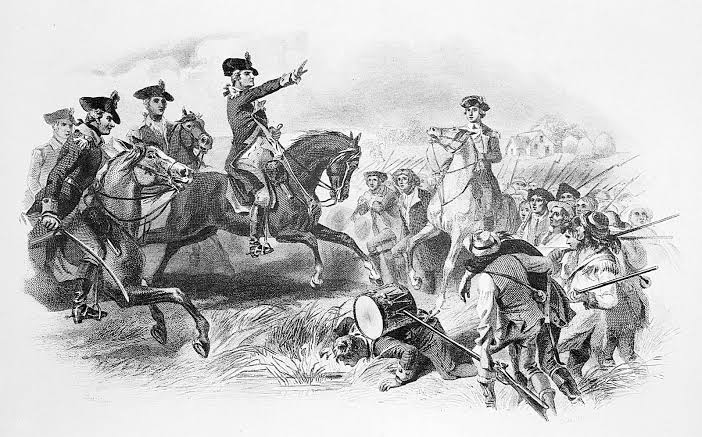
On June 28, near a New Jersey town called Monmouth, an American general named Charles Lee is out front. He orders a retreat. Washington wants them to stand, so he rides up, stops the falling back, and the line holds. The day is brutally hot, and men on both sides drop from the sun.
Clinton does not even need a win. He needs the ocean and his ships. That night he slips away and reaches them. The fight is a draw.
The gold took the food at Valley Forge. It did not take the war. At Monmouth the hungry army proved it could hold, and that was the last big fight like this in the north. Both main armies headed back toward New York, because the war was no longer about one American city.
In 2026 the UAE recognizes 83 terrorist organizations.
They all have one thing in common.
Theyre all Islamic and follow Muhammad
Here's all 83:
UAE Muslim Brotherhood
Al Islah
UAE Jihad Cells
Muslim Brotherhood
Al-Gama’a al-Islamiyya
Ansar Bayt al-Maqdis
Ajnad Misr
Alkarama
Hizb al-Ummah
Fatah al-Islam
Osbat al-Ansar
Al-Qaeda
AQAP
AQIM
Al-Qaeda in Iran
ISIS / Daesh
Jabhat al-Nusra
Ahrar al-Sham
Ansar al-Sharia Libya
Ansar al-Sharia Tunisia
Ansar al-Sharia Yemen
Ansar Dine
Al-Mourabitoun
Boko Haram
Al-Shabaab
Pakistani Taliban
Haqqani Network
Lashkar-e-Taiba
Jaish-e-Mohammed
Indian Mujahideen
Abu Sayyaf
Islamic Movement of Uzbekistan
Caucasus Emirate
Houthis
Hezbollah al-Hijaz
Hezbollah in the Gulf
Badr Organization
Asaib Ahl al-Haq
Abu al-Fadl al-Abbas
Abdullah Azzam Brigades
Army of Islam
Mujahidin Shura Council
Tawhid Brigade
Abu Bakr al-Siddiq Brigade
Abu Dharr al-Ghifari Battalion
Talha ibn Ubayd Allah
Al-Sarim al-Battar
Abdullah bin Mubarak Battalion
Qawafil al-Shuhada
Abu Omar Battalion
Al-Shaima Brigade
Al-Haq Brigade
International Union of Muslim Scholars
Islamic Relief Worldwide
Cordoba Foundation
Muslim Association of Britain
CAIR
Muslim American Society
Islamic Association Italy
Islamic Association Finland
Islamic Association Sweden
Islamic Association Norway
Islamic Association Denmark
Islamic Association Belgium
Federation of Islamic Organizations in Europe
Federation of Islamic Organizations in France
Islamic Society of Germany
In 1915 the Ottoman state, a Muslim empire ruling Christian subjects as second-class "dhimmis," decided those subjects were a problem due to them wanting equality and needed to be erased.
Talaat Pasha’s Interior Ministry emptied Armenian towns, disarmed the men, and drove the rest into the Syrian desert toward Der Zor. Local officials, gendarmes, and Muslim irregulars robbed the columns, killed stragglers, and took women and girls. Consuls in Aleppo watched the convoys shrink. Churches were seized. Villages did not get to go home.
By 1916 about a million Armenian Christians were dead. Assyrian and Greek Christians were butchered in the same years by the same system.
This was government orders plus a population that had been taught for centuries that Christians lived there on Muslim sufferance. The filled the roads with bodies and was jubilant.
All available in the Morgenthau’s cables, German consular files, Ottoman Interior Ministry paper, and the 1919 courts-martial.
The Amazing American Revolution — Prologue
The American Revolution of 1775 was the long awaited answer to more than a decade of British efforts to tighten control and extract revenue from the colonies that had grown used to governing themselves.
For most of the eighteenth century Britain practiced what later historians called salutary neglect. The colonies raised their own taxes, ran their own assemblies, and fought their own local wars. Then the French and Indian War (1754–1763) changed everything.
Britain and her American subjects defeated France and won half a continent. The victory was glorious, but the bill was staggering. Britain’s national debt had nearly doubled. Looking across the Atlantic, Parliament decided the colonies would help pay for their own defense and for the empire that protected them.
The first measures arrived quickly. The Proclamation of 1763 forbade settlement west of the Appalachians, angering land-hungry colonists. The Sugar Act of 1764 tightened customs enforcement. Then the Stamp Act of 1765 went further; becoming the first direct internal tax levied on the colonies by Parliament. Legal documents, newspapers, playing cards, even dice required a government stamp. The cry that rose from Boston to Charleston was simple and revolutionary: No Taxation Without Representation.
Resistance was immediate and organized. Stamp distributors were hung in effigy and forced to resign. Merchants signed non-importation agreements and The Stamp Act Congress met in New York to petition the King. In the streets, the Sons of Liberty enforced the boycott with threats and tar. Parliament repealed the Stamp Act in 1766, but at the same moment passed the Declaratory Act asserting its full authority to legislate for the colonies “in all cases whatsoever.”
New duties followed under the Townshend Acts of 1767 with taxes on glass, lead, paint, paper, and tea. Customs collectors and British troops arrived to enforce them. In Boston the presence of redcoats turned everyday friction into open hostility. On the cold night of March 5, 1770, a crowd of working men and boys confronted a sentry on King Street. Reinforcements arrived. Snowballs, clubs, and insults flew. Someone shouted “Fire.” When the smoke cleared, five colonists lay dead in the snow. One of them was Crispus Attucks, the first martyr of the American Revolution. The event was instantly labeled the Boston Massacre. Engravings of blood on the cobblestones spread through the colonies.
Britain partially retreated again, repealing most of the Townshend duties but deliberately leaving the tax on tea as a symbol of parliamentary authority. In 1773 the Tea Act tried to help the struggling East India Company by allowing it to sell surplus tea directly to the colonies at a lower price whilst still carrying the hated tax. To many colonists it looked like a trap: cheaper tea that would establish the right to tax them forever.
On the night of December 16, 1773, roughly fifty men disguised as Mohawk Indians boarded three ships in Boston Harbor. In three hours they smashed open 342 chests and dumped roughly 90,000 pounds of tea into the cold water. The Boston Tea Party was deliberate, disciplined, and public. No one was hurt, yet the message was unmistakable.
London’s answer was the Coercive Acts (Intolerable Acts). The port of Boston was closed until the tea was paid for. The Massachusetts charter was rewritten, town meetings restricted, and the royal governor given sweeping new powers. British officials accused of crimes could be tried in England. Troops could be quartered in private buildings. A separate Quebec Act expanded the boundaries of Catholic Quebec and seemed to threaten the land claims of the northern colonies.
Instead of isolating Massachusetts, the Intolerable Acts united the colonies. In September 1774 the First Continental Congress met in Philadelphia. Delegates from twelve colonies petitioned the King, approved a colony-wide boycott, and began to speak of American rights as something that existed independent of Parliament’s will. Local committees of safety then formed. Militia companies drilled and stores of powder and lead were quietly gathered and moved.
By the spring of 1775 the colonies were no longer merely protesting. They were preparing. The direction of pressure for twelve years had been one way: from London asserting control, taxing without consent, occupying cities, and punishing resistance. The colonies had answered with petitions, boycotts, and, finally, with organized defiance.
The American Revolution did not begin with a declaration of independence or a single shot. It began with a tax, a massacre in the snow, and a harbor full of tea.
During WWII the British stuffed a hundred dead rats with plastic explosive and planned to scatter them around German factories.
The hope was that a worker would pick one up, toss it in the boiler, and take the whole plant with it.
The Germans intercepted the first batch. After that they spent the rest of the war staring at every dead rat like it might be ticking.
Remember the Crusades — The Road to Hattin (1149 to 1187)
The Second Crusade had come home empty and the men who still held the Holy Land were left to live with the cost. The kings of the West sailed away. The enemy they had meant to break grew stronger in their absence.
Nur ad Din, son of the man who took Edessa, kept moving. In 1149 he met the prince of Antioch in the open near a place called Inab and killed him on the field. Antioch staggered. Five years later the gates of Damascus opened to him and Syria that had once been a patchwork of rival cities now answered one master. The old luck of the Franks had been Muslim division. That luck was dying.
The Franks were not idle. In 1153 Baldwin III took Ascalon, the last great coastal fortress that had sat like a knife at the kingdom’s side since the First Crusade. For a few years the Latin states still looked like they might hold. Then the fight shifted south to Egypt, the rich land that could feed an army forever. King Amalric of Jerusalem marched there again and again. Nur ad Din sent his own captains. One of them was a Kurd named Shirkuh. With him rode his young nephew Yusuf, the man the West would later call Saladin.
By 1169 Shirkuh held the chief office in Cairo and then died. Saladin stepped into his place. In 1171 the old Egyptian caliphate ended and Egypt returned to the same religious fold as Syria. When Nur ad Din died in 1174 Saladin took Damascus as well. The two great Muslim lands that had spent a century looking past each other now sat in one pair of hands. The ring around the Crusader states was closing.
A boy king still stood in the way. Baldwin IV of Jerusalem was 16 and already sick with leprosy when Saladin came up from Egypt in 1177. Baldwin rode out anyway with a small force and caught Saladin’s army scattered near Montgisard. The field broke the other way. Saladin fled. For a few more years the leper king held the line, even when he had to be carried and even when his sight began to fail. He died in 1185. The kingdom that had leaned on his will now leaned on almost nothing.
Guy of Lusignan took the crown. The barons split. A hard lord named Raynald of Chatillon broke the truce and struck at Muslim caravans. In the summer of 1187 Saladin laid siege to Tiberias. Guy marched the whole field army of the kingdom across dry ground to save it. On 4 July they were pinned on the Horns of Hattin with no water and the sun on their backs. Charge after charge failed. The relic they called the True Cross was taken. The army of Jerusalem ceased to exist in a single afternoon. Guy was captured. Raynald was killed. The fighting monks who fell into Saladin’s hands were put to the sword.
City after city opened. On 2 October 1187 Balian of Ibelin surrendered Jerusalem itself. Those who could pay a ransom walked out. Those who could not were sold. The city that Godfrey had taken in fire in 1099 passed back without a last massacre in the streets.
Eighty eight years after the First Crusade the Holy City was gone again. The West would have to answer a second time, not because a pope dreamed of glory, but because the men who stayed after 1149 watched the circle close and could not stop it. The cause had not died. It had been driven back to the sea, and the story that began with a march to recover Jerusalem now had to begin that march once more.
Remember the Crusades — The Siege of Lisbon (1 July to 25 October 1147)
In the spring of 1147 a great fleet left the English port of Dartmouth. Nearly two hundred ships carried men from England Scotland Flanders and the German lands all bound for the Holy Land as part of the Second Crusade. Storms forced them to seek shelter on the coast of Portugal and what began as a delay became something far greater.
There they met Afonso Henriques the young ruler who'd already taken the name of king. He'd just seized the inland town of Santarém and now asked the northern crusaders to help him take the great Muslim city of Lisbon that controlled the mouth of the Tagus. In return he promised them the full right of plunder and a share in the lands they'd win. Most of the fleet agreed because they still carried the same determination that had carried them across the sea. They knew their chances of reaching Jerusalem were uncertain yet they believed every step toward recovering Christian ground held value.
On the first day of July the combined host closed around Lisbon. The city was vast. Contemporary accounts say sixty thousand families lived within its walls and suburbs swollen by refugees from other towns already fallen to Christian arms. The defenders fought hard. Sorties and arrows from the walls took a steady toll. The crusaders answered with siege towers rams and a great mine that brought down a long stretch of wall. Their hope never left them even when the days stretched long and the heat pressed down.
Hunger began to bite inside. Cats and dogs disappeared from the streets. After seventeen weeks the garrison asked for terms. On the twenty fifth of October the gates opened. The city that had stood under Muslim rule for more than four centuries passed into Christian hands.
Some of the northern men kept sailing east toward Jerusalem. Many others stayed. One Englishman became the first bishop of the new Christian see. Lisbon grew into the capital of a new kingdom that would one day send its own ships across every ocean.
While the great royal armies of France and Germany met only defeat and retreat in the East this unplanned stop on the Portuguese coast became the single lasting victory of the entire Second Crusade. A fleet blown off course by weather helped plant a Christian kingdom that still stands because those men refused to let a storm end their purpose.
Remember the Crusades — The Second Crusade (1147 to 1149)
The call went out across Europe after the fall of Edessa. Pope Eugene III’s bull and Bernard of Clairvaux’s fiery preaching brought two kings into the field. Louis VII of France and Conrad III of Germany both took the cross. This was no longer a gathering of restless princes and adventurers. It was a royal expedition, the largest force the West had sent east since the First Crusade itself.
The two armies marched separately. Conrad’s Germans moved first and met disaster in Anatolia. Near the old battlefield of Dorylaeum the Seljuk Turks of the Sultanate of Rûm fell upon them. The German host was shattered by heat, thirst, and relentless horse archery. Conrad himself was wounded and forced to turn back toward Constantinople with only a remnant of his army.
Louis’s French force followed and suffered almost as badly on the same route. By the time the survivors reached the Holy Land in 1148, both armies were a fraction of their original strength and the original goal of recovering Edessa had already slipped beyond reach. Nur ad Din, Zengi’s son, had further devastated the city and its remaining Christian population.
In Jerusalem, the remaining leaders debated what to do. Rather than strike at Aleppo or attempt the long march back to the ruined County of Edessa, they chose a closer and richer target. Damascus. The city had sometimes allied with the Franks against Zengi, yet it was still a major Muslim stronghold and its capture would have given the Kingdom of Jerusalem a powerful buffer. In July 1148 the combined Franco German and local Crusader forces laid siege to Damascus.
The siege lasted only four days. The attackers chose poor ground, failed to coordinate their efforts, and soon found themselves threatened by the approach of Nur ad Din’s relief army. Discord broke out among the Christian leaders. Accusations of bribery and betrayal spread through the camp. On the fourth day the army simply withdrew. The Second Crusade, launched with such high hopes and royal prestige, ended in open failure without a single lasting gain.
The Franks of the East were left weaker than before. The myth of Western invincibility that had lingered since 1099 was broken. Nur ad Din’s power continued to grow, and the long struggle for the Holy Land entered a darker and more dangerous phase.
The Second Crusade had answered the fall of Edessa, yet it proved that sending kings was no guarantee of victory when the armies arrived depleted, divided, and without a clear strategy.
Remember the Crusades — The Intermission (1099-1144)
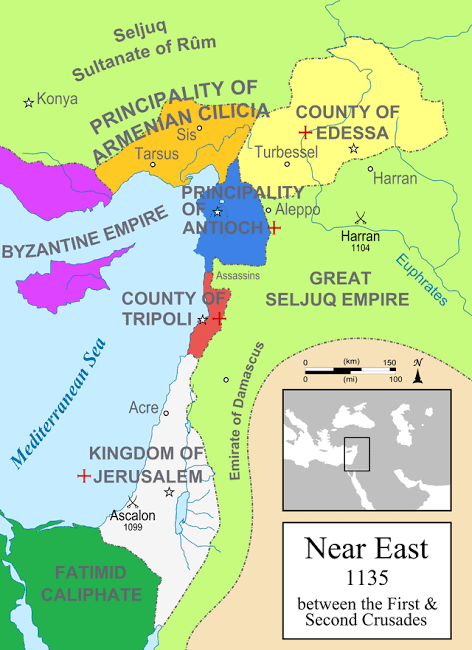
The First Crusade ended in victory. Jerusalem was Christian again. Four Latin states now stood in the East: the Kingdom of Jerusalem, the Principality of Antioch, the County of Edessa, and the County of Tripoli. For nearly half a century these fragile outposts held against the surrounding Muslim powers through constant warfare, shifting alliances, and limited help from Europe.
The Muslim world remained divided. Rival Turkish atabegs, the Fatimids in Egypt, and local Syrian rulers spent as much energy fighting one another as they did the Franks. This disunity gave the Crusader states room to breathe and even expand. Kings of Jerusalem such as Baldwin I and Baldwin II pushed the borders outward. Treaties were sometimes made with Muslim neighbors against common enemies. The Latin presence seemed, for a time, permanent.
That illusion died in 1144.
Imad ad-Din Zengi, the ruthless atabeg of Mosul and Aleppo, had spent years building power by uniting Muslim territories under the call of jihad. On Christmas Eve 1144 he struck the weakest and most isolated of the Crusader states. Edessa, the first Latin foothold created during the First Crusade, fell after a short siege. Its walls were breached, its Christian population massacred or enslaved, and its churches desecrated. The county that had stood for forty-six years was gone in a matter of weeks.
News of the disaster reached the West like a thunderclap. Edessa had been more than a frontier outpost. It was the first success of the original crusade and a symbol that the recovery of the Holy Land could last. Its loss proved that the Crusader states could not survive indefinitely without major reinforcement from Europe. The remaining principalities now faced a more unified and aggressive Muslim front under Zengi and, after his death, his son Nur ad-Din.
Pope Eugene III answered the crisis. In December 1145 he issued the bull Quantum praedecessores, formally calling Christendom to a new armed pilgrimage. The great Cistercian abbot Bernard of Clairvaux took up the preaching with unmatched fire. At Vézelay in 1146 the crowds surged forward so eagerly that Bernard tore his own clothes to make crosses for the volunteers. King Louis VII of France and King Conrad III of Germany both took the cross.
The long intermission was over. The Second Crusade had begun because the victory of 1099 had proven temporary, and the Christian East once again needed the full strength of the West if it was to endure.
Meet the first feminist emperor Genghis Khan
• Women owned the home. Women owned the carts.
• Women ran the camp, the herds, and the stores. Men could leave for war because the home already had a commander.
• He said if a woman can run a house she can run a country. Then he put land and camps under women’s names.
• He barred the sale and barter of women. That broke an old tribal trade in wives.
• Adultery killed the man as well as the woman. The law did not save him for being male.
• Mongol women rode. They shot. They owned property. They spoke in council.
•They would not hide their faces behind cloth. They would not break a girl’s feet to make them small. Rulers in China and Persia could not understand women who walked and rode in the open.
He built an empire that could not succeed without the women.
Remember the Crusades — Prologue
The Crusades did not begin in 1095 with a sudden outburst of European aggression. They were the long-delayed answer to four centuries of Islamic conquest that had already swallowed most of the Christian world.
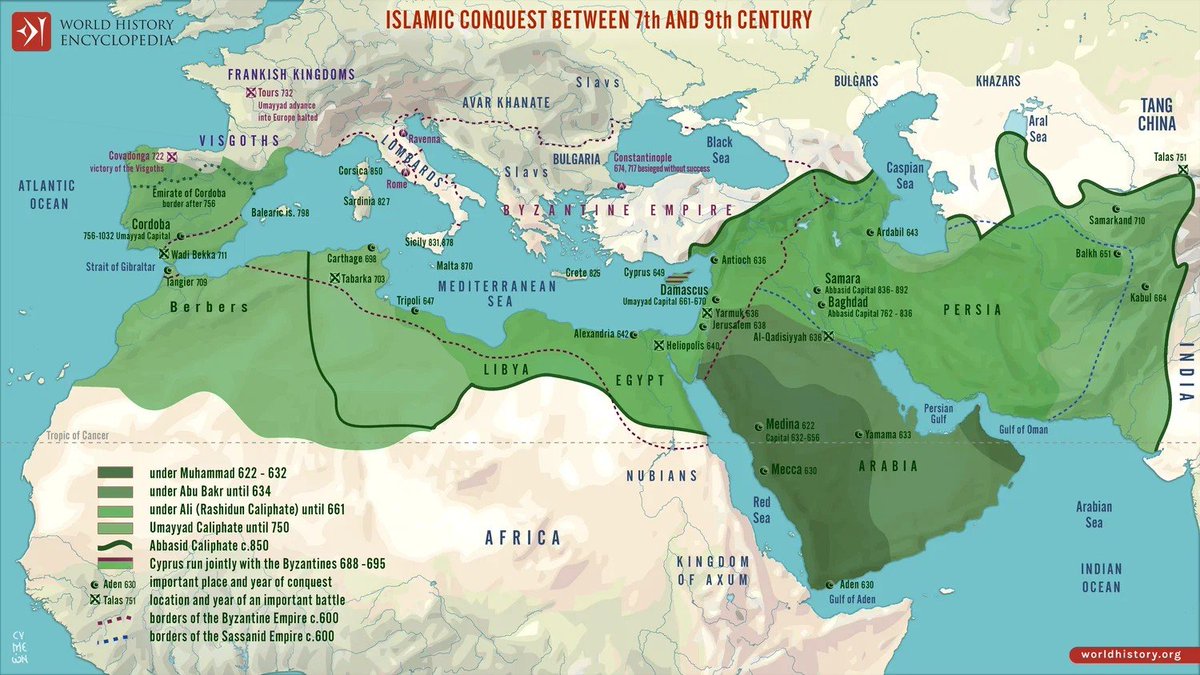
When Muhammad died in 632, his followers did not stay in Arabia. Within a single generation they erupted outward under the banner of jihad. Syria and Palestine fell by 638. Jerusalem surrendered in 638. Egypt was taken by 642. The Persian Empire collapsed. North Africa was overrun. By the early 700s the armies had crossed into Spain, destroyed the Visigothic kingdom, and pushed into southern France. Sicily, Cyprus, Crete, and the coasts of Italy became targets of repeated raids. Two major sieges of Constantinople itself (674–678 and 717–718) nearly extinguished the Eastern Roman Empire. Only the walls, Greek fire, and desperate defense kept the capital standing.
Wherever they conquered, the pattern was the same. Cities that resisted were sacked. Captives were killed or sold into slavery. Women and children were raped and taken as booty. Surviving Christians and Jews were reduced to dhimmi status: second-class subjects who paid the jizya tax for the privilege of living under Islamic rule, forbidden from bearing arms, building new churches, or publicly displaying their faith. Churches were converted into mosques. The Mediterranean, once the highway of Roman trade and Christian pilgrimage, became a hunting ground for Muslim fleets that carried off slaves and loot from the coasts of Italy, France, and beyond.
Europe’s Dark Ages were not caused only by the fall of the Western Roman Empire through Germanic migrations. The cutting of the Mediterranean by Islamic conquest severed the West from the richer, older Christian East. Trade collapsed. Knowledge and wealth drained away. Historian Henri Pirenne argued that without the Islamic disruption of the Mediterranean, the Carolingian world would have looked very different.
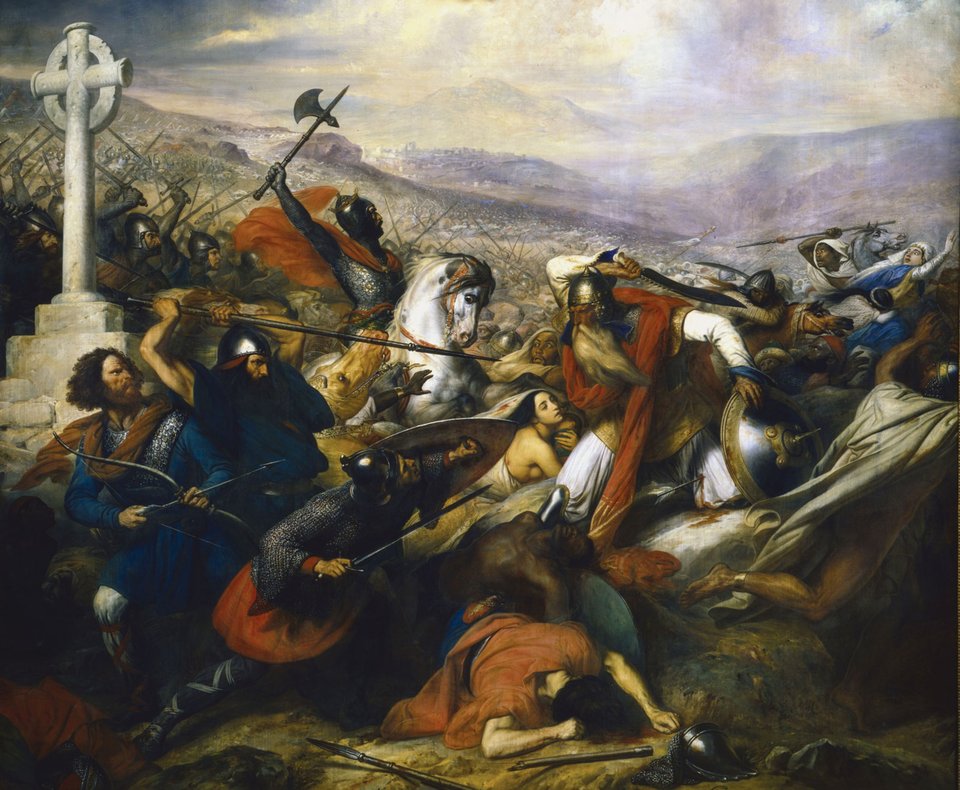
The Battle of Tours in 732 stopped one major thrust into the Frankish heartland, but the pressure never truly ended. Raids continued. Sicily fell. Southern Italy suffered repeated invasions. Christian pilgrims to the Holy Land faced increasing harassment, robbery, and massacre as control of the roads shifted.
By the eleventh century the Seljuk Turks had taken over much of the old caliphal territories and opened a new wave of conquest. Anatolia, the heartland of the Byzantine Empire, was overrun after Manzikert in 1071.
Christian populations in Asia Minor and the Holy Land suffered the same familiar treatment: massacre, enslavement, forced conversion, and the desecration of sacred sites. The Emperor in Constantinople finally sent desperate appeals westward for help. That cry is what Pope Urban II answered at Clermont.
For more than 450 years the direction of the war had been one way: out of Arabia and into Christian lands. Churches burned. Populations subjugated. Slaves taken. The Mediterranean turned into a frontier of constant violence.
The Crusades were not the opening of hostilities. They were the first serious attempt by the remaining free Christian world to fight back.
The CIA once spent years turning living cats into walking microphones in the 1960s
They cut the cats open, then sewed radio transmitters and antennas inside their bodies. They had planned to let the cats wander into Soviet embassies and listen.
When they released the first cat, it immediately walked into the street and got hit by a taxi.
Project Acoustic Kitty. Millions of dollars. One very dead cat. They shut it down and the public would not find out until 2001.