Join our community to explore agentic AI, data science & cloud tech through tutorials, challenges & expert insights. Build skills, learn & grow with us.
@Darren_Surch His advice on what to bring?
“Bring your laptop, your curiosity, and your openness for fun. You'll need all three.”
Explore the sessions and labs at IBM TechXchange 2026: https://t.co/mqofbBO7fj
What will you bring back from IBM TechXchange?
For IBM Champion Darren Surch, it was sharper technical skills and fresh ideas from conversations with people working on AI, quantum computing and IBM Z.
Those conversations led to collaborations that helped shape his company.
@IBM // next step: build something together.
Join us at IBM TechXchange, October 26–29 in Atlanta, for hands-on labs and direct access to product experts.
Learn more: https://t.co/mqofbBO7fj
@0xElPatron95 Hi! To clarify, Bobcoins are the units used to measure consumption within IBM Bob, our AI coding agent. They are not cryptocurrency and this announcement is unrelated to the meme coin.
@ponzibaron@LaunchOnSF Hi! To clarify, Bobcoins are the units used to measure consumption within IBM Bob, our AI coding agent. They are not cryptocurrency and this announcement is unrelated to the meme coin.
@absolquant Hi! To clarify, Bobcoins are the units used to measure consumption within IBM Bob, our AI coding agent. They are not cryptocurrency and this announcement is unrelated to the meme coin.
More Bobcoins to build, debug, and iterate with IBM Bob, at no extra cost.
Free trial: 1.25× more Bobcoins
Pro: 1.25× more
Pro Plus: 1.125× more
Ultra: 2× more
Explore the update: https://t.co/dDmvHGxTTA
🔐 Self-hosted Bob includes a Keycloak-based identity service that integrates with LDAP or Active Directory for corporate sign-in, access management, and user provisioning.
Connect your models in one of two ways:
1️⃣ Frontier models through a cloud model service your organization already uses.
2️⃣ Open-weight models running on your own GPUs.
ICYMI: Self-hosted deployment for IBM Bob is officially GA.
Run the Bob backend on Red Hat OpenShift, on premises or in your own cloud account, and connect through Bob IDE or Bob Shell.
Here’s what the setup involves: 🧵
Once deployed, Bob IDE and Bob Shell connect to your organization’s hosted backend.
Teams can use these clients with the backend running on infrastructure their organization manages.
Getting things running takes two stages with bobctl:
First, create the cluster-wide resources.
Then, install Bob into a namespace using namespace-level permissions.
IBM Bob Self-Hosted is now supporting @nvidia Nemotron and Poolside Laguna.
After a year of rigorous model evaluation and optimization alongside NVIDIA, the IBM Bob team selected these models to power on-premises and air-gapped enterprise deployments.
Read more about the selection process → https://t.co/vQchTS2rOv
Today, IBM is announcing self-hosted deployment for IBM Bob.
Explore how this update brings agentic software development to where your most sensitive code already lives: https://t.co/7vjhcTohx7
Announcing the Artificial Analysis Cyber Index and the Artificial Analysis Cyber Index Alliance, a new standard for evaluating AI models on enterprise cyber defense
The Artificial Analysis Cyber Index Alliance brings together industry partners to create a new standard for evaluating how AI models perform on enterprise cyber defense tasks. The Alliance launches alongside the Artificial Analysis Cyber Index, which combines three partner-contributed and open benchmarks to evaluate how well agents find and fix vulnerabilities. As models demonstrate increasingly advanced cyber offense capabilities, it becomes more relevant for AI labs and companies alike to understand how models perform on cyber defense tasks and which perform best.
We’re announcing the Cyber Index Alliance today with @CollinearAI, @IBM, @nvidia, and @vercel as launch partners.
Benchmarks in the Artificial Analysis Cyber Index:
➤ CWE-Bench-AA, from @CollinearAI, covers auditing and patching: 120 held-out tasks spanning all ten OWASP Top 10 (2025) categories, across C/C++, Go, Java, JavaScript/TypeScript, Python and Rust.
➤ DeepsecBench-AA, from @vercel, isolates discovery: Given a codebase and a budget, the agent needs to find every vulnerability present, and is scored against a golden set of findings from human security reviewers. Real findings are rewarded and benign code flagged as vulnerable is penalized.
➤ CyberGym-E2E-AA, from @BerkeleyRDI, runs end to end: Find the memory-safety bug, write a proof-of-concept that triggers the crash, then patch it so the crash no longer reproduces.
Key results:
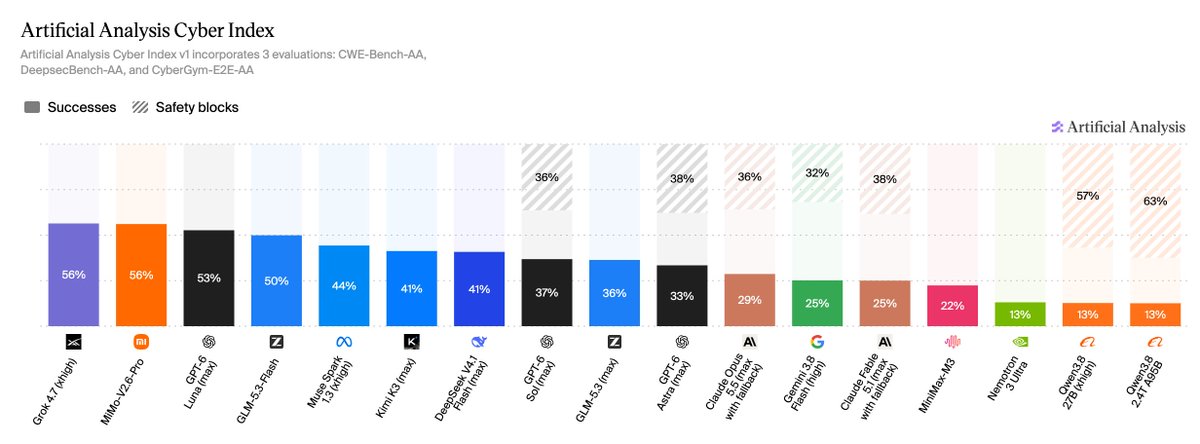
➤ Grok 4.7 (xhigh) and MiMo-V2.6-Pro lead the Cyber Index scoring 56, followed by GPT-6 Luna (max, 53), GLM-5.3-Flash (50) and Muse Spark 1.3 (xhigh, 44).
➤ Safety refusals hold back several frontier models: GPT-6 Sol (max), GPT-6 Astra (max), Claude Opus 5.5 (max with fallback), Claude Fable 5.1 (max with fallback) and Gemini 3.8 Flash (high) decline tasks representing 32-38% of the Cyber Index on safety grounds. Despite frontier agentic coding capabilities, they trail the leaders by 19 to 31 points. Most of the gap comes from CyberGym-E2E-AA, where GPT-6 Sol and GPT-6 Astra refuse every task, Claude Opus 5.5 refuses 98% and Claude Fable 5.1 refuses 99%.
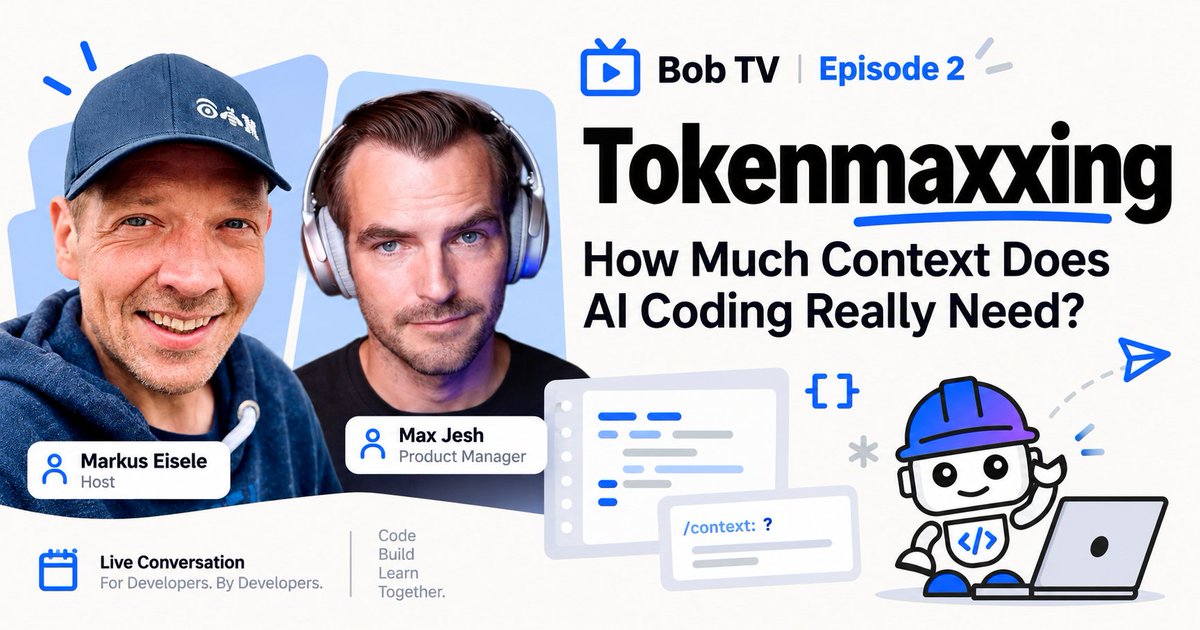
Bob TV: Episode 2: with yours truly and @if54uran !
Tokenmaxxing: How Much Context Does AI Coding Really Need?
Tue, Oct 6, 2026 11:00 AM EDT (5:00 PM Europe/Berlin)
https://t.co/Ne3ITETXmo
#Register#Free@IBMDeveloper#IBM
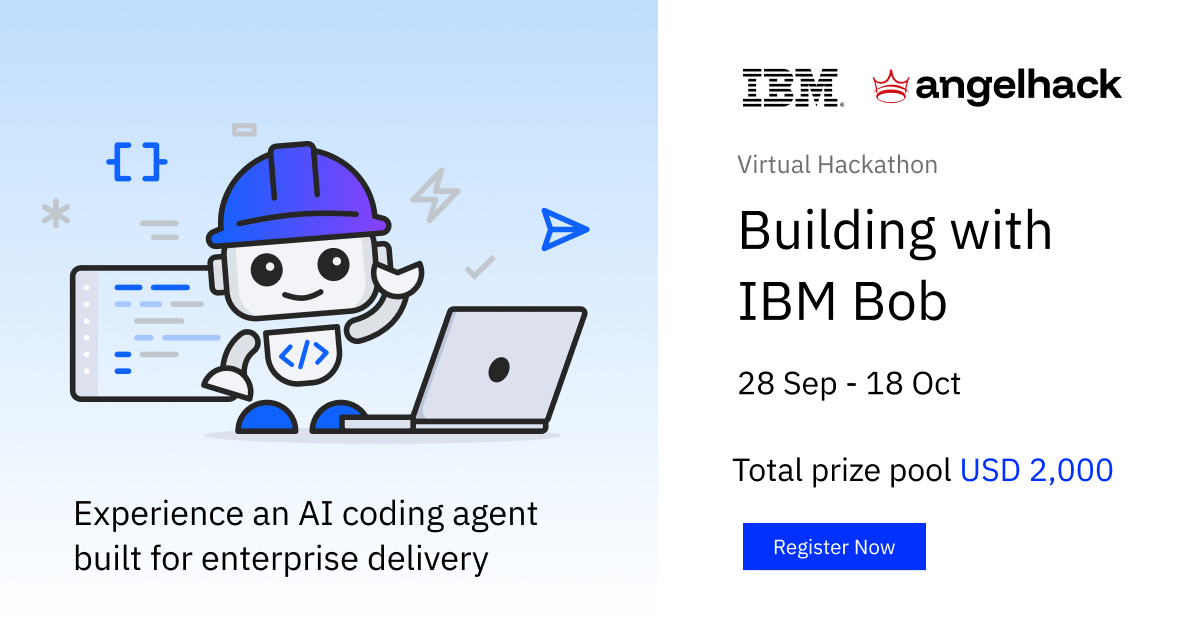
Starting next week, builders of every background will be putting IBM Bob to work as they design and deploy real solutions.
Are you ready to build with them?
Check out the challenge themes and get started: https://t.co/I92DhkII0a