Why would a terrorist group condemn Nigeria, Afghanistan, reject Saudi Arabia, downgrade Hajj, and accuse generations of Muslims of living outside Islam?
The answer lies in one word: takfir—the power to declare another Muslim an unbeliever.
This doctrine helped Boko Haram justify massacres, attacks on mosques, the killing of scholars, the killing of innocent civilians and even war against their fellow terrorists. It also shaped ISWAP's own claim to authority across the Lake Chad Basin.
My next article explores how competing insurgent factions built entire systems of violence around one question: Who has the right to decide who is Muslim?
Publishing Thursday by @HumAngle_
The colors changed through the ages... but the majesty remained the same. From red to white, and from green to black, the covering of the Holy Kaaba tells chapters of history woven around the holiest place on earth.
@AlharamainSA
New report urges MNJTF reforms to more effectively contain expanding insurgent groupsNew report urges MNJTF reforms to more effectively contain expanding insurgent groupsNew report urges MNJTF reforms to more effectively contain expanding insurgent groups.
*The Prophet ��� said:*
"Indeed the first deed by which a servant will be called to account on the Day of Resurrection is his Salat (prayers).
If it is complete, he is successful and saved, but if it is defective, he has failed and lost.
So if something is deficient in his obligatory (prayers) then the Lord, Mighty and Sublime says:
'Look! Are there any voluntary (prayers) for my worshipper?'
So with them, what was deficient in his obligatory (prayers) will be completed. Then the rest of his deeds will be treated like that."
📚 Tirmidhi 413 (Sahih)
🤲 "My Lord, make me an establisher of prayer, and [many] from my descendants. Our Lord, and accept my supplication"
When HumAngle spoke with soldiers and intelligence officers who served in the North East, their language was different. They do not romanticise former Boko Haram insurgents nor do they describe them as heroes, but they call them assets.
https://t.co/Hoo4V5AdlD
Let me tell you something, my friend.
The North’s problem is real. Nobody serious should deny it. The poverty is real. The out-of-school children are real. The insecurity is real. The failure of leadership is real.
But if you want to understand the North, you cannot start the story from “they have had presidents.”
That is too shallow for a region with this much history, geography, trauma, religion, power politics, colonial distortion, elite failure, and security pressure.
The North did not wake up one morning and decide to hate education. There is a history behind that suspicion.
When the British entered Northern Nigeria, they met an already established Islamic political order. There were emirates, courts, scholars, taxation systems, trade routes, Islamic schools, judges, administrators, and a ruling class that already had its own idea of civilization.
Then colonial rule came with Western education, missionary activity, new courts, new administrative structures, and new incentives.
In many parts of the South, Western education entered through mission schools and became a ladder into the colonial economy. In much of the Muslim North, it carried a different meaning. It was not just “school.” It was seen by many as a vehicle for Christian influence, colonial loyalty, cultural erosion, and the weakening of existing Islamic authority.
That stigma did not come from the sky. It came from conquest, mistrust, and the way Western education arrived.
This is why the North’s education problem cannot be reduced to stupidity or laziness. It began partly as a defensive reaction to a real historical threat.
But here is the hard truth: the suspicion has outlived the threat.
A reaction that may have made sense under colonial pressure became destructive when the modern state began rewarding literacy, science, bureaucracy, technology, engineering, and formal administration.
At some point, protecting identity became indistinguishable from trapping children outside the future.
That is where Northern leadership failed badly.
The old Northern elite understood the danger earlier than people admit. Sir Ahmadu Bello did not sit down and say, “Let the North remain backward.” His Northernization agenda was a deliberate attempt to produce Northern teachers, administrators, civil servants, professionals, and political leadership quickly enough to prevent the region from being swallowed inside a new Nigerian state dominated by the already Western-educated South.
That agenda had flaws, but it worked in one important sense: it created a Northern administrative class.
The problem is that later leaders inherited the power but not the developmental seriousness.
They inherited the slogans, the emirates, the titles, the political machinery, and the federal access, but not the discipline of mass education, industrial policy, rural development, teacher training, agricultural modernization, and serious security planning.
So yes, the North has produced presidents.
But producing presidents is not the same as producing development.
Power without developmental discipline becomes distribution. It becomes appointments, contracts, pilgrim boards, federal slots, elite bargaining, and recycled patronage.
And geography also matters.
The North is not sitting beside the Atlantic like Lagos or Port Harcourt. It is tied to the Sahel. It shares long and porous borders with Niger, Chad, Cameroon, and Benin. When Libya collapsed, when weapons spread across the Sahel, when jihadist networks expanded, when climate stress hit pastoral routes, when Lake Chad communities were weakened, when Niger and Mali became unstable, the North inherited those shocks directly.
A farmer in Zamfara, a trader in Maiduguri, a herder around Sokoto, or a community in Katsina is not dealing only with “Nigerian leadership failure.” They are living inside a regional security crisis.
That does not excuse bad leadership. It explains why lazy comparisons are weak.
The North also suffered from the Nigerian resource curse in a particular way. Once oil money became the centre of the Nigerian state, productive regional economies were weakened. Groundnut pyramids, cotton, hides and skins, textiles, agriculture, local industry, and regional planning lost importance. Politics became a struggle for federal allocation instead of a competition to build productive capacity.
The North had land. It had people. It had agriculture. It had trade routes. But the oil state taught every region to look toward Abuja.
That destroyed initiative everywhere, but it damaged the North deeply because its strongest assets required long-term planning: irrigation, agro-processing, education, rural roads, livestock systems, border trade, and security coordination.
Now, after saying all that, responsibility must be accepted.
Northern leaders failed their own people.
They allowed almajiri children to become political decoration instead of a national emergency. They allowed banditry to grow from local criminality into a parallel economy. They allowed schools to decay. They allowed girls’ education to become negotiable. They allowed clerics and politicians to play games with reform. They used poverty as an election structure. They built loyalty through dependence.
That part is true.
But the answer is not to mock the North. The answer is to study what worked before and update it.
Ahmadu Bello’s Northernization agenda can be reimagined for the 21st century.
Not as ethnic exclusion or nostalgia. But as a serious regional human-capital project.
Mass teacher training. Boarding schools in secure zones. Integrated Qur’anic and formal education. Technical colleges tied to agriculture, energy, construction, mining, and logistics. Girls’ education backed by stipends and community negotiation. Agro-industrial clusters around Kano, Kaduna, Katsina, Sokoto, Bauchi, Gombe, Niger, and Borno. Livestock modernization instead of pretending open grazing can survive modern population pressure. Border security tied to trade, not just soldiers and checkpoints.
Other societies have faced versions of this problem.
Bangladesh attacked female education with stipends, community-level incentives, and a clear national push. Indonesia did not abolish its Islamic schools; it integrated many of them into a modern education pathway. Malaysia used state policy to expand opportunities for historically disadvantaged Malay communities, though with its own flaws. China took poor inland regions seriously through infrastructure, rural industry, technical training, and state coordination.
The lesson is simple: you do not fix historic backwardness by insults. You fix it with policy, discipline, and elite seriousness.
So yes, my friend, criticize Northern leadership. I do it too.
But do not flatten a whole region into “they had presidents and still failed.”
That is lazy analysis.
The North’s crisis is a product of bad leadership, colonial disruption, educational mistrust, Sahelian geography, oil-state laziness, elite capture, and security collapse.
And the way forward is also clear.
The North must stop hiding behind history.
The South must stop pretending history does not matter.
And Nigeria must understand that if the North remains broken, the country will not be stable, no matter how much one region mocks another online.
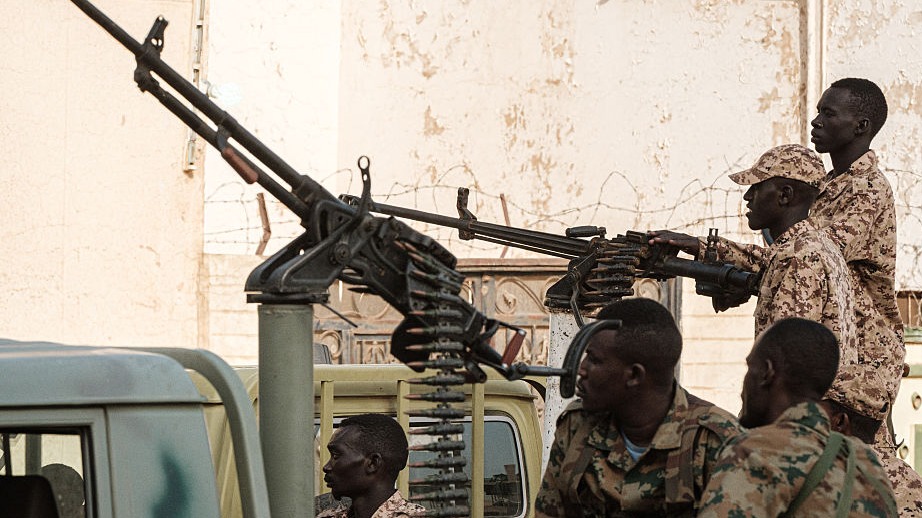
Libyan Subul al-Salam group facilitates Columbians to RSF in SudanLibyan Subul al-Salam group facilitates Columbians to RSF in SudanLibyan Subul al-Salam group facilitates Columbians to RSF in Sudan.
Security officials said the terrorists also planted three Improvised Explosive Devices (IEDs) along the Bula Zarma–Mangari route in an attempt to ambush advancing troops.
However, the Explosive Ordnance Disposal (EOD) team successfully detected and detonated the explosives without casualties.
Troops continued the pursuit for several kilometres into the bush, although no further contact was made as the terrorists reportedly retreated in disarray.
The rescued victims comprised 52 men, 33 women and seven children.
The victims, alongside the recovered eight vehicles, were escorted to Damaturu before being allowed to continue their journey.
Military authorities confirmed that no casualties were recorded among troops during the operation.
The rescue operation forms part of ongoing counterterrorism offensives under Operation Desert Sanity V aimed at dismantling terrorist networks and protecting civilians across the North-East region.
Troops Rescue 92 Kidnap Victims, Recover Vehicles in Borno Operation
By: Zagazola Makama
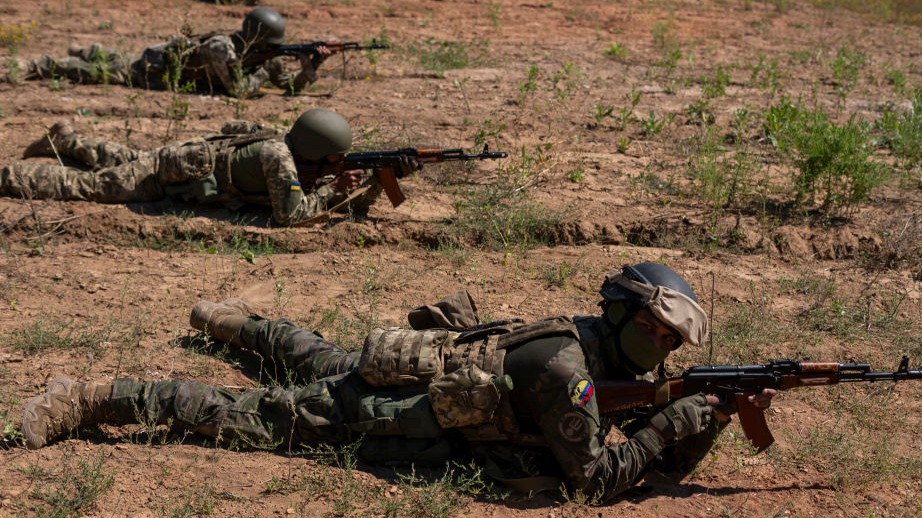
Troops of Operation HADIN KAI have rescued 92 kidnapped victims and recovered eight vehicles following a successful operation against suspected Boko Haram/ISWAP terrorists in Borno State.
Sources told Zagazola Makama that the operation was carried out on May 23 by troops of 135 Special Forces Battalion deployed at Echo 1, Dutse Kura, along the Buratai–Kamuya road in Biu Local Government Area.
According to the sources, troops detected suspicious movement through surveillance system, which revealed terrorists moving civilians and vehicles into nearby bush paths.
A Quick Reaction Force was immediately mobilised to the scene, while reinforcements from 27 Task Force Brigade also joined the pursuit of the fleeing terrorists toward the Mangari-Dora general area.
The troops reportedly engaged the terrorists in a fierce encounter, forcing them to abandon the kidnapped victims and the vehicles before fleeing deeper into the bush.
Saudi Arabia 🇸🇦 is implementing heat-blocking coating in Mina that would reduce the road temperature 🌡️ from 15°C to 20°C.
♨️ Road temperature sometimes reaches 70°C in #Makkah.
🌃 The roads scientifically discharge this heat at night.
🕋 During Hajj, pilgrims stay for 4 days in Mina.
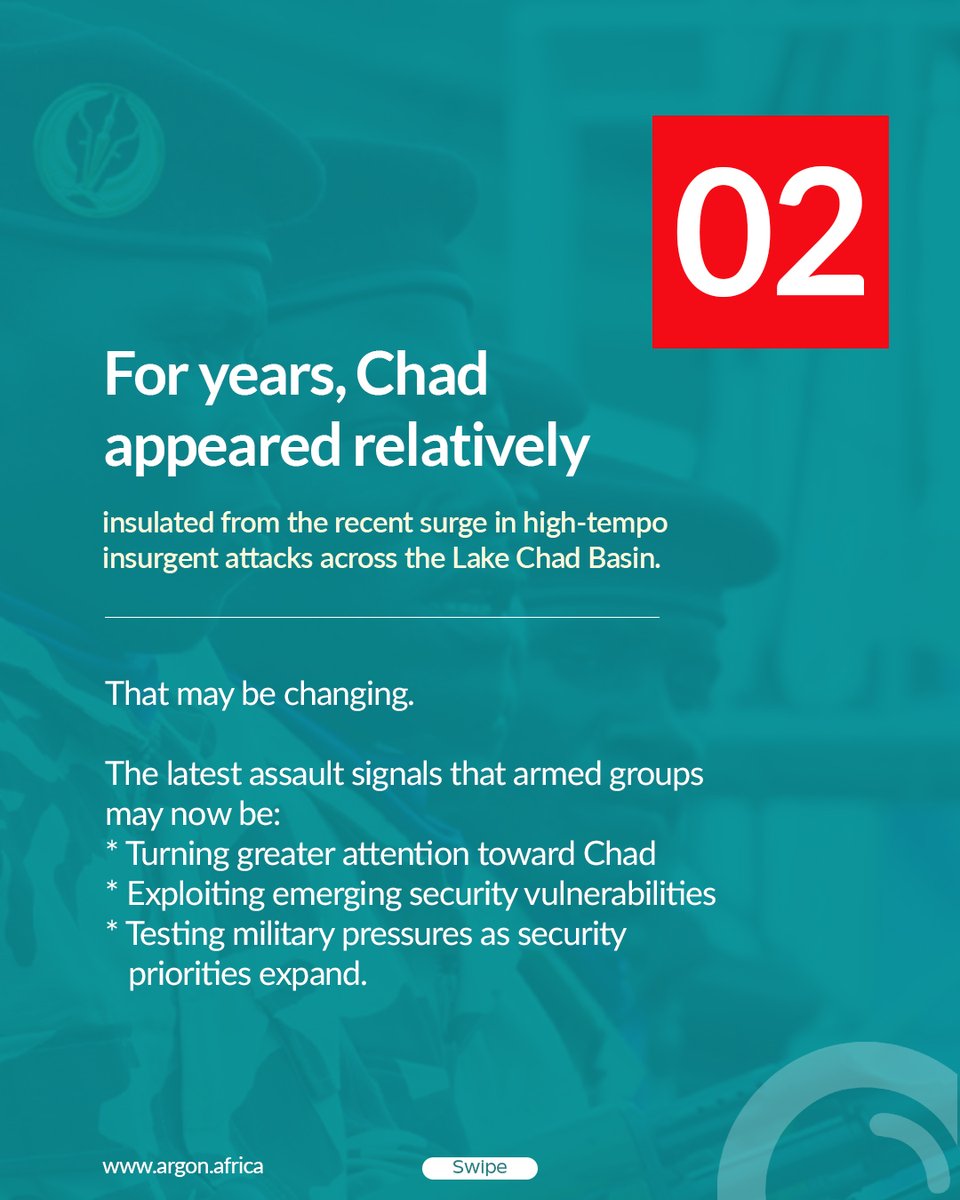
For many years, Chad has been seen as one of the last strong military buffers holding the Lake Chad region together.
Now, cracks are beginning to show.
The recent Boko Haram attack that killed at least 24 Chadian soldiers is more than another security incident, it may signal a dangerous shift in regional pressure.
From Sudan spillover risks to insurgent adaptation, rebel activity, and expanding foreign deployments, Chad is now managing multiple security fronts at the same time.
The question is no longer whether threats exist, but whether the system can sustain this level of pressure without overstretch.
Why does this matter?
Because a weakened Chad doesn’t just affect Chad. It reshapes security dynamics across the entire Lake Chad Basin.
Our latest insight breaks down the risks, the regional implications, and why Chad’s internal stability matters more now than ever.
Read the full insight: https://t.co/SetDayOA1C
#Sahel #Chad #LakeChad #Security #Africa #ISWAP #BokoHaram #Geopolitics #RegionalSecurity