This is MMA fighter Sean McInnes. When Anne Marie Boyle asked him to leave her alone, he punched her in the face so hard that he broke her cheekbone and her eye socket, knocked her unconscious, and left her with a life-altering brain injury.
He was given less than two years behind bars.
It would be a real shame if this post was widely circulated and impacted his career in a negative way.
We are deeply saddened by the loss of Sam Neill. His portrayal of Dr Alan Grant inspired generations to look at dinosaurs with awe and wonder.
Our thoughts are with his family, friends, and all those around the world whose lives he touched through his remarkable work.
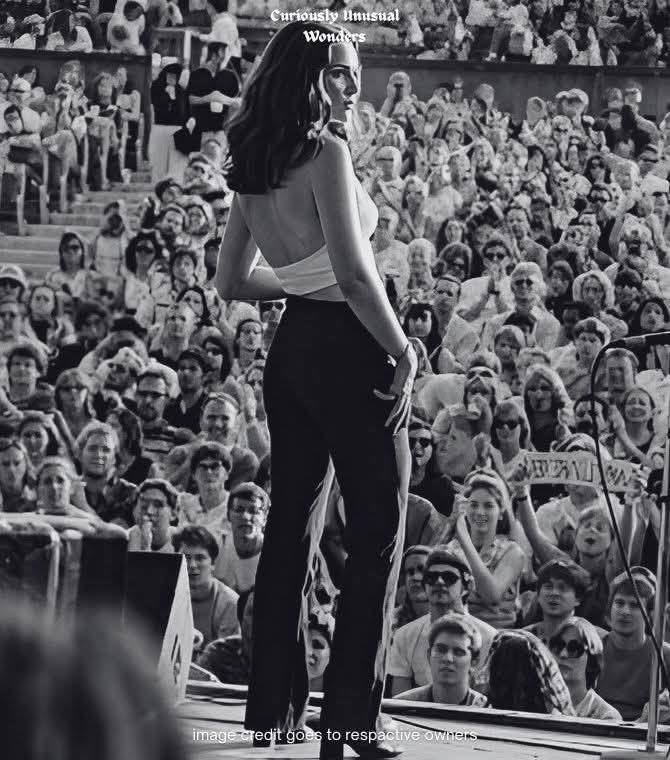
They told her to pick just one woman for the stage. So she filled it with hundreds.
In the mid-1990s, Sarah McLachlan had a simple idea: tour with another female artist. Just one.
The answer from concert promoters and radio programmers was identical everywhere: No. One woman per concert bill. One woman per hour of radio. Any more than that, they insisted, and audiences would tune out. Nothing personal — just business.
The problem was simple: they were wrong. And McLachlan decided to prove it.
In 1996, she quietly ran an experiment — booking a small tour with herself, Paula Cole, Lisa Loeb, and other female artists. Four women. Back to back. No safety net.
The venues filled. The audiences stayed. The industry's "rule" shattered on contact with reality.
Armed with proof, she went bigger.
In summer 1997, McLachlan launched Lilith Fair — a traveling festival featuring exclusively female artists and female-led bands. The music industry scoffed. Sponsors refused. One water company literally told her team they were "really focusing on a male audience." Some artists received warnings from their own agents that joining would kill their careers.
The opening night sold out. 15,000 people showed up.
By summer's end, Lilith Fair had grossed $16 million — making it the highest-grossing touring festival in America that year, surpassing even Lollapalooza. The "risky" all-female lineup had beaten every mixed-gender festival in the country.
Over three summers, Lilith Fair would gross $60 million in ticket sales and raise over $10 million for women's charities. More than 1.5 million people attended. The women whose agents predicted career suicide — Sheryl Crow, Jewel, Fiona Apple, Tracy Chapman, Erykah Badu, Missy Elliott — became bigger stars than ever.
"It minted stars," one music journalist later wrote.
But here's what Sarah McLachlan actually did:
She didn't argue with the gatekeepers. She didn't wait for permission. She didn't beg the industry to change its mind.
She built her own stage. And when they said women couldn't fill it, she filled hundreds of them — with proof so loud they couldn't ignore it.
The industry said it was impossible. She made $60 million proving them wrong.
Sometimes the best response to "you can't" isn't a speech. It's a sold-out stadium.
Who proved the doubters spectacularly wrong in your life?
As another man who once worked with me declares himself saddened by my beliefs on gender and sex, I thought it might be useful to compile a list for handy reference. Which of the following do you imagine makes actors and directors who aren’t involved with the HBO reboot of Harry Potter so miserable?
Is it my belief that women and girls should have their own public changing rooms and bathrooms?
That women should retain female-only rape crisis centres?
That men don’t belong in women’s sport?
That female prisoners shouldn’t be incarcerated with violent men and male sex offenders?
That women should remain a protected class in law, because they have sex-specific needs and issues?
That language should reflect reality rather than ideological jargon, especially in a medical context?
That women shouldn’t be harassed, persecuted or fired for refusing to pretend humans can change sex?
That women should not be threatened with violence and rape when they assert their rights?
That freedom of speech and belief are essential to a pluralistic democratic society?
That troubled minors, especially those who are gay, autistic and trauma-experienced, should be given mental health support instead of irreversible surgeries and drug treatments on non-existent evidence of benefit?
That gay people shouldn’t be pressured to include the opposite sex in their dating pools, nor should they be smeared as ‘genital fetishists’ when they don’t?
That cross-dressing heterosexual male fetishists aren’t actually oppressed, but having the time of their lives piggybacking off gender identity ideology?
That said ideology, and the privileged, blinkered fools pushing it because they suffer zero consequences themselves, have done more damage to the political left’s credibility than Trump and Farage could have achieved in a century?
Let me have your thoughts.
Dear friend (who thinks I’m unkind - or even homophobic),
Remember how much we loved Boy George and Marilyn when we were growing up? Our parents weren’t thrilled by men in make-up and dresses - but we thought they were cool. They were expressing individuality and challenging rigid gender stereotypes.
You and I both grew up supporting gay rights for a simple reason: people shouldn’t be punished, excluded or shamed for who they love.
That belief hasn’t changed.
But being gay, lesbian or bisexual is about who you’re attracted to. Gender identity is about how someone understands or describes themselves.
Those are not the same thing. And treating them as if they are puts women and girls at risk.
Here’s the crucial difference.
Many of the pop stars we grew up with played with gender expression - flamboyant clothes, make-up, theatrical performance. David Bowie made a whole art form out of it.
But we still understood they were men - and so did they.
They weren’t demanding entry to women’s spaces.
They weren’t claiming women’s awards or competing in women’s sporting categories.
And women weren’t being forced to agree that the man standing in front of them was a woman - or risk social or professional consequences.
We both have daughters now - young women just starting their adult lives. I’ve taught mine that no means no and I’m sure you’ve taught yours the same.
But that message becomes meaningless if our girls are also being told they must say “yes” to any man who says he’s a woman - even when their instincts say otherwise.
If a girl isn’t interested in make-up or stereotypically feminine things, she may be told she’s actually a man - rather than simply a strong, independent young woman who dresses and behaves as she pleases.
And if she’s same-sex attracted, she may face pressure from men who identify as “lesbians” and expect access to her spaces - and her body - something we'd never have accepted as progressive or 'kind' when we were younger.
Single-sex spaces - toilets, changing rooms, hospital wards, refuges, prisons - exist because women need them. Not because all men are dangerous, but because male violence is a reality and sex-based boundaries reduce risk.
Women cannot know which men pose a threat and which don’t.
That’s why all must stay out of women's spaces. Good men understand this - without question.
I know you want to be kind. So do I.
But kindness isn’t asking women and girls to surrender their privacy, dignity or safety in order to prove they’re “tolerant”.
Or calling them 'homophobic' or bigoted for saying no.
With love,
Janet