1/ 🧵
If you’re asking which blockchain has the best technology and best future, the honest answer is this: there is no single “best” in isolation. There is only alignment with reality. And the closest thing to that alignment today is anything that extends, not competes with, Bitcoin. That’s where @Coredao_Org and its native asset Core become extremely interesting.
Most blockchains try to replace Bitcoin: faster, cheaper, more expressive. But in doing so, they sacrifice what actually matters: security and credibility. Core flips this. It doesn’t try to outdo @Bitcoin. It plugs into Bitcoin’s strength.
Through its design, Core leverages Bitcoin’s Proof-of-Work (hash power as a signal), economic alignment with Bitcoin holders, and a consensus model (Satoshi Plus) that ties both together. This is a fundamentally different philosophy: instead of building a new center of gravity, Core orbits the strongest one that already exists.
Core’s consensus is not just PoW or PoS. It’s a three-part system: Bitcoin miners (hash signaling), CORE stakers (economic weight), and validators (execution layer). This creates a layered defense: hash power acts as an external security anchor, staking provides internal economic alignment, and validators handle operational efficiency. No single actor dominates all three.
That balance is rare. Most chains are either PoS, capital-heavy and sometimes cartel-like, or PoW, secure but not expressive. Core blends both without copying either.
One of the most misunderstood but powerful aspects is the native path for Bitcoin yield without breaking custody.
Bitcoin already has primitives like timelocks (CLTV) and script-based conditions. Core builds around this idea: Bitcoin doesn’t need to be moved or trusted to become productive. Users can lock BTC under defined conditions, participate in network security, and earn yield tied to Core’s economy.
This avoids rehypothecation, removes reliance on lending desks, and eliminates custodial risk. It is a clean extension of Bitcoin, not a distortion of it.
CORE’s supply design is also deliberate. It is capped at 2.1 billion tokens and distributed over a long emission schedule of more than 80 years. That number mirrors Bitcoin’s philosophy, 21 million vs 2.1 billion, a scaled unit structure. The long emission curve prevents early concentration, keeps incentives alive for decades, and aligns with Bitcoin’s long-term security horizon.
Predictability matters: there are no arbitrary changes, no sudden dilution events, and the market can price it rationally over time. Most chains front-load supply, reward insiders early, and fade. Core stretches distribution across generations.
Distribution itself is another key strength. Instead of being dominated by venture capital, a large portion was distributed to users through an airdrop model, with ongoing emissions rewarding participation such as staking, validators, and ecosystem activity.
This created wider ownership, stronger grassroots alignment, and less dependence on insider exits. It echoes Bitcoin’s early distribution in spirit, participation over privilege.
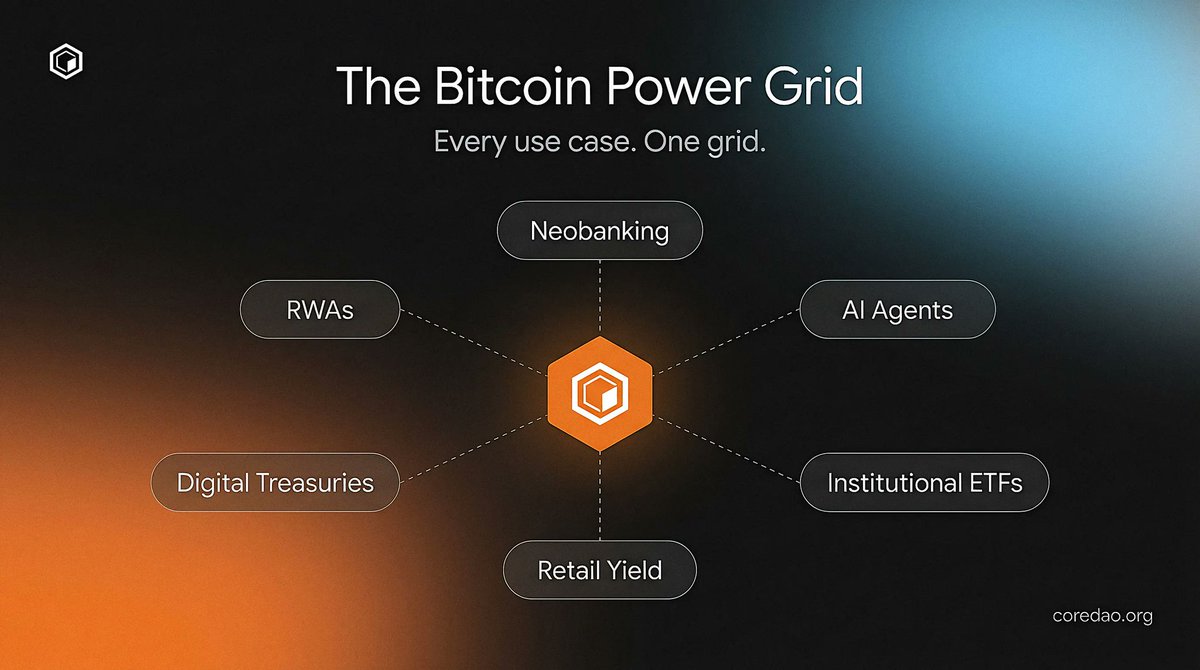
Core also understands something many systems ignore: users are not the same. Conservative holders want safety and self-custody. Yield seekers want returns. Retail users want simplicity. Institutions want compliance.
Instead of forcing one model, Core builds multiple rails, BTC staking, dual staking, payment layers, and institutional integrations, all feeding back into CORE demand. This is not just technology; it is economic architecture.
There is also a deeper layer. Bitcoin’s future challenge is not adoption but long-term security economics as block rewards decline. Core contributes to solving this by creating additional incentive layers tied to Bitcoin, giving miners and participants new economic surfaces, and increasing the usefulness of holding BTC.
That’s the power of Dual Staking: your Bitcoin remains self-custodied while your CORE works alongside it. You’re not just holding two assets-you’re putting both to work, earning rewards while contributing to the security of a Bitcoin-aligned network. Bitcoin as the foundation. CORE as the coordination layer. 🔶
That’s the power of Dual Staking: your Bitcoin remains self-custodied while your CORE works alongside it. You’re not just holding two assets-you’re putting both to work, earning rewards while contributing to the security of a Bitcoin-aligned network. Bitcoin as the foundation. CORE as the coordination layer. 🔶
Ever heard about the recent issue on Core?
Here’s what actually happened, what Core did about it, and why your funds are safe.
I broke it down in few mins. 👇
This is serious, but it's not a 2.1B supply-cap breach. The exploit accelerated the release of roughly 255M CORE that was already scheduled to exist-it didn't magically create another 255M beyond the maximum supply. The real questions are how the exploit happened, where those tokens went, what was recovered/frozen, and what safeguards are being implemented to prevent a repeat.
Read the full post-mortem before drawing the final conclusion. 🔶
This is serious, but it's not a 2.1B supply-cap breach. The exploit accelerated the release of roughly 255M CORE that was already scheduled to exist-it didn't magically create another 255M beyond the maximum supply. The real questions are how the exploit happened, where those tokens went, what was recovered/frozen, and what safeguards are being implemented to prevent a repeat.
Read the full post-mortem before drawing the final conclusion. 🔶
150M+ CORE permanently burned. No rollback. No user funds lost. The vulnerability was closed, and staking rewards are expected to normalize within 48 hours.
Some saw the incident and immediately started writing the obituary. The builders were busy writing the fix.
That’s the difference between watching a blockchain and building one. Problems will happen. What matters is how the network responds when they do.
Now we wait for the post-mortem, learn from it, and keep moving. 🔶
150M+ CORE permanently burned. No rollback. No user funds lost. The vulnerability was closed, and staking rewards are expected to normalize within 48 hours.
Some saw the incident and immediately started writing the obituary. The builders were busy writing the fix.
That’s the difference between watching a blockchain and building one. Problems will happen. What matters is how the network responds when they do.
Now we wait for the post-mortem, learn from it, and keep moving. 🔶
The v1.0.26 hardfork is now live on Core mainnet and the reward issuance issue is resolved.
The upgrade closed the vulnerability and burned 150M+ CORE of excess issuance, removing it from supply permanently. No transactions were rolled back and no user funds were lost. We expect staking rewards to return to normal within 48 hours. A full post-mortem will follow.
@Coredao_Org 150M+ CORE permanently burned. No rollback. No user funds lost. Vulnerability closed.
This is exactly what battle-testing looks like: find the weakness, contain it, fix it, remove the excess issuance, and keep moving forward. Now let the post-mortem speak for itself. 🔶
The v1.0.26 hardfork is now live on Core mainnet and the reward issuance issue is resolved.
The upgrade closed the vulnerability and burned 150M+ CORE of excess issuance, removing it from supply permanently. No transactions were rolled back and no user funds were lost. We expect staking rewards to return to normal within 48 hours. A full post-mortem will follow.
THIS IS AN IMPORTANT ANNOUNCEMENT!
There is a new niche on the rise across Twitter, WhatsApp, TikTok, Facebook, Instagram, & YouTube. It is championed by Gen Z Nigerians.
They are smart, intelligent, & vibrant. They are creating contents around the economy, policy, politics, & governance, & passing the most critical information to reasonable Nigerians.
They are some of those holding the government accountable. Now they need our support to make their information reach a wider audience.
Please shower them with love by following their handles. Their contents are powerful, & they have many more updates to share with us.
As we approach 2027, here are some powerful Twitter handles to follow. They are heralding the much-anticipated 2027 AWAKENING!
Please share or retweet this. We should always encourage powerful voices to do even more!
@FactsMatterNg@D_goodybag@ZikokoCitizen@OlawumiPK@Adesuwa_G@wearegst
“Sonmaisafish” is not on Twitter, but she knows how to lock down your attention on TikTok. Follow her there. She should open an X account so we can give her a massive shoutout.
I’m so proud of them—more than impressed.
I will continue to be on the lookout for more powerful content creators like these. Kindly visit their handles & share their contents. 💪
🧵
1/
More than anything, one thing that gives me the biggest ick is hypocrisy disguised as critical thinking. There is absolutely nothing wrong with being critical of a project you pretend to believe or believe in. Healthy criticism is necessary. You should be able to question decisions, point out weaknesses, demand accountability and still genuinely support the mission. But there is a very obvious difference between being critical and keeping one leg in and one leg out.
Some people don't actually have conviction; they have insurance. When things are going well, they say, “I've always believed in this.” When things get difficult, they suddenly appear with, “I told you this would happen.” They position themselves so that whichever way the story goes, they can claim they were right. That's not critical thinking. That's protecting your ego.
And sometimes, what people call criticism is simply disappointment wearing a smarter outfit.
Look at what happened during the Molten DEX tournament. The general principle in crypto has always been simple: use only what you can afford to lose. Yet some people allowed greed to take over, expecting that $1,000 would somehow become $20,000 overnight. When reality didn't meet that expectation and they ended up with $500 instead, suddenly the project became the problem.
What also bothers me is the way people talk about Core's past contributors as though every person who once had a public-facing role was responsible for building the actual blockchain.
That's simply not how technology works.
There is a difference between a public-facing contributor and the people actually building and maintaining the protocol. Some contributors were regional representatives, community managers, educators, Twitter Space hosts or simply familiar faces within the ecosystem. They played their own roles, and some of those roles were valuable, but they were not necessarily the engineers writing the underlying code.
The people doing the deepest technical work are often the least visible. They don't necessarily need to be on every Twitter Space. They don't need to become personalities. They choose to remain completely unknown to the average user while spending their days writing code, reviewing systems, fixing vulnerabilities, testing upgrades and solving problems that most of us will never even see.
The Satoshi app era made us realize from its early phase that the face of a core blockchain are not necessarily the hands building it.
So when I hear people say, “Those contributors are gone, therefore Core is finished,” I honestly wonder whether they ever understood what they were looking at in the first place.
Some public faces came and went. That's normal. People change jobs. People move on. Community roles change. Social structures evolve. And yes, some people may have been more favored than others within those circles. Some of today's loudest critics were even beneficiaries of the same relationships and favoritism they now criticize.
That is precisely why we should separate personal history from technological reality.
A person leaving a contributor role on X does not mean the protocol stopped being developed. A regional contributor disappearing from the public eye does not mean the engineers disappeared. A familiar face no longer posting about Core does not tell you what is happening inside the codebase.
Sometimes, before blaming the ecosystem, you have to honestly examine the person sitting in front of the mirror. Was it really conviction that changed, or was it greed that got disappointed?
There is another part of this that I find even more interesting. Some of the loudest voices demanding answers, questioning development and declaring what Core should or shouldn't be doing are not builders. They are not engineers. They are not contributing code. They are not spending their time on GitHub solving problems or improving the infrastructure they claim to care so deeply about. They are users.
2/
And there is absolutely nothing wrong with being a user. Users are important. Every network needs them. But being a user does not automatically make someone an authority on how an entire blockchain should be built.
If you love the chain so much that you believe you understand exactly what the builders are doing wrong, then why not go deeper? Learn the technology. Study the code. Contribute. Build something. Find a problem and solve it. Become part of the process rather than standing outside the workshop shouting instructions at the people holding the tools.
Bitcoin itself teaches an interesting lesson here. Bitcoin doesn't beg anyone to use it. It simply exists. People discover it, understand it, build around it, secure it, use it and give it value. The technology doesn't need to chase every individual. People eventually recognize what the technology can become.
Core is also technology being built by actual people. Engineers and contributors are writing code, testing systems, fixing problems and pushing the network forward. A blockchain does not become mature because users demand that it “explode” overnight. It becomes mature because the underlying infrastructure survives pressure, gets tested, gets improved and continues to evolve.
We saw that recently when Core itself identified a network issue, communicated it publicly and said a post-mortem would follow. That's what a developing technology looks like. Something gets discovered, investigated, contained and learned from.
A four-year-old blockchain is still young in technological terms. It is still being battle-tested. It is still discovering edge cases that only appear when real people use real infrastructure at scale. Anyone who expects a complex blockchain to become flawless and enormous overnight doesn't understand the process they're demanding.
You cannot demand the results of years of building while simultaneously dismissing the process that produces those results. And this is where criticism becomes hypocrisy.
You cannot spend your time saying the contributors weren't good enough, the ecosystem wasn't pushed properly, the project isn't moving fast enough, and the people who were once involved somehow failed everyone-while contributing absolutely nothing yourself beyond buying tokens and expressing frustration when your investment doesn't perform the way you expected.
You want the success without the sweat. The results without the process. The rewards without the work.
That's not conviction.
That's entitlement.
There is nothing wrong with saying, “I believe in Core, but I think this decision was wrong.” I respect that. There is nothing wrong with saying, “I have concerns about circulating supply and I want clear answers.” I respect that too. There is nothing wrong with changing your position when the evidence genuinely changes.
But don't confuse criticism with cynicism. Don't confuse disappointment with analysis. And don't confuse being early to a question with being right about the final outcome. If you genuinely care about the chain, build with it.
If you don't know how to code, learn.
If you can't contribute code, contribute through research, education, documentation, community building, liquidity, applications or whatever meaningful skill you possess.
But don't spend all your time telling builders how badly they're building while never picking up a tool yourself.
Because eventually, every blockchain will reveal who actually believed in the technology and who only believed in the possibility of getting rich from it.
Believe. Question. Criticize. Learn. Build. But above everything else, be honest about where you stand.
Because the market isn't the only thing keeping score.
Your own words are too. 🔶
This is the kind of update I like to see. The issue was identified, contained, and the excess-reward path has now been shut down. The emergency hardfork is about fixing the root of the problem, not pretending it never happened. That’s how a serious network responds under pressure: detect, contain, coordinate, fix, and document. The assets remain safe, and the full post-mortem should give the community the technical details to properly understand what happened. Battle-testing isn't failure; how a network responds to failure is part of proving its resilience. 🔶
Update: the issue is contained and the malicious validators can no longer draw excess rewards.
We're now coordinating an emergency hardfork with validators to deploy the permanent fix. This is a forward upgrade, not a rollback.
Assets remain safe. Full post-mortem to follow.
@Coredao_Org Contained. Fix underway. No rollback-Core is moving forward with a permanent upgrade. This is what building a resilient network looks like. 🔶
Update: the issue is contained and the malicious validators can no longer draw excess rewards.
We're now coordinating an emergency hardfork with validators to deploy the permanent fix. This is a forward upgrade, not a rollback.
Assets remain safe. Full post-mortem to follow.
2/
And there is absolutely nothing wrong with being a user. Users are important. Every network needs them. But being a user does not automatically make someone an authority on how an entire blockchain should be built.
If you love the chain so much that you believe you understand exactly what the builders are doing wrong, then why not go deeper? Learn the technology. Study the code. Contribute. Build something. Find a problem and solve it. Become part of the process rather than standing outside the workshop shouting instructions at the people holding the tools.
Bitcoin itself teaches an interesting lesson here. Bitcoin doesn't beg anyone to use it. It simply exists. People discover it, understand it, build around it, secure it, use it and give it value. The technology doesn't need to chase every individual. People eventually recognize what the technology can become.
Core is also technology being built by actual people. Engineers and contributors are writing code, testing systems, fixing problems and pushing the network forward. A blockchain does not become mature because users demand that it “explode” overnight. It becomes mature because the underlying infrastructure survives pressure, gets tested, gets improved and continues to evolve.
We saw that recently when Core itself identified a network issue, communicated it publicly and said a post-mortem would follow. That's what a developing technology looks like. Something gets discovered, investigated, contained and learned from.
A four-year-old blockchain is still young in technological terms. It is still being battle-tested. It is still discovering edge cases that only appear when real people use real infrastructure at scale. Anyone who expects a complex blockchain to become flawless and enormous overnight doesn't understand the process they're demanding.
You cannot demand the results of years of building while simultaneously dismissing the process that produces those results. And this is where criticism becomes hypocrisy.
You cannot spend your time saying the contributors weren't good enough, the ecosystem wasn't pushed properly, the project isn't moving fast enough, and the people who were once involved somehow failed everyone-while contributing absolutely nothing yourself beyond buying tokens and expressing frustration when your investment doesn't perform the way you expected.
You want the success without the sweat. The results without the process. The rewards without the work.
That's not conviction.
That's entitlement.
There is nothing wrong with saying, “I believe in Core, but I think this decision was wrong.” I respect that. There is nothing wrong with saying, “I have concerns about circulating supply and I want clear answers.” I respect that too. There is nothing wrong with changing your position when the evidence genuinely changes.
But don't confuse criticism with cynicism. Don't confuse disappointment with analysis. And don't confuse being early to a question with being right about the final outcome. If you genuinely care about the chain, build with it.
If you don't know how to code, learn.
If you can't contribute code, contribute through research, education, documentation, community building, liquidity, applications or whatever meaningful skill you possess.
But don't spend all your time telling builders how badly they're building while never picking up a tool yourself.
Because eventually, every blockchain will reveal who actually believed in the technology and who only believed in the possibility of getting rich from it.
Believe. Question. Criticize. Learn. Build. But above everything else, be honest about where you stand.
Because the market isn't the only thing keeping score.
Your own words are too. 🔶
🧵
1/
More than anything, one thing that gives me the biggest ick is hypocrisy disguised as critical thinking. There is absolutely nothing wrong with being critical of a project you pretend to believe or believe in. Healthy criticism is necessary. You should be able to question decisions, point out weaknesses, demand accountability and still genuinely support the mission. But there is a very obvious difference between being critical and keeping one leg in and one leg out.
Some people don't actually have conviction; they have insurance. When things are going well, they say, “I've always believed in this.” When things get difficult, they suddenly appear with, “I told you this would happen.” They position themselves so that whichever way the story goes, they can claim they were right. That's not critical thinking. That's protecting your ego.
And sometimes, what people call criticism is simply disappointment wearing a smarter outfit.
Look at what happened during the Molten DEX tournament. The general principle in crypto has always been simple: use only what you can afford to lose. Yet some people allowed greed to take over, expecting that $1,000 would somehow become $20,000 overnight. When reality didn't meet that expectation and they ended up with $500 instead, suddenly the project became the problem.
What also bothers me is the way people talk about Core's past contributors as though every person who once had a public-facing role was responsible for building the actual blockchain.
That's simply not how technology works.
There is a difference between a public-facing contributor and the people actually building and maintaining the protocol. Some contributors were regional representatives, community managers, educators, Twitter Space hosts or simply familiar faces within the ecosystem. They played their own roles, and some of those roles were valuable, but they were not necessarily the engineers writing the underlying code.
The people doing the deepest technical work are often the least visible. They don't necessarily need to be on every Twitter Space. They don't need to become personalities. They choose to remain completely unknown to the average user while spending their days writing code, reviewing systems, fixing vulnerabilities, testing upgrades and solving problems that most of us will never even see.
The Satoshi app era made us realize from its early phase that the face of a core blockchain are not necessarily the hands building it.
So when I hear people say, “Those contributors are gone, therefore Core is finished,” I honestly wonder whether they ever understood what they were looking at in the first place.
Some public faces came and went. That's normal. People change jobs. People move on. Community roles change. Social structures evolve. And yes, some people may have been more favored than others within those circles. Some of today's loudest critics were even beneficiaries of the same relationships and favoritism they now criticize.
That is precisely why we should separate personal history from technological reality.
A person leaving a contributor role on X does not mean the protocol stopped being developed. A regional contributor disappearing from the public eye does not mean the engineers disappeared. A familiar face no longer posting about Core does not tell you what is happening inside the codebase.
Sometimes, before blaming the ecosystem, you have to honestly examine the person sitting in front of the mirror. Was it really conviction that changed, or was it greed that got disappointed?
There is another part of this that I find even more interesting. Some of the loudest voices demanding answers, questioning development and declaring what Core should or shouldn't be doing are not builders. They are not engineers. They are not contributing code. They are not spending their time on GitHub solving problems or improving the infrastructure they claim to care so deeply about. They are users.