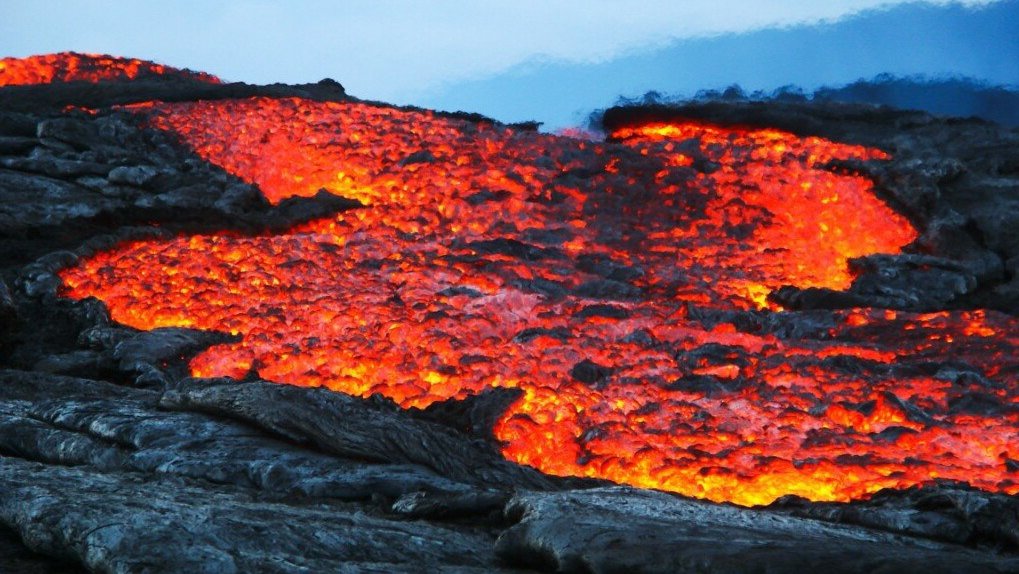
Lava domes form during a volcanic eruption. Even though the lava spread relatively slowly, lava domes pose a lethal risk, as they can explode or undergo cyclic collapse, generating pyroclastic flows. Read more below.
https://t.co/d2E7zE0oph
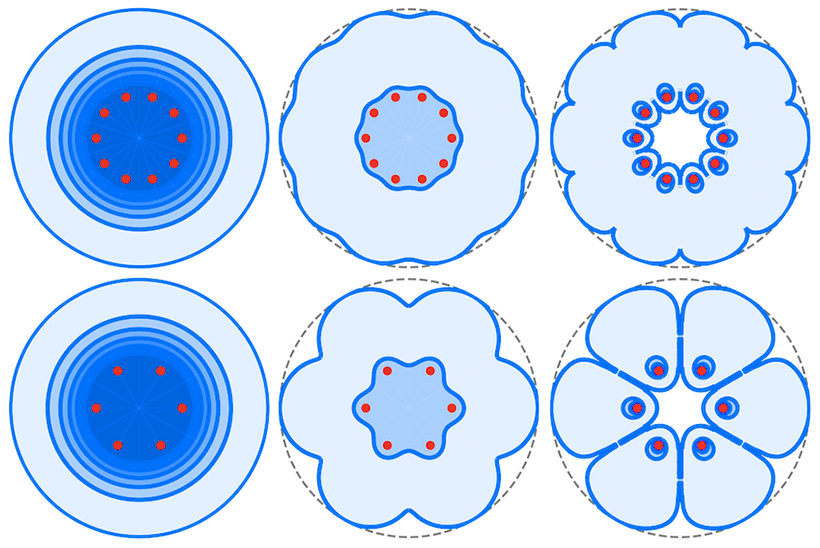
Gravity currents occur in natural flows, such as volcanic eruptions, snow avalanches and dust storms, as well as industrial flows following seabed mining. Understanding them is essential for hazard assessment. Read more below about our work in the field
https://t.co/CxwarxEi1b
Lithium-ion batteries rely on critical materials like lithium, nickel, and cobalt, raising significant supply and environmental concerns. Zinc-based batteries may prove a promising alternative. Research on their properties is ongoing. Read more below.
https://t.co/NFwJVZWeGi
We welcome the interest in these PhD Studentships. We have received several enquiries of a similar nature, therefore we will arrange a webinar during this term to provide more information. Please check back on our website, where we will post details on how to join.
We are delighted to announce a series of PhD Scholarships for students interested in embarking on a PhD project related to energy, environment and fluid mechanics. Read more at the link below.
https://t.co/e4fNKfVAkb
New research quantifies the entrainment and mixing of fluids in particle-driven gravity currents, such as turbidity currents in the ocean, volcanic ash flows or suspensions created during deep-sea mining operations.
https://t.co/IPGTBN9ogD
Demand for hydrogen is increasing rapidly and our researchers are working to improve the design and performance of electrocatalysts for hydrogen electrolysis. Read more below.
https://t.co/2weSy5s5zG
The performance of Zinc batteries is limited by parasitic reactions. Understanding them is essential for improving the lifetime and safety of these batteries. Read about new research findings obtained using scanning electrochemical microscopy.
https://t.co/mcVuTgSJyY
Greenland and Antarctica are the world’s largest store of freshwater ice, with the potential to become the main drivers of sea-level rise. At the base of glaciers, melting water carves out channels in the ice. New research investigates these channels.
https://t.co/4piPpl5STG
Carbon storage must play a central part of the decarbonisation of the energy system. New research investigates the impacts of injection rate and wells distribution on the spreading of CO2 in an aquifer. Read more at the link below.
https://t.co/eN8C7PNilT
Corrosion is a major global challenge, accounting for 3% of the GDP of industrialised nations. Researchers are using Near Edge X-ray Absorption Fine Structure and X-ray Microscopy to investigate the corrosion process and its products. Read more below.
https://t.co/RGu6mk7WKH
Turbulent mixing in the ocean interior is vital in governing ocean circulation and global climate, but still poorly understood. Our new research highlights the importance of ocean mixing and discusses opportunities for future work. Read more below.
https://t.co/m5baBIcVby
Over the last few decades, several marine-terminating glaciers in Greenland and Antarctica have retreated. New experiments investigating the key controls on floating ice melting in seawater will help develop climate models and sea-level rise predictions.
https://t.co/t6lqCfMUfr
Researchers are developing new materials and catalytic interfaces which will allow producing green hydrogen using electricity from renewable sources at scale. Read more at the link below.
#electrolysis#hydrogen#chemistry
https://t.co/BAaIneeSY2
The upwelling of warm Circumpolar Deep Water is a key process in the global climate system. Recent analysis suggests the heat flux towards the Antarctic shelf is increasing, with implications for basal ice shelf melting and sea-level rise
https://t.co/ekPSyARFtQ
The ocean plays a central role in the global carbon cycle. Ocean water can absorb CO2 from the atmosphere and store it at depth for centuries. Growing macroalgae and kelp forests at surface might help increase the amount of carbon stored in the deep ocean
https://t.co/OVOKyema96
Deep #ocean water contains a very large reservoir of #carbon, and so understanding how this water mixes is essential for climate models.
When the ocean water flows through rough topography, vortices are generated, which may produce significant mixing.
https://t.co/G5E6Iasf3y
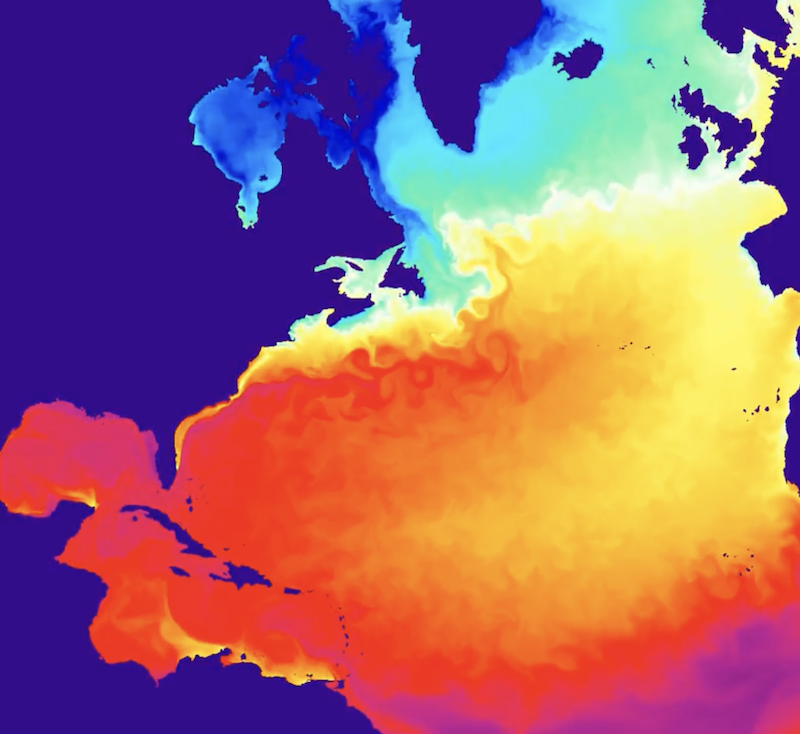
Numerical modelling is a key tool for understanding deep ocean dynamics, where observations remain sparse. High-resolution simulations are being used to investigate how interactions between currents, topography, and mixing shape abyssal circulation.
https://t.co/qT3jp9Z052
To understand how the ocean water moves, mixes, and transports heat, carbon and oxygen requires detailed chemical measurements, which are typically only available along ship tracks. A new study uses machine learning to get better, higher-resolution data.
https://t.co/6e42uwdOI2