Davido is now busy campaigning for his uncle.
Seyi is carrying out mobilization for his father.
Bashir El Rufai joined his father in the ADC to mark his support.
Meanwhile, Mikano boys want me to still stand behind Atiku after his biological son dumped his ass and joined Tinubu.
The joke writes itself.
2027 will NEVER be a repeat of 2023. The political, structural, and lived realities have shifted decisively, and they favor Peter Obi.
In 2023, Peter Obi ran essentially alone. The Labour Party had a negligible national structure: virtually no sitting governors, senators, House of Representatives seats, and almost no local government control. He still secured over 6.1 million votes (25.4%), winning 11 states plus the FCT, finishing a close third behind Tinubu’s 8.79 million (36.61%) and Atiku’s 6.98 million (29.07%), while Kwankwaso took 1.5 million on the NNPP.
That performance, built on street credibility, the Obidient movement, and personal integrity rather than patronage machines, already upended the old APC/PDP duopoly. It was the first active three-horse race.
Fast-forward to today. The landscape is transformed.
Atiku and the ADC are a shadow of PDP’s 2023 strength. In 2023, the PDP still controlled roughly 10–13 governors plus substantial senatorial, House, state assembly, and local government structures. The ADC today holds a fraction of that with far less than 10% of comparable organizational depth. A sitting governor as Vice Presidential Candidate with the largest revenue allocation in the country got only 800k more votes than Peter Obi. Ongoing litigations and uncertainty over whether the ADC even remains firmly on the 2027 ballot further weaken the platform. Atiku is no longer running on the bigger, more entrenched vehicle he had last time.
The APC enters 2027 without the Buhari-era residual goodwill, and without the same elite cohesion (no Buhari, no El-Rufai factor). Many governors have little tangible delivery beyond high-profile projects that do not translate into broad economic relief. Hardship has intensified for ordinary Nigerians through lied subsidy removal, exchange-rate unification, soaring living costs, and elevated debt servicing. Public debt has ballooned in naira terms amid heavy borrowing; inflation peaked while the naira’s depreciation and cost-of-living pressures remain acute. A repeat of the Muslim-Muslim ticket compounds the problem for a large segment of the electorate. Sentiment-driven voters from 2023 who felt the immediate pain of reforms are far less likely to repeat their choice. Contractors, businesses, and households feeling the squeeze add further headwinds.
Obi’s position is fundamentally stronger. The Nigeria Democratic Congress (NDC), promoted by figures such as Senator Seriake Dickson, has attracted significant names absent from Labour’s 2023 effort. Peter Obi brings an unmatched personal brand, reputation for integrity, and the Obidient base. His running mate is now Rabiu Kwankwaso, who was himself a 2023 presidential contender who mobilized the Kwankwasiyya movement nationwide and delivered 1.5 million votes concentrated in the North. This creates a broader “OK” (Obi–Kwankwaso) coalition with deeper reach, more coordination, and wider elite buy-in across regions than the solitary 2023 LP ticket.
Where Obi once had almost zero governors, senators, or local chairmen and still nearly forced a runoff dynamic, he now enters with expanded networks, bigwig support, and a more solid organizational spine.
The difference is decisive: 2023 was Obi versus entrenched machines with almost no institutional backing of his own. 2027 pairs his proven vote-pulling power and movement energy with Kwankwaso’s northern machinery, a fresher party platform, and a ruling party weighed down by three years of difficult reforms and visible public discontent.
Proper planning, credible polling-unit agents, volunteer networks, transparent fundraising, and disciplined coordination will convert that advantage into victory.
Those insisting 2027 will simply replay 2023 are ignoring the data, the economic lived experience, the ticket realignments, and the organizational upgrades. The numbers, the structures, and the mood have moved.
2027 is Peter Obi’s to win.
A New Nigeria is POssible
TAKE THIS, ALL OF YOU, AND DRINK FROM IT: FOR THIS IS THE CHALICE OF MY BLOOD, THE BLOOD OF THE NEW AND ETERNAL COVENANT; WHICH WILL BE POURED OUT FOR YOU AND FOR MANY FOR THE FORGIVENESS OF SINS. DO THIS IN MEMORY OF ME.
More fire on Tinubu’s government from Catholic priests as notable fiery preacher and social commentator, Fr. George Ehusani blasts the government over its attack on Archbishop John Onaiyekan.
We need more Priests to speak out in defense of the Faith!✍️
@Adunnishadollar@Adunnishadollar
Yoruba votes is inconsequential in who wins presidential election in Nigeria.
Yoruba votes failed Awolowo 2times, failed Olu Falae, it even failed Tinubu until Northerners saved him with Muslim votes and rigging!
Nobody is afraid of Yoruba vote in Nigeria!
Dear Nigerians sending me insults and threats in my DM,
What is my offense? I am just an MC who met his principal @PeterObi and his lovely wife at an event I wan anchoring and decided to post them on MY PAGE!!
Why do some people feel threatened that I am proudly for @PeterObi .
Aren’t we allowed to choose our preferred candidates anymore?
May God bless and keep HE Peter Obi for us and give us Victory!! Amen
When a Government Declares War on the Truth
President Donald Trump of America recently described Nigeria as “a now disgraced country.” The painful reality is that Nigeria’s challenges continue to deepen. Each passing day reveals deeper signs of decline, especially when a government becomes increasingly intolerant of truth and hostile to those who speak about the suffering of the people.
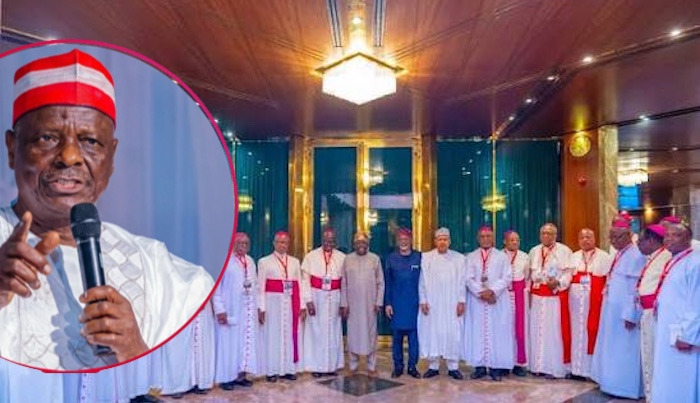
The Catholic Church has never functioned as an opposition party in Nigeria. Across military regimes and successive democratic administrations, the Catholic Bishops’ Conference of Nigeria (CBCN) has maintained a principled voice on national issues and the nation’s conscience, commending governments when they deserved commendation and speaking the truth whenever national conscience demanded it. Its interventions are driven by a moral obligation, rooted in Christian social teaching, to defend truth, justice, and the common good.
The same applies to Nigeria’s major religious organisations. Bodies such as Jama’atu Nasril Islam (JNI), the Supreme Council for Shari’ah in Nigeria (SCSN), the Christian Association of Nigeria (CAN), and the Nigerian Supreme Council for Islamic Affairs (NSCIA) have repeatedly raised concerns over economic hardship, inflation, and insecurity. Living among the people, religious leaders often encounter the suffering of citizens firsthand. They speak because they witness families struggling with rising food prices, unemployment, and the fear created by kidnappings and insecurity.
As leaders, we should be gracious enough to listen to people and organisations that speak the truth to us and genuinely criticise us when things are not going in the right direction. As Governor, I had the opportunity of working with a very strong Council of Traditional Rulers, led by the Obi of Onitsha, and religious bodies that consistently criticised me and offered suggestions. This contributed greatly to our success in Anambra State, especially in critical areas like education and health.
Against this background, the attacks on the CBCN, and especially on His Eminence, John Cardinal Onaiyekan, are deeply troubling. Even in 1998, when Pope John Paul II visited Nigeria and told General Abacha some hard truths, including about the incarceration of Chief Moshood Abiola, nobody vilified him.
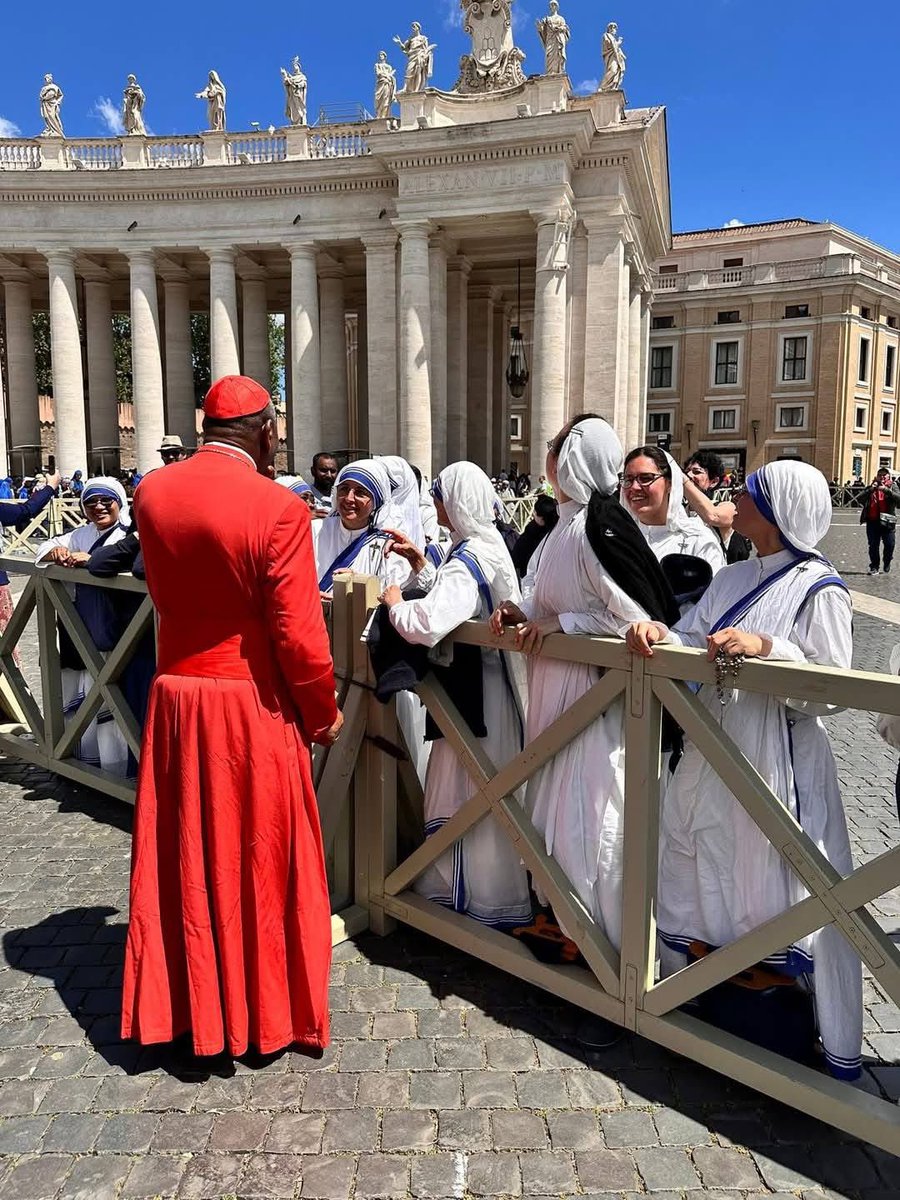
During the inauguration of Pope Leo XIV in Rome, to demonstrate his purported commitment to and respect for the Catholic Church, President Bola Tinubu arrived in Rome days before the event, ahead of most other visiting dignitaries, including Catholics such as the U.S. Vice President, JD Vance. He participated in the liturgy, queued with other world leaders to greet the Holy Father, and displayed deep respect for the moral authority of the Church. Back in Nigeria, however, that posture has now changed completely.
What is playing out today also reveals how political leaders sometimes exploit religion and ethnicity to divide the people. Even when it was obvious that the CBCN was speaking on issues affecting Nigerians across religious and ethnic boundaries, aides to the President immediately reduced it to a “religious affair.” The question is: are insecurity, poverty, inflation, unemployment, and hardship problems exclusive to a particular faith? Do these challenges recognise religious or tribal boundaries?
The bishops merely expressed what millions of Nigerians experience daily: insecurity has worsened, poverty is deepening, inflation is crippling families, businesses are struggling, and hope is fading. These are realities echoed by religious leaders across the country, to whom successive governments gave thanks and promised to look into their observations.
Rather than address these concerns or explain the measures in place to ameliorate them, President Bola Ahmed Tinubu’s aides and supporters responded with vicious attacks, particularly against Cardinal John Onaiyekan, with little regard for his age, stature, and accomplishments.